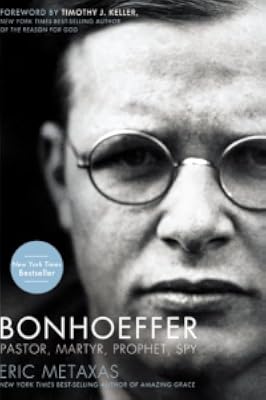
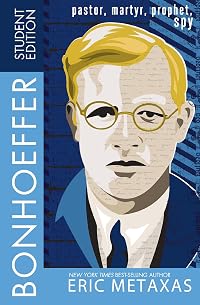
Bonhoeffer: Pastor, Martyr, Prophet, Spy
by Eric Metaxas
On This Page
Description
"Bonhoeffer" presents a profoundly orthodox Christian theologian whose faith led him to boldly confront the greatest evil of the 20th century, and uncovers never-before-revealed facts, including the story of his passionate romance.Tags
Recommendations






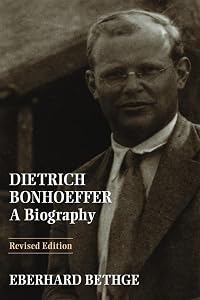

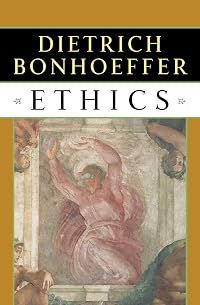

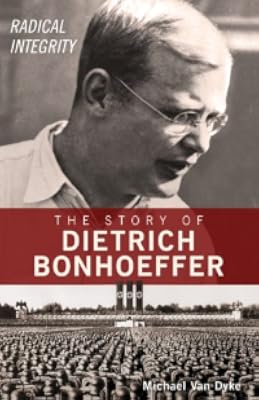










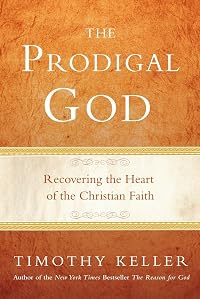
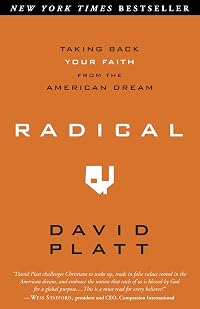
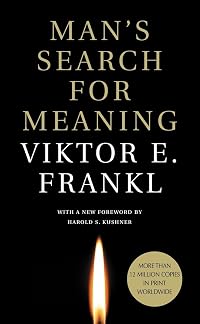
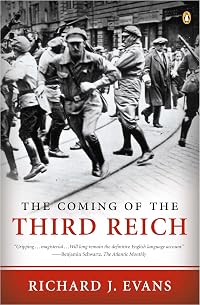





Member Recommendations

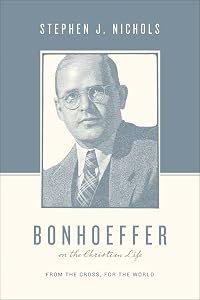
AmishTechie Get the real inside story of being a Pastor, Theologian and sometime resistance fighter, facing death. What does he do? He ministers to others! A soul stirring companion volume to Bonhoeffer: Pastor, Martyr, Prophet, Spy
Member Reviews
Yikes- this was a real disappointment, or, as Metaxas might say, a hemorrhoidal bummer. I was excited when I read reviews when it came out. Then I was wary when I learned that Metaxas is the 'founder and host' of a philosophy reading group for crazy-rich, conservative New Yorkers. Then when I saw that the blurbs for his book, rather than being by biographers or scholars, were by CEOs, ex-CEOs, former General Partners of Goldman Sachs, Kirkus journalists or people who feel the need to put PhD at the end of their names, I was really put off.
Then I started reading, and I went back to excitement. Metaxas writes very clear, Hemingway-gone-effeminate sentences for the most part. It's very soothing... and then suddenly you realize that he's show more just lulling you so he can smack you over the head with a patented word-couple like 'hemorrhoidal isometrics' or 'vampiric homonculus.' In one sentence he describes Hitler as having both 'canine sensitivity' and 'lupine ruthlessness.' In *one sentence*. Theologians are accused of building 'diminutive Ziggurats.' It reads like a high-school student trying to impress her teacher.
And then there's the big problem with the book: despite the fact that almost everyone in Germany refused to take a stand as firm as Bonhoeffer's, Metaxas is unwilling to consider that anyone then alive wasn't either a black-hatted varmant or a white-hatted hero. Once Hitler takes the stage, the book becomes a morality-tale rather than a biography. *Real* Christians never supported Hitler, and Bonhoeffer can do no wrong- but even *he* admitted that he rubbed people the wrong way and had a knack for making enemies. True, true, Metaxas admits, Bonhoeffer could get a bit too high-brow in the pulpit. But such a criticism is doubly ironic: first, because Metaxas' primary complaint about 'Bishop' Mueller is that he's an 'uneducated Navy chaplain' of lower-class origins (this is particularly jarring when you realize how privileged Bonhoeffer was, and that Metaxas doesn't seem to care). Second, despite its sneering at the uneducated, this book is determinedly middle-brow. I imagine Bonhoeffer and Barth sharing a smirk about it before they got back to reading something incomprehensible.
I should have been tipped off by the sub-title, of course, that there wouldn't be much attention paid Bonhoeffer's ideas here: it's not called 'Bonhoeffer: Pastor, Martyr, Prophet, Spy, Theologian.' But I still found the lack of intellectual analysis disappointing, especially given that Metaxas has his own theological axes to grind, primarily against those who are attracted to the idea of religion-less Christianity. Who are they? We're never told. What should we put in place of their (as he sees it) flawed interpretation? We're never told.
It's a shame, because this is a great subject for a biography, and he obviously did a great deal of research and excellent synthesis. show less
Then I started reading, and I went back to excitement. Metaxas writes very clear, Hemingway-gone-effeminate sentences for the most part. It's very soothing... and then suddenly you realize that he's show more just lulling you so he can smack you over the head with a patented word-couple like 'hemorrhoidal isometrics' or 'vampiric homonculus.' In one sentence he describes Hitler as having both 'canine sensitivity' and 'lupine ruthlessness.' In *one sentence*. Theologians are accused of building 'diminutive Ziggurats.' It reads like a high-school student trying to impress her teacher.
And then there's the big problem with the book: despite the fact that almost everyone in Germany refused to take a stand as firm as Bonhoeffer's, Metaxas is unwilling to consider that anyone then alive wasn't either a black-hatted varmant or a white-hatted hero. Once Hitler takes the stage, the book becomes a morality-tale rather than a biography. *Real* Christians never supported Hitler, and Bonhoeffer can do no wrong- but even *he* admitted that he rubbed people the wrong way and had a knack for making enemies. True, true, Metaxas admits, Bonhoeffer could get a bit too high-brow in the pulpit. But such a criticism is doubly ironic: first, because Metaxas' primary complaint about 'Bishop' Mueller is that he's an 'uneducated Navy chaplain' of lower-class origins (this is particularly jarring when you realize how privileged Bonhoeffer was, and that Metaxas doesn't seem to care). Second, despite its sneering at the uneducated, this book is determinedly middle-brow. I imagine Bonhoeffer and Barth sharing a smirk about it before they got back to reading something incomprehensible.
I should have been tipped off by the sub-title, of course, that there wouldn't be much attention paid Bonhoeffer's ideas here: it's not called 'Bonhoeffer: Pastor, Martyr, Prophet, Spy, Theologian.' But I still found the lack of intellectual analysis disappointing, especially given that Metaxas has his own theological axes to grind, primarily against those who are attracted to the idea of religion-less Christianity. Who are they? We're never told. What should we put in place of their (as he sees it) flawed interpretation? We're never told.
It's a shame, because this is a great subject for a biography, and he obviously did a great deal of research and excellent synthesis. show less
It's a big book, over 500 pages, and I'm a slow reader but I've now finished the most recent biography of the German pastor and theologian Dietrich Bonhoeffer by Eric Metaxas. It's the set book for the next Theological Study Group at the John Owen Centre - and for once I am ahead in my reading. I enjoyed the book because I knew the name but not much about him. It was good to catch up, my enjoyment sharpend by having two and a half volumes of Richard Evans' trilogy on the Third Reich.
I was once door knocking in Childs Hill when I came across Edwin Robertson (1912-2007), former minister of nearby Heath Street Baptist, Hampstead, and a great Bonhoeffer advocate. I guess it's the ecumenical, liberal and Barthian that make you suspicious but show more Metaxas (a Tim Keller fan - Keller foes the foreword) makes every effort to get you to look again and there are clearly things to learn from a man who for all his faults appears to have had more sympathy for fundamentalism than liberalism. I look forward to discussing the book.
Meanwhile one or two quotes:
Earthly bliss and humanity belong to God, not in any cramped “religious” sense, but in the fully human sense. Bonhoeffer was a champion of God's idea of humanity, a humanity that he invented and, by participating in it through the incarnation, that he redeemed. (457)
So Bonhoeffer was not "naturally" strong and courageous. His equanimity was the result of self-discipline, of deliberately turning to God. (463)
And from the man himself:
It is not your love that sustains the marriage, but from now on, the marriage that sustains your love. (458)
To renounce a full life and its real joys in order to avoid pain is neither Christian nor human (463)
Very stimulating stuff.
PS The start of the book is so brilliantly sparkling that it cannot be sustained and isn't but it keeps up a high standard throughout. It is a little hagiographical, perhaps. show less
I was once door knocking in Childs Hill when I came across Edwin Robertson (1912-2007), former minister of nearby Heath Street Baptist, Hampstead, and a great Bonhoeffer advocate. I guess it's the ecumenical, liberal and Barthian that make you suspicious but show more Metaxas (a Tim Keller fan - Keller foes the foreword) makes every effort to get you to look again and there are clearly things to learn from a man who for all his faults appears to have had more sympathy for fundamentalism than liberalism. I look forward to discussing the book.
Meanwhile one or two quotes:
Earthly bliss and humanity belong to God, not in any cramped “religious” sense, but in the fully human sense. Bonhoeffer was a champion of God's idea of humanity, a humanity that he invented and, by participating in it through the incarnation, that he redeemed. (457)
So Bonhoeffer was not "naturally" strong and courageous. His equanimity was the result of self-discipline, of deliberately turning to God. (463)
And from the man himself:
It is not your love that sustains the marriage, but from now on, the marriage that sustains your love. (458)
To renounce a full life and its real joys in order to avoid pain is neither Christian nor human (463)
Very stimulating stuff.
PS The start of the book is so brilliantly sparkling that it cannot be sustained and isn't but it keeps up a high standard throughout. It is a little hagiographical, perhaps. show less
In a word: magnificent. From his early beginnings in Berlin to his maturing into a true man of God, this stunning work shows Bonhoeffer's strength to stand and face, head-on, the evil of an emerging Nazi regime led by a relatively unknown foreigner, one Adolf Hitler. In spite of Hitler's persuasion of the German Church to adopt Nazi theology, Bonhoeffer remains steadfast in his commitment and his continual message of the Word of God as opposition to this growing evil. Amazingly, Bonhoeffer never wavered even as he was captured and eventually executed for his part in various assassination conspiracies against Hitler, even garnering the admiration of his executioners as a man "who was hardly ever seen so entirely submissive to the will of show more God". This is quite possibly the most important book I have ever read, and I was continually stunned and surprised at how much of this book applies to our situation in this country today. The similarities are eerie. show less
This is an excellent treatise on the life of a giant, and at the same time serves as a cautionary tale. It happened once, it can happen again. Only principled people living principled lives of courage stand in the way. In Bonhoeffer we are given a template to model. Few will have his intellect but all have the capacity to live their beliefs with integrity.
I must admit that I did not know much about Bonhoeffer going in, but what I did know intrigued me. On a personal quest to answer nagging questions about God's grace in our lives I decided to read this biography of the author of The Cost of Discipleship. To say that Bonhoeffer reached across the decades of history to rock my world puts it mildly.
My entire life I have wondered how German show more Christian's could have allowed Hitler to happen. Now I know, at least in part. For my entire life I have wondered why Christians did not stand against Evil. Now I know that some did.
The volume also does much to describe life in Germany during the war, something that is not all that common. I found it interesting as a view into the psyche of the German people of the time, albeit with a focus on the elite of German society owing to the Bonhoeffer family's position and influence.
All of that is interesting from a historical perspective, but this volume's most memorable impact is much deeper in my own experience. Of late I have been challenged by the common Christian definition of Grace, and that caused me to question my own security. In the end I cannot deny the pure simple logic and wisdom of Bonhoeffer's philosophy of Costly Grace. In it I find challenge, truth, inspiration, and confidence. In it I find a purity of thought that resonates. show less
I must admit that I did not know much about Bonhoeffer going in, but what I did know intrigued me. On a personal quest to answer nagging questions about God's grace in our lives I decided to read this biography of the author of The Cost of Discipleship. To say that Bonhoeffer reached across the decades of history to rock my world puts it mildly.
My entire life I have wondered how German show more Christian's could have allowed Hitler to happen. Now I know, at least in part. For my entire life I have wondered why Christians did not stand against Evil. Now I know that some did.
The volume also does much to describe life in Germany during the war, something that is not all that common. I found it interesting as a view into the psyche of the German people of the time, albeit with a focus on the elite of German society owing to the Bonhoeffer family's position and influence.
All of that is interesting from a historical perspective, but this volume's most memorable impact is much deeper in my own experience. Of late I have been challenged by the common Christian definition of Grace, and that caused me to question my own security. In the end I cannot deny the pure simple logic and wisdom of Bonhoeffer's philosophy of Costly Grace. In it I find challenge, truth, inspiration, and confidence. In it I find a purity of thought that resonates. show less
I've been meaning to get around to reading this book for a couple of years. Friends and relatives have given me their glowing reviews. I have also read a few critical ones which put me off from reading it for awhile.
Some of the criticisms of Metaxas's Bonhoeffer are not altogether fair. He is a popular author and not a Bonhoeffer scholar so he is heavily dependent on early biographies (especially Bethge's). Spelling errors, and factual errors have been corrected from early printings. And in general Metaxas builds his case carefully.
But this is an evangelical recasting of the Bonhoeffer legacy and a little bit of hagiography. In Metaxas's portrait Bonhoeffer is the great opponent of theological liberalism who never seems to think and do show more anything wrong. Ever. I love Bonhoeffer, but I know this is a rosy, and not quite accurate picture of the man. The truth is somewhat more complicated.
Metaxas is a good storyteller and I enjoyed the book. It has been years since I read Letters and Papers from Prison but I think Metaxas captures the drama of Bonhoeffer's last days. show less
Some of the criticisms of Metaxas's Bonhoeffer are not altogether fair. He is a popular author and not a Bonhoeffer scholar so he is heavily dependent on early biographies (especially Bethge's). Spelling errors, and factual errors have been corrected from early printings. And in general Metaxas builds his case carefully.
But this is an evangelical recasting of the Bonhoeffer legacy and a little bit of hagiography. In Metaxas's portrait Bonhoeffer is the great opponent of theological liberalism who never seems to think and do show more anything wrong. Ever. I love Bonhoeffer, but I know this is a rosy, and not quite accurate picture of the man. The truth is somewhat more complicated.
Metaxas is a good storyteller and I enjoyed the book. It has been years since I read Letters and Papers from Prison but I think Metaxas captures the drama of Bonhoeffer's last days. show less
Dietrich Bonhoeffer is one of the towering figures looming over modern Christianity. His seemingly prophetic perception of the evils of National Socialism and his principled stand that led to his execution remain a powerful witness against the evils fostered upon the world through the unbridled excesses manifest in Nazi Germany.
Much more has been written about Bonhoeffer than Bonhoeffer ever wrote; nevertheless, Eric Metaxas has written an accessible if long biography of him entitled Bonhoeffer: Pastor. Martyr. Prophet. Spy. Through it one receives a rather comprehensive view of Bonhoeffer: his family, his upbringing, the theological climate in which he worked, descriptions of the historical events that led to the circumstances in which show more he found himself, and a decent attempt to synthesize the theology Bonhoeffer developed.
As an introduction to Bonhoeffer's world, work, and theology, Metaxas' work succeeds admirably. He does well at contextualizing Bonhoeffer as a brilliant twentieth century German whose "practical," more Barthian theology challenged both the "liberal" and the "conservative" viewpoints, and who seemed to above all seek to live the life exemplified in Jesus. In a mostly anti-Semitic world, he and his family would stand with the right of the Jews to live and exist as they had previously. When other "Christians" attempted to accommodate and/or appease National Socialism, he perceived what it was all about and called for rejecting it. Bonhoeffer perceived, to some extent, Jesus' goal for the transnational Kingdom of God beyond most of his fellow Germans. And then there was the conspiracy against Hitler: the most controversial aspect of Bonhoeffer's life and work.
There is a reason why I have said that it succeeds admirably as an introduction: especially in his historical analysis, Metaxas has a tendency to oversimplify and even become a bit too apologetic for both Germany and Bonhoeffer. Furthermore, Metaxas' admiration for Bonhoeffer seems to be a bit overmuch; the work does not seem to suggest much criticism of Bonhoeffer for any reason. This is understandable to an extent: since the book is directed mostly at Americans, it is useful to get a chance to see the "other side" and try to see why the Nazis took over. Nevertheless, the apology provided throughout--"we did not take Hitler seriously; we could not imagine that he could be that evil"-- is a catch-22. It sounds as if something someone would say to maintain a final last shred of dignity after being presented with the clear culpability and thorough evil taking place at that time, a kind of historical revisionism to feel better. If it is actually true and legitimate (and it seems to be to some extent, at least in terms of the view of other nations toward Hitler), then it is in many ways even worse: people come out looking much more foolish, stupid, and naive this way. A more nuanced position would be more frank about the German predilections toward all of the things that ended up happening based upon the entrenched nationalism, Social Darwinism, and memory of the humiliation of WWI still very much alive at that time.
Metaxas demonstrates how Hitler and his companions were more influenced by Nietzsche than Christianity and the outright hostility toward Christianity felt by many of the Nazis in high command. Their own words confess their adherence to many scientific dogmas of the day and how they used those dogmas to justify their actions. Ultimately, this level of evil cannot be easily explained, and to that end it is easy to sympathize with Metaxas: how can you explain how Hitler came to be?
That same surface treatment also causes difficulty in terms of the discussion of the conspiracy. For me, this has always been the most vexing challenge of Bonhoeffer: one wants to sympathize with his cause, understanding the great evil being perpetrated by Hitler, and one wants to sympathize with his arguments about how all of the deception and work done in an attempt to kill Hitler is justified because of the greater good of getting rid of him.
But the conspiracy does not succeed. Most of those who participated were executed. Ultimately, all would have been better off had they not attempted the execution; the Allies were already on the ground in France when the attempt was actually made, and the war would be over within the year. Yes, it is easy to make that declaration in hindsight, but when we are being faced with a theological question like this, it is worth consideration: whereas Bonhoeffer's ultimate goal perhaps was right, did that justify his methodology?
These are major challenges, and easy answers do not help. The tone of Metaxas' biography assumes Bonhoeffer is right in believing that what he is doing is what God wills and wants him to do. To challenge that premise is made out to be dangerous; after all, it is easy to play "armchair quarterback" and criticize his actions and thought process in peace and security when he was in great danger and acting boldly. But this may be the ultimate difficulty of Bonhoeffer's execution: he was denied the opportunity to sit down in peacetime, reflect upon his behavior and how everything eventually took place, and try to make sense of it all. We will never know whether he would confess that in the heat of the conflict he went too far or whether he would stand by everything he did until the bitter end. Therefore, we are left with his theology as it was tested in the middle of intense conflict, and its condition is argued in that situation.
This is not an attempt to besmirch Bonhoeffer. He perceived the great challenge to historic Christianity that was afoot in the twentieth century, and he stood firm against it. He can be embraced as the conscience of a nation that almost entirely lost it in the war. His challenge to Christian organizations and individuals to take what Jesus said and did seriously and attempt to live similarly in their own day and age is exactly what needed to be declared, and much that is good in theology has developed in his shadow.
But Bonhoeffer was not perfect; of all people, he would be the first to admit that. Therefore, his theology and actions, especially in terms of resistance against the state, are things to be discussed, questioned, challenged, and debated, and not necessarily to be wholeheartedly embraced. A good dose of "Lincoln's theology" might present an entirely different view of the matter, viewing Hitler and WWII in similar terms as Lincoln viewed the Civil War. Until the cup of wrath was fully drunk, perhaps, there was not intended to be relief for anyone. Ultimately, only God knows.
Could Bonhoeffer have engaged in resistance against the Nazis without the deception and the conspiracy and not just remain in God's will but be better aligned with it in order to see the ultimate end as God was establishing it? This is the question; it has always been the question; it will remain the question.
Yet this is beyond the scope of the book, which remains a good introduction to Bonhoeffer, and hopefully many will read it and go on to consider his other books.
*--book received as part of early review program show less
Much more has been written about Bonhoeffer than Bonhoeffer ever wrote; nevertheless, Eric Metaxas has written an accessible if long biography of him entitled Bonhoeffer: Pastor. Martyr. Prophet. Spy. Through it one receives a rather comprehensive view of Bonhoeffer: his family, his upbringing, the theological climate in which he worked, descriptions of the historical events that led to the circumstances in which show more he found himself, and a decent attempt to synthesize the theology Bonhoeffer developed.
As an introduction to Bonhoeffer's world, work, and theology, Metaxas' work succeeds admirably. He does well at contextualizing Bonhoeffer as a brilliant twentieth century German whose "practical," more Barthian theology challenged both the "liberal" and the "conservative" viewpoints, and who seemed to above all seek to live the life exemplified in Jesus. In a mostly anti-Semitic world, he and his family would stand with the right of the Jews to live and exist as they had previously. When other "Christians" attempted to accommodate and/or appease National Socialism, he perceived what it was all about and called for rejecting it. Bonhoeffer perceived, to some extent, Jesus' goal for the transnational Kingdom of God beyond most of his fellow Germans. And then there was the conspiracy against Hitler: the most controversial aspect of Bonhoeffer's life and work.
There is a reason why I have said that it succeeds admirably as an introduction: especially in his historical analysis, Metaxas has a tendency to oversimplify and even become a bit too apologetic for both Germany and Bonhoeffer. Furthermore, Metaxas' admiration for Bonhoeffer seems to be a bit overmuch; the work does not seem to suggest much criticism of Bonhoeffer for any reason. This is understandable to an extent: since the book is directed mostly at Americans, it is useful to get a chance to see the "other side" and try to see why the Nazis took over. Nevertheless, the apology provided throughout--"we did not take Hitler seriously; we could not imagine that he could be that evil"-- is a catch-22. It sounds as if something someone would say to maintain a final last shred of dignity after being presented with the clear culpability and thorough evil taking place at that time, a kind of historical revisionism to feel better. If it is actually true and legitimate (and it seems to be to some extent, at least in terms of the view of other nations toward Hitler), then it is in many ways even worse: people come out looking much more foolish, stupid, and naive this way. A more nuanced position would be more frank about the German predilections toward all of the things that ended up happening based upon the entrenched nationalism, Social Darwinism, and memory of the humiliation of WWI still very much alive at that time.
Metaxas demonstrates how Hitler and his companions were more influenced by Nietzsche than Christianity and the outright hostility toward Christianity felt by many of the Nazis in high command. Their own words confess their adherence to many scientific dogmas of the day and how they used those dogmas to justify their actions. Ultimately, this level of evil cannot be easily explained, and to that end it is easy to sympathize with Metaxas: how can you explain how Hitler came to be?
That same surface treatment also causes difficulty in terms of the discussion of the conspiracy. For me, this has always been the most vexing challenge of Bonhoeffer: one wants to sympathize with his cause, understanding the great evil being perpetrated by Hitler, and one wants to sympathize with his arguments about how all of the deception and work done in an attempt to kill Hitler is justified because of the greater good of getting rid of him.
But the conspiracy does not succeed. Most of those who participated were executed. Ultimately, all would have been better off had they not attempted the execution; the Allies were already on the ground in France when the attempt was actually made, and the war would be over within the year. Yes, it is easy to make that declaration in hindsight, but when we are being faced with a theological question like this, it is worth consideration: whereas Bonhoeffer's ultimate goal perhaps was right, did that justify his methodology?
These are major challenges, and easy answers do not help. The tone of Metaxas' biography assumes Bonhoeffer is right in believing that what he is doing is what God wills and wants him to do. To challenge that premise is made out to be dangerous; after all, it is easy to play "armchair quarterback" and criticize his actions and thought process in peace and security when he was in great danger and acting boldly. But this may be the ultimate difficulty of Bonhoeffer's execution: he was denied the opportunity to sit down in peacetime, reflect upon his behavior and how everything eventually took place, and try to make sense of it all. We will never know whether he would confess that in the heat of the conflict he went too far or whether he would stand by everything he did until the bitter end. Therefore, we are left with his theology as it was tested in the middle of intense conflict, and its condition is argued in that situation.
This is not an attempt to besmirch Bonhoeffer. He perceived the great challenge to historic Christianity that was afoot in the twentieth century, and he stood firm against it. He can be embraced as the conscience of a nation that almost entirely lost it in the war. His challenge to Christian organizations and individuals to take what Jesus said and did seriously and attempt to live similarly in their own day and age is exactly what needed to be declared, and much that is good in theology has developed in his shadow.
But Bonhoeffer was not perfect; of all people, he would be the first to admit that. Therefore, his theology and actions, especially in terms of resistance against the state, are things to be discussed, questioned, challenged, and debated, and not necessarily to be wholeheartedly embraced. A good dose of "Lincoln's theology" might present an entirely different view of the matter, viewing Hitler and WWII in similar terms as Lincoln viewed the Civil War. Until the cup of wrath was fully drunk, perhaps, there was not intended to be relief for anyone. Ultimately, only God knows.
Could Bonhoeffer have engaged in resistance against the Nazis without the deception and the conspiracy and not just remain in God's will but be better aligned with it in order to see the ultimate end as God was establishing it? This is the question; it has always been the question; it will remain the question.
Yet this is beyond the scope of the book, which remains a good introduction to Bonhoeffer, and hopefully many will read it and go on to consider his other books.
*--book received as part of early review program show less
There were a lot of neat things I learned from reading this wonderful book about an extraordinary man. For instance, I didn't know that Bonhoeffer's trip to America and his immersion in "negroe churches" caused such a major pivotal change in both his life and his theology. His experiences with "negroe churches" would lay a foundation for his resistance against Hitler and the plight of Jews in Nazi Germany. I never knew a movement amongst Christians existed in Germany called "German Christians", a tool Hitler used in attempting to reconcile Nazi beliefs with the Christian church in what would be called the Reich Church. These Christians would be the primary opponents to Bonhoeffer's Confessing Church movement. It was sad to see so many show more Christians jump onto the Hitler bandwagon. They supported Hitler because of what he had to offer to the people of Germany, a time when Germany was at its lowest point. It's a scary reminder what could happen when Christians take on nationalistic fervor void of any reason or religious foundation. It was also amazing to see the quick about-face Bonhoeffer made when he knew he had to conspire to assassinate Hitler. It happened on the day Germany conquered France and marched into Paris. In a cafe in Eastern Germany, Bonhoeffer joined with the crowd in cheering, "Heil Hitler!" His friend asked, "what are you doing?" To which Bonhoeffer replied, "now is the time to pretend I support Hitler". It was also interesting to note that Bonhoeffer was never arrested and jailed for his conspiracy to assassinate Hitler, rather for his association with his Jewish brother-in-law and confidant, Dohnanyi. It was also likely he was arrested from some trumped up charges with his work in the Abwehr. I was also struck by Bonhoeffer and his soon-to-be-wife Maria von Wedemeyer's long distance love affair. Their engagement remained pure and it was evident how much they loved each other by the numerous letters they wrote to one another. It seems Maria's letters and visits to Bonhoeffer while he was in jail certainly helped sustain him. It was later when Bonhoeffer was moved from Tegel prison to a Gestapo prison and later executed. Not much is known about Bonhoeffer during this time except from what we learn from other prisoners who survived. It is believed just prior to his execution he was last seen providing a sermon to his fellow prisonmates, including an atheist.
In retrospect, it does appear to me that Bonhoeffer seemed like a guarded man, never wanting to speak personably with others about his own feelings. He was ultra-conservative in his theological views and at times a tad bit legalistic. Anything and everything that was liberal was very bad to him. And, it seemed he only had negative things to say about the American church in general. He was quick to point out the faults of other believers but never his own. Did he struggle with pride? Perhaps. We all do to some extent I suppose. However, I was inspired by his love for spiritual disciplines: community, prayer, and meditation. He remembered most of the Psalms and often played them to music for which he was naturally gifted. He had a penchant for writing and penned some of the most notable works of religious literature, "The Cost of Discipleship", and "Ethics", to name a few. Bonhoeffer had a rock-solid faith and never seemed to waver despite the many trials and tribulations he faced at the worst time in modern history. He seemed to make the best of each situation, as evident during his time in jail when even the guards and fellow prisonmates enjoyed his character, his wisdom, and faith. Bonhoeffer remains an inspiration to me in so many ways, primarily his unwavering faith in the midst of adversity.
A tad bit too long, nevertheless I highly recommend Metaxas' biography about Bonhoeffer. From what I have been told it is perhaps the best record of Bonhoeffer's life written by someone other than Bonhoeffer himself. With this charge I fully concur. Never a dull moment, full of many quotes and letters written by Bonhoeffer and third-party accounts as well. I look forward to reading more of Metaxas' books in the future, along with Bonhoeffer's literary classics.
My favorite and most profound quote taken from this book is as follows:
"To renounce a full life and its real joys in order to avoid pain is neither Christian nor human." (Bonhoeffer in his letter written to his friend Bethge, 23 January 1944) show less
In retrospect, it does appear to me that Bonhoeffer seemed like a guarded man, never wanting to speak personably with others about his own feelings. He was ultra-conservative in his theological views and at times a tad bit legalistic. Anything and everything that was liberal was very bad to him. And, it seemed he only had negative things to say about the American church in general. He was quick to point out the faults of other believers but never his own. Did he struggle with pride? Perhaps. We all do to some extent I suppose. However, I was inspired by his love for spiritual disciplines: community, prayer, and meditation. He remembered most of the Psalms and often played them to music for which he was naturally gifted. He had a penchant for writing and penned some of the most notable works of religious literature, "The Cost of Discipleship", and "Ethics", to name a few. Bonhoeffer had a rock-solid faith and never seemed to waver despite the many trials and tribulations he faced at the worst time in modern history. He seemed to make the best of each situation, as evident during his time in jail when even the guards and fellow prisonmates enjoyed his character, his wisdom, and faith. Bonhoeffer remains an inspiration to me in so many ways, primarily his unwavering faith in the midst of adversity.
A tad bit too long, nevertheless I highly recommend Metaxas' biography about Bonhoeffer. From what I have been told it is perhaps the best record of Bonhoeffer's life written by someone other than Bonhoeffer himself. With this charge I fully concur. Never a dull moment, full of many quotes and letters written by Bonhoeffer and third-party accounts as well. I look forward to reading more of Metaxas' books in the future, along with Bonhoeffer's literary classics.
My favorite and most profound quote taken from this book is as follows:
"To renounce a full life and its real joys in order to avoid pain is neither Christian nor human." (Bonhoeffer in his letter written to his friend Bethge, 23 January 1944) show less
Members
- Recently Added By
Published Reviews
ThingScore 100
In this fine biography, Metaxas stays close to the story and refrains from any efforts at theory. All the more reason to read it: when it comes to the strengths and the limits of post-Kantian liberalism, we already have theory aplenty. But be careful what you read it for....
added by Shortride
Lists

Books about World War II
241 works; 22 members

Generation Joshua
115 works; 3 members

Books Read in 2015
3,299 works; 129 members
Author Information

72+ Works 15,029 Members
Eric Metaxas was born in New York City in 1963, and grew up in Danbury, Connecticut. He graduated from Yale University, where he edited the Yale Record, America's oldest college humor magazine. He has written several biographies, including Amazing Grace: William Wilberforce and the Heroic Campaign to End Slavery and the New York Times bestseller, show more Bonhoeffer: Pastor, Martyr, Prophet. His latest book is entitled, If You Can Keep It: The Forgotten Promise of American Liberty. He has also written over 30 children's books, including It's Time to Sleep, My Love and Squanto and the Miracle of Thanksgiving. (Bowker Author Biography) show less
All Editions
Some Editions
Awards and Honors
Awards
Distinctions
Notable Lists
Work Relationships
Has the adaptation
Is abridged in
Has as a student's study guide
Common Knowledge
- Original publication date
- 2010
- People/Characters
- Dietrich Bonhoeffer; Adolf Hitler; Karl Barth; Frank Fisher; Klaus Bonhoeffer; Sabine Bonhoeffer (show all 10); Paula Bonhoeffer; Karl Bonhoeffer; Martin Luther; Eberhard Bethge
- Important places
- London, England, UK; Charlottenburg, Berlin, Germany; Harlem, New York, New York, USA; Finkenwalde, Germany; Tübingen, Baden-Württemberg, Germany; Barcelona, Catalonia, Spain (show all 7); Flossenbürg concentration camp, Bavaria, Germany
- Important events
- World War II
- Related movies
- Bonhoeffer: Pastor. Spy. Assassin. (2024 | IMDb)
- Epigraph
- We are troubled on every side, yet not distressed, we are perplexed, but not in despair, persecuted, but not forsaken; cast down, but not destroyed, always bearing about in the body the dying of the Lord Jesus, that the li... (show all)fe also of Jesus might be made manifest in our body. For we which are always delivered unto death for Jesus' sake, that the life also of Jesus might be made manifest in our mortal flesh. So then death worketh in us, but life in you.
--2 CORINTHIANS 4:8-12 - First words
- [Prologue] Peace had at last returned to Europe.
[Foreword] I'm delighted that my friend Eric Metaxas has penned this volume on Dietrich Bonhoeffer. - Quotations
- His soul really shone in the dark desperation of our prison . . . [Bonhoeffer] had always been afraid that he would not be strong enough to stand such a test but now he knew there was nothing in life of which one need ever be... (show all) afraid.
(Above is Payne Best's quotation, and below are Bonhoeffer's.)
No one has yet believed in God and the kingdom of God, no one has yet heard about the realm of the resurrected, and not been homesick from that hour, waiting and looking forward to being released from bodily existence.
Whether we are young or old makes no difference. What are twenty or thirty or fifty years in the sight of God? And which of us knows how near he or she may already be to the goal? . . . Why are we so afraid when we think about death? . . . Death is only dreadful for those who live in dread and fear of it. Death is not wild and terrible, if only we can be still and hold fast to God's Word. . . . .
Death is hell and night and cold, if it is not transformed by our faith. But that is just what is so marvelous, that we can transform death. - Last words
- (Click to show. Warning: May contain spoilers.)When the service ended, Karl and Paula Bonhoeffer turned off the radio.
(Click to show. Warning: May contain spoilers.)[Foreword] So it looks like we still need to listen to Bonhoeffer and others who go deep in discussing the nature of the gospel.
(Click to show. Warning: May contain spoilers.)[Prologue] This is his story. - Blurbers
- Thornbury, Greg; Loconte, Joseph; Doblmeier, Martin; Lane, James N.; Maskell, Caleb J. D.; Pennington, Gordon Riddle (show all 7); Schroeder, Gerald
- Original language
- English
Classifications
- Genres
- Biography & Memoir, Religion & Spirituality, History, General Nonfiction, Nonfiction
- DDC/MDS
- 284.1092 — Religion Christian denominations Protestant denominations of Continental origin and related bodies Lutheran Reformed Biography And History Biography
- LCC
- BX4827 .B57 .M48 — Philosophy, Psychology and Religion Christian Denominations Christian Denominations Protestantism General
- BISAC
Statistics
- Members
- 5,040
- Popularity
- 2,759
- Reviews
- 102
- Rating
- (4.30)
- Languages
- 11 — Danish, Dutch, English, Finnish, French, German, Italian, Russian, Spanish, Swedish, Portuguese (Portugal)
- Media
- Paper, Audiobook, Ebook
- ISBNs
- 45
- ASINs
- 26