On This Page
Description
Parisian policewoman Capucine LeTellier plunges into a uniquely Parisian affair of gastronomic delights and bureaucratic intrigue to close a case that could make her career or kill it.Tags
Recommendations


































Member Reviews
I got this ebook as a Free Friday title on my Nook back in 2013 (it sounded at least marginally interesting, and hey, it was free), then it sat unread until now. Let's just say I am glad I didn't spend any money to get this book, and I would really like about half of the six hours I spent reading it back. It wasn't absolutely terrible, but I felt a fair amount of disappointment when I was done.
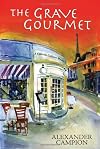
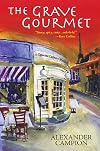
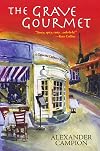
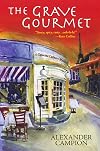
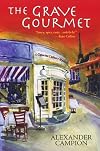
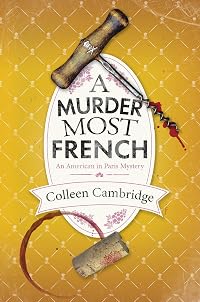
From the cover art and cover copy I was expecting a cozier sort of police procedural with a foodie bent, which is why I picked up the book in the first place. Well, there is a police procedural type thing going on, and there is foodie stuff, but they did not play well together in creating a satisfying narrative. Rather it felt that the novel show more lurched and jerked from one narrative line to the other with very little to connect them apart from overlapping characters (and the victim being found in the walk-in cooler of a French restaurant).
French words are sprinkled haphazardly throughout the novel, but instead of helping to set the tone they were mostly just annoying to have to puzzle through. On top of the seemingly random French sat a plethora of "author words" (more obscure words that basically show the author knows how to use a thesaurus, chosen without regard to characters and tone of the story) alongside a hefty dollop of casual profanity/vulgarity.
I was invested enough in the story to want to know how things ended, but when we do find out who stuffed the victim into the walk-in cooler of the fancy French restaurant we are told in probably the most boring way possible, and the culprit and motive feel practically random. There was no real foreshadowing, no information trail for the reader to follow. Poirot and Holmes may be able to get away with being the smartest person in the room and revealing the train of thought they used to solve the mystery; looking back on their stories you can see the clues laid out for the reader to pick up on. Capucine uses off-page information to "cleverly" pull everything together, and it just falls flat.
I did learn some things about French cuisine while reading this novel, but the main thing I learned is that I doubt I will pick up any more books by this author. show less
From the cover art and cover copy I was expecting a cozier sort of police procedural with a foodie bent, which is why I picked up the book in the first place. Well, there is a police procedural type thing going on, and there is foodie stuff, but they did not play well together in creating a satisfying narrative. Rather it felt that the novel show more lurched and jerked from one narrative line to the other with very little to connect them apart from overlapping characters (and the victim being found in the walk-in cooler of a French restaurant).
French words are sprinkled haphazardly throughout the novel, but instead of helping to set the tone they were mostly just annoying to have to puzzle through. On top of the seemingly random French sat a plethora of "author words" (more obscure words that basically show the author knows how to use a thesaurus, chosen without regard to characters and tone of the story) alongside a hefty dollop of casual profanity/vulgarity.
I was invested enough in the story to want to know how things ended, but when we do find out who stuffed the victim into the walk-in cooler of the fancy French restaurant we are told in probably the most boring way possible, and the culprit and motive feel practically random. There was no real foreshadowing, no information trail for the reader to follow. Poirot and Holmes may be able to get away with being the smartest person in the room and revealing the train of thought they used to solve the mystery; looking back on their stories you can see the clues laid out for the reader to pick up on. Capucine uses off-page information to "cleverly" pull everything together, and it just falls flat.
I did learn some things about French cuisine while reading this novel, but the main thing I learned is that I doubt I will pick up any more books by this author. show less
Capucine is a desk lieutenant for the police in Paris, but she's anxious to hit the streets where the action is. Her husband is a food critic. As she seeks a transfer, an opportunity for which she is qualified presents itself. A man has been found dead in the food cooler of a high-end restaurant. She and the team she got from a vacationing officer set out to investigate. I hated this book, and I'm not quite sure why I finished it except to see if the author might pull it off in the end. It was flat from start to finish and the mid-section was absolutely the worst. The author seemed to be confused about his genre. It had elements of a cozier police procedural as well as elements of a thriller. It simply did not work. As much as I love show more foodie mysteries, this is one series I won't be continuing. show less
First, let me add here that although there are no recipes included in the book itself they can be found on the Author’s website under recipes.
Now, onto the book itself. If you are looking for serious crime novel set in Paris, this may not be the one for you. Although it is a crime novel, and it is set in Paris it is more a light-hearted look at the Police Judicaire, and the homicide division.
The main protagonist is a very chic, very French woman, married to a food critic. She is moneyed, over-privileged, beautiful and a little bit lost in the soup when it comes to investigating murder. For any reader that has spent more than a 2 week vacation in Paris, they will recognize her as one of the women that walks the Champs-Élysées; well show more dressed, elegant and knowing eyes will be upon her as she walks by. For some readers this may be off putting, but in this character her self-assurance and feeling of privilege are what add humour to this story. Having spent some time in Paris, I found her attitude and bearing to be more stereotypical than an accurate description of Parisian women, but it wasn’t this that made me feel no connection with her, it was more her constant preening and admiration of herself that kept me from fully liking her. Her Husband, I felt, was almost as if had been written by a different hand; he was personable, funny and spent a great deal of time in the kitchen. He had a total understanding of the way his wife thought and reacted to certain situations, and was always on hand to return her to their version of the real world.
From the descriptions of the locales in and around Paris, it is apparent that the Author has spent a great deal of time living there, and partaking of all that French cuisine and vineyards have to offer as the book is filled with plenty of intriguing information about this aspect of French life. Unfortunately all the great locales and haute cuisine covered it the book does not make this any more than a mediocre police procedural, even though it is woven skilfully into a basic plot.
I didn’t dislike this novel, but then again I didn’t love it; it was fun and just OK and, based on this I find it highly unlikely that I would read anymore books by this Author. I would recommend it to anyone that is looking for a light read with a twist.
Originally reviewed on: http://catesbooknuthut.com/2013/10/21/review-the-grave-gourmet-capucine-culinary...
This work is licensed under a Creative Commons Attribution-NonCommercial-NoDerivs 3.0 Unported License. show less
Now, onto the book itself. If you are looking for serious crime novel set in Paris, this may not be the one for you. Although it is a crime novel, and it is set in Paris it is more a light-hearted look at the Police Judicaire, and the homicide division.
The main protagonist is a very chic, very French woman, married to a food critic. She is moneyed, over-privileged, beautiful and a little bit lost in the soup when it comes to investigating murder. For any reader that has spent more than a 2 week vacation in Paris, they will recognize her as one of the women that walks the Champs-Élysées; well show more dressed, elegant and knowing eyes will be upon her as she walks by. For some readers this may be off putting, but in this character her self-assurance and feeling of privilege are what add humour to this story. Having spent some time in Paris, I found her attitude and bearing to be more stereotypical than an accurate description of Parisian women, but it wasn’t this that made me feel no connection with her, it was more her constant preening and admiration of herself that kept me from fully liking her. Her Husband, I felt, was almost as if had been written by a different hand; he was personable, funny and spent a great deal of time in the kitchen. He had a total understanding of the way his wife thought and reacted to certain situations, and was always on hand to return her to their version of the real world.
From the descriptions of the locales in and around Paris, it is apparent that the Author has spent a great deal of time living there, and partaking of all that French cuisine and vineyards have to offer as the book is filled with plenty of intriguing information about this aspect of French life. Unfortunately all the great locales and haute cuisine covered it the book does not make this any more than a mediocre police procedural, even though it is woven skilfully into a basic plot.
I didn’t dislike this novel, but then again I didn’t love it; it was fun and just OK and, based on this I find it highly unlikely that I would read anymore books by this Author. I would recommend it to anyone that is looking for a light read with a twist.
Originally reviewed on: http://catesbooknuthut.com/2013/10/21/review-the-grave-gourmet-capucine-culinary...
This work is licensed under a Creative Commons Attribution-NonCommercial-NoDerivs 3.0 Unported License. show less
First, let me add here that although there are no recipes included in the book itself they can be found on the Author’s website under recipes.
Now, onto the book itself. If you are looking for serious crime novel set in Paris, this may not be the one for you. Although it is a crime novel, and it is set in Paris it is more a light-hearted look at the Police Judicaire, and the homicide division.
The main protagonist is a very chic, very French woman, married to a food critic. She is moneyed, over-privileged, beautiful and a little bit lost in the soup when it comes to investigating murder. For any reader that has spent more than a 2 week vacation in Paris, they will recognize her as one of the women that walks the Champs-Élysées; well show more dressed, elegant and knowing eyes will be upon her as she walks by. For some readers this may be off putting, but in this character her self-assurance and feeling of privilege are what add humour to this story. Having spent some time in Paris, I found her attitude and bearing to be more stereotypical than an accurate description of Parisian women, but it wasn’t this that made me feel no connection with her, it was more her constant preening and admiration of herself that kept me from fully liking her. Her Husband, I felt, was almost as if had been written by a different hand; he was personable, funny and spent a great deal of time in the kitchen. He had a total understanding of the way his wife thought and reacted to certain situations, and was always on hand to return her to their version of the real world.
From the descriptions of the locales in and around Paris, it is apparent that the Author has spent a great deal of time living there, and partaking of all that French cuisine and vineyards have to offer as the book is filled with plenty of intriguing information about this aspect of French life. Unfortunately all the great locales and haute cuisine covered it the book does not make this any more than a mediocre police procedural, even though it is woven skilfully into a basic plot.
I didn’t dislike this novel, but then again I didn’t love it; it was fun and just OK and, based on this I find it highly unlikely that I would read anymore books by this Author. I would recommend it to anyone that is looking for a light read with a twist.
Originally reviewed on: http://catesbooknuthut.com/2013/10/21/review-the-grave-gourmet-capucine-culinary...
This work is licensed under a Creative Commons Attribution-NonCommercial-NoDerivs 3.0 Unported License. show less
Now, onto the book itself. If you are looking for serious crime novel set in Paris, this may not be the one for you. Although it is a crime novel, and it is set in Paris it is more a light-hearted look at the Police Judicaire, and the homicide division.
The main protagonist is a very chic, very French woman, married to a food critic. She is moneyed, over-privileged, beautiful and a little bit lost in the soup when it comes to investigating murder. For any reader that has spent more than a 2 week vacation in Paris, they will recognize her as one of the women that walks the Champs-Élysées; well show more dressed, elegant and knowing eyes will be upon her as she walks by. For some readers this may be off putting, but in this character her self-assurance and feeling of privilege are what add humour to this story. Having spent some time in Paris, I found her attitude and bearing to be more stereotypical than an accurate description of Parisian women, but it wasn’t this that made me feel no connection with her, it was more her constant preening and admiration of herself that kept me from fully liking her. Her Husband, I felt, was almost as if had been written by a different hand; he was personable, funny and spent a great deal of time in the kitchen. He had a total understanding of the way his wife thought and reacted to certain situations, and was always on hand to return her to their version of the real world.
From the descriptions of the locales in and around Paris, it is apparent that the Author has spent a great deal of time living there, and partaking of all that French cuisine and vineyards have to offer as the book is filled with plenty of intriguing information about this aspect of French life. Unfortunately all the great locales and haute cuisine covered it the book does not make this any more than a mediocre police procedural, even though it is woven skilfully into a basic plot.
I didn’t dislike this novel, but then again I didn’t love it; it was fun and just OK and, based on this I find it highly unlikely that I would read anymore books by this Author. I would recommend it to anyone that is looking for a light read with a twist.
Originally reviewed on: http://catesbooknuthut.com/2013/10/21/review-the-grave-gourmet-capucine-culinary...
This work is licensed under a Creative Commons Attribution-NonCommercial-NoDerivs 3.0 Unported License. show less
Subtitled A Capucine Culinary Mystery, obviously this is the debut of a series which is set in Paris. The protagonist is 28 year old Lt Capucine Le Tellier, who works for the police, the Police Judiciare (PJ). Her husband Alexandre is a food/restaurant critic for an unspecified paper. When the book opens, Ca;pucine is fuming at her job in the fraud section of the PJ. She longs to be assigned to La Crim, the homicide division, but is doing such a good job in her current position that she can’t get out, no matter how many strings she pulls (and as the daughter of a very well-off family, she has connections). But suddenly the body of the President of Renault is found in a walk-in freezer in Diapason, a Michelin 3-star restaurant, and show more while it does appear to be a case of food poisoning, there is no one available to take the case. Capucine gets her big chance.
This is a light-weight, light-hearted, amusing yet satisfying entry into the police procedural genre. For those of us who love our food, there is plenty of intriguing information about French haute cuisine--and French wines. Campion is an American who spent 35 years in Paris, becoming a restaurant critic, so he speaks with an insider’s knowledge. It’s all woven well into a more or less standard plot, complete with a little international espionage thrown in, and it all works.
This is a fun book, and I’m looking forward to the next in the series. show less
This is a light-weight, light-hearted, amusing yet satisfying entry into the police procedural genre. For those of us who love our food, there is plenty of intriguing information about French haute cuisine--and French wines. Campion is an American who spent 35 years in Paris, becoming a restaurant critic, so he speaks with an insider’s knowledge. It’s all woven well into a more or less standard plot, complete with a little international espionage thrown in, and it all works.
This is a fun book, and I’m looking forward to the next in the series. show less
An enjoyable read . . . if you are not looking for suspense, intrigue, action or any of the other elements found in detective/mystery stories. This is a story about a young woman, Inspector/Lieutenant Capucine Le Tellier, solving the crime of the murder of the president/director general of Renault, whose body was discovered in a prestigious restaurant in Paris, France. Capucine Le Tellier works within and around the labyrinth of the regulations and the politics of the French police, and successfully determines the motive and identifies the killer.
Even though the plot is clear and the writing itself is coherent, the overall crafting of the story results in awkward and sparse character development and pacing which doesn't seem to show more correspond with specific scenes and events, both of which preclude a sense of suspense or even actual caring about the outcome. For example, I knew about Capucine Le Tellier's past and present work and family situations and what some of her thoughts were, yet I could not identify with her nor even have any opinion about her as a detective or as a person. When Campion revealed how the murder came about it was anti-climactic, without a preceding climax.
I said that this was an enjoyable read primarily because of aspects which had little to do with the crime itself. Throughout the narrative of the investigation, Campion, who had been a food critic for many years in France, interjects many descriptions of French cuisine and provides some interesting gastronomical and historical details regarding particular restaurants and dishes, such as the endangered Ortolan bird, "held to be the epitome of French cuisine." These descriptions contributed to the "enjoyable" aspect of this book.
Campion also displays an excellent command of the English language. However, he used a lot (about 50) of unusual words which are rarely used in speaking and only occasionally in writing. At times this proved annoying to pause from reading in order to look up the meaning of words such as Pantagruelian, melismatic, rogation, phatic, gibbosity, biffing. On the other hand, it was also educating.
Overall, this author's first attempt at fiction writing is a mix of good ideas with beginner's skill. show less
Even though the plot is clear and the writing itself is coherent, the overall crafting of the story results in awkward and sparse character development and pacing which doesn't seem to show more correspond with specific scenes and events, both of which preclude a sense of suspense or even actual caring about the outcome. For example, I knew about Capucine Le Tellier's past and present work and family situations and what some of her thoughts were, yet I could not identify with her nor even have any opinion about her as a detective or as a person. When Campion revealed how the murder came about it was anti-climactic, without a preceding climax.
I said that this was an enjoyable read primarily because of aspects which had little to do with the crime itself. Throughout the narrative of the investigation, Campion, who had been a food critic for many years in France, interjects many descriptions of French cuisine and provides some interesting gastronomical and historical details regarding particular restaurants and dishes, such as the endangered Ortolan bird, "held to be the epitome of French cuisine." These descriptions contributed to the "enjoyable" aspect of this book.
Campion also displays an excellent command of the English language. However, he used a lot (about 50) of unusual words which are rarely used in speaking and only occasionally in writing. At times this proved annoying to pause from reading in order to look up the meaning of words such as Pantagruelian, melismatic, rogation, phatic, gibbosity, biffing. On the other hand, it was also educating.
Overall, this author's first attempt at fiction writing is a mix of good ideas with beginner's skill. show less
I'm really not certain about this one. It just didn't catch my attention. Capuchine is likely quite delightful but she didn't seem so to me. There was a suitable amount of backstory dropped throughout the course of the book but she still just seemed a bit lightweight for my liking.
Towards the beginning of the book she was running around in confusion and then when the murderer was uncovered she was saying that she had an idea all along.
Maybe it was that things just 'jumped' too much (not in time but some of the transitions between events). This will likely make it onto my 'reread' pile eventually so I can give it a second chance.
Towards the beginning of the book she was running around in confusion and then when the murderer was uncovered she was saying that she had an idea all along.
Maybe it was that things just 'jumped' too much (not in time but some of the transitions between events). This will likely make it onto my 'reread' pile eventually so I can give it a second chance.
Members
- Recently Added By
Lists

Favorite Series
238 works; 94 members

Books Read in 2019
4,052 works; 110 members
Author Information

5 Works 343 Members
Series

Common Knowledge
- Canonical title
- The Grave Gourmet
- Original title
- The Grave Gourmet
- Original publication date
- 2010-06-29
- People/Characters
- Capucine LeTellier; Jean-Louis Delage; Chef Jean-Basille Labrousse; Alexandre de Huguelet
- Important places
- Paris, France
- Dedication
- The first one, of course, can only be for T., to whom I owe it all.
- First words
- Prologue: With the consummate petulance endemic to opera divas and French chefs, Jean-Basile Labrousse kicked the bag as hard as he could.
Chapter 1: Capucine Le Tellier rushed into the restaurant. - Last words
- (Click to show. Warning: May contain spoilers.)"Paris is over for me as well."
- Publisher's editor
- Biro, Martin
- Blurbers
- Collins, Kate; Haines, Carolyn; Saroyan, Aram
Classifications
Statistics
- Members
- 190
- Popularity
- 172,235
- Reviews
- 11
- Rating
- (2.41)
- Languages
- English
- Media
- Paper, Ebook
- ISBNs
- 6
- ASINs
- 4