On This Page
Description
The Quantum Bomb of 2015 changed everything. The fabric that kept the universe's different dimensions apart was torn and now, six years later, the people of earth exist in uneasy company with the inhabitants of, amongst others, the elfin, elemental, and demonic realms. Magic is real and can be even more dangerous than technology. Elves are exotic, erotic, dangerous, and really bored with the constant Lord of the Rings references. Elementals are a law unto themselves and demons are best left show more well to themselves.Special agent Lila Black used to be pretty, but now she's not so sure. Her body is more than half restless carbon and metal alloy machinery, a machine she's barely in control of. It goes into combat mode, enough weapons for a small army springing from within itself, at the merest provocation. As for her heart, well, ever since being drawn into a game by the elfin rockstar Zal (lead singer of The No Shows), who she's been assigned to protect, she's not even sure she can trust that any more either.
. show less
Tags
Recommendations

Member Reviews
Now this one is really fun. It postulates a surprisingly believable universe of us, demons, faeries, elementals and elves (and all sorts) with a hard science (of sorts) back story.
The heroine is a tough girly fantasy figure but not stupidly so. She's a bit of a lonely ladette and I suppose she's been written up for the modern twenty something rather than old salts like this reviewer. But she seems real enough and characterisation is good.
Be prepared for some genuinely raunchy sex scenes (find out how elves make out with humans) and a bit of violence so this is not for the kids - but worth a try. I'll certainly be reading the next in the series. Recommended.
The heroine is a tough girly fantasy figure but not stupidly so. She's a bit of a lonely ladette and I suppose she's been written up for the modern twenty something rather than old salts like this reviewer. But she seems real enough and characterisation is good.
Be prepared for some genuinely raunchy sex scenes (find out how elves make out with humans) and a bit of violence so this is not for the kids - but worth a try. I'll certainly be reading the next in the series. Recommended.
I found this book at the library, and thought I would give it a try. Considering the genre, I was expecting a light on plot, heavy on romance and was expecting to give up half way through. I was pleasantly surprised.
Lila Black lives in a world that has collided with others in an accident called the Quantum Bomb. This brought into contact elves, fairies, demons, and even a world of death to the previous alone and un-magical human. Lila was seriously hurt during a trip to the elf world. To save her, the government repaired her with a curious mix of machinery, magic, and technology, turning her into half machine, half human, and utterly alone. When she gets assigned to protect Zal, Elf rock star hated by his own people, she takes a trip show more to the elfworld learns a bit about herself, finds love, and takes a few steps into the world of magic.
Over all it was a well written book. A few slow spots, some bits and pieces glossed over. I still don't understand why Earth's name was changed. The author has managed to take a stereotype elf and turn it into something else, even if the language seemed right out of Tolkien. show less
Lila Black lives in a world that has collided with others in an accident called the Quantum Bomb. This brought into contact elves, fairies, demons, and even a world of death to the previous alone and un-magical human. Lila was seriously hurt during a trip to the elf world. To save her, the government repaired her with a curious mix of machinery, magic, and technology, turning her into half machine, half human, and utterly alone. When she gets assigned to protect Zal, Elf rock star hated by his own people, she takes a trip show more to the elfworld learns a bit about herself, finds love, and takes a few steps into the world of magic.
Over all it was a well written book. A few slow spots, some bits and pieces glossed over. I still don't understand why Earth's name was changed. The author has managed to take a stereotype elf and turn it into something else, even if the language seemed right out of Tolkien. show less
Review courtesy of All Things Urban Fantasy:
www.allthingsurbanfantasy.blogspot.com
KEEPING IT REAL was reminiscent of The Lord of the Rings, ON THE ROAD, and DO ANDROIDS DREAM OF ELECTRIC SHEEP? all rolled into one, though the way these elements came together is unlike anything I’ve ever read before. Magical and lyric and lovely, this book sweeps from page to page like breathing, wrapping you in the world building so completely it is both foreign and utterly encompassing. Like learning a language through immersion, the music of what you read carries you along until the meaning emerges, and even now I’m still trying to put together the pieces into a greater whole.
This immersion style affects both world building and characters. Both show more Lila and Zal are presented as inscrutable and larger than life, but as events unfold their secrets start to dribble out on to the page. Not that this makes them any more predictable, nor their happily-ever-after even remotely certain, but the romance aspects of KEEPING IT REAL were the raft that kept me afloat in this complex story. There were definitely parts of the story where losing sight of Lila and Zal had my attention wandering from the book, but never to the point where I lost the thread of the plot. The world building in KEEPING IT REAL is fascinating, and despite an opening primer called “Common Knowledge”, much of what Robson teaches readers comes on the fly, woven into the action of the story. I particularly enjoyed how drastically Lila’s perception of elves changes over the course of the novel, either her growing understanding of elves’ formal, stilted speech or her complicated relationship with the elf who’s torture was the reason Lila had lost so much of herself.
Like classic fantasy and science fiction, KEEPING IT REAL is not light reading in and of itself, and it’s the start of a series that promises to be a serious (if rewarding) time investment. Despite my five bats, I still recommend readers check out the excerpt linked above before buying, the style of KEEPING IT REAL is very different from the usual Urban Fantasy fare (to the point where I don’t think that genre label really applies). Dole this book out to yourself when you’re willing to be immersed and swept away and you won’t be disappointed.
Sexual Content: Sex scenes and references to sex. show less
www.allthingsurbanfantasy.blogspot.com
KEEPING IT REAL was reminiscent of The Lord of the Rings, ON THE ROAD, and DO ANDROIDS DREAM OF ELECTRIC SHEEP? all rolled into one, though the way these elements came together is unlike anything I’ve ever read before. Magical and lyric and lovely, this book sweeps from page to page like breathing, wrapping you in the world building so completely it is both foreign and utterly encompassing. Like learning a language through immersion, the music of what you read carries you along until the meaning emerges, and even now I’m still trying to put together the pieces into a greater whole.
This immersion style affects both world building and characters. Both show more Lila and Zal are presented as inscrutable and larger than life, but as events unfold their secrets start to dribble out on to the page. Not that this makes them any more predictable, nor their happily-ever-after even remotely certain, but the romance aspects of KEEPING IT REAL were the raft that kept me afloat in this complex story. There were definitely parts of the story where losing sight of Lila and Zal had my attention wandering from the book, but never to the point where I lost the thread of the plot. The world building in KEEPING IT REAL is fascinating, and despite an opening primer called “Common Knowledge”, much of what Robson teaches readers comes on the fly, woven into the action of the story. I particularly enjoyed how drastically Lila’s perception of elves changes over the course of the novel, either her growing understanding of elves’ formal, stilted speech or her complicated relationship with the elf who’s torture was the reason Lila had lost so much of herself.
Like classic fantasy and science fiction, KEEPING IT REAL is not light reading in and of itself, and it’s the start of a series that promises to be a serious (if rewarding) time investment. Despite my five bats, I still recommend readers check out the excerpt linked above before buying, the style of KEEPING IT REAL is very different from the usual Urban Fantasy fare (to the point where I don’t think that genre label really applies). Dole this book out to yourself when you’re willing to be immersed and swept away and you won’t be disappointed.
Sexual Content: Sex scenes and references to sex. show less
Diese und weitere Rezensionen findet ihr auf meinem Blog Anima Libri - Buchseele
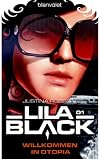
Ui, dieses Buch sieht ja erstmal rundrum irgendwie recht trashig aus :D Aufgegabelt habe ich es… äh… vor Minimum sieben/acht Jahren bei einer dieser Mängelexemplaraktionen und dann ist es – wie das halt so geht – im Regal verschwunden und auch bei diversen Umzügen irgendwo untergegangen. Jetzt aber, jetzt habe ich es wieder entdeckt! Und das genau zum richtigen Zeitpunkt! Denn das vor zehn Jahren geschriebene, bzw. vor neun Jahren erstmals veröffentlichte Werk von Justina Robson hat als Ausgangspunkt ein Ereignis im, wie sollte es anders sein, Jahre 2015!
Denn in der Welt von Lila Black explodiert 2015 eine texanische Forschungseinrichtung und show more plötzlich ist die Magie Wirklichkeit und unsere Welt voller Elfen, Dämonen und anderen Wesen. Und mitten drin eben Lila Black, ein Cyborg. Die Erzählung ihrer Geschichte fängt sechs Jahre nach der verheerenden Explosion an und liest sich, wie ein anderer Rezensent so schön geschrieben hat, ein bisschen wie Popcornkino in Buchform: humorvoll und actiongeladen und gleichzeitig auch romantisch und hier und da ein wenig knisternd.
Es ist also auch inhaltlich ungefähr so trashig, wie es von draußen aussieht ;) ABER es ist dabei auch wahnsinnig unterhaltsam, hat mich von der ersten bis zur letzten Seite an gefesselt und konnte mich schlicht und einfach begeistern. Protagonistin Lila Black war mir sofort sympathisch, Justina Robsons Schreibstil konnte mich überzeugen, vor allem war es aber der durch und durch gelungene Genre-Mix, der mich von „Lila Black: Willkommen in Otopia“ überzeugt hat.
Diese und weitere Rezensionen findet ihr auf meinem Blog Anima Libri - Buchseele
Denn Justina Robson zeigt hier gekonnt, was dabei herauskommen kann, wenn man Urban Fantasy und Science Fiction mixt, dabei bewusst mit Klischees spielt, auf Witz und Aberwitz setzt und aus solchen längst bekannten Komponenten ein gelungenes neues Ganzes schafft. Meiner Meinung nach macht genau das „Lila Black: Willkommen in Otopia“ von Justina Robson so lesenswert und ich denke, genau das macht es auch zu so einer ganz oder gar nicht Angelegenheit, denn entweder einem gefällt, was die Autorin aus dieser Geschichte gemacht hat, oder man empfindet es als langweiligen Abklatsch.
Für mich war „Lila Black: Willkommen in Otopia“ von Justina Robson ein echtes Highlight, ich hatte tierischen Spaß an der Geschichte und hatte das Buch innerhalb eines Tages durch. Schade nur, dass es in Deutschland gar nicht mehr verlegt wird… Ich werde trotzdem schauen, dass ich den zweiten Teil noch auf Deutsch auftreibe und den Rest dann wohl auf Englisch lesen. Von mir jedenfalls gibt es eine dicke, fette Empfehlung ;) show less
Ui, dieses Buch sieht ja erstmal rundrum irgendwie recht trashig aus :D Aufgegabelt habe ich es… äh… vor Minimum sieben/acht Jahren bei einer dieser Mängelexemplaraktionen und dann ist es – wie das halt so geht – im Regal verschwunden und auch bei diversen Umzügen irgendwo untergegangen. Jetzt aber, jetzt habe ich es wieder entdeckt! Und das genau zum richtigen Zeitpunkt! Denn das vor zehn Jahren geschriebene, bzw. vor neun Jahren erstmals veröffentlichte Werk von Justina Robson hat als Ausgangspunkt ein Ereignis im, wie sollte es anders sein, Jahre 2015!
Denn in der Welt von Lila Black explodiert 2015 eine texanische Forschungseinrichtung und show more plötzlich ist die Magie Wirklichkeit und unsere Welt voller Elfen, Dämonen und anderen Wesen. Und mitten drin eben Lila Black, ein Cyborg. Die Erzählung ihrer Geschichte fängt sechs Jahre nach der verheerenden Explosion an und liest sich, wie ein anderer Rezensent so schön geschrieben hat, ein bisschen wie Popcornkino in Buchform: humorvoll und actiongeladen und gleichzeitig auch romantisch und hier und da ein wenig knisternd.
Es ist also auch inhaltlich ungefähr so trashig, wie es von draußen aussieht ;) ABER es ist dabei auch wahnsinnig unterhaltsam, hat mich von der ersten bis zur letzten Seite an gefesselt und konnte mich schlicht und einfach begeistern. Protagonistin Lila Black war mir sofort sympathisch, Justina Robsons Schreibstil konnte mich überzeugen, vor allem war es aber der durch und durch gelungene Genre-Mix, der mich von „Lila Black: Willkommen in Otopia“ überzeugt hat.
Diese und weitere Rezensionen findet ihr auf meinem Blog Anima Libri - Buchseele
Denn Justina Robson zeigt hier gekonnt, was dabei herauskommen kann, wenn man Urban Fantasy und Science Fiction mixt, dabei bewusst mit Klischees spielt, auf Witz und Aberwitz setzt und aus solchen längst bekannten Komponenten ein gelungenes neues Ganzes schafft. Meiner Meinung nach macht genau das „Lila Black: Willkommen in Otopia“ von Justina Robson so lesenswert und ich denke, genau das macht es auch zu so einer ganz oder gar nicht Angelegenheit, denn entweder einem gefällt, was die Autorin aus dieser Geschichte gemacht hat, oder man empfindet es als langweiligen Abklatsch.
Für mich war „Lila Black: Willkommen in Otopia“ von Justina Robson ein echtes Highlight, ich hatte tierischen Spaß an der Geschichte und hatte das Buch innerhalb eines Tages durch. Schade nur, dass es in Deutschland gar nicht mehr verlegt wird… Ich werde trotzdem schauen, dass ich den zweiten Teil noch auf Deutsch auftreibe und den Rest dann wohl auf Englisch lesen. Von mir jedenfalls gibt es eine dicke, fette Empfehlung ;) show less
First of all, the writing style reminded me strongly of Lilith Saintcrow because it pushed the heroine constantly to the limits of her endurance. More than once I wondered how Lila will come out of the impossible situations she was getting into... and she did come out swinging, although not without heavy repercussions.
Lila was a fascinating woman, broken, empty, cold, feeling worthless because after being tortured and damaged beyond repair as a human being she was turned into a cyborg, a perfect multi billion machine which is constantly poked and probed and experimented with. No wonder the woman felt sub-human and unworthy of reconnection with her old life.
Her first real life task is to guard a famous rock-star elf Zal who keeps show more receiving death threats from other elves. The human intelligence service suspects that Zal who always was a rebel is supposed to fulfil some sort of elven prophecy, and elven community which wants to separate itself from the rest of the worlds tries to stop it from happening by eliminating Zal.
Zal and Lila accidentally start a Game when they first see each other. Game is something that can happen with all the otherworlders, it's like a magical power that catches us making promises or refusing to do something or making a deal and forces us to adhere to the stakes until the Game is played out. It's complicated ad intricate like everything else in this book :)
Actually, expect to be constantly puzzled and awed by the depth of world-building and meticulous details in the series. Sometimes I was thinking "no way it could get more complicated", and sure as hell I would turn the page and find out something else that would change my perception of the world.
This is the only drawback of the series, sometimes it feels too much and you start developing a headache trying to cope with the onslaught of the information, otherwise it's action driven and rich multi faceted story, a rare mix of sci-fi and fantasy, which strongly reminded me of popular animated series Final Fantasy.
Recommended with reservations. show less
Lila was a fascinating woman, broken, empty, cold, feeling worthless because after being tortured and damaged beyond repair as a human being she was turned into a cyborg, a perfect multi billion machine which is constantly poked and probed and experimented with. No wonder the woman felt sub-human and unworthy of reconnection with her old life.
Her first real life task is to guard a famous rock-star elf Zal who keeps show more receiving death threats from other elves. The human intelligence service suspects that Zal who always was a rebel is supposed to fulfil some sort of elven prophecy, and elven community which wants to separate itself from the rest of the worlds tries to stop it from happening by eliminating Zal.
Zal and Lila accidentally start a Game when they first see each other. Game is something that can happen with all the otherworlders, it's like a magical power that catches us making promises or refusing to do something or making a deal and forces us to adhere to the stakes until the Game is played out. It's complicated ad intricate like everything else in this book :)
Actually, expect to be constantly puzzled and awed by the depth of world-building and meticulous details in the series. Sometimes I was thinking "no way it could get more complicated", and sure as hell I would turn the page and find out something else that would change my perception of the world.
This is the only drawback of the series, sometimes it feels too much and you start developing a headache trying to cope with the onslaught of the information, otherwise it's action driven and rich multi faceted story, a rare mix of sci-fi and fantasy, which strongly reminded me of popular animated series Final Fantasy.
Recommended with reservations. show less
Justina Robson has written several intricate, cutting edge novels. This is not one of them. This is a R-rated YA adventure tale. I read the first fifty pages and almost gave up. I really did not need another story about a damaged, whiny young adult. But after the whining is over, there actually is an interesting story about what would happen if there was an Event that opened the doors between Earth (now called Otopia), Fairy, Elven Lands, Demonia, and other mythical places.
Lila Black is a former low level diplomat/spy damaged by Elves to such an extent that the only way to save her is to replace half her body with battle hardened cyborg structure and weapons. She is hired to protect an Elf turned part Demon from retribution by other show more elves. He is the lead singer of the rock band, so there are quite a few musical references. Her job leads her back to the Elven Lands where she joins forces with the Elf that damaged her in the first place and other Elves who might or might not be part of a revolution against the ruling Elvish leader.
People die, some at her hands, but in the end her Elf/Demon lover is saved and a structure is in place for more novels set in the same universe. show less
Lila Black is a former low level diplomat/spy damaged by Elves to such an extent that the only way to save her is to replace half her body with battle hardened cyborg structure and weapons. She is hired to protect an Elf turned part Demon from retribution by other show more elves. He is the lead singer of the rock band, so there are quite a few musical references. Her job leads her back to the Elven Lands where she joins forces with the Elf that damaged her in the first place and other Elves who might or might not be part of a revolution against the ruling Elvish leader.
People die, some at her hands, but in the end her Elf/Demon lover is saved and a structure is in place for more novels set in the same universe. show less
(Reprinted from the Chicago Center for Literature and Photography [cclapcenter.com]. I am the original author of this essay, as well as the owner of CCLaP; it is not being reprinted here illegally.)
So once again, it's time for me to pen a single essay concerning an entire series of genre books; because once again I'm tackling a combination of back-titles and a new title from our good friends at genre publisher Pyr, who earlier this year sent me an entire giant box full of cool-looking books merely because I asked them to. And in this case it's the latest three books by our old friend Justina Robson, whose classic artificial-intelligence primer Silver Screen really blew me away when I read it earlier this year (yep, it was yet another show more book in this big box from Pyr), and made me realize why she's considered by many to be one of the real shining lights of the so-called "British New Wave" of science-fiction authors in the early 2000s. But this time, though, she delivers something completely different: not a serious mindbending drama about "hard science" conceits, but rather a racy, darkly humorous grand fantasy saga, with not exactly a lot of actual sex thrown in but certainly a lot of sexiness. The name of the entire storyline is the "Quantum Gravity" series (consisting so far of 2006's Keeping It Real, 2007's Selling Out and 2008's Going Under*, with more maybe to come); and I have to admit that they quite literally charmed the socks right off me, despite me having barely any tolerance whatsoever for the fantasy genre in general.
Ah, but this isn't any ol' fantasy series, see; it's written in the style of a newish subgenre called "urban fantasy," a type of story that barely existed at all before the mid-1980s or so, but has suddenly exploded in recent years in a way rarely seen in the world of the speculative arts. And to understand what urban fantasy is, one needs simply to recall its two most popular examples, the Harry Potter series and Buffy the Vampire Slayer; they are stories where for one reason or another, tropes from the world of traditional fantasy (wizards, magic, trolls, ogres, etc etc etc) somehow exist within a contemporary, science-based society. And it's this and this alone that makes urban fantasy even tolerable to me at all; because to tell the truth, the thing about traditional Tolkien-style fantasy that drives me the craziest is all the flowery Medieval crap that comes along with it, all the endless stilted dialogue and pre-tech warfare and traipsing around the woods by candlelight and the rest. (And in an attempt to pre-emptively stop a rash of angry letters from coming in, let me make it perfectly clear that I don't think there's anything wrong with liking traditional fantasy, simply that it's not my particular cup of tea, just as there are lots of people who can't stand the silly neo-Victorian finery of the "steampunk" genre that I so adore.)
But this being Robson, of course, she's come up with her own jarringly unique twist on things, which in good "world-building" style starts with a seemingly simple conceit behind it all, which then gets more and more complex the further you examine it: namely, that throughout the entire course of human history, there have actually been half a dozen inhabited planets scattered across the universe, each of the others filled with the kinds of creatures we've only known before in fairytales (a world full of elves, a world full of demons, a world full of fairies, etc), and that a recent mysterious cataclysmic event (known as the "quantum bomb") ripped open an interdimensional gateway between the worlds for the first time. And right away, in fact, Robson does with this concept one of the most brilliant things I've ever seen a genre author do, which is to answer all the immediate questions one would have concerning such a quantum bomb with a simple, "Nobody knows;" that in fact one of the many side-effects of this bomb was to collectively wipe humanity's memories of life before the bomb (much less what caused the bomb itself), to such a profound extent that Earth isn't even called 'Earth' anymore but rather 'Otopia,' to signify The World That Is from The World That Was.
What these books mostly concern themselves with, then, are the ways these various races deal with each other, now that they can all travel freely between the worlds, as well as humanity's efforts to learn as much about these other planets as possible; and Robson does this in a way that harkens all the way back to Silver Screen, by presenting us with the delightfully neurotic main protagonist Lila Black, who is half big-hipped indie-rock nerd queen and half mechanized warrior robot, the result of a freak one-time bionics experiment by what is now Otopia's interdimensional spy agency, after a previous assignment that went bad and left her nearly dead. This is actually one of the things Robson is known for, in fact, addressing female body-image issues through the filter of some pretty astounding hard-science concepts; and just like the self-conscious big-hipped female heroine of Silver Screen, so too is Lila's preoccupation with her looks a running theme to the Quantum Gravity series, and so too does Lila spend quite a bit of time pondering how her semi-hideous half-mecha body** comes across to others, and how it does and does not affect her love life among all the various creatures out there in the interdimensional universe.
Because did I not mention that the whole thing is a raunchy sex comedy too? The whole thing is a raunchy sex comedy too; although please be aware that in the best tradition of erotic tales written by women for women, there are precious few actual graphic sex scenes in the series (only one or two per book), with Robson otherwise pulling off the Austenesque feat of filling the books with sexual tension and grown-up humor instead. And again, she does this in these sometimes infinitely clever ways, that rely heavily on the fantastical elements of the universe she's created; take for example her entire concept of 'aether,' which in the world of "Quantum Gravity" is supposed to be a sort of form of naturally existing energy that humans simply never knew about before the bomb, a sorta free form of electricity and an internet-style wireless communications network all at once, or perhaps it's better thought of like "The Force" from the original Star Wars trilogy, a kind of living energy that binds together all living creatures and affects their actions in subtle ways. It's a substance that can be detected and manipulated by the elves, who turn out to be the second most talked-about race in these books after humans -- creatures who look almost exactly like the elves from Lord of the Rings, only much more pissy if you can believe it -- and in fact the elves of Robson's universe actually have two different bodies, a physical one and then an aetheric one that sorta hangs around and inside and outside the corporeal one, and which actually feeds off this mysterious aether and can do things with it that seem to humans like old-skool magic (and by 'old-skool' I mean King Arthur).
So, to cite one of Robson's ribald examples of what can be done with such a conceit, consider this: that if you've ever in the past felt a sorta strange thing in the air whenever you've partaken in an intense flirtation with someone, something that feels almost like a kind of charged electricity between the two of you that moment, according to Robson you're not just making things up -- this really is the aether of the universe affecting the two of you, working in these incomprehensible ways to make that repartee a much more passionate, dangerous thing than it would otherwise be. And this is just one example I'm talking about, with Robson actually throwing in dozens of them throughout this plainly-written, easy-to-follow series -- from the demon etiquette of attending cocktail parties bathed in the blood of your enemies, to the druglike high humans get while having sex on one of the aether-heavy non-Otopian planets, and a whole lot more smart and kinda dirty stuff to boot. And this of course is to say nothing of the hundreds of nonsexual details about this universe that Robson layers in throughout, which in classic Tolkienian style exists not just of a series of exotic mythologies but even numerous mythologies within these mythologies; there is not just one race of elves but two, for example, with a complicated Indian-style caste system that defines both their relationship and their society in general, plus with an extinct third race whose genocide is a closely-guarded elvish secret, which may or may not have something to do with the quantum bomb that humans can no longer remember anything about. Now multiply this by a hundred, and you're starting to get an idea of the myriad of levels Robson builds into this mesmerizing, addictive universe.
It's hard for me to overstate just how great I found this series, and how like Silver Screen I found it an almost perfect example of its particular genre done right; or in other words, if you're the type of person who only reads one fantasy book a year, you could do a lot worse than to make it Keeping It Real (book 1 of this series) for 2009. An endlessly inventive hybrid of technology and magic, tied together with an internal logic as rock-solid as genre fiction gets, this is sure to be a much-loved treat to any speculative fan out there. The entire series gets a big recommendation from me today.
Out of 10: 9.3, or 10 for existing fantasy fans
*All that said, let me confess that I did not read book 3 of the series, Going Under; because no matter how well-written of fantasy books these are, they're still fantasy books, and I found my natural distaste for fantasy simply rearing its ugly head again by the time I was halfway through book 2. This however still does not change my opinion expressed above, that even non-fans of the genre should tackle at least the first book in the series, and that those who like fantasy in general even a little would be wise to gobble up the entire thing.
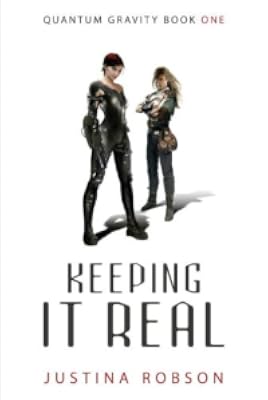
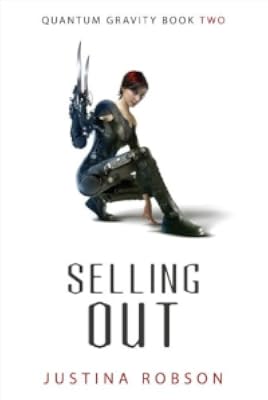
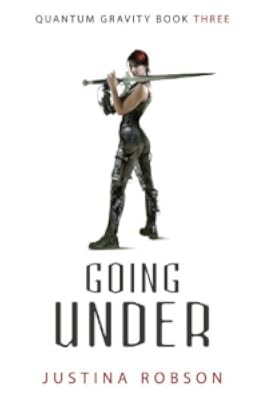
**And speaking of body-image issues, please be aware that the Lila described in the books looks profoundly different than the admittedly kickass illustrations by Larry Rostant gracing the covers of all these titles, and that this is a big part of where her neurosis comes in; how ironic, in fact, that one of her ongoing anxieties is over not looking like one of those Neil-Gaiman-reading pixie hipster cosplay hotties she's exactly depicted as on the books' covers. show less
So once again, it's time for me to pen a single essay concerning an entire series of genre books; because once again I'm tackling a combination of back-titles and a new title from our good friends at genre publisher Pyr, who earlier this year sent me an entire giant box full of cool-looking books merely because I asked them to. And in this case it's the latest three books by our old friend Justina Robson, whose classic artificial-intelligence primer Silver Screen really blew me away when I read it earlier this year (yep, it was yet another show more book in this big box from Pyr), and made me realize why she's considered by many to be one of the real shining lights of the so-called "British New Wave" of science-fiction authors in the early 2000s. But this time, though, she delivers something completely different: not a serious mindbending drama about "hard science" conceits, but rather a racy, darkly humorous grand fantasy saga, with not exactly a lot of actual sex thrown in but certainly a lot of sexiness. The name of the entire storyline is the "Quantum Gravity" series (consisting so far of 2006's Keeping It Real, 2007's Selling Out and 2008's Going Under*, with more maybe to come); and I have to admit that they quite literally charmed the socks right off me, despite me having barely any tolerance whatsoever for the fantasy genre in general.
Ah, but this isn't any ol' fantasy series, see; it's written in the style of a newish subgenre called "urban fantasy," a type of story that barely existed at all before the mid-1980s or so, but has suddenly exploded in recent years in a way rarely seen in the world of the speculative arts. And to understand what urban fantasy is, one needs simply to recall its two most popular examples, the Harry Potter series and Buffy the Vampire Slayer; they are stories where for one reason or another, tropes from the world of traditional fantasy (wizards, magic, trolls, ogres, etc etc etc) somehow exist within a contemporary, science-based society. And it's this and this alone that makes urban fantasy even tolerable to me at all; because to tell the truth, the thing about traditional Tolkien-style fantasy that drives me the craziest is all the flowery Medieval crap that comes along with it, all the endless stilted dialogue and pre-tech warfare and traipsing around the woods by candlelight and the rest. (And in an attempt to pre-emptively stop a rash of angry letters from coming in, let me make it perfectly clear that I don't think there's anything wrong with liking traditional fantasy, simply that it's not my particular cup of tea, just as there are lots of people who can't stand the silly neo-Victorian finery of the "steampunk" genre that I so adore.)
But this being Robson, of course, she's come up with her own jarringly unique twist on things, which in good "world-building" style starts with a seemingly simple conceit behind it all, which then gets more and more complex the further you examine it: namely, that throughout the entire course of human history, there have actually been half a dozen inhabited planets scattered across the universe, each of the others filled with the kinds of creatures we've only known before in fairytales (a world full of elves, a world full of demons, a world full of fairies, etc), and that a recent mysterious cataclysmic event (known as the "quantum bomb") ripped open an interdimensional gateway between the worlds for the first time. And right away, in fact, Robson does with this concept one of the most brilliant things I've ever seen a genre author do, which is to answer all the immediate questions one would have concerning such a quantum bomb with a simple, "Nobody knows;" that in fact one of the many side-effects of this bomb was to collectively wipe humanity's memories of life before the bomb (much less what caused the bomb itself), to such a profound extent that Earth isn't even called 'Earth' anymore but rather 'Otopia,' to signify The World That Is from The World That Was.
What these books mostly concern themselves with, then, are the ways these various races deal with each other, now that they can all travel freely between the worlds, as well as humanity's efforts to learn as much about these other planets as possible; and Robson does this in a way that harkens all the way back to Silver Screen, by presenting us with the delightfully neurotic main protagonist Lila Black, who is half big-hipped indie-rock nerd queen and half mechanized warrior robot, the result of a freak one-time bionics experiment by what is now Otopia's interdimensional spy agency, after a previous assignment that went bad and left her nearly dead. This is actually one of the things Robson is known for, in fact, addressing female body-image issues through the filter of some pretty astounding hard-science concepts; and just like the self-conscious big-hipped female heroine of Silver Screen, so too is Lila's preoccupation with her looks a running theme to the Quantum Gravity series, and so too does Lila spend quite a bit of time pondering how her semi-hideous half-mecha body** comes across to others, and how it does and does not affect her love life among all the various creatures out there in the interdimensional universe.
Because did I not mention that the whole thing is a raunchy sex comedy too? The whole thing is a raunchy sex comedy too; although please be aware that in the best tradition of erotic tales written by women for women, there are precious few actual graphic sex scenes in the series (only one or two per book), with Robson otherwise pulling off the Austenesque feat of filling the books with sexual tension and grown-up humor instead. And again, she does this in these sometimes infinitely clever ways, that rely heavily on the fantastical elements of the universe she's created; take for example her entire concept of 'aether,' which in the world of "Quantum Gravity" is supposed to be a sort of form of naturally existing energy that humans simply never knew about before the bomb, a sorta free form of electricity and an internet-style wireless communications network all at once, or perhaps it's better thought of like "The Force" from the original Star Wars trilogy, a kind of living energy that binds together all living creatures and affects their actions in subtle ways. It's a substance that can be detected and manipulated by the elves, who turn out to be the second most talked-about race in these books after humans -- creatures who look almost exactly like the elves from Lord of the Rings, only much more pissy if you can believe it -- and in fact the elves of Robson's universe actually have two different bodies, a physical one and then an aetheric one that sorta hangs around and inside and outside the corporeal one, and which actually feeds off this mysterious aether and can do things with it that seem to humans like old-skool magic (and by 'old-skool' I mean King Arthur).
So, to cite one of Robson's ribald examples of what can be done with such a conceit, consider this: that if you've ever in the past felt a sorta strange thing in the air whenever you've partaken in an intense flirtation with someone, something that feels almost like a kind of charged electricity between the two of you that moment, according to Robson you're not just making things up -- this really is the aether of the universe affecting the two of you, working in these incomprehensible ways to make that repartee a much more passionate, dangerous thing than it would otherwise be. And this is just one example I'm talking about, with Robson actually throwing in dozens of them throughout this plainly-written, easy-to-follow series -- from the demon etiquette of attending cocktail parties bathed in the blood of your enemies, to the druglike high humans get while having sex on one of the aether-heavy non-Otopian planets, and a whole lot more smart and kinda dirty stuff to boot. And this of course is to say nothing of the hundreds of nonsexual details about this universe that Robson layers in throughout, which in classic Tolkienian style exists not just of a series of exotic mythologies but even numerous mythologies within these mythologies; there is not just one race of elves but two, for example, with a complicated Indian-style caste system that defines both their relationship and their society in general, plus with an extinct third race whose genocide is a closely-guarded elvish secret, which may or may not have something to do with the quantum bomb that humans can no longer remember anything about. Now multiply this by a hundred, and you're starting to get an idea of the myriad of levels Robson builds into this mesmerizing, addictive universe.
It's hard for me to overstate just how great I found this series, and how like Silver Screen I found it an almost perfect example of its particular genre done right; or in other words, if you're the type of person who only reads one fantasy book a year, you could do a lot worse than to make it Keeping It Real (book 1 of this series) for 2009. An endlessly inventive hybrid of technology and magic, tied together with an internal logic as rock-solid as genre fiction gets, this is sure to be a much-loved treat to any speculative fan out there. The entire series gets a big recommendation from me today.
Out of 10: 9.3, or 10 for existing fantasy fans
*All that said, let me confess that I did not read book 3 of the series, Going Under; because no matter how well-written of fantasy books these are, they're still fantasy books, and I found my natural distaste for fantasy simply rearing its ugly head again by the time I was halfway through book 2. This however still does not change my opinion expressed above, that even non-fans of the genre should tackle at least the first book in the series, and that those who like fantasy in general even a little would be wise to gobble up the entire thing.
**And speaking of body-image issues, please be aware that the Lila described in the books looks profoundly different than the admittedly kickass illustrations by Larry Rostant gracing the covers of all these titles, and that this is a big part of where her neurosis comes in; how ironic, in fact, that one of her ongoing anxieties is over not looking like one of those Neil-Gaiman-reading pixie hipster cosplay hotties she's exactly depicted as on the books' covers. show less
Members
- Recently Added By
Lists

Favorite Science Fiction by Women Authors
754 works; 203 members

Best Science Fiction Novels
816 works; 426 members
Author Information

31+ Works 3,813 Members
Justina Robson was a teacher (2002,2006) at the Arvon Foundation in the UK.
Series

Common Knowledge
- Canonical title
- Keeping It Real
- Original title
- Keeping It Real
- Original publication date
- 2006-05-18
- People/Characters
- Lila Black; Azrazal Ahriman Suhanathir Taliesetra; Sorcha Azlaria Ahriman; Poppy; Malachi; Sarasilien (show all 15); Dr Williams; Jolene Duchovnik; Jelly Sakamoto; Buddy Ritz; Dar Dusisannen; Ilyatath Voynassi Taliesetra; Arië Taliesetra; Astar Taliesetra; Gwilaren Amanita
- First words
- In the days that followed the explosion at the Superconducting Supercollider in Texas, at some unknown point in the Lost Year, 2015, scientists discovered a hole in the fabric of spacetime over the blast site.
- Last words
- (Click to show. Warning: May contain spoilers.)She kissed him gently on the mouth, exploring all the angles until they both found one that gave the perfect fit.
- Publisher's editor
- Anders, Lou
Classifications
Statistics
- Members
- 897
- Popularity
- 30,208
- Reviews
- 36
- Rating
- (3.47)
- Languages
- 7 — Czech, Dutch, English, Finnish, French, German, Italian
- Media
- Paper, Audiobook, Ebook
- ISBNs
- 15
- ASINs
- 6