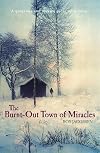
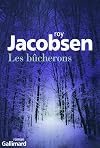
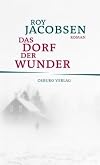
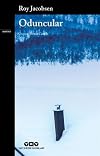
The Burnt-Out Town of Miracles
by Roy Jacobsen
On This Page
Description
Set in Finland in 1939, this is the story of one man who remains in his home town when everyone else has fled, burning down their houses in their wake, before the invading Russians arrive. Timo remains behind because he can't imagine life anywhere else, doing anything else besides felling the trees near his home. This is a novel about belonging - a tale of powerful and forbidden friendships forged during a war, of unexpected bravery and astonishing survival instincts. The Burnt-Out Town of show more Miracles is not a novel about war, but about the lives of ordinary people dragged into war, each of whom only wants to find the path back home. Roy Jacobsen uses the dramatic natural landscape of light and darkness, fire-blazing heat and life-robbing cold to spectacular effect. show lessTags
Recommendations

















Member Recommendations
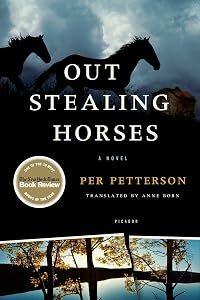
rrmmff2000 Different period of history, but both set in rural Finland dealing with the unstated in families and communities. Both finely crafted short books.
Member Reviews
Possibly my ‘discovery’ of the year: a Norwegian writer with a past as a street tug, who has an historical interest and an original voice.
In this historical novel set in famous Suomussalmi, Finland, during the winter war, he gives us a unique character: Timo, the lumberjack. Timo is not considered 100% sane by his fellow villagers, and not only because he wants to stay while the rest is being evacuated by the Finnish army. The houses are set to be burnt: the Finnish army wants to put up a stern defence against the invading army. Timo runs around and prevents some houses from being burnt (also the house where he stays in the basement – the village store).
Once the Russians have arrived it is winter, and hence they need wood. Timo show more slowly but surely ingratiates himself with his new masters, especially with a dubious character who acts as an interpreter. Skilfully chopping wood, he gains the Russians’ trust, and gets to command a lumberjack battalion of odd balls: two gypsy Jewish brothers, a reluctant teacher who tells funny stories, a smallish tug, a Karelian Russian peasant who speaks a smattering of Finnish. Gradually his fellow group members come to respect Timo, who takes them into one of the few houses that is still functional.
Meanwhile the battle turns from bad to worse for the Russians (the famous motti battle, though we do not hear anything about this in the novel). The Russians start to suspect Timo of informing his fellow countrymen. And so Timo gets tortured. Yet Timo is stoic and the Russians still need wood, and so he is put back to work. Conditions worsen. When they go out logging they normally get protection by a detail of Russian soldiers, but no longer. It gets colder. They escape, along the lake Northward trying to reach Timo’s farm. They run out of food, it gets really cold, they hide in a boatshed: realizing they will freeze to death, Timo in his desperation sets the shed alight, while they all lie outside it in a circle. This is how they are discovered and caught by a Finnish detail.
Now the situation reverses – people flock back into town, Timo is a suspect again – how did he survive those Russians? Slowly Timo resumes his work, this time for Finnish troops and returning inhabitants. Also his old Russian gang returns to him, as POWs, to resume their work as lumberjacks. Towards the end of the war, they decide to escape and go in hiding in Timo’s farm, which is still in tact. Then they spread out, each going his own way. Timo and Heikko (a Finnish mate he gained when the Finnish troops returned) jointly construct a new farm for Heikko on the border. During the continuation war, this farm once more gets abandoned and burnt down by Russians. After the war they rebuild a farm for Heikko.
Timo slowly resumes his old life as Wood cutter for Suomussalmi citizens, while the town rediscovers itself as the heroic place where the Fins beat the Russians. Timo is reticent to explain what really happened, despite the fact that he is the only Fin who can relate what happened behind the Russian lines. He occasionally hears about the fate of one of his fellow lumberjacks. Suomussalmi basks in the attention it receives post-war as battle site.
What makes the story exceptional, besides the sparse, crystal clear style of writing, is the mundane resilience and everyday survival strategies applied by Timo, the village madman, who manages to pull through everything. His kind of heroic survival does not befit any patriotic war story that likes to paint a black-and-white perspective. Rather Timo and his gang pass through the grey zones, that will be rendered oblivious after the war. Remarkable war novel. show less
In this historical novel set in famous Suomussalmi, Finland, during the winter war, he gives us a unique character: Timo, the lumberjack. Timo is not considered 100% sane by his fellow villagers, and not only because he wants to stay while the rest is being evacuated by the Finnish army. The houses are set to be burnt: the Finnish army wants to put up a stern defence against the invading army. Timo runs around and prevents some houses from being burnt (also the house where he stays in the basement – the village store).
Once the Russians have arrived it is winter, and hence they need wood. Timo show more slowly but surely ingratiates himself with his new masters, especially with a dubious character who acts as an interpreter. Skilfully chopping wood, he gains the Russians’ trust, and gets to command a lumberjack battalion of odd balls: two gypsy Jewish brothers, a reluctant teacher who tells funny stories, a smallish tug, a Karelian Russian peasant who speaks a smattering of Finnish. Gradually his fellow group members come to respect Timo, who takes them into one of the few houses that is still functional.
Meanwhile the battle turns from bad to worse for the Russians (the famous motti battle, though we do not hear anything about this in the novel). The Russians start to suspect Timo of informing his fellow countrymen. And so Timo gets tortured. Yet Timo is stoic and the Russians still need wood, and so he is put back to work. Conditions worsen. When they go out logging they normally get protection by a detail of Russian soldiers, but no longer. It gets colder. They escape, along the lake Northward trying to reach Timo’s farm. They run out of food, it gets really cold, they hide in a boatshed: realizing they will freeze to death, Timo in his desperation sets the shed alight, while they all lie outside it in a circle. This is how they are discovered and caught by a Finnish detail.
Now the situation reverses – people flock back into town, Timo is a suspect again – how did he survive those Russians? Slowly Timo resumes his work, this time for Finnish troops and returning inhabitants. Also his old Russian gang returns to him, as POWs, to resume their work as lumberjacks. Towards the end of the war, they decide to escape and go in hiding in Timo’s farm, which is still in tact. Then they spread out, each going his own way. Timo and Heikko (a Finnish mate he gained when the Finnish troops returned) jointly construct a new farm for Heikko on the border. During the continuation war, this farm once more gets abandoned and burnt down by Russians. After the war they rebuild a farm for Heikko.
Timo slowly resumes his old life as Wood cutter for Suomussalmi citizens, while the town rediscovers itself as the heroic place where the Fins beat the Russians. Timo is reticent to explain what really happened, despite the fact that he is the only Fin who can relate what happened behind the Russian lines. He occasionally hears about the fate of one of his fellow lumberjacks. Suomussalmi basks in the attention it receives post-war as battle site.
What makes the story exceptional, besides the sparse, crystal clear style of writing, is the mundane resilience and everyday survival strategies applied by Timo, the village madman, who manages to pull through everything. His kind of heroic survival does not befit any patriotic war story that likes to paint a black-and-white perspective. Rather Timo and his gang pass through the grey zones, that will be rendered oblivious after the war. Remarkable war novel. show less
The cover of this book states 'As chosen by The Times Book Group'. This is a group I have never heard of, but I'm guessing they don't sit around discussing Jackie Collins novels. Not surprisingly this was more cerebral than entertaining. It follows Timo, a Finnish woodsman who refuses to leave his town as it is evacuated and burned ahead of the Russian invasion of 1939. The book looks at Timo's isolation as he is treated with suspicion by the invading forces, and later by his own countrymen.
The text is frequently repetitive, and a little distant, a great deal less sensationalist than other 'war is hell' -type books. At one point, for example, a group of characters sit down to rest on what they think is a snow-covered log, but which show more turns out to be a stack of corpses, but this episode was narrated with a feeling of detachment.
The prose is heavy with meaning, and whilst I found the story informative I am sure I didn't discern all of its subtleties. Definitely a task for the Times Book Group! show less
The text is frequently repetitive, and a little distant, a great deal less sensationalist than other 'war is hell' -type books. At one point, for example, a group of characters sit down to rest on what they think is a snow-covered log, but which show more turns out to be a stack of corpses, but this episode was narrated with a feeling of detachment.
The prose is heavy with meaning, and whilst I found the story informative I am sure I didn't discern all of its subtleties. Definitely a task for the Times Book Group! show less
I read this during the coldest December on record in the UK. The narrator is 'the village idiot', but of course he isn't. Trees, forests, frost and COLD, all enveloping the insane chaos inside a war that most of the world doesn't even know took place. At first I thought i wouldn't like it, but it captivated me, right through to the heart-rending, but possibly redemptive, ending. Odd to learn that the author is not Finnish, but Norwegian.
On a most unseasonably hot Easter weekend I read this novel about the Winter War in a Finnish town with people freezing to death and snow and ice and frostbite and survival. It is very stark and strangely moving, this tale of men.
I quite liked this book! I'd been reading and reading about the Winter War and the battle of Suomussalmi in non-fiction books, but it was nice to find a story that put a human face to all the facts. I found it to be an engaging read, though it didn't quite grab me as much as I'd hoped (maybe it has to do with the translation; I'm not sure) Overall, a good book. I'd recommend it to anyone interested in the Winter War.
A Norwegian writer. Takes place at the begnning of the war, in 1939, in Finland. One simple man, Timo, refuses to flee his town from the advances of the Russian army.
A Norwegian writer. Takes place at the begnning of the war, in 1939, in Finland. One simple man, Timo, refuses to flee his town from the advances of the Russian army.
Members
- Recently Added By
Published Reviews
«... alle har rett til å være helt i eget liv, selv de halte og de blinde, selv de med et krater i fjeset, om så med litt hjelp, hvor hadde vi vært uten litt hjelp?»
Da finnene brenner og rømmer den lille byen Suomussalmi før russerne kommer i november 1939, blir én mann igjen. Det er vedhoggeren Timmo Vatanen. Timmo har bodd i Suomussalmi hele livet og kan ikke være noen andre show more steder. Og én mann må forsvare ruinene og gjøre de riktige tingene, om det er aldri så umulig, og om det ikke skaffer ham noen venner verken her eller der.
Hoggerne er en gripende eksistensiell roman om sju menn som må dra lasset sammen, om ved og varme og et par damesko, og om ordet «takk». show less
Da finnene brenner og rømmer den lille byen Suomussalmi før russerne kommer i november 1939, blir én mann igjen. Det er vedhoggeren Timmo Vatanen. Timmo har bodd i Suomussalmi hele livet og kan ikke være noen andre show more steder. Og én mann må forsvare ruinene og gjøre de riktige tingene, om det er aldri så umulig, og om det ikke skaffer ham noen venner verken her eller der.
Hoggerne er en gripende eksistensiell roman om sju menn som må dra lasset sammen, om ved og varme og et par damesko, og om ordet «takk». show less
added by kirstenlund
Lists

International IMPAC Dublin Literary Award
179 works; 6 members
Author Information

31+ Works 2,309 Members
Some Editions
Awards and Honors
Awards
Series
Belongs to Publisher Series
Common Knowledge
- Canonical title
- The Burnt-Out Town of Miracles
- Original title
- Hoggerne
- Original publication date
- 2005
- Important places
- Finland
- Important events
- World War II (1939 | 1945); Winter War (1939-11-30 | 1940-03-13)
- Epigraph*
- « Prenez n'importe quelle assemblée. Si Socrate et Charles XII de Suède étaient présents tous les deux, si Socrate disait : “Suivez-moi pour une leçon de philosophie”, et si Charles XII disait : “Suivez-moi, nous ... (show all)allons détrôner le tsar”, tout le monde aurait honte de suivre Socrate. »
JAMES BOSWELL, Vie de Samuel Johnson - Dedication
- To my children - Maria and Daniel
- First words
- Suomussalmi was set ablaze on 7 December, after all four thousand inhabitants had been evacuated, except for me, I was born here, and lived here all my life and couldn't imagine living anywhere else - so when I became aware o... (show all)f a figure in a white uniform telling me I had to get out, I dug my heels in the snow and refused to budge.
- Original language*
- Noors
*Some information comes from Common Knowledge in other languages. Click "Edit" for more information.
Classifications
- Genres
- Fiction and Literature, General Fiction, Historical Fiction
- DDC/MDS
- 839.82374 — Literature & rhetoric German & related literatures Other Germanic literatures Danish and Norwegian literatures Norwegian literature Norwegian Bokmål fiction 1900–2000 Late 20th century 1945–2000
- LCC
- PT8951.2 .A385 .B87 — Language and Literature German, Dutch and Scandinavian literatures Norwegian literature Individual authors or works 1961-2000
- BISAC
Statistics
- Members
- 209
- Popularity
- 156,771
- Reviews
- 10
- Rating
- (3.55)
- Languages
- 9 — Danish, Dutch, English, French, German, Norwegian (Bokmål), Norwegian, Swedish, Turkish
- Media
- Paper, Ebook
- ISBNs
- 21
- ASINs
- 2