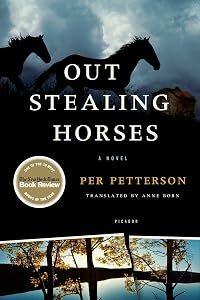
Out Stealing Horses
by Per Petterson
On This Page
Description
Sixty-seven-year-old Trond Sander lives secluded in a far corner of Norway. Casting his mind back to 1948, he recalls a horse stealing prank with his best friend that turned tragic and changed his life forever.Tags
Recommendations

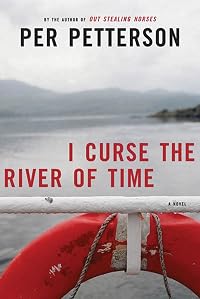
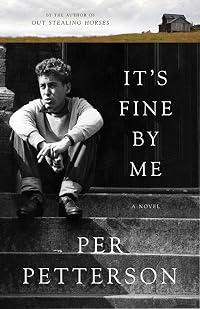








Member Recommendations



Member Reviews
I love novels that quietly leave their mark, telling their story as a whisper and slowly drawing you in like a boat returning from sea. That’s how I would describe Per Petterson’s beautiful story, Out Stealing Horses. Quite simply, it was a breath-taking and enthralling book.
Trond Sander moved to a cabin in the Norwegian countryside after retiring. His plan was to escape the ghosts of his past and live a simple, rural life. He managed to avoid his nearest neighbor until a fateful night when the neighbor’s dog ran off. When Trond left his home to assist, he recognized his neighbor as Lars, the brother of a childhood friend. This chance encounter was a domino effect, forcing Trond to relive painful memories of his past and deal with show more the ghosts he was trying to escape.
The story then moved to Trond’s time as a 15-year-old-boy, staying with his father in a cabin one summer. This was Trond’s “coming of age” – a time when he learned about friendship and his father’s past during World War II. Many secrets were revealed, and Trond left that summer cabin a changed person.
Petterson’s characterization was spot on, his plot steady and his language beautiful. Translated from Norwegian, Out Stealing Horses rolled off its pages like a song. Throughout many tragedies, Petterson mixed in some humor and touching moments. It was a well-balanced tale.
Who would I recommend Out Stealing Horses to? Anyone who loves great literary fiction – it’s a book not to miss. show less
Trond Sander moved to a cabin in the Norwegian countryside after retiring. His plan was to escape the ghosts of his past and live a simple, rural life. He managed to avoid his nearest neighbor until a fateful night when the neighbor’s dog ran off. When Trond left his home to assist, he recognized his neighbor as Lars, the brother of a childhood friend. This chance encounter was a domino effect, forcing Trond to relive painful memories of his past and deal with show more the ghosts he was trying to escape.
The story then moved to Trond’s time as a 15-year-old-boy, staying with his father in a cabin one summer. This was Trond’s “coming of age” – a time when he learned about friendship and his father’s past during World War II. Many secrets were revealed, and Trond left that summer cabin a changed person.
Petterson’s characterization was spot on, his plot steady and his language beautiful. Translated from Norwegian, Out Stealing Horses rolled off its pages like a song. Throughout many tragedies, Petterson mixed in some humor and touching moments. It was a well-balanced tale.
Who would I recommend Out Stealing Horses to? Anyone who loves great literary fiction – it’s a book not to miss. show less
3
In the case of Out Stealing Horses, third time really is the charm. I have checked out and returned unread this novel two other times over the past year, and it wasn't until this week that time and tide and the phase of the moon aligned to make it the right time to read this book (other peckish bibliophiles understand what I mean when I say this, sometimes a book just has to feel right). I'm not sure what I expected when I started this book, and whatever it was it isn't what I got, not that that is a bad thing. Out Stealing Horses is the lyrically sparse and amazingly crafted coming to terms of seventy year old Trond, after a period of self-imposed exile and solitude following the loss of his wife and sister in a very short period of show more time. Petterson deftly weaves past and present in a series of memories and flashbacks brought on by the discovery that his neighbor is actually someone from his past, specifically from the summer he was fifteen that would forever change him. Honestly, many times, this is where a book like this loses me, however Trond is made of sterner stuff than many other protagonists I have come across. For where he is flawed and scarred and even broken, underneath lies a heart that still connects with his family, his new friend and the life which he now leads. In coming to terms with the most difficult moments of his life, he chose "when it would hurt" and in choosing, becomes a man of whom I can say, it was an honor to spend an afternoon. Recommended. show less
It was a slow, satisfying read; a story without much plot but with a lot of depth. A man who has recently lost his wife takes himself to a relatively remote farm in Norway similar to the one where he spent summers as a boy, determined to live alone and be as independent as possible for the time left to him. As he prepares for his first winter his mind takes him back to scenes from his childhood, and we learn very gradually about the days he spent with his father in the woods, the life lessons, both intended and not so, that he learned back then. It's a very Scandinavian sort of story, with cold and loneliness almost palpable, and the theme of abandonment threads through both past and present. There is loss, but there is also acceptance. show more It could have been depressing, but it struck me as simply realistic. Recommended. show less
Out Stealing Horses jumps from the present to the past, and in these jumps we get to see the boy Trond was and the man he has become. Trond, in his youth, was referred to as the “boy with the golden trousers”. He considered himself lucky, but when he begins to falter in his old age he wonders where the golden boy has gone. He maintains that he has been lucky, but he soon learns that luck is just a state of mind-for better and for worse. Trond recently moved to an isolated Norwegian village to escape people and live out his last days. Yet, this is impossible. Trond’s past comes rushing back to him, and not even his luck can help him escape the summer of 1948-the summer that changed his life, the summer he has been trying his whole show more life to avoid.
Out Stealing Horses teaches Trond, and all of us, that we cannot remain stagnant despite our best efforts. Memories and people from his past keep rushing in, and eventually Trond feels their absence. He cannot have become the man he is without these people and these thoughts.
The summer of 1948, right after WWII, was a tragic one for Trond, but he lived his life without allowing it to affect him. Only in his old age, alone with his thoughts, can the events work their magic. Trond will still “decide for (himself) when it will hurt”, but he now he is acknowledging the hurt’s existence and its impact on his life.
The mystery of the novel, and its other lessons, unfold like magic. Petterson is a master storyteller. show less
Out Stealing Horses teaches Trond, and all of us, that we cannot remain stagnant despite our best efforts. Memories and people from his past keep rushing in, and eventually Trond feels their absence. He cannot have become the man he is without these people and these thoughts.
The summer of 1948, right after WWII, was a tragic one for Trond, but he lived his life without allowing it to affect him. Only in his old age, alone with his thoughts, can the events work their magic. Trond will still “decide for (himself) when it will hurt”, but he now he is acknowledging the hurt’s existence and its impact on his life.
The mystery of the novel, and its other lessons, unfold like magic. Petterson is a master storyteller. show less
In 1999, sixty-seven-year-old protagonist Trond lives with his dog in a small house near a river in rural eastern Norway. He is still grieving the loss of his wife, has retired from his business in Oslo, and desires to lead a solitary life. The present story alternates with recollections of 1948, when he and his father spent the summer at a cabin near the border of Norway and Sweden. Parts of the story refer to his father’s involvement in the Norwegian resistance in WWII.
This is a contemplative novel about choices we make in life and their ramifications. It is a story about fathers and sons and coming to terms with trauma. It contains beautiful descriptions of nature. The prose is surprisingly spare for the amount of emotional show more content it conveys. There is little action, but the few action-oriented scenes are impactful. It is an introspective story of a stoic man who seems to be emulating his father without realizing it. I could sense Trond’s longing for peace, as he sifts through his memories. The resolution leaves many questions unanswered. I found it poignant and memorable. show less
This is a contemplative novel about choices we make in life and their ramifications. It is a story about fathers and sons and coming to terms with trauma. It contains beautiful descriptions of nature. The prose is surprisingly spare for the amount of emotional show more content it conveys. There is little action, but the few action-oriented scenes are impactful. It is an introspective story of a stoic man who seems to be emulating his father without realizing it. I could sense Trond’s longing for peace, as he sifts through his memories. The resolution leaves many questions unanswered. I found it poignant and memorable. show less
This is a quiet but deep book about an older man who leaves his life and family behind to retire to a cabin in the country in Norway. A chance encounter with a neighbor who he knows from his childhood brings up all sorts of memories, mainly of his father and a summer they spent together in the country during 1948 when he was a teenager.
The book meanders through Trond's memories and his current thoughts about aging and craving solitude. I thought the writing was beautifully paced and a good mix of introspective and intriguing. In this book, I liked the things that the author left unexplained or only hinted at. I think it's a book I'll be thinking about for quite a while.
The book meanders through Trond's memories and his current thoughts about aging and craving solitude. I thought the writing was beautifully paced and a good mix of introspective and intriguing. In this book, I liked the things that the author left unexplained or only hinted at. I think it's a book I'll be thinking about for quite a while.
A chance encounter causes Trond, a widower in his sixties living in near-solitude, to reflect on the pivotal summer of 1948 that began when his friend Jon invited him along to steal horses.
This quiet, contemplative book focuses on only a few characters and sort of sneaks up on you with what it's really about. The parts of the narrative present (soon before the turn of the 21st century) are told in present tense, while 1948 and other years are in past tense, which was structurally very helpful for remembering if we were with 67-year-old or 15-year-old Trond. He speaks sometimes in sentence fragments and sometimes in run-ons, much like you might imagine someone's thoughts to run on, stop and start, when he or she is alone. Trond claims he show more is lucky, and while we see glimpses of that, much of this story focuses on his profound sense of loss and coming to grips with grief and regret, all wrapped up in that one life-changing summer where he learned so much about his father and himself. show less
This quiet, contemplative book focuses on only a few characters and sort of sneaks up on you with what it's really about. The parts of the narrative present (soon before the turn of the 21st century) are told in present tense, while 1948 and other years are in past tense, which was structurally very helpful for remembering if we were with 67-year-old or 15-year-old Trond. He speaks sometimes in sentence fragments and sometimes in run-ons, much like you might imagine someone's thoughts to run on, stop and start, when he or she is alone. Trond claims he show more is lucky, and while we see glimpses of that, much of this story focuses on his profound sense of loss and coming to grips with grief and regret, all wrapped up in that one life-changing summer where he learned so much about his father and himself. show less
Members
- Recently Added By
Published Reviews
ThingScore 95
Lists

Best Contemporary Literary Fiction (Around the Last 30 Years)
388 works; 123 members

Best 21st Century Books (So Far)
670 works; 86 members

Top Five Books of 2013
1,562 works; 715 members

Recommend the 20 best books you've read in the last five years
2,168 works; 601 members
International IMPAC Dublin Literary Award
179 works; 6 members

Top Five Books of 2016
795 works; 229 members

Best Book Club Selections
26 works; 8 members

2008-2012 Notable Books for Adults
127 works; 10 members

Books about World War II
241 works; 22 members

Vote - Bookmarque's Teetering TBR Tower
33 works; 8 members

Books Read in 2015
3,299 works; 126 members

Allie's Wishlist
217 works; 2 members

Books discovered on LibraryThing
256 works; 36 members

Best Horse Stories or "Back in the Saddle Again"
82 works; 17 members

Animals in the Title
498 works; 11 members
Best Book and Movie Combos
70 works; 11 members

Books Read in 2024
4,712 works; 128 members

BBC World Book Club
265 works; 5 members

Las mejores obras literarias leídas en 2022 -- Magistrales (R. D.)
30 works; 1 member

Favorite Books in Translation
320 works; 133 members

.
184 works; 1 member

Library List - Pulitzer Adjacent
40 works; 1 member

World Book Club (BBC World Service)
212 works; 1 member

Books Featured on Readers' Review of the Diane Rehm Show
161 works; 8 members
Author Information

20+ Works 7,595 Members
Per Petterson was born in Norway on July 18, 1952. He is a trained librarian and before becoming a full-time writer, he worked as a bookstore clerk, translator and literary critic. His first work, Aske i munnen, sand i skoa (Ash in His Mouth, Sand in His Shoe), a volume of short stories, was published in 1987. His other works include These are show more Ekkoland (1989), Det er greit for meg (1992), and To Siberia (1996). He has won numerous awards including the prestigious Norwegian literary prize Brageprisen for In the Wake (2000) and the Independent Foreign Fiction Prize in the UK, the Norwegian Booksellers' Prize, and the Norwegian Critics' Award for best novel for Out Stealing Horses (2003). (Bowker Author Biography) show less
Some Editions
Awards and Honors
Awards
Distinctions
Series
Belongs to Publisher Series
Common Knowledge
- Canonical title
- Out Stealing Horses
- Original title
- Ut og stjæle hester
- Original publication date
- 2003(Norwegian) (Norwegian); 2005(English translation) (English translation); 2010 (Italian translation) (Italian translation)
- People/Characters
- Trond Sander; Jon Haug; Lars Haug; Jacob Sander
- Important events
- World War II
- Dedication*
- Für Trond T.
- First words
- Tidlig november. Klokka er ni. Kjøttmeisene smeller mot vinduet. Noen ganger faller de og blir liggende i nysnøen og kave før de kommer seg på vingene igjen. Jeg veit ikke hva jeg har som de vil ha... (show all).
Early November. It's nine o'clock. The titmice are banging against the window. - Quotations
- I listen to the news, cannot break that habit...but it no longer has the same place in my life. It does not affect my view of the world as it once did.
- Last words
- (Click to show. Warning: May contain spoilers.).....og vi bestemmer jo sjøl når det skal gjøre vondt.
...we do decide for ourselves when it will hurt. - Original language
- Norwegian
*Some information comes from Common Knowledge in other languages. Click "Edit" for more information.
Classifications
- Genres
- Fiction and Literature, General Fiction
- DDC/MDS
- 839.82374 — Literature & rhetoric German & related literatures Other Germanic literatures Danish and Norwegian literatures Norwegian literature Norwegian Bokmål fiction 1900–2000 Late 20th century 1945–2000
- LCC
- PT8951.26 .E88 .U813 — Language and Literature German, Dutch and Scandinavian literatures Norwegian literature Individual authors or works 1961-2000
- BISAC
Statistics
- Members
- 4,542
- Popularity
- 3,229
- Reviews
- 260
- Rating
- (3.91)
- Languages
- 23 — Catalan, Czech, Danish, Dutch, English, Estonian, Finnish, French, German, Italian, Lithuanian, Marathi, Norwegian (Bokmål), Norwegian, Polish, Portuguese, Romanian, Russian, Serbian, Croatian, Spanish, Swedish, Turkish
- Media
- Paper, Audiobook, Ebook
- ISBNs
- 77
- ASINs
- 26