
The Twin
by Gerbrand Bakker
On This Page
Description
When his twin brother is killed in a car accident, Helmer is obliged to give up university to take over his brother’s role on the small family farm, resigning himself to spending the rest of his days "with his head under a cow." The novel begins thirty years later with Helmer moving his invalid father upstairs out of the way, so that he can redecorate the downstairs, finally making it his own. Then Riet, the woman who had once been engaged to marry Helmer’s twin, appears and asks if her show more troubled eighteen-year-old son could come live on the farm for a while. Ostensibly a novel about the countryside, The Twin ultimately poses difficult questions about solitude and the possibility of taking life into one’s own hands. It chronicles a way of life that has resisted modernity, a world culturally apart yet laden with familiar longing. show lessTags
Recommendations
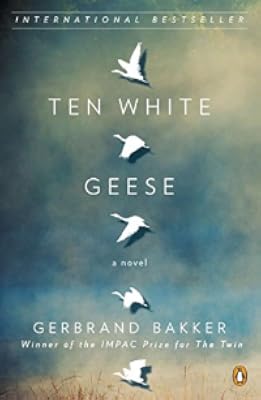
















Member Recommendations
Member Reviews
The Twin by Gerbrand Bakker Now here's a book to get to grips with.
If you are American, did you know that books written in English are translated into American? words you may not be familiar with like "telephone box", "motor car", "nappy" are translated into words you may understand. If anyone was doing this in reverse I'd be insulted if anyone thought I was not intelligent enough to either grasp or lookup a word or two.
The downside to this, apart from the implied insult, is that Americans get feed a diet of books that are not true to their original context. I had kinda always thought that the whole idea of reading was to broaden our horizons, not to have wider horizons trammelled down to our naturally parochial view point.
In short I show more thought it was to broaden our minds not have broader stuff narrowed down to our local viewpoint.
So. For anyone who is not aware that the literary world extends into non-English languages you could start here. If you do, nothing in this book will be familiar, at least until someone does an American translation. It is translated from Dutch into English but it has not been "simplified".
You will be confronted by a man's inner thoughts and feelings since his twin brother drowns. In fact you could say that water is one of the main characters in this novel. Place names are all Dutch. But don't let that bother you, it doesn't matter if the village sounds like a disease a dog may get, the drift or current of this story will soon have you in its grip and it will sweep you along.
And time is spent on several different scales depending on who is the focus. We have young old and the seasons all sharing that same timeline but at different speeds.
There are a few strange things in this book like men getting in bed together without there being any sexual context at all, like none at all. A lot is unsaid but its 'unsaidness' is louder than if it had been spoken. This book was not written for us, it was written for the Dutch.
The fact that we can read it feels more like a scent of a foreign land, not an exotic, tropical paradise but the pragmatic wetness and dryness that is so fundamental to anything to do with Holland.
A surprising ending but not a twist, more of a coming into the light in a wholly satisfying way.
I really enjoyed every moment of this book, it is both haunting and about loss and yearning.
p.s. I've just re-read this and feel I have to point at that I was not criticising Americans per se only their publishing industry :-) show less
If you are American, did you know that books written in English are translated into American? words you may not be familiar with like "telephone box", "motor car", "nappy" are translated into words you may understand. If anyone was doing this in reverse I'd be insulted if anyone thought I was not intelligent enough to either grasp or lookup a word or two.
The downside to this, apart from the implied insult, is that Americans get feed a diet of books that are not true to their original context. I had kinda always thought that the whole idea of reading was to broaden our horizons, not to have wider horizons trammelled down to our naturally parochial view point.
In short I show more thought it was to broaden our minds not have broader stuff narrowed down to our local viewpoint.
So. For anyone who is not aware that the literary world extends into non-English languages you could start here. If you do, nothing in this book will be familiar, at least until someone does an American translation. It is translated from Dutch into English but it has not been "simplified".
You will be confronted by a man's inner thoughts and feelings since his twin brother drowns. In fact you could say that water is one of the main characters in this novel. Place names are all Dutch. But don't let that bother you, it doesn't matter if the village sounds like a disease a dog may get, the drift or current of this story will soon have you in its grip and it will sweep you along.
And time is spent on several different scales depending on who is the focus. We have young old and the seasons all sharing that same timeline but at different speeds.
There are a few strange things in this book like men getting in bed together without there being any sexual context at all, like none at all. A lot is unsaid but its 'unsaidness' is louder than if it had been spoken. This book was not written for us, it was written for the Dutch.
The fact that we can read it feels more like a scent of a foreign land, not an exotic, tropical paradise but the pragmatic wetness and dryness that is so fundamental to anything to do with Holland.
A surprising ending but not a twist, more of a coming into the light in a wholly satisfying way.
I really enjoyed every moment of this book, it is both haunting and about loss and yearning.
p.s. I've just re-read this and feel I have to point at that I was not criticising Americans per se only their publishing industry :-) show less
I loved this sparsely written story of Helmut, a middle-aged man forced, by life's circumstances, into a life of farming and caring for his aging father. The writing is absolutely beautiful; both the style and the setting express a longing barely articulated by Helmut himself.
Helmut lost his twin brother to an accident when they were young men, As a result, Helmut gave up his university studies to work on the family farm. And life went on...as the story opens, Helmut is middle-aged; his mother has been deceased for several years and his father is weakening daily.
And Helmut begins to think about his life.
Wonderful.
Helmut lost his twin brother to an accident when they were young men, As a result, Helmut gave up his university studies to work on the family farm. And life went on...as the story opens, Helmut is middle-aged; his mother has been deceased for several years and his father is weakening daily.
And Helmut begins to think about his life.
Wonderful.
“Everything is different when you have a coffin in your living room”
These are the kinds of sentences that fill The Twin: subtle, understated and crackling. This beautifully written novel shines with its character depiction of Helmer, a man who has made no choices in his life other than selecting the chickens for the farm. His home, the larger farm animals, his furniture and even his work clothes were passed on: choices that belonged to others.
However, the impending death of his father leads him to finally and uncomfortably assert his own will by moving the furniture, painting, and throwing out years worth of family relics. With this new and clean space, he finds that the things he can’t get rid of become more prominent. The show more house’s newly vacated space feels hollow, a reflection of the state of his heart and mind. He’s aware of his emptiness, and it’s illustrated when he buys a map to hang as “art” for his walls. The lack of anything attractive on the walls of his house makes the single picture lost and the emptiness all the more obvious. All he can do is look at the map and memorize the places he’d like to someday visit, an urge that seems impossible with all the burdens laid upon him since his teens.
He spends his days managing the meager farm, tending carelessly to his father and reeling from the thirty year loss of his twin brother Henk. For a time he allows a wayward teen to help as a farmhand, bringing new dynamics to his empty space. The complexity of the novel isn’t simply the missing twin, that sort of story has been written countless times before. Rather, the theme is based on identity of self, not in relation to anyone else (his father or brother) but in the form of his own destiny. He appears to make no strides towards the independence he aspires to, and the contrast between his thoughts and actions creates a tension that is sometimes funny and sometimes brutal. Self-determination is an entirely unknown concept to Helmer, and throughout the novel you question if he ever can achieve it. Some could read a geo-political message in this, but I’d rather leave that out and focus on the beautiful writing and the descriptions that make you pause: in reference to an old log, “even a dead thing can be beautiful.”
A symbolism that is repeated throughout the novel is of a solitary hooded crow that stalks Helmer through the windows and around the yard, silently glaring. Since crows generally represent sadness or death, I thought it was appropriate in many ways. Yet the way Bakker concludes the story, and accounts for the crow's presence, was still an unexpected surprise. show less
These are the kinds of sentences that fill The Twin: subtle, understated and crackling. This beautifully written novel shines with its character depiction of Helmer, a man who has made no choices in his life other than selecting the chickens for the farm. His home, the larger farm animals, his furniture and even his work clothes were passed on: choices that belonged to others.
However, the impending death of his father leads him to finally and uncomfortably assert his own will by moving the furniture, painting, and throwing out years worth of family relics. With this new and clean space, he finds that the things he can’t get rid of become more prominent. The show more house’s newly vacated space feels hollow, a reflection of the state of his heart and mind. He’s aware of his emptiness, and it’s illustrated when he buys a map to hang as “art” for his walls. The lack of anything attractive on the walls of his house makes the single picture lost and the emptiness all the more obvious. All he can do is look at the map and memorize the places he’d like to someday visit, an urge that seems impossible with all the burdens laid upon him since his teens.
He spends his days managing the meager farm, tending carelessly to his father and reeling from the thirty year loss of his twin brother Henk. For a time he allows a wayward teen to help as a farmhand, bringing new dynamics to his empty space. The complexity of the novel isn’t simply the missing twin, that sort of story has been written countless times before. Rather, the theme is based on identity of self, not in relation to anyone else (his father or brother) but in the form of his own destiny. He appears to make no strides towards the independence he aspires to, and the contrast between his thoughts and actions creates a tension that is sometimes funny and sometimes brutal. Self-determination is an entirely unknown concept to Helmer, and throughout the novel you question if he ever can achieve it. Some could read a geo-political message in this, but I’d rather leave that out and focus on the beautiful writing and the descriptions that make you pause: in reference to an old log, “even a dead thing can be beautiful.”
A symbolism that is repeated throughout the novel is of a solitary hooded crow that stalks Helmer through the windows and around the yard, silently glaring. Since crows generally represent sadness or death, I thought it was appropriate in many ways. Yet the way Bakker concludes the story, and accounts for the crow's presence, was still an unexpected surprise. show less
Unlike his twin brother Henk, Helmer Wunderer could never seem to measure up in the eyes of his father. So when his brother meets and falls for a local girl, he turns to the hired hand, that his father has recently fired, for friendship and comfort and to assuage his overwhelming loneliness. Then tragedy strikes the family and Helmer’s education at the university in Amsterdam is cut short as he is forced to help run the farm. Fifty years later, the story opens with Helmer carrying his elderly, invalid father to an upstairs bedroom so that he can revamp the downstairs and finally, make this house his own. Quite unexpectedly, he receives a letter from his brother’s old flame, and after a visit she convinces him to take her eighteen show more year old son on as a farm hand. He arrives with a chip on his shoulder and very little interest in doing any actual work. But in time, his attitude changes, and therein lies the main crux of this story.
That’s what the story is about. This is what the story did. Gerbrand Bakker, through powerful storytelling, slyly draws the reader into the lives of these characters living on this rural farm in Holland. Using spare prose, he dragged me along, quite willingly, through a taut psychological narrative, filled with an underlying rage. I truly felt an incredible sense of place where I could feel the winter chill and smell the first signs of spring.
But it’s the wonderful prose that illuminates this sparse novel:
Coming home doesn’t really help. Coming home after you’ve been somewhere very different is always strange. Is that because everything at home is the way you left it? Whereas you yourself have experienced things, no matter how insignificant, and grown older, even if just by a couple of hours? I see the farm through his eyes: a wet building wet surroundings, with bare, dripping trees, frost-burnt grass, meager stalks of kale, empty fields and a light in an upstairs room. Did I turn on the light or did Father manage it by himself?” (Page 156)
A wonderful novel with the bonus at the end of assuring the reader that a long-held belief in future happiness can arrive unexpectedly even late in life. Highly recommended. show less
That’s what the story is about. This is what the story did. Gerbrand Bakker, through powerful storytelling, slyly draws the reader into the lives of these characters living on this rural farm in Holland. Using spare prose, he dragged me along, quite willingly, through a taut psychological narrative, filled with an underlying rage. I truly felt an incredible sense of place where I could feel the winter chill and smell the first signs of spring.
But it’s the wonderful prose that illuminates this sparse novel:
Coming home doesn’t really help. Coming home after you’ve been somewhere very different is always strange. Is that because everything at home is the way you left it? Whereas you yourself have experienced things, no matter how insignificant, and grown older, even if just by a couple of hours? I see the farm through his eyes: a wet building wet surroundings, with bare, dripping trees, frost-burnt grass, meager stalks of kale, empty fields and a light in an upstairs room. Did I turn on the light or did Father manage it by himself?” (Page 156)
A wonderful novel with the bonus at the end of assuring the reader that a long-held belief in future happiness can arrive unexpectedly even late in life. Highly recommended. show less
Helmer is attending school in Amsterdam and is suddenly called home, when his twin brother abruptly dies. Home is a small farm in the Dutch countryside, a life Helmer was never comfortable with.
Thirty-five years later, Helmer is still at the farm, caring for a dying father, maintaining the livestock, including a pair of precocious donkeys and leading a simple, lonely life. Things begin to change, when a teenager arrives, the son of his brother’s ex-fiance. Now in his mid-50s, Helmer finally begins to awaken.
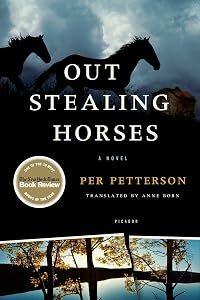
This is a languid tale, simply told, capturing the mundane lifestyle of a middle-aged man, dealing with bitter isolation and second chances. It’s reminiscent of [Out Stealing Horses], although darker in its tone and themes. This show more debut novel may not be for everyone, but I enjoyed its quiet beauty. show less
Thirty-five years later, Helmer is still at the farm, caring for a dying father, maintaining the livestock, including a pair of precocious donkeys and leading a simple, lonely life. Things begin to change, when a teenager arrives, the son of his brother’s ex-fiance. Now in his mid-50s, Helmer finally begins to awaken.
This is a languid tale, simply told, capturing the mundane lifestyle of a middle-aged man, dealing with bitter isolation and second chances. It’s reminiscent of [Out Stealing Horses], although darker in its tone and themes. This show more debut novel may not be for everyone, but I enjoyed its quiet beauty. show less
This book is unlikely to be popular. There is no action, little obvious drama, no intrigues. The atmosphere is grey, rather melancholy, dark and damp - almost soggy. The narrator is a stoic ageing dairy farmer (Helmer) who plods about the farm and lives a very narrow, restrained life - but don't let that put you off this novel. It's very good. The simple prose is quite engaging, and beneath the calm exterior there are strong emotional undercurrents. After decades of tedium as a slave to his cruel father Helmer at last starts to take control of his life and break free from his father, the farm, and the ghosts that haunt him. There’s a strong sense of place and nature, and being a donkey fanatic I just loved the important role given to show more the donkeys. A worthy winner of the Impac award. show less
I started to read this book for the most absurd reason: I was for sentimental reasons interested in the garden plants that are commonly grown in Frisia (I know, how improbable) and learning in an interview the writer is a gardener by profession and mistakenly understanding in the same interview that the place of the book was Frisia, I decided to take a look at it. I was immediately captivated by its sober language. I had never read a book written by a Dutch (this was actually another reason I wanted to read this one) and I suspect that his nationality has a lot of influence in Mr. Bakker's writing style. I found it a wonderful change to the more florid tradition of British literature that I love so much, but sometimes can be a little show more overbearing (I'll not mention all those Booker prize winners).
The book place is not Frisia indeed, but the countryside near Amsterdam, and Bakker is quite understandably tired of thinking of garden plants so he hardly ever mentions any member of the vegetable kingdom. To my surprise and delight, he does mention a lot of birds, I strongly suspect him to be a fellow bird-watcher, but these are only minor details. More importantly, this is a beautifully written book with a subtly universal story.
Superficially it tells the story of a man called Helmer, who is a farmer. He is middle-aged and has lived a very boring life, very different than the one he would have chosen to live had he had a choice. He is taking care of his father's property and literally waiting for the old man to die. Helmer had an identical twin who died when he was a young man, hence the title of the book.
Under the surface, however, it is a story about that universal experience of coming of age and growing to become full human beings that we all must face, which is the instance (or the many such instances we will go through in our lives) when we will choose (or be forced) to become what we wish to (must) become instead of the son/daughter our parents wanted or dreamed us to be, much to their chagrin, but quite often also to our own. This is a subtle and painful point that Bakker catches so well. Helmer's twin was the perfect son is father loved and for whom he had great expectations. Helmer himself oscillates between resentment and love of his brother, often himself thinking of his brother as a better version of himself. However the twin dies, and his father will have to replace him with Helmer, the son he has, not the son he wished he had.
The power of this book is the universality of this experience, in other words, we all have a twin brother who died about the time we reached adulthood and we will all have to face for many years the consequences of our twin's death and learn to overcome the natural resentment against our parents' nostalgic attitude towards their beloved dead son/daughter and their often resentful attitude towards who we have become and for some of us their inability to love us the way we are.
The beauty of "The Twin" lies in great part in the unraveling process of coming-of-age of a man at the age of fifty, because, even if we often forget it, we will go on growing and evolving all through our lives and that process that begins as we are born may have very different speeds at different times of our lives but only stops completely on that final day. With the approaching dead of his father, Helmer finds his own growth accelerating considerably. In this sense Mr. Bakker is a genius because it is truly difficult to come up with a compelling story of coming-of-age beyond the age of 20, as you'll find in the literature dedicated to such subject. This is a rare gem indeed.
To finish I would like to thank the author for having made the courageous and politically incorrect choice of writing a closeted book. I know that Mr. Bakker is an out-of-the-closet kind of man and the story of Helmer is really about the difficulty most gay men face of not having their sexuality accepted by their families. This is obvious for anyone who can read between the lines, after all Helmer's twin had a girlfriend, but Helmer only has a few "fishy" male friends, highly suspicious. However is by making this point so subtle that the book gains most of its strength (this is my way of avoiding to use the word universality again). I'm sure Bakker's bank account is at least as happy as I am about that choice, after all had the subject of the book been more explicit, not only I, but most of its reader's would have been unable to identify with it. For anyone willing to criticize this choice, I'll remind you that a gay men is 99.9...% (I'm unsure how many 9 should go here, but quite a lot I'd guess) the same as any other man, and only the prejudices of our society turn such a small detail as sexual orientation into such a big deal. After all I'm sure it shouldn't be so different to have to hear your parents regretting how you did not become a doctor as to hear them regret how you didn't marry that nice girlfriend you had in high school, if you exclude the shameful virulence homophobic attitudes can reach. show less
The book place is not Frisia indeed, but the countryside near Amsterdam, and Bakker is quite understandably tired of thinking of garden plants so he hardly ever mentions any member of the vegetable kingdom. To my surprise and delight, he does mention a lot of birds, I strongly suspect him to be a fellow bird-watcher, but these are only minor details. More importantly, this is a beautifully written book with a subtly universal story.
Superficially it tells the story of a man called Helmer, who is a farmer. He is middle-aged and has lived a very boring life, very different than the one he would have chosen to live had he had a choice. He is taking care of his father's property and literally waiting for the old man to die. Helmer had an identical twin who died when he was a young man, hence the title of the book.
Under the surface, however, it is a story about that universal experience of coming of age and growing to become full human beings that we all must face, which is the instance (or the many such instances we will go through in our lives) when we will choose (or be forced) to become what we wish to (must) become instead of the son/daughter our parents wanted or dreamed us to be, much to their chagrin, but quite often also to our own. This is a subtle and painful point that Bakker catches so well. Helmer's twin was the perfect son is father loved and for whom he had great expectations. Helmer himself oscillates between resentment and love of his brother, often himself thinking of his brother as a better version of himself. However the twin dies, and his father will have to replace him with Helmer, the son he has, not the son he wished he had.
The power of this book is the universality of this experience, in other words, we all have a twin brother who died about the time we reached adulthood and we will all have to face for many years the consequences of our twin's death and learn to overcome the natural resentment against our parents' nostalgic attitude towards their beloved dead son/daughter and their often resentful attitude towards who we have become and for some of us their inability to love us the way we are.
The beauty of "The Twin" lies in great part in the unraveling process of coming-of-age of a man at the age of fifty, because, even if we often forget it, we will go on growing and evolving all through our lives and that process that begins as we are born may have very different speeds at different times of our lives but only stops completely on that final day. With the approaching dead of his father, Helmer finds his own growth accelerating considerably. In this sense Mr. Bakker is a genius because it is truly difficult to come up with a compelling story of coming-of-age beyond the age of 20, as you'll find in the literature dedicated to such subject. This is a rare gem indeed.
To finish I would like to thank the author for having made the courageous and politically incorrect choice of writing a closeted book. I know that Mr. Bakker is an out-of-the-closet kind of man and the story of Helmer is really about the difficulty most gay men face of not having their sexuality accepted by their families. This is obvious for anyone who can read between the lines, after all Helmer's twin had a girlfriend, but Helmer only has a few "fishy" male friends, highly suspicious. However is by making this point so subtle that the book gains most of its strength (this is my way of avoiding to use the word universality again). I'm sure Bakker's bank account is at least as happy as I am about that choice, after all had the subject of the book been more explicit, not only I, but most of its reader's would have been unable to identify with it. For anyone willing to criticize this choice, I'll remind you that a gay men is 99.9...% (I'm unsure how many 9 should go here, but quite a lot I'd guess) the same as any other man, and only the prejudices of our society turn such a small detail as sexual orientation into such a big deal. After all I'm sure it shouldn't be so different to have to hear your parents regretting how you did not become a doctor as to hear them regret how you didn't marry that nice girlfriend you had in high school, if you exclude the shameful virulence homophobic attitudes can reach. show less
Members
- Recently Added By
Published Reviews
ThingScore 100
This is a novel of great brilliance and subtlety. It contains scenes of enveloping psychological force but is open-ended, its extraordinary last section suggesting that fulfilment of long-standing aspirations can arrive, unanticipated, in late middle-age. Human dramas are offset by landscape and animals feelingly delineated, and David Colmer's translation is distinguished by an exceptional show more (and crucial) ear for dialogue. show less
added by vancouverdeb
There are certain stories that both ask for and reward rereading, and not according to the Great Work of Art notion that demanding, ambitious works like Ulysses and Hamlet sustain multiple engagements over a lifetime. I mean instead that more modest, deceptively simple works tend to reveal their many smaller gems of wisdom and beauty on second, third and even 20th readings. Marilynne show more Robinson’s Gilead – her luminous novel about an old Kansas preacher’s relationship to his young son and to the changing world around them – and Ernest Hemingway’s Big Two-Hearted River – a pitch-perfect short story about a damaged young man’s effort at a restorative fishing trip in northern Michigan – come to mind.
Gerbrand Bakker’s debut novel, The Twin, while not as accomplished as either of these works, has a similar feel to it. The winner of the 2010 International IMPAC Dublin Literary Award is unapologetically slow-paced, patient in its revelations, almost ritualistic in its descriptions of quotidian things, melancholic and meditative in its narrative voice and capable, at its best moments, of bringing off remarkably moving and tense passages concerning a middle-aged Dutchman’s fraught relationship to his aged father, a relationship permanently and tragically forged in fracture by the accidental death of the Dutchman’s twin brother – the always preferred son – when they were teenagers. show less
Gerbrand Bakker’s debut novel, The Twin, while not as accomplished as either of these works, has a similar feel to it. The winner of the 2010 International IMPAC Dublin Literary Award is unapologetically slow-paced, patient in its revelations, almost ritualistic in its descriptions of quotidian things, melancholic and meditative in its narrative voice and capable, at its best moments, of bringing off remarkably moving and tense passages concerning a middle-aged Dutchman’s fraught relationship to his aged father, a relationship permanently and tragically forged in fracture by the accidental death of the Dutchman’s twin brother – the always preferred son – when they were teenagers. show less
added by vancouverdeb
But these men are so silent in the assessment of their own lives, and this is such a sad and bleak story, that no matter how delicate the touch and how subtle the undercurrents, it makes for a sad, bleak read.
added by vancouverdeb
Lists

International IMPAC Dublin Literary Award
179 works; 6 members

Powell's Indiespensable
79 works; 6 members

Books with Twins
175 works; 12 members

Books Read in 2016
4,666 works; 199 members

Death of one twin -- adult fiction
7 works; 1 member

Best of World Literature
435 works; 52 members
Author Information

30+ Works 2,047 Members
Some Editions
Awards and Honors
Awards
Series
Belongs to Publisher Series
Common Knowledge
- Canonical title
- The Twin
- Original title
- Boven is het stil
- Original publication date
- 2006 (original Dutch) (original Dutch); 2008 (English: Colmer) (English: Colmer)
- People/Characters
- Helmer van Wonderen
- Important places
- Waterland, North Holland, Netherlands; Monnickendam, North Holland, Netherlands
- Important events*
- emigratie
- First words
- I've put Father upstairs.
- Last words
- (Click to show. Warning: May contain spoilers.)I am alone.
- Blurbers
- Coetzee, J.M.; Parks, Tim; Binding, Paul; Schwartz, Lynne Sharon
- Original language
- Dutch
*Some information comes from Common Knowledge in other languages. Click "Edit" for more information.
Classifications
- Genres
- General Fiction, Fiction and Literature
- DDC/MDS
- 839.3137 — Literature & rhetoric German & related literatures Other Germanic literatures Netherlandish literatures Dutch Dutch fiction 21st Century
- LCC
- PT5882.12 .A55 .B6713 — Language and Literature German, Dutch and Scandinavian literatures Dutch literature 2001-
- BISAC
Statistics
- Members
- 1,008
- Popularity
- 25,860
- Reviews
- 78
- Rating
- (3.93)
- Languages
- 12 — Catalan, Danish, Dutch, English, Finnish, French, German, Italian, Norwegian (Bokmål), Polish, Spanish, Swedish
- Media
- Paper, Ebook
- ISBNs
- 37
- ASINs
- 10