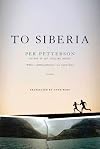
To Siberia
by Per Petterson
On This Page
Description
In the years before the Nazis arrive, two young people growing up in Danish Jutland have dreams of leaving their frigid coastal town while coping with distant parents, eccentric family members, and the cold winds. In the aftermath of their grandfather's suicide, the arrival of puberty and most tragically, the German invasion, their idyllic childhood changes forever.Tags
Recommendations































Member Recommendations

SqueakyChu Bother-sister relationships
Member Reviews
Petterson is a maestro of mood & the landscape of the north (Denmark, Sweden, Norway) lends itself well to a pervasiveness loneliness. Even the intense connection(if not for their difference in age one might suspect them of being twins) of the protagonist & her older brother Jesper can't save them from distance & the finality of separation. Set in the 1930s and 40s, before, during & just after WWII. A restrained & constrained universe of sky, sea, snow, war(both personal & political) & silence. The deepest silence of all--family.
This is a wonderful loss of innocence book - after reading "Out Stealing Horses" I knew that I had to try Per Petterson again.
This book intrigued me. I felt the loneliness, aimlessness and lack of center of the main character from early on. What I love so much about Per's books is the introduction to a part of the world that I have very little knowledge of... and the inner struggles of people like I rarely see. With this book, I learned more about Denmark... and about the soul of a human being who really wanted to be happy but just couldn't get there.
Siberia, to me, was the symbol of the main character's yearning to escape. Her one anchor in life, her brother Jesper, held her from drifting away even when he wasn't nearby. I felt his show more presence throughout the book.
I was mesmerized by this story - it was spare, simple and beautiful. No huge dramas or crisis (although I suppose you can call a Nazi occupation a crisis - but even this was discussed in rather banal terms) - just simple events told in a powerful way.
I felt the destination reached at the end of the book in my heart. show less
This book intrigued me. I felt the loneliness, aimlessness and lack of center of the main character from early on. What I love so much about Per's books is the introduction to a part of the world that I have very little knowledge of... and the inner struggles of people like I rarely see. With this book, I learned more about Denmark... and about the soul of a human being who really wanted to be happy but just couldn't get there.
Siberia, to me, was the symbol of the main character's yearning to escape. Her one anchor in life, her brother Jesper, held her from drifting away even when he wasn't nearby. I felt his show more presence throughout the book.
I was mesmerized by this story - it was spare, simple and beautiful. No huge dramas or crisis (although I suppose you can call a Nazi occupation a crisis - but even this was discussed in rather banal terms) - just simple events told in a powerful way.
I felt the destination reached at the end of the book in my heart. show less
Told from the perspective of an unnamed woman looking back on her teenage years in Norway, Petterson gracefully captures the bond between brother and sister as they navigate the suicide of their grandfather, neglect of their parents, corruption of their uncle, and the coming of Germans to their doorstep in the early years of World War II. Petterson's descriptive language had me remembering my own adolescence: nights when it was so pitch-black dark I couldn't see hand in front of my face. I remember waiting for the sweeping beam from the lighthouse before dashing ahead a few yards, only to stop and wait for the light again. Such is the fog that rolled off the Norwegian harbor, obscuring residents' view.
As I have often said before, I have show more trouble with translations. Like this line, for example: "One day my road is suddenly blocked and the train trapped in a wall of Bibles" (p 54-55). Does someone want to explain that one to me? The protagonist has been talking about becoming a missionary and traveling to far off countries. Does she mean that religion dashed her dreams?
To Siberia was so haunting. The language is sparse, but the unknown protagonist's love and unwavering devotion to her brother, even when he disappears in Morocco, is beautiful. show less
As I have often said before, I have show more trouble with translations. Like this line, for example: "One day my road is suddenly blocked and the train trapped in a wall of Bibles" (p 54-55). Does someone want to explain that one to me? The protagonist has been talking about becoming a missionary and traveling to far off countries. Does she mean that religion dashed her dreams?
To Siberia was so haunting. The language is sparse, but the unknown protagonist's love and unwavering devotion to her brother, even when he disappears in Morocco, is beautiful. show less
To be honest, I'm not quite sure what to make of To Siberia. Petterson's prose is as stark and beautiful as in Out Stealing Horses and again the setting is Scandinavia, but otherwise it is worlds away. I suppose it's not fair to compare this to OSH but my thought is that many are coming to it based on their love of OSH as I did. If you're looking for more of the same gorgeous spare prose, by all means pick this up. However, if you're looking for another book that leaves you feeling breathless and in harmony with the bigger things in life, this isn't it.
This book is dark, cold and ultimately a bit hopeless in feel, much like it's unnamed narrator. You sympathize with her, to a point, certainly with the more difficult aspects of her show more childhood, but in the end she reminded me of Cathy from Wuthering Heights in that her behavior was maddeningly selfish and you just left the text glad to be done with her. Perhaps the best word for her would be "heartbroken". Her heart was broken when her brother Jesper left for Sweden abandoning her with their eccentric, remote parents. In return, she leaves home as he's about to return and wanders about, no more than using most of the people who cross her path with little concern for their feelings. This is a decision it seems she regrets for the rest of her life, and thus begins her tale with the happier memories of her brother. I felt there was a subtext here of an unnatural sort of love the narrator had for Jesper. There are moments in the narrative that suggest this: in the speakeasy dancing with him, she likes that the women who don't know who she is are jealous; when the self-appointed-Gestapo neighbor jokingly accuses her of sleeping with her brother, she overreacts; when she changes out of her wet clothes while visiting Jesper in the shack, she stops dressing and hugs him topless. Add that to her discomfort at his ease changing in front of her and (perhaps most importantly) that she never seems to enjoy a single sexual encounter in her life, and I can't help but think she loved him as an unrequited lover, not a brother. Ultimately it's this disturbing subtext that came away with me the strongest, and not the amazing skill of the writing. Which is a shame, because this really is an amazing work of both creation and translation. show less
This book is dark, cold and ultimately a bit hopeless in feel, much like it's unnamed narrator. You sympathize with her, to a point, certainly with the more difficult aspects of her show more childhood, but in the end she reminded me of Cathy from Wuthering Heights in that her behavior was maddeningly selfish and you just left the text glad to be done with her. Perhaps the best word for her would be "heartbroken". Her heart was broken when her brother Jesper left for Sweden abandoning her with their eccentric, remote parents. In return, she leaves home as he's about to return and wanders about, no more than using most of the people who cross her path with little concern for their feelings. This is a decision it seems she regrets for the rest of her life, and thus begins her tale with the happier memories of her brother. I felt there was a subtext here of an unnatural sort of love the narrator had for Jesper. There are moments in the narrative that suggest this: in the speakeasy dancing with him, she likes that the women who don't know who she is are jealous; when the self-appointed-Gestapo neighbor jokingly accuses her of sleeping with her brother, she overreacts; when she changes out of her wet clothes while visiting Jesper in the shack, she stops dressing and hugs him topless. Add that to her discomfort at his ease changing in front of her and (perhaps most importantly) that she never seems to enjoy a single sexual encounter in her life, and I can't help but think she loved him as an unrequited lover, not a brother. Ultimately it's this disturbing subtext that came away with me the strongest, and not the amazing skill of the writing. Which is a shame, because this really is an amazing work of both creation and translation. show less
Being cold simultaneously conjures images of warmth; a fire to heat a frigid room, a sweater to keep out the chill. Yet it also, in Per Petterson’s novel To Siberia, is just as much of a character as any human is. The cold is persistent and something the narrator always pays attention to. The narrator is an unnamed woman looking back on her childhood in Denmark. Her name is never revealed, and the closest she gets to a name is the affectionate “Sistermine” that her brother Jesper refers to her by.
Their brother/sister bond is a large part of the narrative structure. The first half of the book demonstrates how strong their relationship is (and indeed, there is a cruel suggestion by a Gestapo officer that the two are show more incestuous).
Siberia seems like a welcome escape from her homeland. She often dreams of going there and in her imagination the country is a far more welcoming place.
Petterson’s writing is beautiful; he infuses the life of a girl on the brink of womanhood with lovely sentences that capture the awe of youth, as when he describes her in her parents store in the early morning:
I like this early half-light, the mild air from the sea, standing inside looking out without being seen, and there are almost no sounds from the street, and I can think and remember who I am before anything new comes along. Everything happens so fast it’s easy to forget, everything is exploding and burning. But now it is quiet
When Jesper joins the resistance movement against the Nazi’s and has to flee the country. The narrator also leaves home but not until the end of the war. She travels, not to Siberia as she had hoped, but stays with different family members within Scandinavia. The last part of the book focuses on how lost she is without Jesper’s presence and her once fiery, intellectual spirit seems deflated. On the night of Jesper's departure for Sweden (to avoid capture by the Nazis, Sistermine has her first sexual encounter with one of the fishermen helping with the escape plan. There is neither love nor passion in this act
I still don't know the fisherman's name, or if he is still alive, but I slept with him that night in his boat. It gave me no pleasure but he didn't say "No thanks", and then that was done.
This act begins a fairly regular pattern of Sistermine sleeping with random, unnamed men. She becomes pregnant from her last encounter and is aware of the fact immediately after she wakes, the morning after she has had sex. She begins to caress her belly frequently, unaware she is doing so. The book ends on what has been described as an ambiguous note:
I am twenty three years old, there is nothing left in life. Only the rest."
I take this as a hopeful moment and find it to be a powerful sentence. show less
Their brother/sister bond is a large part of the narrative structure. The first half of the book demonstrates how strong their relationship is (and indeed, there is a cruel suggestion by a Gestapo officer that the two are show more incestuous).
Siberia seems like a welcome escape from her homeland. She often dreams of going there and in her imagination the country is a far more welcoming place.
Here everything is brickwork and cement. The water seeps in through the cracks and spreads in damp flowers through the wallpaper so it peels off and the kitchen floor is icy to the feet even in summer with the sun shining in. There is no glow in bricks. In Siberia the houses are built of timber that gives off the good smell of tar and warmth in summer, and when the long winter sets in the glow stays in the logs and never fades. The wood contracts and waits and stretches out when spring comes and drinks in the wind and the sun.Nature and the natural elements are always of interest to Petterson. In his award-winning novel, Out Stealing Horses the landscape plays an important part in the unfolding of the narrative, and this novel is no different in that regard.
Petterson’s writing is beautiful; he infuses the life of a girl on the brink of womanhood with lovely sentences that capture the awe of youth, as when he describes her in her parents store in the early morning:
I like this early half-light, the mild air from the sea, standing inside looking out without being seen, and there are almost no sounds from the street, and I can think and remember who I am before anything new comes along. Everything happens so fast it’s easy to forget, everything is exploding and burning. But now it is quiet
When Jesper joins the resistance movement against the Nazi’s and has to flee the country. The narrator also leaves home but not until the end of the war. She travels, not to Siberia as she had hoped, but stays with different family members within Scandinavia. The last part of the book focuses on how lost she is without Jesper’s presence and her once fiery, intellectual spirit seems deflated. On the night of Jesper's departure for Sweden (to avoid capture by the Nazis, Sistermine has her first sexual encounter with one of the fishermen helping with the escape plan. There is neither love nor passion in this act
I still don't know the fisherman's name, or if he is still alive, but I slept with him that night in his boat. It gave me no pleasure but he didn't say "No thanks", and then that was done.
This act begins a fairly regular pattern of Sistermine sleeping with random, unnamed men. She becomes pregnant from her last encounter and is aware of the fact immediately after she wakes, the morning after she has had sex. She begins to caress her belly frequently, unaware she is doing so. The book ends on what has been described as an ambiguous note:
I am twenty three years old, there is nothing left in life. Only the rest."
I take this as a hopeful moment and find it to be a powerful sentence. show less
A darkness like soot clings to each of the characters in this book. Not one of them is happy for longer than one cold moment. If readers can accept this up front, maybe they'll be more likely to enjoy the book. I've been reading through Per Petterson's catalog for a few years now, and I find that his books all radiate a certain deep sorrow. I read In The Wake first and measure all subsequent books against that one, which remains my favorite. To Siberia is perhaps his bleakest, but it is beautiful, and his now familiar spare, evocative prose seamlessly shepherds the admittedly thin plot from Sweden to Norway and back. Petterson's descriptions of these countries always set me daydreaming about visiting them. Certainly this book is not for show more everyone (particularly not those looking for a pick-me-up and/or an intricate plot), and while I don't think it Petterson's best work, I still devoured it in less than two days. show less
I love a book which has emotional depth. Not only does this book describe a very close relationship between “Sistermine” and Jesper, a sister and brother with parents to whom they feel distanced, but it does so in a particularly vivid setting. The author makes use of the natural beauty and cold weather of Denmark, and later Norway, to make the setting almost as alive as the characters themselves.
The book is divided into three parts. The first part takes place before World War II with the siblings cavorting as mischievous youth. The second part is during the war when Jesper decides to leave Denmark quickly due to his political ideology and activity. The third part is after the war when "Sistermine" is waiting for her brother to show more return.
For me, the book was really divided into only two parts. The heart of the book was its beginning. After Jesper left, nothing was the same. I was waiting, along with "Sistermine", for her brother to return quickly. Together these siblings had a beautiful and wondrous relationship, but alone "Sistermine" seemed lost and adrift.
This is the first book I’ve read by Per Petterson, but I immediately fell into the rhythm of this Norwegian author’s lyrical writing. I look forward to reading more of his work. show less
The book is divided into three parts. The first part takes place before World War II with the siblings cavorting as mischievous youth. The second part is during the war when Jesper decides to leave Denmark quickly due to his political ideology and activity. The third part is after the war when "Sistermine" is waiting for her brother to show more return.
For me, the book was really divided into only two parts. The heart of the book was its beginning. After Jesper left, nothing was the same. I was waiting, along with "Sistermine", for her brother to return quickly. Together these siblings had a beautiful and wondrous relationship, but alone "Sistermine" seemed lost and adrift.
This is the first book I’ve read by Per Petterson, but I immediately fell into the rhythm of this Norwegian author’s lyrical writing. I look forward to reading more of his work. show less
 This review was written for LibraryThing Early Reviewers.
Members
- Recently Added By
Published Reviews
Til Sibirien er en skøn lille roman, der suger læseren til sig.
added by 2810michael
Det er alt sammen fint og enkelt skildret, en række mesterligt fortalte, præcise forløb uden den mindste rysten på hånden. Det er egentlig svært at sige noget dybsindigt om Til Sibirien, for den er så let at læse. Til gengæld forstår man godt, at den lille roman har været indstillet til Nordisk Råds pris, og at den er begyndt at gå sin sejrsgang i de store lande. Læs den - og show more læs den igen, for der er varme under dens usentimentale blufærdighed. show less
added by 2810michael
Det er alt sammen fint og enkelt skildret, en række mesterligt fortalte, præcise forløb uden den mindste rysten på hånden. Det er egentlig svært at sige noget dybsindigt om Til Sibirien, for den er så let at læse. Til gengæld forstår man godt, at den lille roman har været indstillet til Nordisk Råds pris, og at den er begyndt at gå sin sejrsgang i de store lande. Læs den - og show more læs den igen, for der er varme under dens usentimentale blufærdighed. show less
added by 2810michael
Author Information

20+ Works 7,613 Members
Per Petterson was born in Norway on July 18, 1952. He is a trained librarian and before becoming a full-time writer, he worked as a bookstore clerk, translator and literary critic. His first work, Aske i munnen, sand i skoa (Ash in His Mouth, Sand in His Shoe), a volume of short stories, was published in 1987. His other works include These are show more Ekkoland (1989), Det er greit for meg (1992), and To Siberia (1996). He has won numerous awards including the prestigious Norwegian literary prize Brageprisen for In the Wake (2000) and the Independent Foreign Fiction Prize in the UK, the Norwegian Booksellers' Prize, and the Norwegian Critics' Award for best novel for Out Stealing Horses (2003). (Bowker Author Biography) show less
Awards and Honors
Awards
Notable Lists
Series
Belongs to Publisher Series
Common Knowledge
- Canonical title
- To Siberia
- Original title
- Til Sibir
- Original publication date
- 1996
- People/Characters
- Sistermine; Jesper
- Important places
- Denmark
- Important events
- World War II
- Dedication
- To Morit and Mona
- First words
- When I was a little girl of six or seven I was always scared when we passed the lions on our way out of town.
- Last words
- (Click to show. Warning: May contain spoilers.)Only the rest.
Classifications
- Genres
- Fiction and Literature, General Fiction, Historical Fiction
- DDC/MDS
- 813 — Literature & rhetoric American literature in English American fiction in English
- LCC
- PT8951.26 .E88 .T5513 — Language and Literature German, Dutch and Scandinavian literatures Norwegian literature Individual authors or works 1961-2000
- BISAC
Statistics
- Members
- 671
- Popularity
- 43,050
- Reviews
- 51
- Rating
- (3.66)
- Languages
- 12 — Catalan, Czech, Danish, Dutch, English, French, German, Italian, Norwegian (Bokmål), Norwegian, Polish, Spanish
- Media
- Paper, Audiobook, Ebook
- ISBNs
- 35
- ASINs
- 10