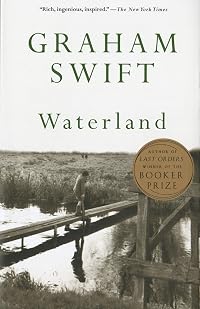
Waterland
by Graham Swift
On This Page
Description
Set in the bleak Fen Country of East Anglia, and spanning some 240 years in the lives of its haunted narrator and his ancestors, Waterland is a book that takes in eels and incest, ale-making and madness, the heartless sweep of history and a family romance as tormented as any in Greek tragedy. " Waterland, like the Hardy novels, carries with all else a profound knowledge of a people, a place, and their interweaving.... Swift tells his tale with wonderful contemporary verve and verbal show more felicity.... A fine and original work." --"Los Angeles Times" show lessTags
Recommendations


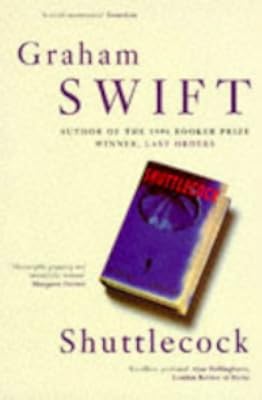
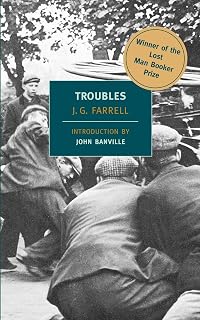
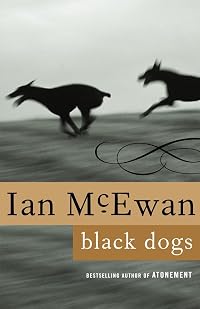

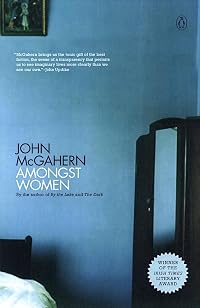

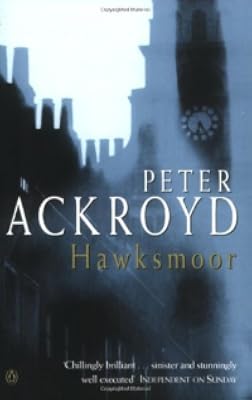
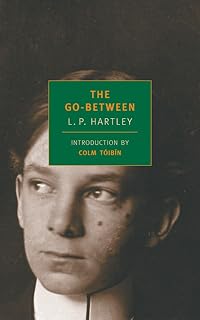

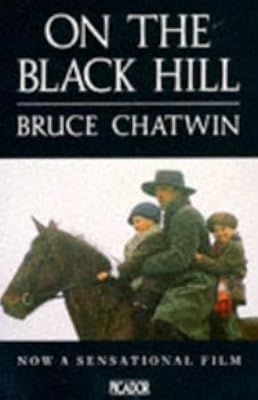
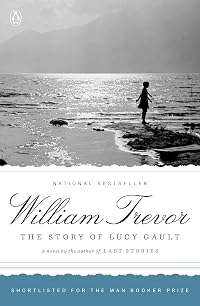


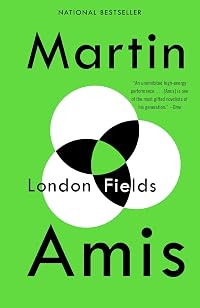
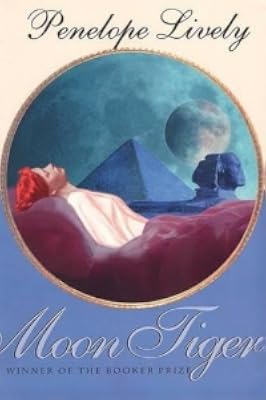
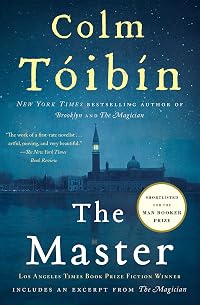
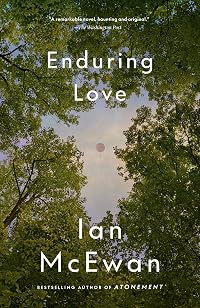
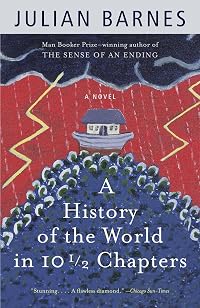
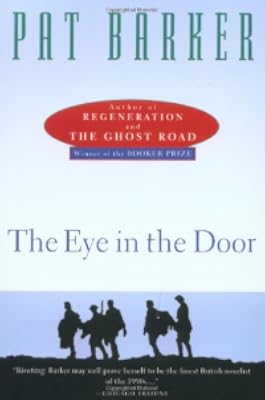
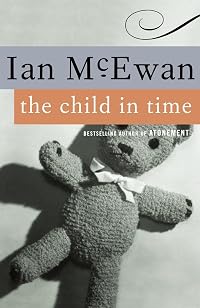
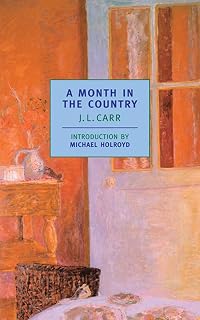




Member Recommendations

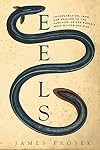
Eels: An Exploration, from New Zealand to the Sargasso, of the World's Most Mysterious Fish by James Prosek
ehines A character in Waterland is fixated by eels: their elusive nature, myths surrounding them, and how the riddle of their origin was finally solved. Waterland is mentioned in the Introduction as one of the inspirations for Prosek's book.


tim_halpin Similar obsession with the connection between History (with a capital H) and ordinary people's lives. Same historical scope. Also, coincidentally, both set in the East of England.
Member Reviews
Robert Webb, I will never forgive you for recommending this novel! I watched Between the Covers, the BBC book club with Sara Cox, to pick up some TBR tips from celebrities and Robert Webb's favourite book - "I gave it to my last two girlfriends – including my wife – and David Mitchell, and they all liked it" (ha!) - was definitely a fail.
Combining two of my most hated literary devices - smug male narrators and thinly veiled themes overloading the story - this somnambulant disaster was only good at sending me straight to sleep after ploughing through more than a paragraph. In the spirit of Stoner, pompous history teacher Tom Crick is being forced to 'retire' after his wife steals a baby and gets put away. He spends his final term show more holding his class hostage with a convoluted and tedious history of his life, interspersed with random lectures on the Norfolk fens, rivers, eels and even phlegm at one point (like a very British Les Mis!)
When he was a young boy, living with his widowed lockkeeper father and slow older brother (charmingly termed a 'potato head'), one of Tom's schoolfriends drowned in the river, and we poor readers spend the whole book waiting for the obvious to be confirmed - everything is always a woman's fault! Freddie Parr was pushed into the river as a (mistaken) rival for a young girl's affection. Why did older Tom's wife - the same girl at the centre of the childhood drama - steal a baby? Childhood trauma robbed her of the chance of becoming a mother, of course!
Added to the Wikipedia articles and drawn-out memoirs of a failed Dead Poets Society wannabe, we also get ridiculous melodrama in the form of local history. Two families, the Cricks and the Atkinsons, represent the past and the future of the fens, the one respecting the river and the other damming the water up and building sluice gates and locks in the spirit of Victorian progress. The Atkinsons, however, are gothic nightmares, complete with zombie wives and literal inbreeding - so of course the two families join together and the result is the narrator and his brother.
All of this water-centric madness could have been acceptable - even entertaining, like Michael McDowell's Blackwater saga - but for the writing:
And thus the history teacher—though his relation with his young charges echoes first the paternal, then the grand-paternal, though he sees in their faces (but does not admit it) less and less the image of the future, more and more that of something he is trying to retrieve, something he has lost—could always say (he acquires a penchant for paradox) that he looked back in order to look forward.
Pages and pages of pontificating drivel, punctuated with annoying half sentences - 'If she had ...', 'But then ...' No wonder I kept falling asleep! I hated Tom, adult and child/preteen - not to mention the very Stephen King preoccupation with young kids touching each other and playing 'You show me yours' that made the childhood scenes even more creepy - and that was before he kicked his pet dog so hard that he needed his jaw wiring. Yikes - why am I supposed to care about this man exactly?
For lovers of Stoner-esque characters only. show less
Combining two of my most hated literary devices - smug male narrators and thinly veiled themes overloading the story - this somnambulant disaster was only good at sending me straight to sleep after ploughing through more than a paragraph. In the spirit of Stoner, pompous history teacher Tom Crick is being forced to 'retire' after his wife steals a baby and gets put away. He spends his final term show more holding his class hostage with a convoluted and tedious history of his life, interspersed with random lectures on the Norfolk fens, rivers, eels and even phlegm at one point (like a very British Les Mis!)
When he was a young boy, living with his widowed lockkeeper father and slow older brother (charmingly termed a 'potato head'), one of Tom's schoolfriends drowned in the river, and we poor readers spend the whole book waiting for the obvious to be confirmed - everything is always a woman's fault! Freddie Parr was pushed into the river as a (mistaken) rival for a young girl's affection. Why did older Tom's wife - the same girl at the centre of the childhood drama - steal a baby? Childhood trauma robbed her of the chance of becoming a mother, of course!
Added to the Wikipedia articles and drawn-out memoirs of a failed Dead Poets Society wannabe, we also get ridiculous melodrama in the form of local history. Two families, the Cricks and the Atkinsons, represent the past and the future of the fens, the one respecting the river and the other damming the water up and building sluice gates and locks in the spirit of Victorian progress. The Atkinsons, however, are gothic nightmares, complete with zombie wives and literal inbreeding - so of course the two families join together and the result is the narrator and his brother.
All of this water-centric madness could have been acceptable - even entertaining, like Michael McDowell's Blackwater saga - but for the writing:
And thus the history teacher—though his relation with his young charges echoes first the paternal, then the grand-paternal, though he sees in their faces (but does not admit it) less and less the image of the future, more and more that of something he is trying to retrieve, something he has lost—could always say (he acquires a penchant for paradox) that he looked back in order to look forward.
Pages and pages of pontificating drivel, punctuated with annoying half sentences - 'If she had ...', 'But then ...' No wonder I kept falling asleep! I hated Tom, adult and child/preteen - not to mention the very Stephen King preoccupation with young kids touching each other and playing 'You show me yours' that made the childhood scenes even more creepy - and that was before he kicked his pet dog so hard that he needed his jaw wiring. Yikes - why am I supposed to care about this man exactly?
For lovers of Stoner-esque characters only. show less
REVIEW
I started this book expecting I might dislike it. I did dislike the topic of incest but was key to the story which is really a detective story and so much more. A fictional autobiography being told by Tom Crick as he teaches his students about why history. It is meditative; exploring fate, responsibility and history. Tom tells the story of his family’s roots and the Fen area of East Anglia. It also is a story of storytelling.
OPENING LINE:
Epigram: Historia, -ae, f. 1. inquiry, investigation, learning. 2. a) a narrative of past events, history. b) any kind of narrative: account, tale, story.
“And don’t forget’, my father would say, as if he expected me at any moment to up and leave to seek my fortune in the wide world, show more ‘whatever you learn about people, however bad they turn out, each one of them has a heart, and each one of them was once a tiny baby sucking his mother’s milk….’
QUOTES:
Until a series of encounters with the Here and Now gave a sudden urgency to my studies. Until the Here and Now, gripping me by the arm, slapping my face and telling me to take a good look at the mess I was in, informed me that history was no invention but indeed existed — and I had become a part of it.
Supposing it's the other way round. Supposing it's revolutions which divert and impede the course of our inborn curiosity. Supposing it's curiosity — which inspires our sexual explorations and feeds our desires to hear and tell stories — which is our natural and fundamental state of mind. Supposing it's our insatiable and feverish desire to know about things, to know about each other, always to be sniff-sniffing things out, which is the true and rightful subverter and defeats even our impulse for historical progression.
Children, only animals live entirely in the Here and Now. Only nature knows neither memory nor history. Man man — let me offer you a definition — is the story-telling animal. Wherever he goes he wants to leave behind not a chaotic wake, not an empty space, but the comforting marker-buoys and trail-signs of stories. He has to go on telling stories. He has to keep on making them up. As long as there's a story, it's all right.
WORDS:
Fen: a type of wetland, fens are a kind of mire.
Fabianism: British socialist organisation whose purpose is to advance the principles of socialism via gradualist and reformist means
Atavism: tendency to revert to ancestral type. In biology, an atavism is an evolutionary throwback, such as traits reappearing which had disappeared generations before.
jingoism: patriotism in the form of aggressive foreign policy. Jingoism also refers to a country's advocation of the use of threats or actual force
CLOSING LINE:
On the bank in the thickening dusk, in the will-o’ the wisp dusk, abandoned but vigilant, a motorcycle.
RATING: very good show less
I started this book expecting I might dislike it. I did dislike the topic of incest but was key to the story which is really a detective story and so much more. A fictional autobiography being told by Tom Crick as he teaches his students about why history. It is meditative; exploring fate, responsibility and history. Tom tells the story of his family’s roots and the Fen area of East Anglia. It also is a story of storytelling.
OPENING LINE:
Epigram: Historia, -ae, f. 1. inquiry, investigation, learning. 2. a) a narrative of past events, history. b) any kind of narrative: account, tale, story.
“And don’t forget’, my father would say, as if he expected me at any moment to up and leave to seek my fortune in the wide world, show more ‘whatever you learn about people, however bad they turn out, each one of them has a heart, and each one of them was once a tiny baby sucking his mother’s milk….’
QUOTES:
Until a series of encounters with the Here and Now gave a sudden urgency to my studies. Until the Here and Now, gripping me by the arm, slapping my face and telling me to take a good look at the mess I was in, informed me that history was no invention but indeed existed — and I had become a part of it.
Supposing it's the other way round. Supposing it's revolutions which divert and impede the course of our inborn curiosity. Supposing it's curiosity — which inspires our sexual explorations and feeds our desires to hear and tell stories — which is our natural and fundamental state of mind. Supposing it's our insatiable and feverish desire to know about things, to know about each other, always to be sniff-sniffing things out, which is the true and rightful subverter and defeats even our impulse for historical progression.
Children, only animals live entirely in the Here and Now. Only nature knows neither memory nor history. Man man — let me offer you a definition — is the story-telling animal. Wherever he goes he wants to leave behind not a chaotic wake, not an empty space, but the comforting marker-buoys and trail-signs of stories. He has to go on telling stories. He has to keep on making them up. As long as there's a story, it's all right.
WORDS:
Fen: a type of wetland, fens are a kind of mire.
Fabianism: British socialist organisation whose purpose is to advance the principles of socialism via gradualist and reformist means
Atavism: tendency to revert to ancestral type. In biology, an atavism is an evolutionary throwback, such as traits reappearing which had disappeared generations before.
jingoism: patriotism in the form of aggressive foreign policy. Jingoism also refers to a country's advocation of the use of threats or actual force
CLOSING LINE:
On the bank in the thickening dusk, in the will-o’ the wisp dusk, abandoned but vigilant, a motorcycle.
RATING: very good show less
Not my first book by the author, I read Last Orders wile travelling a few years ago, but I had forgotten his roundabout, yet entertaining, way of spinning a yarn.
Set in the Fens, the characters are as much tied to the land, the titular Waterland. Like the water in its springy earth, the Fens seem to move, retract and then burst their banks as the try to get back to their previous untamed state.
The book has 3 threads. The first is that of a history teacher, Crick, being given his marching orders, partly for his unorthodox teaching methods and partly because of an incident in his personal life. In his classes, he tells the students about the other two threads - the history of his family in the Fens and the death of a childhood friend, show more both of which have contributed to the current state of events.
Price, a clever boy in Crick's class, questions the relevance of history in a world which has a bleak, if any, future. Written in the early '80s, it is a fear that my own generation dismissed with the fall of the Iron Curtain, only for it to have reared its head again in the wake of 9/11 and the current economic crisis.
The impression you get of the Fens is that of a fierce, resistant people. Resistant to those who tried to tame the waters, independent from the world outside until it strategic position and the source of man power were discovered by the powers that be. I suppose you could argue nature versus nurture, but how can you separate the two when both seem to be governed by the Fens? Most of all, though, there is a feeling of guilt that pervades in its pages - for what has happened, whether it could have been prevented. Absent mothers and madness are two other recurring notes.
Highly recommended. show less
Set in the Fens, the characters are as much tied to the land, the titular Waterland. Like the water in its springy earth, the Fens seem to move, retract and then burst their banks as the try to get back to their previous untamed state.
The book has 3 threads. The first is that of a history teacher, Crick, being given his marching orders, partly for his unorthodox teaching methods and partly because of an incident in his personal life. In his classes, he tells the students about the other two threads - the history of his family in the Fens and the death of a childhood friend, show more both of which have contributed to the current state of events.
Price, a clever boy in Crick's class, questions the relevance of history in a world which has a bleak, if any, future. Written in the early '80s, it is a fear that my own generation dismissed with the fall of the Iron Curtain, only for it to have reared its head again in the wake of 9/11 and the current economic crisis.
The impression you get of the Fens is that of a fierce, resistant people. Resistant to those who tried to tame the waters, independent from the world outside until it strategic position and the source of man power were discovered by the powers that be. I suppose you could argue nature versus nurture, but how can you separate the two when both seem to be governed by the Fens? Most of all, though, there is a feeling of guilt that pervades in its pages - for what has happened, whether it could have been prevented. Absent mothers and madness are two other recurring notes.
Highly recommended. show less
Although meandering at times, this was an enjoyable read. I enjoyed Swift's style, and although not my favorite author, I will probably read more of his books in the future. I like the idea of a history teacher, whose life has taken a turn he could never have anticipated, suddenly departing from typical history lessons to instead relate his own history and the history of his family to his students. A last hurrah, a last attempt to immortalize himself perhaps...An understandable impulse as it is only by looking back that we can move forward with any real confidence. Those who ignore the past are fools who all too often are doomed to repeat it.
Yes, there's eels. Yes, there's incest. But more importantly, there's a subtle flow of history, back and forth across the pages from the French Revolution to the nuclear days of WWII. Lessons learned from the trials and tribulations of the Crick family can easily be applied to the great events of world history, and history itself is shown to be an irresistible constant of useless baggage wrapped around dire foretelling. The world is racing to improve itself at such speeds as to dash itself across the rocks of its own progress, falling in love with the idea of complete destruction in order to break from the mindless fervor pace. Humans are the most obvious instrument and often times side effect of this juggernaut, and as Tom shows, the show more only thing to be done is to try and understand the facts behind the madness. Not to get THE answer, but SOME answer, delving deep and retrieving something serviceable, something that will reason out the unfortunate events and say, "Here. This is why it happened. Knowing this won't change anything, save your ability to cope. And perhaps add you to the chain of consequences propagated from this history. Your decision." show less
Graham Swift is an amazing writer!
This is a story about the power of story-telling; the ability of stories to change lives. Tom Crick, a fifty-something history teacher, abandons the course curriculum and tells his students his own life story. In doing so, he rekindles their interest in history as a subject.
And what a story he has to tell. Along with the usual coming-of-age rituals of experimenting with sex and alcohol, there is incest, madness and murder. All told with Mr. Swift's wonderful way of balancing what is said with what is not, winding around events going ever deeper into motivations and causes.
This is a story about the power of story-telling; the ability of stories to change lives. Tom Crick, a fifty-something history teacher, abandons the course curriculum and tells his students his own life story. In doing so, he rekindles their interest in history as a subject.
And what a story he has to tell. Along with the usual coming-of-age rituals of experimenting with sex and alcohol, there is incest, madness and murder. All told with Mr. Swift's wonderful way of balancing what is said with what is not, winding around events going ever deeper into motivations and causes.
A slow but, I think, worthwhile read. The cover on my edition has a blurb from The New York Times that calls this book, "A gothic family saga, a detective story and a philosophical meditation on the nature and use of history". That describes 'Waterland' pretty well. The other word that describes this book is, "Exhausting". There is an exhausting level of detail in exploring the regional and familial history of the narrator. Swift's use of sentence structure can also be exhausting; he has a tendency to interject extraneous phrases - with no immediate sense of purpose and with nary a warning, seemingly to show off his wordsmithery rather than to propel the reader in any specific direction - into his sentences, (yes, that was an example). show more To be fair, it mostly works pretty well, but there are times where it becomes irritating. If you can work past the multitude of mini-digressions inherent in this style of writing, then lurking within, you will find an interesting tale. But you will need some patience to sift it out of the silty fenlands of Swift's imagination. show less
Members
- Recently Added By
Published Reviews
The story was almost Dickensian in its complexity and dealt primarily with history teacher Tom Crick, whose barren wife Mary is driven to snatch a baby in the Lewisham Safeway, in south London, precipitating mental his breakdown and professional ruin. The main thrust of the story, however, concerns the difficult pathway through personal history that leads to these events, as told by "Cricky" show more during highly unorthodox history lessons. "At once a history of England, a Fenland documentary and a fictional autobiography," enthused the Observer, "this is a beautiful, serious and intelligent novel, admirably ambitious and original." show less
added by KayCliff
Lists

The Guardian's 1000 Novels Everyone Must Read
1,005 works; 547 members

1001 Books You Must Read Before You Die
1,448 works; 1,134 members

Booker Prize
491 works; 62 members
Booker Prize Shortlist: Titles Read
103 works; 10 members

Books Read in 2023
5,547 works; 145 members

BBC Radio 4 Bookclub
340 works; 13 members

Man Booker Prize Longlist 1983
6 works; 1 member

Julie Parson’s Old Books
52 works; 4 members

A Good Read (Radio 4)
221 works; 1 member

A Novel Cure
742 works; 23 members

1,001 BYMRBYD Concensus
723 works; 27 members

Top Five Books of 2023
767 works; 317 members

Books With Water Words in the Title
186 works; 12 members

Books Read in 2026
1,911 works; 66 members
Author Information

21+ Works 10,727 Members
British novelist Graham Swift was born in London on May 4, 1949. He attended Cambridge University and York University. Swift has written five novels, including Waterland. (Bowker Author Biography) Novelist Graham Swift was born in London, England on May 4, 1949. He attended Cambridge University where he received a B.A. in 1970, and an M.A. in show more 1975. He also attended York University from 1970-73. He taught English part time at several London Colleges between the years 1974 to1983. Swift's fiction tends to touch upon the subject of World War II as well as exploring the larger subject of history. "Waterland" established Swift's reputation and was made into a major film. He also wrote "Last Orders" and his novels have won a variety of prestigious literary awards and have been widely translated. Swift was an avid fisherman and co-edited an anthology of fishing in literature. (Bowker Author Biography) show less
Some Editions
Awards and Honors
Awards
Distinctions
Notable Lists
Series
Belongs to Publisher Series
Work Relationships
Is contained in
Is abridged in
Has as a student's study guide
Common Knowledge
- Canonical title*
- Wasserland
- Original title
- Waterland
- Original publication date
- 1983
- People/Characters
- Tom Crick; Dick Crick; Henry Crick; Helen Atkinson; Mary Metcalf; Ernest Atkinson
- Important places
- the Fens; Cambridgeshire, England, UK; Norfolk, England, UK; Gildsey, England, UK
- Related movies
- Waterland (1992 | IMDb)
- Dedication
- For Candice
- First words
- "And don't forget," my father would say, as if he expected me at any moment to up and leave to seek my fortune in the wide world, "whatever you learn about people, however bad they turn out, each one of them has a heart, and ... (show all)each one of them was once a tiny baby sucking his mother's milk . . . "
- Quotations
- Children, be curious. Nothing is worse (I know it) than when curiosity stops. Nothing is more repressive than the repression of curiosity. Curiosity begets love. It weds us to the world. (pg.206)
Though the popular notion of revolution is that of categorical change, transformation - a progressive leap into the future - yet almost every revolution contains within it an opposite if less obvious tendency: the idea of a r... (show all)eturn.
History is that impossible thing: the attempt to give an account, with incomplete knowledge, of actions themselves undertaken with incomplete knowledge. - Last words
- (Click to show. Warning: May contain spoilers.)On the bank, in the thickening dusk, in the will-o’-the-wisp dusk, abandoned but vigilant, a motor-cycle.
- Original language
- English
*Some information comes from Common Knowledge in other languages. Click "Edit" for more information.
Classifications
Statistics
- Members
- 2,625
- Popularity
- 7,161
- Reviews
- 42
- Rating
- (3.94)
- Languages
- 15 — Czech, Danish, Dutch, English, Finnish, French, German, Greek, Italian, Norwegian (Bokmål), Portuguese, Russian, Spanish, Swedish, Turkish
- Media
- Paper, Audiobook, Ebook
- ISBNs
- 71
- UPCs
- 2
- ASINs
- 10