
John Burnside (1955–2024)
Author of The Glister
About the Author
John Burnside is a poet, novelist, and memoirist whose many books include Still Life with Feeding Snake and On Henry Miller (Princeton). He is professor of English at the University of St Andrews and a regular contributor to the London Review of Books.
Image credit: Image by Norman McBeath
Works by John Burnside
Associated Works
The Poetry Pharmacy: Tried-and-True Prescriptions for the Heart, Mind, and Soul (2017) 197 copies, 5 reviews
Tagged
Common Knowledge
- Other names
- Dick, John-Paul (pseudonnym)
- Birthdate
- 1955-03-19
- Date of death
- 2024-05-29
- Gender
- male
- Occupations
- poet
writer
novelist
memoirist
professor - Organizations
- University of St Andrews
- Awards and honors
- David Cohen British Literature Prize (2023)
- Agent
- Anna Webber
- Nationality
- UK
- Birthplace
- Dunfermline, Fife, Scotland, UK
- Places of residence
- Cowdenbeath, Fife, Scotland, UK
Corby, Northamptonshire, England, UK - Map Location
- Scotland, UK
Members
Reviews
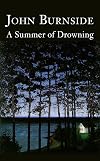
It is summer time on the island of Kvaloya, the time of the midnight sun. And Mats Sigfridsson has just drowned. Soon after his brother Harald also drowns. How could they both have drowned on such a calm, peaceful sea? And why had they both chosen to steal the same boat. Was it some sort of a suicide pact between the brothers? Liv Rossdal isn’t so sure. And after ten years thinking about the drownings she still isn’t sure.
Liv was eighteen that summer. Finished school and trying to decide show more what to do with her life. She had lived on the island inside the Arctic circle for as long as she could remember, her father had never been in her life, her mother had made the decision to relocate to focus on painting. They live an isolated existence, although her mother isn’t as much of a recluse as she and the art world sometimes make out. She has her weekly meetings with her “suitors”, and then there is the neighbour Kyrre Opdahl. A strange old man with her stories and tales of huldra and spirits and people who go out one day and are never seen again.
This is one of those books that I really have no idea how to review. Because to give away too many details is to spoil it. And yet the plot isn’t the important thing. It is the writing and the way Burnside tells the story. Liv is our narrator. From a distance of ten years she looks back at that “summer of drowning” and tells us what she saw, and did, and witnessed. What she thought about what had happened. So we have that delicious sense of foreboding all the time. We know from very early on that there will be drownings and mysterious disappearances. And the possibility of a huldra.
The huldra is a wild spirit that appears as a beautiful woman, she lures men to their death.
But the huldra does not exist surely. It is a creature from folklore and legend. But then what possible explanation could there be for the events of that summer in 2001? Before you start to get the wrong impression, this is not a fantasy romance with a new supernatural being at its centre, instead it is a strange dreamlike novel that you are much more likely to find in the literary fiction part of you bookstore than the YA.
The thing about this book that really stood out as I read it was the use of language. It really is a lovely book to just read and enjoy. I found myself noting down quotes almost constantly because both the way Burnside writes, and what he writes about really resonated with me. I loved the character of Liv. I don’t think she would be an altogether pleasant person to know, but I could totally understand and relate to her. Maybe not so much to her mother, although I did like the relationship between the two of them.
And I loved the whole atmosphere of the book, the cover image that I have here in this blog is a lot brighter and clearer than the hard copy one. Which is a pity, because the painting and artist are mentioned in the book, and are important, so it would have been nice to have been able to appreciate it more from the outset. But with the interwebs I was more than able to look the painter & artist up. There was quite a lot in this book that I looked up actually. From Norwegian phrases to artists and paintings, so I guess you could also call it an educational book.
One word of warning though, don’t start this expecting a cut and dried story with a neatly tied up plot, because that isn’t what you are going to get here, instead you’ll get a wonderfully written, atmospheric, and evocative novel. I’ll certainly be investigating more of Burnside’s work, I may even try some of his poetry, we’ll see how that goes though :) show less
Liv was eighteen that summer. Finished school and trying to decide show more what to do with her life. She had lived on the island inside the Arctic circle for as long as she could remember, her father had never been in her life, her mother had made the decision to relocate to focus on painting. They live an isolated existence, although her mother isn’t as much of a recluse as she and the art world sometimes make out. She has her weekly meetings with her “suitors”, and then there is the neighbour Kyrre Opdahl. A strange old man with her stories and tales of huldra and spirits and people who go out one day and are never seen again.
This is one of those books that I really have no idea how to review. Because to give away too many details is to spoil it. And yet the plot isn’t the important thing. It is the writing and the way Burnside tells the story. Liv is our narrator. From a distance of ten years she looks back at that “summer of drowning” and tells us what she saw, and did, and witnessed. What she thought about what had happened. So we have that delicious sense of foreboding all the time. We know from very early on that there will be drownings and mysterious disappearances. And the possibility of a huldra.
The huldra is a wild spirit that appears as a beautiful woman, she lures men to their death.
But the huldra does not exist surely. It is a creature from folklore and legend. But then what possible explanation could there be for the events of that summer in 2001? Before you start to get the wrong impression, this is not a fantasy romance with a new supernatural being at its centre, instead it is a strange dreamlike novel that you are much more likely to find in the literary fiction part of you bookstore than the YA.
The thing about this book that really stood out as I read it was the use of language. It really is a lovely book to just read and enjoy. I found myself noting down quotes almost constantly because both the way Burnside writes, and what he writes about really resonated with me. I loved the character of Liv. I don’t think she would be an altogether pleasant person to know, but I could totally understand and relate to her. Maybe not so much to her mother, although I did like the relationship between the two of them.
And I loved the whole atmosphere of the book, the cover image that I have here in this blog is a lot brighter and clearer than the hard copy one. Which is a pity, because the painting and artist are mentioned in the book, and are important, so it would have been nice to have been able to appreciate it more from the outset. But with the interwebs I was more than able to look the painter & artist up. There was quite a lot in this book that I looked up actually. From Norwegian phrases to artists and paintings, so I guess you could also call it an educational book.
One word of warning though, don’t start this expecting a cut and dried story with a neatly tied up plot, because that isn’t what you are going to get here, instead you’ll get a wonderfully written, atmospheric, and evocative novel. I’ll certainly be investigating more of Burnside’s work, I may even try some of his poetry, we’ll see how that goes though :) show less
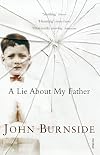
John Burnside's memoir about his father is a brilliant, but brutal account of what it was like for him growing-up in the fifties and sixties in Cowdenbeath and Corby. As well as being a liar, his father is a drunk and a bully who is singularly ill-qualified for fatherhood, even by the standards of 1950s Scotland.
A Lie About My Father covers the time from John's birth to his early twenties when his dad dies. It is tough going – his dad burning his teddy bear at six, his mother bundling him show more out of the bedroon window late at night to avoid drunken beatings, the broken arm from a holiday in Blackpool that goes undiagnosed for three weeks, the teenage obsession with fire-lighting – but not at all gloomy. He seems to cope remarkably well with his lot and there is a complete lack of self-pity or wallowing in his predicament. Like millions of other teenagers he survives with the help of books, music and a complete rejection of his father's principles.
Of course, however, it all takes its toll and as the book ends he is diagnosed with mental illness, hospitalised and losing himself in serious drug abuse from which it takes him a decade to escape.
"When they warn you about all that bohemian stuff, they always talk about the seductive properties of alcohol, or drugs, or loose morals, but they never say how seductive falling is, what a great pleasure it is to be lost. Perhaps they don't know. Perhaps only the lost know. Far from home, far from the known, the imagination starts to play beautiful, terrifying tricks on us. Maybe it is the road of excess that leads to the palace of wisdom – which is just another word for a certain kind of crazy. Being lost, being crazy: while I was falling, I knew I was on to something. I knew I wasn't anywhere near there yet, but I also knew that I couldn't get there from where I was."
His recent memoir Waking up in Toytown covers this lost decade and his escape into suburbia of all places. A Lie About My Father ends positively and, although I don't want to spoil the book for anyone, it is safe to say that he isn't going to repeat the mistakes his father made. show less
A Lie About My Father covers the time from John's birth to his early twenties when his dad dies. It is tough going – his dad burning his teddy bear at six, his mother bundling him show more out of the bedroon window late at night to avoid drunken beatings, the broken arm from a holiday in Blackpool that goes undiagnosed for three weeks, the teenage obsession with fire-lighting – but not at all gloomy. He seems to cope remarkably well with his lot and there is a complete lack of self-pity or wallowing in his predicament. Like millions of other teenagers he survives with the help of books, music and a complete rejection of his father's principles.
Of course, however, it all takes its toll and as the book ends he is diagnosed with mental illness, hospitalised and losing himself in serious drug abuse from which it takes him a decade to escape.
"When they warn you about all that bohemian stuff, they always talk about the seductive properties of alcohol, or drugs, or loose morals, but they never say how seductive falling is, what a great pleasure it is to be lost. Perhaps they don't know. Perhaps only the lost know. Far from home, far from the known, the imagination starts to play beautiful, terrifying tricks on us. Maybe it is the road of excess that leads to the palace of wisdom – which is just another word for a certain kind of crazy. Being lost, being crazy: while I was falling, I knew I was on to something. I knew I wasn't anywhere near there yet, but I also knew that I couldn't get there from where I was."
His recent memoir Waking up in Toytown covers this lost decade and his escape into suburbia of all places. A Lie About My Father ends positively and, although I don't want to spoil the book for anyone, it is safe to say that he isn't going to repeat the mistakes his father made. show less
This puzzling, poetic, even mythic, novel does not easily give up its secrets to the reader, even with determined repeated readings of key passages. A young girl, Liv, who has just finished high school, lives on a remote Norwegian island with her famously reclusive artist mother. Angelika, who once painted portraits, has, for the past several years, surrendered to the deep solitude of the place and is mostly lost in the work of painting landscapes. She is a beautiful, remote, and unavailable show more woman, more angel than human. Her daughter appears to have taken after her, demonstrating none of the expected traits and interests of a typical adolescent girl. Liv's best friend is an elderly man, steeped in old Norse stories. When two teenaged brothers drown, Liv--taking her cues from Kyrre, the old storyteller--believes that their deaths are attributable to a dark-spirited girl, Maia, who may be a modern embodiment of the huldra, a siren figure from Norse mythology, known to lure the "susceptible" to their deaths.
The world, Burnside intimates in this novel, is a great, unexplained mystery. Its meaning or, rather, the meaning of human events, is opaque. Liv grapples with the unresolved mystery of several deaths over the course of one arctic summer, and barely evades the clutches of madness in the process. In the end, it seems that the old stories, the myths, provide a structure, a narrative, if not a full explanation, for making sense of the strange, dark forces of life. show less
The world, Burnside intimates in this novel, is a great, unexplained mystery. Its meaning or, rather, the meaning of human events, is opaque. Liv grapples with the unresolved mystery of several deaths over the course of one arctic summer, and barely evades the clutches of madness in the process. In the end, it seems that the old stories, the myths, provide a structure, a narrative, if not a full explanation, for making sense of the strange, dark forces of life. show less
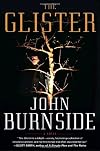
The Glister is more the story of a town than it is of any one person. Innertown has been decimated by its chemical plant. With the demise of the once successful chemical plant, the town seems to deteriorate and fall in on itself. The plant leaves behind a town populated with ineffectual adults unable to recover from chemical induced ailments or trapped with the grief of losing loved ones and a generation of disaffected children who haunt the abandoned and disintegrating chemical plant show more property in search of meaning or maybe just a way out of their dismal futures. While the adults seem to be caught up in their own lowgrade misfortune, young boys are disappearing. Instead of seeing this for the problem that it is, all choose to believe that the young teenage boys have simply found a way to escape their fates in Innertown.
I can't tell you much more, except that there's quite a bit of violence, a few teenagers that are actually even h-rnier than you would expect of teenagers, and a good deal of bad language. And this wouldn't have bothered me if it had all added up to something in the end. Instead the book just seems to trail off in yet one more mystery that doesn't seem to make any sense. As it so happens, so much of this book would be promising if only it had all come to something.
If there is indeed a main character for this book, it is Leonard, a teenage boy whose father is dying and whose mother has walked out on them. Leonard's narration crackles and pops with teenage cynicism and wit. He's a good character with a unique and consistent voice. And the atmosphere. The atmosphere in the book is stunning. Burnside manages to create an impression in the reader that Innertown is a place where the sun never shines, where the town's misfortunes cover it like blanket. Even though there are scenes where the sun is actually shining, one can't shake the feeling that this is a place where it is perpetually overcast, and no light shines in. All these things kept me reading in hopes of a fascinating resolution despite my intense dislike of Leonard's freakishly h-rny girlfriend and the various and sundry gratuitous things you would find in an R-rated movie. As you may have guessed, I was ultimately disappointed. The end just doesn't quite come together satisfactorily. It's a little like being led into a maze by someone who knows where they're going and being left halfway through to find your own way out. While I can handle an ambiguous ending, The Glister ultimately leaves too many questions unanswered without so much as a clue to lead its readers to any real resolution. show less
I can't tell you much more, except that there's quite a bit of violence, a few teenagers that are actually even h-rnier than you would expect of teenagers, and a good deal of bad language. And this wouldn't have bothered me if it had all added up to something in the end. Instead the book just seems to trail off in yet one more mystery that doesn't seem to make any sense. As it so happens, so much of this book would be promising if only it had all come to something.
If there is indeed a main character for this book, it is Leonard, a teenage boy whose father is dying and whose mother has walked out on them. Leonard's narration crackles and pops with teenage cynicism and wit. He's a good character with a unique and consistent voice. And the atmosphere. The atmosphere in the book is stunning. Burnside manages to create an impression in the reader that Innertown is a place where the sun never shines, where the town's misfortunes cover it like blanket. Even though there are scenes where the sun is actually shining, one can't shake the feeling that this is a place where it is perpetually overcast, and no light shines in. All these things kept me reading in hopes of a fascinating resolution despite my intense dislike of Leonard's freakishly h-rny girlfriend and the various and sundry gratuitous things you would find in an R-rated movie. As you may have guessed, I was ultimately disappointed. The end just doesn't quite come together satisfactorily. It's a little like being led into a maze by someone who knows where they're going and being left halfway through to find your own way out. While I can handle an ambiguous ending, The Glister ultimately leaves too many questions unanswered without so much as a clue to lead its readers to any real resolution. show less
Lists
Awards


You May Also Like


Associated Authors
Statistics
- Works
- 56
- Also by
- 17
- Members
- 1,926
- Popularity
- #13,362
- Rating
- 3.9
- Reviews
- 68
- ISBNs
- 163
- Languages
- 9
- Favorited
- 2