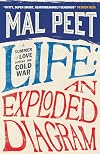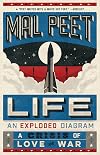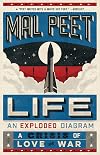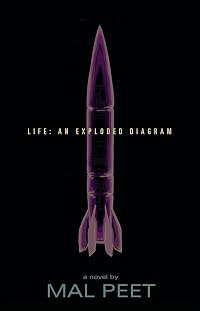
Life: An Exploded Diagram
by Mal Peet
On This Page
Description
Carnegie Medalist Mal Peet ignites an epic tale of young love against the dramatic backdrop of the Cold War and the Cuban Missile Crisis.Can love survive a lifetime? When working-class Clem Ackroyd falls for Frankie Mortimer, the gorgeous daughter of a wealthy local landowner, he has no hope that it can. After all, the world teeters on the brink of war, and bombs could rain down any minute over the bleak English countryside – just as they did seventeen years ago as his mother, pregnant show more with him, tended her garden. This time, Clem may not survive. Told in cinematic style by acclaimed writer Mal Peet, this brilliant coming-of-age novel is a gripping family portrait that interweaves the stories of three generations and the terrifying crises that define them. With its urgent sense of history, sweeping emotion, and winning young narrator, Mal Peet's latest is an unforgettable, timely exploration of life during wartime.
. show less
Tags
Recommendations
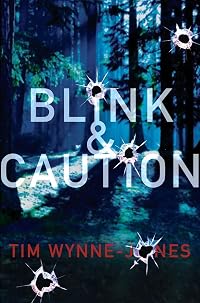
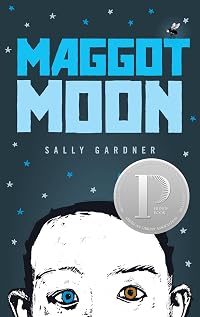
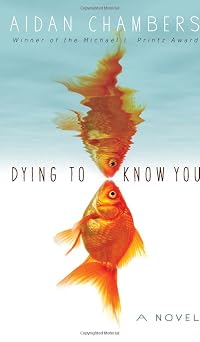
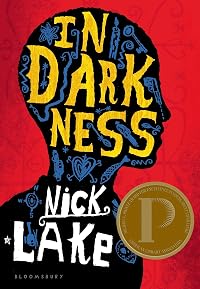



Member Recommendations
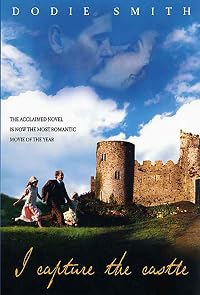
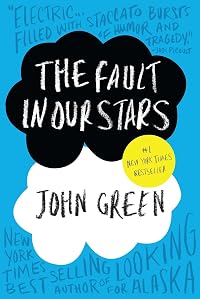
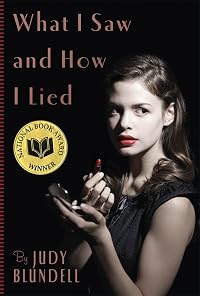
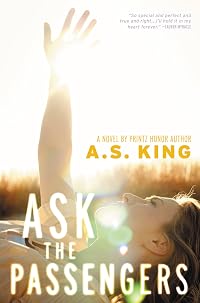
tim_halpin Similar obsession with the connection between History (with a capital H) and ordinary people's lives. Same historical scope. Also, coincidentally, both set in the East of England.
tim_halpin Similar interest in the workings of History, and delicate touch with the everyday.
Member Reviews
Fantastic novel set during the Cuban Missile crisis. A complex character study of both a time and a place in English history which begins with Clem's mother going into labour at the end of the war after a rogue german pilot blows up her chimney. Fast forward to Clem growing up as a working class boy who wins a scholarship to a prestigious boarding school. Coupled with his returned soldier father's move to a new estate, he and his family are further isolated as being "above themselves". When Clem comes back for holidays to work in the strawberry farms, he discovers the love of his life, Frankie, the boss' daughter. They carry their love in secret and, as the world moves closer to D-Day with the threat of nuclear war wiping out humanity, show more decide to take the ultimate step. What happens on the beach is a shock to all. (But hinted at earlier in the text).
Peet is a mastercraftsman building suspense with actual transcripts from the Whitehouse juxtaposed against an English countryside village trying to leap into the 20th Century, and further contrasted with the innocence of the two central lovers. Brilliant settings, character studies and plot tension by one of the Premier Young Adult authors, I would have no hesitation recommending this to my adult friends as it falls into the cross-over genre. The sexual scenes make it a book for older teenagers. show less
Peet is a mastercraftsman building suspense with actual transcripts from the Whitehouse juxtaposed against an English countryside village trying to leap into the 20th Century, and further contrasted with the innocence of the two central lovers. Brilliant settings, character studies and plot tension by one of the Premier Young Adult authors, I would have no hesitation recommending this to my adult friends as it falls into the cross-over genre. The sexual scenes make it a book for older teenagers. show less
I'm positive Mal Peet suffers from multiple personalities because I was hard pressed to realize that the first part of Life and the second part were written by the same author.
I almost didn't read Life because of a bad review I read, but that would have been a grand shame, because it is one of my Top 10 of 2011, which hopefully I'll get to next week. Part One: Putting Things Together recounts Clem Ackroyd's life from his birth in 1945 through the early 1960s in England. His father, George, was in the military during World War II and didn't meet Clem until he was 3 years old. Before that, Clem grew up with his mother, Ruth, and grandmother, Win. Peet is a knowing observer, talking about Ruth and George's sexless marriage, their rise from show more poverty to lower middle class, their mindless, unworldy existence. As he ages Clem, he adroitly contrasts his teenage lust with his parents. Clem, a typical teenager, is a sex crazed boy in love with Frankie, daughter of the local manor owner--a couple both of whose parents would frown upon from a 'class' standpoint. But they are truly in love. Peet's cadence in this narrative shifts from totally laid back to highly energized as Clem and Frankie's passion escalates. Peet's various characters are unique, extraordinary and loveable.
But, in Part Two: Blowing Things Apart, Peet abruptly shifts to the Cuban Missile Crisis, where he describes (at times tongue-in-cheek, hopefully) President Kennedy and his military advisors, Premier Khrushchev and Fidel Castro. In his Author's Note, Peet states "Clem Ackroyd is an unreliable historian", so I'm sure there's some 'Author's License' in the depiction of these world leaders. However, it is riveting. In this second part there are occasional reversions to Clem and Frankie, but few and far between.
How Peet masterfully intertwines these two stories is not something I want to reveal to you. You must read it for yourself. And, if you're like me, you may be surprised, saddened and surprised, by Part Three: Picking Up the Pieces. I could not put Life: An Exploded Diagram down. I chuckled. I smiled. I frowned. My emotions ran the gamut. Do yourself a favor. If you're looking for that great end of year book, pick up Life: An Exploded Diagram by Mal Peet. show less
I almost didn't read Life because of a bad review I read, but that would have been a grand shame, because it is one of my Top 10 of 2011, which hopefully I'll get to next week. Part One: Putting Things Together recounts Clem Ackroyd's life from his birth in 1945 through the early 1960s in England. His father, George, was in the military during World War II and didn't meet Clem until he was 3 years old. Before that, Clem grew up with his mother, Ruth, and grandmother, Win. Peet is a knowing observer, talking about Ruth and George's sexless marriage, their rise from show more poverty to lower middle class, their mindless, unworldy existence. As he ages Clem, he adroitly contrasts his teenage lust with his parents. Clem, a typical teenager, is a sex crazed boy in love with Frankie, daughter of the local manor owner--a couple both of whose parents would frown upon from a 'class' standpoint. But they are truly in love. Peet's cadence in this narrative shifts from totally laid back to highly energized as Clem and Frankie's passion escalates. Peet's various characters are unique, extraordinary and loveable.
But, in Part Two: Blowing Things Apart, Peet abruptly shifts to the Cuban Missile Crisis, where he describes (at times tongue-in-cheek, hopefully) President Kennedy and his military advisors, Premier Khrushchev and Fidel Castro. In his Author's Note, Peet states "Clem Ackroyd is an unreliable historian", so I'm sure there's some 'Author's License' in the depiction of these world leaders. However, it is riveting. In this second part there are occasional reversions to Clem and Frankie, but few and far between.
How Peet masterfully intertwines these two stories is not something I want to reveal to you. You must read it for yourself. And, if you're like me, you may be surprised, saddened and surprised, by Part Three: Picking Up the Pieces. I could not put Life: An Exploded Diagram down. I chuckled. I smiled. I frowned. My emotions ran the gamut. Do yourself a favor. If you're looking for that great end of year book, pick up Life: An Exploded Diagram by Mal Peet. show less
Teen fiction (for people who don't read teen fiction). A curious amalgam of war novel and historic romance, this is a slower-paced book (the lovers don't actually meet until p. 137) but thoroughly enjoyable. The narrator's voice is intelligent with occasional malaprops: "as cunning as a lavatory rat" (p. 235) and "brain choked on an anagram" (p. 364). I would suspect these were deliberate choices by the author, but the effect is imbalanced rather than humorous--the book would have been better without.
I think I may have found a new favourite author.
Is this a coming of age novel? A romance? A history lesson? Yes, it is all of that, and they're all tied up together into this book with an amazing historical scope and an ambitious exploration of how Big History, the Cold War, effects the lives of kids in provincial Norfolk. But, you have to go further than that, because the Cold War doesn't make sense without reference to the Second World War, and neither do these kids make sense without reference to their parents and grandparents.
This is a book to get deeply involved in. It's long, and not a quick read, but it's nourishing. It gives as much as you give it, which is all you can ask of a novel. The descriptions, in particular the show more similes, are fantastic.
So what's it about? Working class grammar school kid falls for the rich daughter of his father's boss. But, actually, you don't even meet these characters until about half-way through.
If I had one criticism, I would have to keep it to myself because it kind of gives away the ending. But if you've already read this, you'll know what I mean. I didn't think the actual violence, when it finally arrived, was as well tied-in as it could have been. It was almost meaningless, when it could have had more resonance. But perhaps that's the point - history doesn't always makes sense. The 20th century isn't a novel.
Once you've read this, try Waterland by Graham Swift. show less
Is this a coming of age novel? A romance? A history lesson? Yes, it is all of that, and they're all tied up together into this book with an amazing historical scope and an ambitious exploration of how Big History, the Cold War, effects the lives of kids in provincial Norfolk. But, you have to go further than that, because the Cold War doesn't make sense without reference to the Second World War, and neither do these kids make sense without reference to their parents and grandparents.
This is a book to get deeply involved in. It's long, and not a quick read, but it's nourishing. It gives as much as you give it, which is all you can ask of a novel. The descriptions, in particular the show more similes, are fantastic.
So what's it about? Working class grammar school kid falls for the rich daughter of his father's boss. But, actually, you don't even meet these characters until about half-way through.
If I had one criticism, I would have to keep it to myself because it kind of gives away the ending. But if you've already read this, you'll know what I mean. I didn't think the actual violence, when it finally arrived, was as well tied-in as it could have been. It was almost meaningless, when it could have had more resonance. But perhaps that's the point - history doesn't always makes sense. The 20th century isn't a novel.
Once you've read this, try Waterland by Graham Swift. show less
A very powerful story, actually two stories, a love story and a war story told parallel, overlapping, intertwining and dissecting all at once. And the writing is just incredible.
"But the window - if that's what it is - is utterly and intensely black. Blacker than any night sky in the darkest part of the universe. Darker than death. The whole middle of the painting is a terrifying void. But the fruits and the vegetables, those humble and edible object, have their backs to that void. They bathe in the brevity of light, casting their modest shadows onto the stone. They say, they insist, that they briefly exist.
'Here we are,' they say, 'Death is the default. There's no avoiding it. It's the background into which we will inevitably melt. We show more will rot and so will you. But in the meantime, eat, see, smell, taste, listen, touch. Look how commonplace and how beautiful we are.'
And they really were. Are." show less
"But the window - if that's what it is - is utterly and intensely black. Blacker than any night sky in the darkest part of the universe. Darker than death. The whole middle of the painting is a terrifying void. But the fruits and the vegetables, those humble and edible object, have their backs to that void. They bathe in the brevity of light, casting their modest shadows onto the stone. They say, they insist, that they briefly exist.
'Here we are,' they say, 'Death is the default. There's no avoiding it. It's the background into which we will inevitably melt. We show more will rot and so will you. But in the meantime, eat, see, smell, taste, listen, touch. Look how commonplace and how beautiful we are.'
And they really were. Are." show less
I thought this book was perfect. I was gripped the entire way through and I really, really didn't want it to end! It kept throwing surprises at me and I never knew what was happening next.
I identified with the characters, and I think they are really good portrayals of teenagers. They just seemed right, you know? I think the dialogue was spot on as well.
I loved the style of writing. I desperately want to read another of Peet's books, to get my fix of his writing because it is amazing!
And the ending! Oh the ending! I won't spoil anything, but oh my god the ending!
I identified with the characters, and I think they are really good portrayals of teenagers. They just seemed right, you know? I think the dialogue was spot on as well.
I loved the style of writing. I desperately want to read another of Peet's books, to get my fix of his writing because it is amazing!
And the ending! Oh the ending! I won't spoil anything, but oh my god the ending!
Spanning 30 years, this is the love story of two teenagers during the Cuban Missile Crisis. Told in flashbacks and by multiple narrators, Peet gives the reader a true understanding of the tension in the world. He also writes eloquently about the redeeming power of hope and first love.
Members
- Recently Added By
Author Information

65+ Works 3,229 Members
Mal Peet was born in 1947. Before becoming a children's author, he worked as a teacher and for educational publishers. His first novel, Keeper, won the Branford Boase award and Nestle Children's Book Award. He also won the Carnegie Medal in 2006 for Tamar and the Guardian children's fiction prize in 2009 for Exposure. He co-authored a series of show more children's books with his wife Elspeth Graham. His first novel for adults, The Murdstone Trilogy, was published in 2014. He died from cancer on March 2, 2015 at the age of 67. (Bowker Author Biography) show less
Awards and Honors
Awards
Distinctions
Notable Lists
Common Knowledge
- Canonical title
- Life: An Exploded Diagram
- Original publication date
- 2011
- Important events
- Cuban Missile Crisis
Classifications
Statistics
- Members
- 333
- Popularity
- 95,564
- Reviews
- 17
- Rating
- (3.91)
- Languages
- English
- Media
- Paper, Audiobook, Ebook
- ISBNs
- 18
- ASINs
- 4