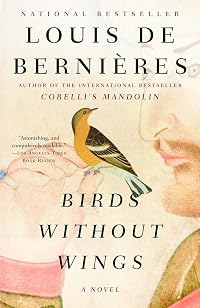
Birds without Wings
by Louis De Bernières
On This Page
Description
Birds Without Wingstraces the fortunes of one small community in southwest Turkey (Anatolia) in the early part of the last century — a quirky community in which Christian and Muslim lives and traditions have co-existed peacefully over the centuries and where friendship, even love, has transcended religious differences. But with the disintegration of the Ottoman Empire and the onset of the Great War, the sweep of history has a cataclysmic effect on this peaceful place: The great love of show more Philothei, a Christian girl of legendary beauty, and Ibrahim, a Muslim shepherd who courts her from near infancy, culminates in tragedy and madness; Two inseparable childhood friends who grow up playing in the hills above the town suddenly find themselves on opposite sides of the bloody struggle; and Rustem Bey, a wealthy landlord, who has an enchanting mistress who is not what she seems. Far away from these small lives, a man of destiny who will come to be known as Mustafa Kemal Atatürk is emerging to create a country from the ruins of an empire. Victory at Gallipoli fails to save the Ottomans from ultimate defeat and, as a new conflict arises, Muslims and Christians struggle to survive, let alone understand, their part in the great tragedy that will reshape the whole region forever. show lessTags
Recommendations

















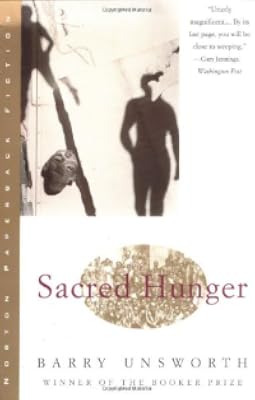



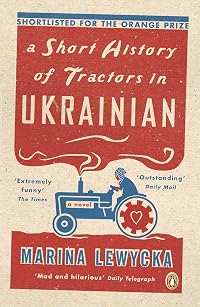

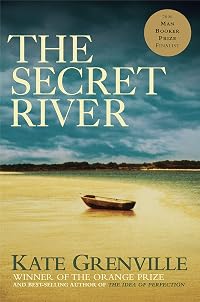


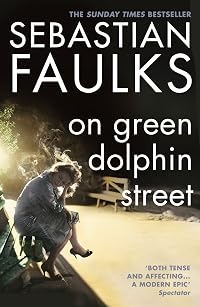





Member Recommendations



tim_halpin Similar interest in the workings of History, and delicate touch with the everyday.
by anonymous user

karatelpek Great War in East Africa. Blends literature with little known history of different theaters of ww1.

Member Reviews
"The first casualties of a religion's establishment are the intentions of its founder." (pg.143)
"The triple contagions of nationalism, utopianism, and religious absolutism effervesce together into an acid that corrodes the moral metal of a people, and it shamelessly and proudly performs deeds that it would deem vile if done by another." (pg.257)
I finished Birds Without Wings over a week ago. It is a moving and timely work of historical fiction which continues to haunt me. It is the story of the Greek, Muslim, and Armenian inhabitants of Fethiye, a small village on Anatolia's coast, who lived harmoniously together until the First World War when the Ottoman Empire aligned with the Axis and the nation of Greece with the Allies.
Louis de show more Bernieres analyzes the impact of external events on everyday life through multiple lenses. We follow the villagers through a series of finely drawn vignettes that depict their friendships, loves, and aspirations and the forces of war, nationalism, and religious intolerance that destroy the fabric of their world. De Bernieres also examines the machinations of the Great Powers and their role in manipulating events behind the scenes.
Segments of Mustafa Kemal's life history are interspersed throughout the text, providing historical grounding and foreshadowing of what is to come. These historical pieces offer a stark contrast to the moving and, at times, humorous depictions of village life.
I loved the book, and it continues to haunt me. I followed Karatavuk, a Muslim villager through his childhood and his harrowing war diaries from Gallipoli. I found Levon the Armenian to be a good soul and a family man, and the horrific story of his family's expulsion brought home the tragedy of the Armenians.
While the unraveling of village life began with the First World War, the subsequent Greco-Turkish War led to its destruction. De Bernieres describes the expulsion of the Greek community, the population exchange, and the destruction of Smyrna in heart-breaking detail through its impact on characters I came to know and care about.
Birds Without Wings is a great novel that added depth and understanding to my knowledge of a sad and troubling period of history. I strongly recommend it. show less
"The triple contagions of nationalism, utopianism, and religious absolutism effervesce together into an acid that corrodes the moral metal of a people, and it shamelessly and proudly performs deeds that it would deem vile if done by another." (pg.257)
I finished Birds Without Wings over a week ago. It is a moving and timely work of historical fiction which continues to haunt me. It is the story of the Greek, Muslim, and Armenian inhabitants of Fethiye, a small village on Anatolia's coast, who lived harmoniously together until the First World War when the Ottoman Empire aligned with the Axis and the nation of Greece with the Allies.
Louis de show more Bernieres analyzes the impact of external events on everyday life through multiple lenses. We follow the villagers through a series of finely drawn vignettes that depict their friendships, loves, and aspirations and the forces of war, nationalism, and religious intolerance that destroy the fabric of their world. De Bernieres also examines the machinations of the Great Powers and their role in manipulating events behind the scenes.
Segments of Mustafa Kemal's life history are interspersed throughout the text, providing historical grounding and foreshadowing of what is to come. These historical pieces offer a stark contrast to the moving and, at times, humorous depictions of village life.
I loved the book, and it continues to haunt me. I followed Karatavuk, a Muslim villager through his childhood and his harrowing war diaries from Gallipoli. I found Levon the Armenian to be a good soul and a family man, and the horrific story of his family's expulsion brought home the tragedy of the Armenians.
While the unraveling of village life began with the First World War, the subsequent Greco-Turkish War led to its destruction. De Bernieres describes the expulsion of the Greek community, the population exchange, and the destruction of Smyrna in heart-breaking detail through its impact on characters I came to know and care about.
Birds Without Wings is a great novel that added depth and understanding to my knowledge of a sad and troubling period of history. I strongly recommend it. show less
This is not an easy book to get into. It describes in great detail life in a small village in Anatolia at the cusp of the 20th century. The Christians and Muslims, Greek Turks and Turkish Greeks in Eskibahce, which means "Garden of Eden", get along amazingly well until the horror of the Great War strikes. My favorites of the large cast of characters were the childhood friends Abdul and Nico who were called by the Turkish names for the Blackbird and Robin because they blew into the pottery whistles that mimicked the songs of these birds to call to each other all day long. "For birds without wings nothing changes; they fly where they will and they know nothing about borders and their quarrels are very small." (551)
The author is better show more known for Corelli's Mandolin which was in my Top Ten Books in 2001. Birds Without Wings is broader in scope and depth. After reading it, I have a much better understanding of The Ottoman Empire and its downfall. We are guided through the many war chapters through the voice of General Mustafa Kemal who is based on the first President of Turkey.
This SERIOUS book is a challenge to read. For me, it was well worth the effort. It took me over a week to read it and I consulted Wikipedia and my Dictionary app many times. It is more than worthy of the time I spent and the resulting rare 5-star rating. show less
The author is better show more known for Corelli's Mandolin which was in my Top Ten Books in 2001. Birds Without Wings is broader in scope and depth. After reading it, I have a much better understanding of The Ottoman Empire and its downfall. We are guided through the many war chapters through the voice of General Mustafa Kemal who is based on the first President of Turkey.
This SERIOUS book is a challenge to read. For me, it was well worth the effort. It took me over a week to read it and I consulted Wikipedia and my Dictionary app many times. It is more than worthy of the time I spent and the resulting rare 5-star rating. show less
De Berniernes paints a picture of an obscure little town in south western Anatolia facing the Aegean Sea and how its Ottomans, Greeks,Armenians, Muslims, Christians, and others more or less lived and worked together in pre World War I Ottoman Empire only to disintegrate through many disruptions and horrors into something new and the author would argue something much less. Included and running parallel to the town's story is that of the unbelievable rise of Mustafa Kemal, Ataturk. and that of modern Turkey. That the Greeks spoke Turkish and the Muslims often visited Christian services and their children played with each other and sometimes grew up to marry each other emphasizes the coming devastation of the forced removals of the show more Armenians and the Greeks, So Ataturk's story is astonishing in itself but when placed against the various humans stories of this village the tragedy and suffering of modern Turkey come powerfully through. Our author reminds us that history is not only of the great but of the small. This is a masterpiece.
Quotes: (page 285) “They did not know that Enver Pasha, effectively the military dictator, had ordered the military bombardment of these bases without consulting the Sultan, the Grand Vizier, or the majority of the other ministers, four of whom had consequently resigned in disgust. They did not know that Enver Pasha had a great vision to pursue, of expanding the Ottoman Empire to the east, to include all the Turkic peoples. This was an age when everyone wanted an empire and felt entitled to one, days of innocence perhaps, before the world realized, if it yet has, that empires were pointless and expensive, and their subject peoples rancorous and ungrateful.”
(pages 396-397-398) “After two division commanders are killed, and armed with whip, he personally leads the dawn attack on the high ground of Conk Bayiri, which has tantalized the Allies from the start, and which now they have finally attained. A ball of shrapnel smacks into his chest, but his heart is saved by a watch in his breast pocket...Mustafa Kemal's dawn attack works, and the exhausted British soldiers are overwhelmed by sheer numbers. Up on the hill the Ottoman troops are subjected to an apocalyptic bombardment by the British navy, and ground erupts into crater and flame, but all the Allied assaults are beaten off, and trench warfare predictably establishes itself on the new front. Kemal's extraordinary and his rigid disregard for personal safety continue to burnish his legend among the troops...
An Ottoman officer officer declines to accept an order from a German superior, and Kemal similarly refuses to hand him over...
It is quite likely that without Mustafa Kemal the Ottomans would have lost the campaign at Gallipoli, which would have saved the whole world a great deal of trouble. There would have been no Russian Revolution and no Cold War, and the Great War might have ended a year sooner, but Mustafa Kemal does not believe in saving anyone any trouble, and in Istanbul he continues to harass the authorities without pity.”
(page 581-582) “'Take my advice,' said Karatavuk, 'get rid of your red shirt that makes you an easy target, and go find your family, and till the soil like everyone else, and live in peace.'...
Mehmetcik held up the small clay bird whistle. 'And you still have one of these. I've had mine all these years, and I have never broken it. It's a miracle when you think of all its been through. Does Iskander Efendi still make them? You know, I have always wondered why he made mine with a turban on its head. Whoever heard of a robin wearing a turban?'
'It was just my father's fancy.'...All my brothers were killed in Mesopotamia, and now we two are the only ones left to carry own. Now I have a wife, so I have hope that all will be well.'
'I have gone a long way off course,'reflected Mehmetcik sadly, carefully replacing the whistle in his sash. 'I am very like Sadettin.' He paused and looked up. ''I have to ask you...actually this is the reason I had to speak to you...who are those people in my father's house? Where hav my family gone?'
Karatavuk looked at him in astonishment. 'You don't know?'
'I have no idea. In the last years I've been everywhere from Kemer to Konya. I haven't been able to return.'
'You must know that all the Christians have been deported.'
Mehmetcik blanched, ' All of them?'
published 2004 show less
Quotes: (page 285) “They did not know that Enver Pasha, effectively the military dictator, had ordered the military bombardment of these bases without consulting the Sultan, the Grand Vizier, or the majority of the other ministers, four of whom had consequently resigned in disgust. They did not know that Enver Pasha had a great vision to pursue, of expanding the Ottoman Empire to the east, to include all the Turkic peoples. This was an age when everyone wanted an empire and felt entitled to one, days of innocence perhaps, before the world realized, if it yet has, that empires were pointless and expensive, and their subject peoples rancorous and ungrateful.”
(pages 396-397-398) “After two division commanders are killed, and armed with whip, he personally leads the dawn attack on the high ground of Conk Bayiri, which has tantalized the Allies from the start, and which now they have finally attained. A ball of shrapnel smacks into his chest, but his heart is saved by a watch in his breast pocket...Mustafa Kemal's dawn attack works, and the exhausted British soldiers are overwhelmed by sheer numbers. Up on the hill the Ottoman troops are subjected to an apocalyptic bombardment by the British navy, and ground erupts into crater and flame, but all the Allied assaults are beaten off, and trench warfare predictably establishes itself on the new front. Kemal's extraordinary and his rigid disregard for personal safety continue to burnish his legend among the troops...
An Ottoman officer officer declines to accept an order from a German superior, and Kemal similarly refuses to hand him over...
It is quite likely that without Mustafa Kemal the Ottomans would have lost the campaign at Gallipoli, which would have saved the whole world a great deal of trouble. There would have been no Russian Revolution and no Cold War, and the Great War might have ended a year sooner, but Mustafa Kemal does not believe in saving anyone any trouble, and in Istanbul he continues to harass the authorities without pity.”
(page 581-582) “'Take my advice,' said Karatavuk, 'get rid of your red shirt that makes you an easy target, and go find your family, and till the soil like everyone else, and live in peace.'...
Mehmetcik held up the small clay bird whistle. 'And you still have one of these. I've had mine all these years, and I have never broken it. It's a miracle when you think of all its been through. Does Iskander Efendi still make them? You know, I have always wondered why he made mine with a turban on its head. Whoever heard of a robin wearing a turban?'
'It was just my father's fancy.'...All my brothers were killed in Mesopotamia, and now we two are the only ones left to carry own. Now I have a wife, so I have hope that all will be well.'
'I have gone a long way off course,'reflected Mehmetcik sadly, carefully replacing the whistle in his sash. 'I am very like Sadettin.' He paused and looked up. ''I have to ask you...actually this is the reason I had to speak to you...who are those people in my father's house? Where hav my family gone?'
Karatavuk looked at him in astonishment. 'You don't know?'
'I have no idea. In the last years I've been everywhere from Kemer to Konya. I haven't been able to return.'
'You must know that all the Christians have been deported.'
Mehmetcik blanched, ' All of them?'
published 2004 show less
This historical novel takes us through the momentous bit of Turkish history between 1900 and 1923, with the narrative viewpoint alternating between a helicopter-view of the big events of the career of Mustafa Kemal and a tortoise's-eye-view of the inhabitants of a remote, small town on the Anatolian coast near Fethiye (then called Telmessos).
Rather like Ivo Andrić in The bridge on the Drina, de Bernières shows us the Ottoman Empire as a polity that for centuries made it possible for people of different faiths and ethnic backgrounds to live together in reasonable harmony and without slaughtering each other, even if that life involved a lot of poverty and deprivation for most of them, and no political or legal rights worth speaking of. show more
The Muslims and Greek Christians who live in Eskibahçe speak the same language, have all been living in Anatolia for centuries, intermarrying from time to time, and don't think of themselves as "Turks" and "Greeks" until nationalist agitators come along and tell them that's what they are. As far as de Bernières is concerned, the "historic grievances" that led to the Greek occupation of Anatolia and the subsequent mass deportations of 1923 had their origins in the political ambitions of people like Venizelos and Mustafa Kemal, amplified into a revenge-cycle by the sort of atrocities that take place automatically as soon as you start an armed conflict.
There is some great, if rather romanticised, storytelling in this book: the Eskibahçe characters are full of interesting human quirks, and de Bernières cleverly mixes in local colour and traditions. The descriptions of Gallipoli from the viewpoint of an Ottoman soldier in the trenches are gripping too. But the political rant in the narrator's own voice in the "history" chapters doesn't seem to work as well: de Bernières is (understandably) so angry at the abuses and humanitarian disasters that leaders on all sides allowed to happen that he makes a lot of sweeping accusations that go beyond the evidence he has shown us. We're inclined to believe his assertions that Kemal, Venizelos, Lloyd George and the Kaiser are a bunch of irresponsible murderous ruffians, of course, and that all Italians except Mussolini are saints, but it would be nicer to be allowed to draw our own conclusions rather than have to take that as axiomatic. And of course, the fact that we know this is a British writer speaking on behalf of Ottoman/Turkish/Greek characters doesn't help.
Oddly, the thing I noticed most about this book before reading it, the fact that it's nearly 800 pages long, didn't really seem to matter. The use of multiple different types of narration results in quite a bit of repetition, but it felt like the sort of book where you could just dig in and let all that wash over you. De Bernière's writing isn't the sort of thing where you have to read a sentence several times. It would probably work really well as an audiobook. show less
Rather like Ivo Andrić in The bridge on the Drina, de Bernières shows us the Ottoman Empire as a polity that for centuries made it possible for people of different faiths and ethnic backgrounds to live together in reasonable harmony and without slaughtering each other, even if that life involved a lot of poverty and deprivation for most of them, and no political or legal rights worth speaking of. show more
The Muslims and Greek Christians who live in Eskibahçe speak the same language, have all been living in Anatolia for centuries, intermarrying from time to time, and don't think of themselves as "Turks" and "Greeks" until nationalist agitators come along and tell them that's what they are. As far as de Bernières is concerned, the "historic grievances" that led to the Greek occupation of Anatolia and the subsequent mass deportations of 1923 had their origins in the political ambitions of people like Venizelos and Mustafa Kemal, amplified into a revenge-cycle by the sort of atrocities that take place automatically as soon as you start an armed conflict.
There is some great, if rather romanticised, storytelling in this book: the Eskibahçe characters are full of interesting human quirks, and de Bernières cleverly mixes in local colour and traditions. The descriptions of Gallipoli from the viewpoint of an Ottoman soldier in the trenches are gripping too. But the political rant in the narrator's own voice in the "history" chapters doesn't seem to work as well: de Bernières is (understandably) so angry at the abuses and humanitarian disasters that leaders on all sides allowed to happen that he makes a lot of sweeping accusations that go beyond the evidence he has shown us. We're inclined to believe his assertions that Kemal, Venizelos, Lloyd George and the Kaiser are a bunch of irresponsible murderous ruffians, of course, and that all Italians except Mussolini are saints, but it would be nicer to be allowed to draw our own conclusions rather than have to take that as axiomatic. And of course, the fact that we know this is a British writer speaking on behalf of Ottoman/Turkish/Greek characters doesn't help.
Oddly, the thing I noticed most about this book before reading it, the fact that it's nearly 800 pages long, didn't really seem to matter. The use of multiple different types of narration results in quite a bit of repetition, but it felt like the sort of book where you could just dig in and let all that wash over you. De Bernière's writing isn't the sort of thing where you have to read a sentence several times. It would probably work really well as an audiobook. show less
Birds Without Wings – Louis de Bernieres –
5 stars
I’ve recently returned from the small town of Eskibache in Turkey as it was early in the last century. I’m trying to return to my real life, but Eskibache and its many colorful inhabitants are alive and very active in my mind. Eskibache is a special place where Muslims and Christians live peacefully together, mingling language and customs and frequently intermarrying. The town has a learned Imam, a Greek orthodox priest and Rustem Bey the aga. Take a walk in the meydan or down the street where the Armenians live or up the steep hills to the tombs. Stop to watch Iskander the Potter and he will tell you a proverb. Go to the hamam and gossip with the women.
Bernieres uses the multiple show more voices of the town’s inhabitants to tell the history of this tiny unimportant place during the last days of the Ottoman Empire. Along the way, he also provides a biographical history of the career of Mustafa Kemal Ataturk and the rise of the modern Turkey. How could the story be anything but tragic? Bernieres allows the private traumas of Eskibache to mirror the enormous catastrophes of war, persecutions and exterminations. And somehow, he does it with humor and poetry.
This is one of those books which I acquired both in audio and paper versions. The audio performance by John Lee is outstanding. It helped me to hear correct pronunciations. John Lee handled the frequent changes of voice and viewpoint seamlessly. I had no trouble keeping track of the many characters. show less
5 stars
I’ve recently returned from the small town of Eskibache in Turkey as it was early in the last century. I’m trying to return to my real life, but Eskibache and its many colorful inhabitants are alive and very active in my mind. Eskibache is a special place where Muslims and Christians live peacefully together, mingling language and customs and frequently intermarrying. The town has a learned Imam, a Greek orthodox priest and Rustem Bey the aga. Take a walk in the meydan or down the street where the Armenians live or up the steep hills to the tombs. Stop to watch Iskander the Potter and he will tell you a proverb. Go to the hamam and gossip with the women.
Bernieres uses the multiple show more voices of the town’s inhabitants to tell the history of this tiny unimportant place during the last days of the Ottoman Empire. Along the way, he also provides a biographical history of the career of Mustafa Kemal Ataturk and the rise of the modern Turkey. How could the story be anything but tragic? Bernieres allows the private traumas of Eskibache to mirror the enormous catastrophes of war, persecutions and exterminations. And somehow, he does it with humor and poetry.
This is one of those books which I acquired both in audio and paper versions. The audio performance by John Lee is outstanding. It helped me to hear correct pronunciations. John Lee handled the frequent changes of voice and viewpoint seamlessly. I had no trouble keeping track of the many characters. show less
I was encouraged to read this book following our recent visit to Turkey. I'm so glad I did. It might be fiction, but it's strongly rooted in the early 20th century history of this region, giving an overview of the life and times of Kamal Ataturk, and the bloody, tempestuous history of the former Ottoman Empire and parts of the Balkans. The book centres on the lives of the inhabitants of Eskibahçe. We meet its Muslim and Christian inhabitants, living in neighbourly harmony together. There's Rustem Bey, their neighbourhood aristocrat; imams, priests, teachers, beggars,prostitutes, boys who grow up to be soldiers, girls who grow up to be wives, or soon-to-be-wives. We become rooted in the simple rhythms of life in this community. So when show more it all goes wrong, when war starts, we care. This is a disturbing but compulsively readable book which serves as a helpful and accessible introduction to 21st century Turkey, as well as being a wonderful story, with many skilfully interwoven threads. show less
Joy's review: This is one of the most beautifully written books I have ever read. It covers the life of a small village and it's inhabitants as they were affected by happenings in greater Turkey from the late 1800's through the 1920's. It was a horrific time when human cruelty seemed to break out regularly and randomly. So, it's odd that this book would seem so beautiful to me, but de Bernieres' writing is exceptional and the stories and points-of-view are strong and unique. I loved this book.
Members
- Recently Added By
Published Reviews
ThingScore 75
"De Bernières has always been adept at juxtaposing brutality with episodes of high comedy or romance, and that's certainly the case here."
added by bookfitz
"Though some readers may balk at the novel's sheer heft, the reward is an effective and moving portrayal of a way of life—and lives—that might, if not for Bernières's careful exposition and imagination, be lost to memory forever."
added by bookfitz
Lists

Best Historical Fiction
620 works; 261 members

Recommend the 20 best books you've read in the last five years
2,168 works; 606 members

Historical Fiction
889 works; 90 members

Books That Made Me Cry
199 works; 105 members

Books about World War I
80 works; 14 members

Middle East Fiction
179 works; 16 members
Put a Bird On It
75 works; 12 members

Books With Our Favorite First Lines
168 works; 104 members

THE WAR ROOM
813 works; 24 members
Author Information

39+ Works 18,301 Members
Louis de Bernières was born on December 8, 1954, in England to a military family. He spent four months in the British army in his late teens. When he was nineteen, he spent a year in Colombia where he wrote a short story about a true incident of violence that occurred there. Fifteen years later, while recuperating from a motorcycle accident, de show more Bernières used that short story as the basis for the first volume of his Latin American Trilogy, The War of Don Emmanuel's Nether Parts, Senor Vivo and the Coca Lord, and The Troublesome Offspring of Cardinal Guzman. In the 1980s, de Bernières worked as an auto mechanic and then as a supply teacher in London. In 1993 he took a holiday on the Greek island of Cephallonia. That became the setting for Captain Correlli's Mandolin, a novel of war, love, and heroism, which remained on the (London) Times bestseller list for four years. It has sold more than 600,000 copies, has been reprinted in paperback more than thirty times, and has been translated into more than seventeen languages.The book also won the Commonwealth Writers Prize for Best Book. It was also shortlisted for the 1994 Sunday Express Book of the Year. De Bernières was named one of Granta's 20 Best British Novelists in 1993, and Author of the Year 1998 by England's Publishing News. He will be give the opening night address at the 2015 Melbourne Writers Festival. His title The Dust that Falls from Dreams made the New Zealand Best Seller List in 2015 (Bowker Author Biography) show less
Some Editions
Awards and Honors
Awards
Series
Belongs to Publisher Series
Fischer Taschenbuch (16648)
Gallimard, Folio (4678)
Work Relationships
Has as a supplement
Common Knowledge
- Canonical title
- Birds without Wings
- Original title
- Birds without Wings
- Original publication date
- 2004-04-24
- People/Characters
- Iskander; Karatavuk; Mehmetçik; Father Kristoforos; Abdulhamid Hodja; Rustem Bey (show all 11); "the Dog"; "the Blasphemer"; Philothei; Ibrahim; Mustafa Kemal Atatürk
- Important places
- Gallipoli, Turkey; Turkey; Ottoman Empire; Middle East
- Important events
- World War I (1914 | 1918); Creation of Turkey; Gallipoli Campaign (1915-04-25 | 1916-01-09)
- Epigraph
- [poem] THE CAT / She was licking / the opened tin / for hours and hours / without realising / that she was drinking / her own blood. // Spyros Kyriazopoulos
- Dedication
- In the great scheme of things, this book is necessarily dedicated to the unhappy memory of the millions of civilians on all sides during the times portrayed, [...]. More personally, it is also dedicated to the memory of my ma... (show all)ternal grandfather, Arthur Kenneth Smithells, [...]. Manet in pectus domesticum.
- First words
- The people who remained in this place have often asked themselves why it was that the Ibrahim went mad.
- Last words
- (Click to show. Warning: May contain spoilers.)Because we have no wings we are pushed into struggles and abominations that we did not seek, and then, after all that, the years go by, the mountains are levelled, the valleys rise, the rivers are blocked by sand and the cliffs fall into the sea.
Classifications
Statistics
- Members
- 2,827
- Popularity
- 6,436
- Reviews
- 57
- Rating
- (4.08)
- Languages
- 21 — Arabic, Czech, Danish, Dutch, English, French, German, Greek, Hebrew, Italian, Norwegian (Bokmål), Norwegian, Polish, Serbian, Croatian, Slovak, Slovenian, Spanish, Swedish, Turkish, Portuguese (Brazil)
- Media
- Paper, Audiobook, Ebook
- ISBNs
- 50
- ASINs
- 11