
Klaus Modick
Author of Konzert ohne Dichter: Roman
Works by Klaus Modick
Ein Bild und tausend Worte: Die Entstehungsgeschichte von "Konzert ohne Dichter" und andere Essays (2016) 3 copies
… haben die Axt im Haus und erleben Kunst und Katastrophen "erfolgreichen" Handwerkens (1999) 1 copy
Erste Lieben & andere Peinlichkeiten: Oldenburger Geschichten (Edition Nordwest) (German Edition) (1997) 1 copy
Associated Works
Instructions for British Servicemen in Germany, 1944 (Instructions for Servicemen) (1944) — Translator, some editions — 114 copies, 2 reviews
Zivilcourage: Empörte, Helfer und Retter aus Wehrmacht, Polizei und SS (2004) — Contributor — 11 copies
Tagged
Common Knowledge
- Birthdate
- 1951-05-03
- Gender
- male
- Awards and honors
- Rheingau-Literaturpreis (2015)
- Nationality
- Germany
- Birthplace
- Oldenburg, Germany
- Map Location
- Germany
Members
Reviews
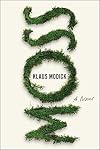
Moss by Klaus Modick
Order, control, separation from nature. That is what his father had taught. Upon arriving at their woodland cabin, as a child his duty had been to scrub the moss from the stone pathway. The child objected, "But the moss is so lovely."
Now, he is old and endeavoring to form a lifetime of insight into his final paper critiquing nomenclature. He questions his father's teaching and the science of his academic career as a biologist.
Why do we divide ourselves from nature? What can we learn from show more moss? Shouldn't our goal be wonder and joy of beauty, not arcane facts and artificial categories?
Returning to that family cabin, surrounded by the forest, he embraces death as part of life, the natural cycle.
Science gives way to connection.
When his manuscript is found after his death, it was not what people expected. He renamed it "Moss."
Oh, I thought, another novel about age and death! I am already too aware of the passing years, how I have outlived so many family members! And with a pandemic, every one of us is faced with our mortality and aware of the uncertainty of life.
I feel the depth of this story eludes me, calling me to reread and grapple with all that lies beneath it's misleading simplicity and the beauty of its poetry.
I received a free book from the publisher through LibraryThing. My review is fair and unbiased. show less
Now, he is old and endeavoring to form a lifetime of insight into his final paper critiquing nomenclature. He questions his father's teaching and the science of his academic career as a biologist.
Why do we divide ourselves from nature? What can we learn from show more moss? Shouldn't our goal be wonder and joy of beauty, not arcane facts and artificial categories?
Returning to that family cabin, surrounded by the forest, he embraces death as part of life, the natural cycle.
Science gives way to connection.
When his manuscript is found after his death, it was not what people expected. He renamed it "Moss."
Oh, I thought, another novel about age and death! I am already too aware of the passing years, how I have outlived so many family members! And with a pandemic, every one of us is faced with our mortality and aware of the uncertainty of life.
I feel the depth of this story eludes me, calling me to reread and grapple with all that lies beneath it's misleading simplicity and the beauty of its poetry.
I received a free book from the publisher through LibraryThing. My review is fair and unbiased. show less
 This review was written for LibraryThing Early Reviewers.
Moss by Klaus Modick
“It is a slow fall. Sometimes, though, it is a rising upward” (138).
It took me numerous starts to get into this, but once I did — wow. This was lovely, reminiscent of Per Petterson’s Out Stealing Horses: quiet, rural, memory-laced. I wouldn’t have enjoyed this book in my twenties. It’s almost plotless as the aging narrator meditates on nature generally and moss particularly, the small plant that is barely noticed, yet covers the largest trees, renders the most solid thing show more invisible. If you like that kind of quiet book, that’s meditative, about one thing — like moss — but really about so much more, then check this out. If you’re looking for a book in which a bunch of stuff happens, though, this may not be for you. show less
It took me numerous starts to get into this, but once I did — wow. This was lovely, reminiscent of Per Petterson’s Out Stealing Horses: quiet, rural, memory-laced. I wouldn’t have enjoyed this book in my twenties. It’s almost plotless as the aging narrator meditates on nature generally and moss particularly, the small plant that is barely noticed, yet covers the largest trees, renders the most solid thing show more invisible. If you like that kind of quiet book, that’s meditative, about one thing — like moss — but really about so much more, then check this out. If you’re looking for a book in which a bunch of stuff happens, though, this may not be for you. show less
This review was written for LibraryThing Early Reviewers.Moss by Klaus Modick
This book felt like it was written for me personally. I was surprised to see it was originally published (in German) in 1984, because it has so much to say to our current time. I wish I had had the opportunity to read it sooner, and hope to see many more of Modick's works made accessible in English in the near future.
'Moss' is layered and subtle, with beautifully-written prose. Hidden throughout are many literary treasures ("wrapped up, onionlike, in many layers of blankets" particularly show more delighted me). I found the narrator really relatable, from the way he described feeling physically assaulted by unwanted noise, to his deepening relationship with the natural world, to his views on death and decay. It was clear to me from the introductory framing story that I was going to connect with this man and his experiences with nature and with being regarded as psychologically unsound because of them. When your priorities radically change, people don't really know what to do with you anymore show less
'Moss' is layered and subtle, with beautifully-written prose. Hidden throughout are many literary treasures ("wrapped up, onionlike, in many layers of blankets" particularly show more delighted me). I found the narrator really relatable, from the way he described feeling physically assaulted by unwanted noise, to his deepening relationship with the natural world, to his views on death and decay. It was clear to me from the introductory framing story that I was going to connect with this man and his experiences with nature and with being regarded as psychologically unsound because of them. When your priorities radically change, people don't really know what to do with you anymore show less
This review was written for LibraryThing Early Reviewers.Moss by Klaus Modick
An interesting brief bildungsroman of sorts, where the character, rather than growing up, grows into his death. The text is presented as a "found manuscript" published after the author's death.
The protagonist tries to move away from the language of (botanical) science in which he spent his adult life in order to achieve a different kind of knowledge, more holistic.
While a reader may disagree with the stance of the character - Lukhas Ohlburg (and it is hard not to consider him an alter ego of show more the author, whose name is an anagram of the character's: Klaus), his approach to the subject matter of how to perceive reality is nevertheless compelling. show less
The protagonist tries to move away from the language of (botanical) science in which he spent his adult life in order to achieve a different kind of knowledge, more holistic.
While a reader may disagree with the stance of the character - Lukhas Ohlburg (and it is hard not to consider him an alter ego of show more the author, whose name is an anagram of the character's: Klaus), his approach to the subject matter of how to perceive reality is nevertheless compelling. show less
This review was written for LibraryThing Early Reviewers.Lists
Awards


You May Also Like


Associated Authors
Statistics
- Works
- 33
- Also by
- 5
- Members
- 307
- Popularity
- #76,699
- Rating
- 4.0
- Reviews
- 23
- ISBNs
- 90
- Languages
- 5
- Favorited
- 1
