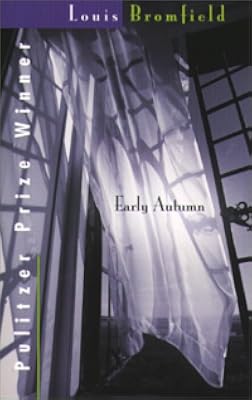
Early Autumn
by Louis Bromfield
On This Page
Description
A forthright woman disrupts the social order of upper crust New England in this Pulitzer Prize-winning family saga. Tracing their lineage back to its colonial founders, the Pentland family of Durham, Massachusetts, is committed to preserving the "old ways." But time has its own way of moving restlessly forward. Patriarch John Pentland never understood why his niece Sabine married a man so beneath them. Now, after escaping to Europe twenty years ago, the black sheep has returned. And she's show more determined to present her eighteen-year-old daughter to society. Sabine Callendar is not the humble, broken creature the Pentlands expected. In fact, she has no trouble holding them accountable, skewering the hypocrisies of a society that once tormented her. As long-held secrets come to light the Pentlands, and the legacy of their name, will be changed forever. show lessTags
Recommendations












Member Reviews
Summary: Olivia Pentland, in a loveless marriage in a rich old family, faces choices as the early autumn approaches when she turns 40.
I’ve long had an interest in Ohio-born author Louis Bromfield. Bromfield was a best-selling novelist in the 1920’s, winning the Pulitzer Prize for this work. In the 1938, he returned from Paris to his home town of Mansfield, Ohio, purchasing a worn out piece of farmland that he renamed Malabar Farm, building an elegant home that was the site of the wedding of Humphrey Bogart and Lauren Bacall. I’ve toured the home, camped with Boy Scouts on the farm, and read two books on his early experiments with sustainable agriculture, Pleasant Valley and Malabar Farm. But until now, I’ve not read any of his show more fiction, which I suspect is largely neglected these days.
The story is set in the fictional town of Durham, Massachusetts at the estate of the Pentlands, a rich but declining old New England family. The central character is Olivia Pentland. Though Scotch-Irish and of a lower class, she had a dark beauty and her own wealth. As a young girl, a marriage to Anson Pentland appeared promising. Twenty years on, she found herself in a loveless marriage. Anson was in love with writing his family’s history but no longer slept with Olivia, Their daughter, Sybil was turning 18, their son and heir, John, was sickly, and the shadow of death hangs over this narrative.
The one person Olivia shares the deepest bond with is Anson’s father, John. He is still in many ways the family head at the Pentlands, even as Olivia makes the household work. His wife is still living, but confined to a wing of the home, having descended into insanity and cared for by Miss Egan, who is secretly having an affair with Higgins, their groom. While visiting his wife every day, John Pentland also has had a close companionship with Mrs. Soames.
During the summer before Olivia is to turn forty, John’s niece, Sabine Callendar and her daughter Therese have come for a visit, staying at a cottage owned by Michael O’Hara, an upstart Irish politician who has built a new estate nearby. Sabine represents the family scandal, having lived a libertine life in France. She is resented by Aunt Cassie, the family Puritan determined to maintain the rectitude and reputation of the Pentlands. But Sabine’s presence is the catalyst for Olivia to realize the confining character of her own life at Pentlands. The loveless marriage, the strictures of what’s appropriate, and the secrets lurking behind the pious appearances. Not only that, Olivia fears her daughter will inherit all this.
Not only that, Sabine brings Olivia together with Michael O’Hara. O’Hara had been riding horses with Sybil. When Olivia joins to discover his intentions, she learns his interest is in her, not the daughter. Through the summer, romance kindles between them. Meanwhile, she finds a bundle of letters revealing a family secret that will wreck the pretensions of the Pentlands. That includes Anson’s book. Then a young man arrives from France who had met Sybil during a visit and is seeking her hand. He’s a man of character and the two really love each other. But this won’t go down well with the Pentlands.
Things come to a head as autumn and Olivia’s birthday approaches. What will she do about O’Hara? About her daughter? About the messed up household of the Pentlands, which somehow has ended depending upon her? Among all those trying to influence and define her, she is confronted with what she wants in her life at this important juncture, and what kind of person she will be.
I liked the way Bromfield builds up to the crisis we all see is coming. In addition, in developing the character of Olivia, we come to appreciate her strength, quiet beauty, and deep sadness. The novel harks back to a different time, a blend (or clash?) of Regency, Victorian, and Continental sensibilities in a New England setting. Written a century after Jane Austen’s novels, I found it had more in common with these than more recent works. Perhaps that is why people aren’t reading Bromfield these days. But this is Bromfield at his best, and well worth the read.
My reviews of Bromfield’s non-fiction:
Pleasant Valley: https://bobonbooks.com/2015/10/08/review-pleasant-valley/
Malabar Farm: https://bobonbooks.com/2015/10/26/review-malabar-farm/ show less
I’ve long had an interest in Ohio-born author Louis Bromfield. Bromfield was a best-selling novelist in the 1920’s, winning the Pulitzer Prize for this work. In the 1938, he returned from Paris to his home town of Mansfield, Ohio, purchasing a worn out piece of farmland that he renamed Malabar Farm, building an elegant home that was the site of the wedding of Humphrey Bogart and Lauren Bacall. I’ve toured the home, camped with Boy Scouts on the farm, and read two books on his early experiments with sustainable agriculture, Pleasant Valley and Malabar Farm. But until now, I’ve not read any of his show more fiction, which I suspect is largely neglected these days.
The story is set in the fictional town of Durham, Massachusetts at the estate of the Pentlands, a rich but declining old New England family. The central character is Olivia Pentland. Though Scotch-Irish and of a lower class, she had a dark beauty and her own wealth. As a young girl, a marriage to Anson Pentland appeared promising. Twenty years on, she found herself in a loveless marriage. Anson was in love with writing his family’s history but no longer slept with Olivia, Their daughter, Sybil was turning 18, their son and heir, John, was sickly, and the shadow of death hangs over this narrative.
The one person Olivia shares the deepest bond with is Anson’s father, John. He is still in many ways the family head at the Pentlands, even as Olivia makes the household work. His wife is still living, but confined to a wing of the home, having descended into insanity and cared for by Miss Egan, who is secretly having an affair with Higgins, their groom. While visiting his wife every day, John Pentland also has had a close companionship with Mrs. Soames.
During the summer before Olivia is to turn forty, John’s niece, Sabine Callendar and her daughter Therese have come for a visit, staying at a cottage owned by Michael O’Hara, an upstart Irish politician who has built a new estate nearby. Sabine represents the family scandal, having lived a libertine life in France. She is resented by Aunt Cassie, the family Puritan determined to maintain the rectitude and reputation of the Pentlands. But Sabine’s presence is the catalyst for Olivia to realize the confining character of her own life at Pentlands. The loveless marriage, the strictures of what’s appropriate, and the secrets lurking behind the pious appearances. Not only that, Olivia fears her daughter will inherit all this.
Not only that, Sabine brings Olivia together with Michael O’Hara. O’Hara had been riding horses with Sybil. When Olivia joins to discover his intentions, she learns his interest is in her, not the daughter. Through the summer, romance kindles between them. Meanwhile, she finds a bundle of letters revealing a family secret that will wreck the pretensions of the Pentlands. That includes Anson’s book. Then a young man arrives from France who had met Sybil during a visit and is seeking her hand. He’s a man of character and the two really love each other. But this won’t go down well with the Pentlands.
Things come to a head as autumn and Olivia’s birthday approaches. What will she do about O’Hara? About her daughter? About the messed up household of the Pentlands, which somehow has ended depending upon her? Among all those trying to influence and define her, she is confronted with what she wants in her life at this important juncture, and what kind of person she will be.
I liked the way Bromfield builds up to the crisis we all see is coming. In addition, in developing the character of Olivia, we come to appreciate her strength, quiet beauty, and deep sadness. The novel harks back to a different time, a blend (or clash?) of Regency, Victorian, and Continental sensibilities in a New England setting. Written a century after Jane Austen’s novels, I found it had more in common with these than more recent works. Perhaps that is why people aren’t reading Bromfield these days. But this is Bromfield at his best, and well worth the read.
My reviews of Bromfield’s non-fiction:
Pleasant Valley: https://bobonbooks.com/2015/10/08/review-pleasant-valley/
Malabar Farm: https://bobonbooks.com/2015/10/26/review-malabar-farm/ show less
Pulitzer Prize winner for 1927.
Durham, Massachusetts, is an outpost for the old, wealthy families of Boston, such as the Pentlands, who live in a mansion of the same name. The story recounts the lives of the Pentlands in post World War I Durham during late summer and early fall, mostly from the point of view of Olivia, the 40 year old wife of Anson Pentland.There are unwelcome changes to the neighborhood and to the lives of the Pentlands, coming in the form of Sabine Callender, sister of Anson, who is the “black sheep” of the family, returning to Pentlands after a scandalous 20 year absence and in Michael O’Hara, a self-made Irishman who has risen to wealth and political prominence--but who is definitely not socially acceptable. show more Tragedies interrupt the placid existence at Pentlands, as the different generations of Pentlands react to these events in their own ways.
The book has no real plot as such but rather it is an examination of the lives of the very rich who claim distinction through family during the early 20th century. The result is an indictment of meaningless lives, where people of all but the latest generation exist rather than live. Contrasted with these desiccated survivors of an old New England family is the vitality of O’Hare, an upstart, a “shanty Irish”, who does not have the purity of blood to sully the Pentland name.
Women are the main protagonists: besides Olivia, there is Aunt Cassie, who is the arbiter of the family morals and “standards;” Sabine, who hates everything her family stands for and longs to destroy them; and Sybil, Olivia’s daughter, who symbolizes the hope of escape from the stultifying existence of Pentland expectations. These and other characters, however, with the exception of Olivia, are caricatures, one-dimensional, in Bromfield’s remorseless attack on upper-class lives. Everyone is a stereotype, although a well-drawn stereotype.
Bromfield’s use of language is stunning. His prose drifts, ephemeral, insubstantial--just like the lives of the Pentlands. Olivia speaks repeatedly of living in an “enchantment” that numbs her life. The landscape around Durham is without color, as are the Pentlands.
While brilliantly written, in the end I found the book unsatisfying. It was just too much of meaninglessness, endlessly repeated, with the characters insufficiently complex to sustain my interest. In the end, they all behave predictably, from Old John Pentland, the patriarch, down to Sybil. This may have been Bromfield’s intent, to draw characters so devoid of life in order to rip away any pretense of glamor surrounding the Old Rich, and it may have been novel during the Roaring Twenties, but in today’s cynical world, the book doesn’t hold up. But as an example of near-perfect writing, where the author totally bends his prose to his intent, Early Autumn is hard to match. show less
Durham, Massachusetts, is an outpost for the old, wealthy families of Boston, such as the Pentlands, who live in a mansion of the same name. The story recounts the lives of the Pentlands in post World War I Durham during late summer and early fall, mostly from the point of view of Olivia, the 40 year old wife of Anson Pentland.There are unwelcome changes to the neighborhood and to the lives of the Pentlands, coming in the form of Sabine Callender, sister of Anson, who is the “black sheep” of the family, returning to Pentlands after a scandalous 20 year absence and in Michael O’Hara, a self-made Irishman who has risen to wealth and political prominence--but who is definitely not socially acceptable. show more Tragedies interrupt the placid existence at Pentlands, as the different generations of Pentlands react to these events in their own ways.
The book has no real plot as such but rather it is an examination of the lives of the very rich who claim distinction through family during the early 20th century. The result is an indictment of meaningless lives, where people of all but the latest generation exist rather than live. Contrasted with these desiccated survivors of an old New England family is the vitality of O’Hare, an upstart, a “shanty Irish”, who does not have the purity of blood to sully the Pentland name.
Women are the main protagonists: besides Olivia, there is Aunt Cassie, who is the arbiter of the family morals and “standards;” Sabine, who hates everything her family stands for and longs to destroy them; and Sybil, Olivia’s daughter, who symbolizes the hope of escape from the stultifying existence of Pentland expectations. These and other characters, however, with the exception of Olivia, are caricatures, one-dimensional, in Bromfield’s remorseless attack on upper-class lives. Everyone is a stereotype, although a well-drawn stereotype.
Bromfield’s use of language is stunning. His prose drifts, ephemeral, insubstantial--just like the lives of the Pentlands. Olivia speaks repeatedly of living in an “enchantment” that numbs her life. The landscape around Durham is without color, as are the Pentlands.
While brilliantly written, in the end I found the book unsatisfying. It was just too much of meaninglessness, endlessly repeated, with the characters insufficiently complex to sustain my interest. In the end, they all behave predictably, from Old John Pentland, the patriarch, down to Sybil. This may have been Bromfield’s intent, to draw characters so devoid of life in order to rip away any pretense of glamor surrounding the Old Rich, and it may have been novel during the Roaring Twenties, but in today’s cynical world, the book doesn’t hold up. But as an example of near-perfect writing, where the author totally bends his prose to his intent, Early Autumn is hard to match. show less
Classic Bromfield with a cast of characters that range from the weak and foolish to the wise and strong, inhabiting a world that’s changing and moving forward.
No, the time this story is set in isn’t our time anymore and values have changed, but I still found it an interesting glimpse back onto a past and characters governed by those values we might now find wrong.
No, the time this story is set in isn’t our time anymore and values have changed, but I still found it an interesting glimpse back onto a past and characters governed by those values we might now find wrong.
Early Autumn won the Pulitzer in 1926, and like many of the Pulitzer winners around this time, the focus was much more on the story than the storytelling. Unfortunately, the story being told was one that's been told a million times before. Woman marries into wealthy and prestigious family. Her husband is cold and indifferent. She falls in love with a lowly farmhand. They promise to run away together. Instead, they don't.
There are 4 similar books I can think of off hand that tell a similar story but are much more engaging.
There are 4 similar books I can think of off hand that tell a similar story but are much more engaging.
Life for society women in the 1920s had its own constraints, the image of "family" was stronger than "self" and women's freedom didn't exist yet.
In "Early Autumn, " the Pulitzer Prize winner of 1927, we have a story of a wealthy family, its place in the society of the times and the rigid rules of family members who are almost members of the aristocracy of New England.
The story opens with the celebration of Olivia Pentland's daughter, Sybil's being presented to Boston society. Also being presented is her friend and neighbor, Therese Callendar.
It is evident that Olivia is the strength of the family. She hasn't reached age forty and has little time for herself. Her husband spends most of his time in his Boston office, working with show more charities or on family genealogy. He gets an income from his elderly father, who doesn't trust him to run the family business.
At a time without television, one means for entertainment for society women was to visit with their friends and learn the latest gossip. This is the case for Aunt Cassie (the family busy body) and Sabine Callendar. These women don't like each other and the author compares them to a couple of cats, eyeing each other for days at a time, stealthily.
Bromfield's wit is evident when we read of Aunt Cassie talking about joining her late husband in heaven. Sabine tells us her feeling that, based on how her husband tried to stay away from Cassie in life, the reunion might not be as pleasant as she expects.
Olivia seems forced to live in a world filled with traditions but little love. She does see her daughter trying to escape from this family web and it gives her hope.
She meets a man who brings the thrill of love and a new meaning of life. But, can a woman of society in the 1920s ask for divorce? What if her husband refuses?
This was an interesting story, to see how society acted almost one hundred years ago and how things have changed. show less
In "Early Autumn, " the Pulitzer Prize winner of 1927, we have a story of a wealthy family, its place in the society of the times and the rigid rules of family members who are almost members of the aristocracy of New England.
The story opens with the celebration of Olivia Pentland's daughter, Sybil's being presented to Boston society. Also being presented is her friend and neighbor, Therese Callendar.
It is evident that Olivia is the strength of the family. She hasn't reached age forty and has little time for herself. Her husband spends most of his time in his Boston office, working with show more charities or on family genealogy. He gets an income from his elderly father, who doesn't trust him to run the family business.
At a time without television, one means for entertainment for society women was to visit with their friends and learn the latest gossip. This is the case for Aunt Cassie (the family busy body) and Sabine Callendar. These women don't like each other and the author compares them to a couple of cats, eyeing each other for days at a time, stealthily.
Bromfield's wit is evident when we read of Aunt Cassie talking about joining her late husband in heaven. Sabine tells us her feeling that, based on how her husband tried to stay away from Cassie in life, the reunion might not be as pleasant as she expects.
Olivia seems forced to live in a world filled with traditions but little love. She does see her daughter trying to escape from this family web and it gives her hope.
She meets a man who brings the thrill of love and a new meaning of life. But, can a woman of society in the 1920s ask for divorce? What if her husband refuses?
This was an interesting story, to see how society acted almost one hundred years ago and how things have changed. show less
Early Autumn won the Pultzer in 1927and is very much a product of it's era. It's a gentle story about a wealthy family in New England. The characters are well-drawn and the story of their relationships interesting enough to keep me reading.
Similar to Age of Innocence by Edith Wharton and The Late George Appley by John Marquand - blending New England character with unrequited love.
Members
- Recently Added By
Lists

Pulitzer Prize Winners for Fiction
102 works; 54 members

Best Books of 1926-1935
403 works; 10 members

Books Referenced by Izetbegovic's Islam Between East and West
233 works; 2 members
Author Information

All Editions
Some Editions
Awards and Honors
Awards
Series
Belongs to Publisher Series
Florin Books (26)
Work Relationships
Common Knowledge
- Canonical title
- Early Autumn
- Original title
- Early Autumn
- People/Characters
- Sybil Pentland; Therese Callendar; Sabine Callendar; John Pentland; Olivia Pentland; Egan (show all 13); Mrs. Soames; Agnes; Aunt Cassie; Horace Pentland; Michael O'Hara; Dr. Jennings; Jean de Ceyon
- Important places
- Boston, Massachusetts, USA; Durham, Massachusetts, USA
- Dedication
- For Laura Canfield Wood
- First words
- There was a ball in the old Pentland house because for the first time in nearly forty years there was a young girl in the family to be introduced to the polite world of Boston and to the elect who had been asked to come on fr... (show all)om New York and Philadelphia.
- Last words
- (Click to show. Warning: May contain spoilers.)Out of the darkness came the sound of a feeble, reed-like voice, terrible in its sanity, saying, "Oh, it's you, Olivia. I knew you'd come. I've been waiting for you. . . ."
Classifications
Statistics
- Members
- 288
- Popularity
- 111,729
- Reviews
- 8
- Rating
- (3.58)
- Languages
- 8 — English, French, German, Italian, Norwegian (Bokmål), Romanian, Spanish, Swedish
- Media
- Paper, Audiobook, Ebook
- ISBNs
- 21
- ASINs
- 29