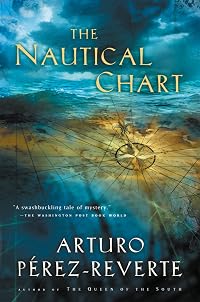
The Nautical Chart
by Arturo Pérez-Reverte
On This Page
Description
Coy is a sailor without a ship.Tánger Soto is a woman with an obsession to find the Dei Gloria, a ship sunk during the seventeenth century, and El Piloto is an old man with the sailboat on which all three set out to seek their fortune together. Or do they?.
Tags
Recommendations
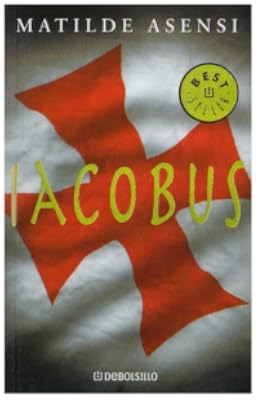
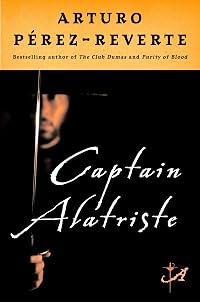
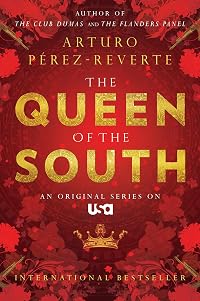
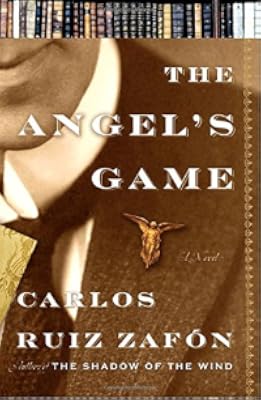


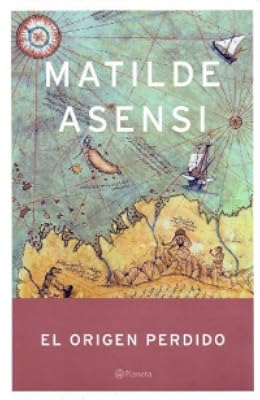
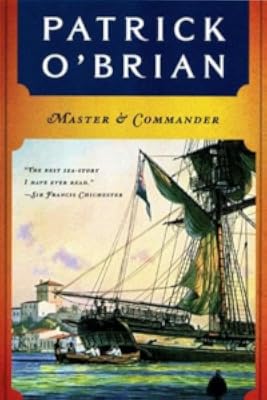

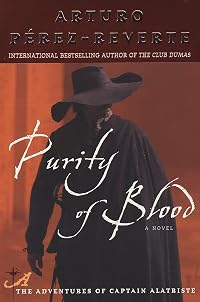


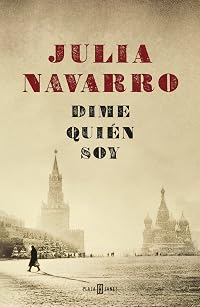













Member Recommendations
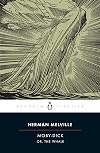
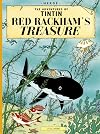
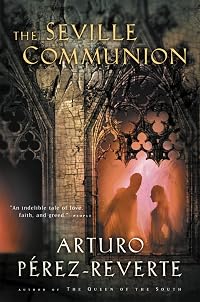
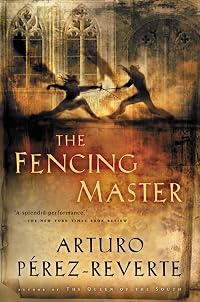
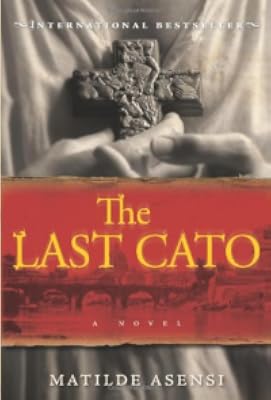
thorold Essential background reading: P-R has a lot of fun reworking this Tintin adventure in a modern, grown-up setting.
Member Reviews
A curious mixture of noir thriller, Tintin adventure and Moby-Dick. Perez-Reverte seems to be playing around with that most Spanish of subjects, the collision between real life and the romance of adventure stories. A heroine who can't make her mind up whether she's Mary Astor in The Maltese Falcon or a boy reporter with a quiff is confronted with a hero made up of equal parts of Lord Jim, Captain Haddock and Popeye, and they go hunting for sunken treasure in 1990s Spain. It sounds absurd, and the concept isn't helped by P-R’s habitual weakness for the worst noir clichés (the fist-fights, the sip-by-sip and blow-by-blow descriptions of every drink and cigarette, the mind-numbing misogyny of it all). But I have to confess to getting a show more good deal of pleasure out of it. Maybe some of that came from reading it in the original and having to puzzle out all the Spanish nautical terminology, but there is also something curiously appealing about the character of the sailor who still hasn't quite fallen out of love with the sea. show less
I do not know even after all these pages whether the translation sucks or the whole thing misses the mark ?
it feels like when you go to an elaborate dinner served by a drunk foodie couple whose overambitious menu features dishes with expensive and exotic ingredients that they just can't quite pull off while inebriated and interacting with their guests. Stuff comes to the table late, under or over-cooked. The dialogue is banal, and what should tickle the senses falls flat.
if you put a post-it over the author's name you might think Dan Brown and Clive Cussler's manuscripts got misfed in adjacent Xerox machines that spat out the pages and the people who came upon the papers scattered about published the stuff they picked up off the floor show more and shuffled back together. show less
it feels like when you go to an elaborate dinner served by a drunk foodie couple whose overambitious menu features dishes with expensive and exotic ingredients that they just can't quite pull off while inebriated and interacting with their guests. Stuff comes to the table late, under or over-cooked. The dialogue is banal, and what should tickle the senses falls flat.
if you put a post-it over the author's name you might think Dan Brown and Clive Cussler's manuscripts got misfed in adjacent Xerox machines that spat out the pages and the people who came upon the papers scattered about published the stuff they picked up off the floor show more and shuffled back together. show less
I read this when it first came out over 20 years ago. I loved it back then as a swashbuckling adventure with sly references to the Tin Tin books The Secret of the Unicorn and Red Rackham's treasure. I have just re-read it, and while I still enjoyed it (I liked the narrative around the fact that the world is shrinking and that arts of navigating the seas without GPS are being lost), the world has moved on and Coy, the key protaganist does come out as a misogynistic and violent anti-hero.
An enjoyable story but not totally engrossing and at times the writing is a little more intricate than it needs to be making it hard work in parts. Not what I'd describe as a page turner but there was no way I was going to give up on it either.
No time for more than a brief note, alas.
Coy is a sailor confined to land for a couple of years because he accidentally ran a ship aground. He's lured by lovely museum curator Tanger into the search for a Jesuit ship that sank/was sunk in the late 18th century, and for its cargo of precious emeralds. As the tale slowly unfolds we're treated to a myriad smaller stories of Coy's earlier adventures among other men for whom, like him, the land seems a foreign territory and the sea their only possible home.
This longish text demands that you immerse yourself in it, that you invest in time in it; it's not really amenable to being read in ten-minute chunks grabbed here and there as other activities permit. If you're looking for rip-roaring, show more pulse-pounding action, this isn't for you (although there's some of that in it), but I found it entirely engrossing nonetheless -- it was a wrench to put it down each time I had to.
Margaret Sayers Peden's respectful translation serves the book well. Every now and then I was reminded, by an odd turn of phrase or some infelicuty, that this was a translation, but that occurred no more than a handful of times during the book; otherwise, the narrative read with great style. show less
Coy is a sailor confined to land for a couple of years because he accidentally ran a ship aground. He's lured by lovely museum curator Tanger into the search for a Jesuit ship that sank/was sunk in the late 18th century, and for its cargo of precious emeralds. As the tale slowly unfolds we're treated to a myriad smaller stories of Coy's earlier adventures among other men for whom, like him, the land seems a foreign territory and the sea their only possible home.
This longish text demands that you immerse yourself in it, that you invest in time in it; it's not really amenable to being read in ten-minute chunks grabbed here and there as other activities permit. If you're looking for rip-roaring, show more pulse-pounding action, this isn't for you (although there's some of that in it), but I found it entirely engrossing nonetheless -- it was a wrench to put it down each time I had to.
Margaret Sayers Peden's respectful translation serves the book well. Every now and then I was reminded, by an odd turn of phrase or some infelicuty, that this was a translation, but that occurred no more than a handful of times during the book; otherwise, the narrative read with great style. show less
Helped pass a dull daytime flight. Read a bit like a sub-Bond movie at times. Unreconstructed misogynist as anti-hero grated at times.
After reading Captain Alatriste earlier in the year, I felt overdue to revisit one of Perez-Reverte’s more contemporary novels. This one isn’t quite in the league of The Flanders Panel or The Club Dumas, but it was very enjoyable.
The story revolves around a sailor who has been barred from his naval career due to an unfortunate incident at sea. Attending an auction, he witnesses a curious bidding war over a very old nautical chart. Soon he is entangled with a femme fatale who thinks she has the inside track to a bountiful treasure lost at sea several hundred years ago.
As always, Perez-Reverte manages to weave considerable research into the story quite effortlessly. He just threads it into the action so you hardly notice how much show more you’re learning. Here we learn much of the nuances of a sailor’s life as well as a subtle history of mapmaking. So this is a good page-turner that will teach you a few things. But if you’re unconvinced, start with his other two books that I mentioned. show less
The story revolves around a sailor who has been barred from his naval career due to an unfortunate incident at sea. Attending an auction, he witnesses a curious bidding war over a very old nautical chart. Soon he is entangled with a femme fatale who thinks she has the inside track to a bountiful treasure lost at sea several hundred years ago.
As always, Perez-Reverte manages to weave considerable research into the story quite effortlessly. He just threads it into the action so you hardly notice how much show more you’re learning. Here we learn much of the nuances of a sailor’s life as well as a subtle history of mapmaking. So this is a good page-turner that will teach you a few things. But if you’re unconvinced, start with his other two books that I mentioned. show less
Members
- Recently Added By
Lists

Recommend the 20 best books you've read in the last five years
2,168 works; 607 members

Best Sea Stories
33 works; 5 members
Author Information

75+ Works 37,955 Members
Novelist and former journalist Arturo Pérez-Reverte Gutiérrez was born in Cartagena, Spain on November 25, 1951. He started his journalistic career writing for the Spanish newspaper Pueblo and later for Television Espanola - the Spanish state owned television, in the role of war correspondant. He worked as a war correspondent from 1973 to1994 show more before becoming a full-time writer. His first novel, El húsar, which was set in the Napoleonic Wars, was published in 1986, and he is well-known internationally for his popular Captain Alatriste fiction series, which takes place in 17th-century Europe. Pérez-Reverte has been elected to the Spanish Royal Academy. (Bowker Author Biography) show less
Some Editions
Awards and Honors
Distinctions
Series
Belongs to Publisher Series
Common Knowledge
- Canonical title
- The Nautical Chart
- Original title
- La carta esférica
- Alternate titles*
- Тайный меридиан
- Original publication date
- 2000
- People/Characters*
- Coy; Tanger Soto
- Important places
- Admiral Benbow Inn, Bristol, England, UK; Spain
- Related movies
- The Nautical Chart (2007 | IMDb)
- Epigraph*
- Une carte marine est bien plus qu'un instrument indispensable pour aller d'un point à un autre ; c'est une gravure, une page d'histoire, parfois un roman d'aventures.
Jacques Dupuet, Marin - First words
- We could call him Ishmael, but in truth his name is Coy.
- Last words
- (Click to show. Warning: May contain spoilers.)Oh God, he thought, I hope they let me go back to sea. I hope I find a good ship soon.
- Original language
- Spanish
*Some information comes from Common Knowledge in other languages. Click "Edit" for more information.
Classifications
- Genres
- Fiction and Literature, General Fiction, Mystery, Historical Fiction
- DDC/MDS
- 863.64 — Literature & rhetoric Spanish Literature Spanish fiction 20th Century 1945-2000
- LCC
- PQ6666 .E765 .C3813 — Language and Literature French, Italian, Spanish and Portuguese literatures Spanish literature Individual authors, 1961-2000
- BISAC
Statistics
- Members
- 2,266
- Popularity
- 8,889
- Reviews
- 38
- Rating
- (3.53)
- Languages
- 13 — Czech, Danish, Dutch, English, Finnish, French, German, Greek, Italian, Polish, Russian, Spanish, Portuguese (Portugal)
- Media
- Paper, Audiobook, Ebook
- ISBNs
- 64
- ASINs
- 19