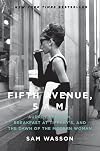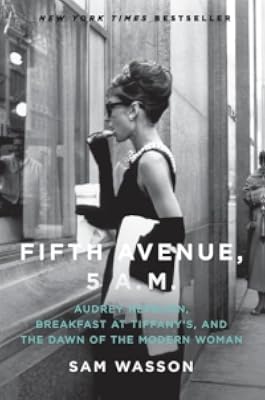
Fifth Avenue, 5 A.M.: Audrey Hepburn, Breakfast at Tiffany's, and the Dawn of the Modern Woman
by Sam Wasson
On This Page
Description
A closeup examination of Blake Edwards' classic film, Breakfast at Tiffany's, winner of two Oscars.Tags
Recommendations












Member Reviews
Fifth Avenue, 5 A.M., by Sam Wasson, is a little book with a lot to say.
The title tells you where and when shooting began on a silly-yet-pivital romantic comedy — the movie version of Breakfast at Tiffany's — and the book proceeds to put the whole production into the context of its time.
Think late-fifties, early sixties. The world was different then. I had forgotten how different.
What really interested me, though, was seeing how a story can be reimagined, and why this one had to be.
First of all, if you've never read Breakfast at Tiffany's, do it now. Go ahead. Go. The rest of this can wait and I don't want to spoil anything for you ...
It's stunning, don't you think, just how good Capote's comic tragedy really is. I just read it show more again and was astonished once more by how much feeling he was able to pack in so few pages.
But the novella — even though it provides most of the dialogue in the film and shows more than it tells — was not well suited for the screen. Not at the time.
In Fifth Avenue, 5 A.M., we learn that screenwriter George Axelrod struggled with the adaptation and nearly dispaired. This wasn't the typical Hollywood romance where Rock Hudson tries to bed Doris Day and she holds him off until they're married.
The central character, Holly Golightly (Audrey Hepburn in the movie) is a Manhatten partygirl living off the largess of rich old men. Virginity isn't an issue.
That was good because, we're told, Axelrod had been itching to do a truly adult comedy. It was bad because he had the Motion Picture Production Code to worry about.
I watched the movie again last night and, while far from perfect, it is fascinating in its own right. Holly comes across as innocent compared to Paul, the male lead, who Axelrod reimagined as not just a struggling writer (as in the book) but one who prostitutes himself to a rich, older, married woman who leaves cash on the dresser when she leaves in the morning.
That was OK with Holly and with the censors and it all ends happily.
What I'd really like to see is a remake by the Coen Brothers. show less
The title tells you where and when shooting began on a silly-yet-pivital romantic comedy — the movie version of Breakfast at Tiffany's — and the book proceeds to put the whole production into the context of its time.
Think late-fifties, early sixties. The world was different then. I had forgotten how different.
What really interested me, though, was seeing how a story can be reimagined, and why this one had to be.
First of all, if you've never read Breakfast at Tiffany's, do it now. Go ahead. Go. The rest of this can wait and I don't want to spoil anything for you ...
It's stunning, don't you think, just how good Capote's comic tragedy really is. I just read it show more again and was astonished once more by how much feeling he was able to pack in so few pages.
But the novella — even though it provides most of the dialogue in the film and shows more than it tells — was not well suited for the screen. Not at the time.
In Fifth Avenue, 5 A.M., we learn that screenwriter George Axelrod struggled with the adaptation and nearly dispaired. This wasn't the typical Hollywood romance where Rock Hudson tries to bed Doris Day and she holds him off until they're married.
The central character, Holly Golightly (Audrey Hepburn in the movie) is a Manhatten partygirl living off the largess of rich old men. Virginity isn't an issue.
That was good because, we're told, Axelrod had been itching to do a truly adult comedy. It was bad because he had the Motion Picture Production Code to worry about.
I watched the movie again last night and, while far from perfect, it is fascinating in its own right. Holly comes across as innocent compared to Paul, the male lead, who Axelrod reimagined as not just a struggling writer (as in the book) but one who prostitutes himself to a rich, older, married woman who leaves cash on the dresser when she leaves in the morning.
That was OK with Holly and with the censors and it all ends happily.
What I'd really like to see is a remake by the Coen Brothers. show less
I really enjoyed this book, especially Wasson's writing style. This book could have easily gone either too expose, but Wasson weaves episodes surrounding the conception of the film, the careers of the people involved, and the effects the book had into a vivid story that makes for a very enjoyable and easy read. I also liked the feminism that he brings out in Hepburn's transformation from the princess good girl to the sophisticated actress, and the change Holly golightly had on American women.
Snack Lit rating: trail mix
Snack Lit rating: trail mix
This is an odd little book, light as a feather (in actual weight due to the quality of the paper, as well as its content) and so ideal for a summer read. I picked it up because of positive reviews. Like almost everyone (except, it seems, Emma Thompson who recently said she couldn't act), I loved Audrey Hepburn. By the end, I found that everyone who knew her loved her so no startling revelations here. Indeed, the author didn't set out to insult anyone: according to the subtitle, his intent is to position Audrey and "Breakfast at Tiffany's" as precursors to the "modern woman", although it's not clear who that woman is.
Audrey herself professed to put children and family far before her career and testimony from her son Sean and Robert show more Wolders, her longtime spousal equivalent until the end of her life, supports this. Apart from the flashy career she fell into and ultimately abandoned, Audrey was a firm traditionalist. Perhaps it was her character, Holly Golightly, the author had in mind?
The idea for the book surely came from Wasson's other book, "A Splurch in the Kisser: The Movies of Blake Edwards", the director of "Breakfast". He is the most fleshed out character in this book, partly because of Wasson's access to him and his friends. He managed a happy, sometimes whacky set that presaged the zaniness of his Inspector Clouseau movies.
Most of the others involved in "Breakfast" have died: the two lead actors, the writer, one of the producers and the composer of the haunting title song, "Moon River" - Henry Mancini. The notes at the back cite lengthy input from Richard Shepherd, a producer, supporting actress Patricia Neal, and Hepburn's family. The remaining sources are magazine interviews with the principals and biographies of Truman Capote, Edith Head and others. So far so good until Wasson attempts to put words in his protagonists' heads as he does with Hepburn. Here she - supposedly - is as she waits in a car to begin the first scene in front of Tiffany's at 5 A.M.:
"What she had to do now was to forget that she wasn't anyone's first choice, and that Capote was dissatisfied (some said), and that no one seemed to know how much Holly was, well, whatever she was ... She had to forget about her fights with Mel (Ferrer, her husband) whom she missed as much as she was glad to be without. It wasn't something Audrey had put words to. Was it really true love? Or was it grown-up love, the kind they don't make movies about?"
This seems to me a monumental presumption. One of the magazine sources Wasson uses elsewhere in the book is "Photoplay", a popular movie rag of the 1950s and 60s and this pulpy item certainly reads the same way.
Truman Capote's Holly Golightly was based on his mother and some of his "swans", the New York socialites he palled around with. She was a dreamy-eyed girl who partied hard and supported herself by sleeping with men for money. In hiring Hepburn, the producers hoped to win over the production code people, and by blurring the reality of how Holly made a living, the movie manages to leave unsaid that she is, essentially, a hooker. The casting of everyone's favorite good girl helped sell that idea.
If Wasson's theory is that Holly (not Hepburn) signaled the "dawn of the modern woman", he also conveniently ignores the whole prostitute thing and apparently bases this on the fact that Holly lived alone and made her own way in the world. That girl is the one that Helen Gurley Brown celebrated in 1962 with "Sex and the Single Girl" and sassy as she was, Helen wasn't recommending prostitution for her career-minded readers.
In the end, it's enjoyable for the light-as-a-feather gossipy story it really is: part fact, part made up stuff posing as fact. The author's attempts to make it some sort of comment on the dawn of something serious was off-putting and a little insulting to the reader's intelligence. Ignore the ridiculous subtitle: this is a story of how an entertaining movie was made, and some of the drama that went into hoodwinking the public as to what it was really about. show less
Audrey herself professed to put children and family far before her career and testimony from her son Sean and Robert show more Wolders, her longtime spousal equivalent until the end of her life, supports this. Apart from the flashy career she fell into and ultimately abandoned, Audrey was a firm traditionalist. Perhaps it was her character, Holly Golightly, the author had in mind?
The idea for the book surely came from Wasson's other book, "A Splurch in the Kisser: The Movies of Blake Edwards", the director of "Breakfast". He is the most fleshed out character in this book, partly because of Wasson's access to him and his friends. He managed a happy, sometimes whacky set that presaged the zaniness of his Inspector Clouseau movies.
Most of the others involved in "Breakfast" have died: the two lead actors, the writer, one of the producers and the composer of the haunting title song, "Moon River" - Henry Mancini. The notes at the back cite lengthy input from Richard Shepherd, a producer, supporting actress Patricia Neal, and Hepburn's family. The remaining sources are magazine interviews with the principals and biographies of Truman Capote, Edith Head and others. So far so good until Wasson attempts to put words in his protagonists' heads as he does with Hepburn. Here she - supposedly - is as she waits in a car to begin the first scene in front of Tiffany's at 5 A.M.:
"What she had to do now was to forget that she wasn't anyone's first choice, and that Capote was dissatisfied (some said), and that no one seemed to know how much Holly was, well, whatever she was ... She had to forget about her fights with Mel (Ferrer, her husband) whom she missed as much as she was glad to be without. It wasn't something Audrey had put words to. Was it really true love? Or was it grown-up love, the kind they don't make movies about?"
This seems to me a monumental presumption. One of the magazine sources Wasson uses elsewhere in the book is "Photoplay", a popular movie rag of the 1950s and 60s and this pulpy item certainly reads the same way.
Truman Capote's Holly Golightly was based on his mother and some of his "swans", the New York socialites he palled around with. She was a dreamy-eyed girl who partied hard and supported herself by sleeping with men for money. In hiring Hepburn, the producers hoped to win over the production code people, and by blurring the reality of how Holly made a living, the movie manages to leave unsaid that she is, essentially, a hooker. The casting of everyone's favorite good girl helped sell that idea.
If Wasson's theory is that Holly (not Hepburn) signaled the "dawn of the modern woman", he also conveniently ignores the whole prostitute thing and apparently bases this on the fact that Holly lived alone and made her own way in the world. That girl is the one that Helen Gurley Brown celebrated in 1962 with "Sex and the Single Girl" and sassy as she was, Helen wasn't recommending prostitution for her career-minded readers.
In the end, it's enjoyable for the light-as-a-feather gossipy story it really is: part fact, part made up stuff posing as fact. The author's attempts to make it some sort of comment on the dawn of something serious was off-putting and a little insulting to the reader's intelligence. Ignore the ridiculous subtitle: this is a story of how an entertaining movie was made, and some of the drama that went into hoodwinking the public as to what it was really about. show less
The style - titled short sections of a few paragraphs - took a bit of getting used to, but the book seemed well-researched and was really interesting. I enjoyed the way the notes in the back were structured; rather than just listing sources, the author gave a bit of explanation for each.
Since I don't remember seeing Breakfast at Tiffany's and know almost nothing about Audrey Hepburn, I don't remember what caught my eye about this book - it's been on my Kindle for 10 (!) years, so thought it was time to read it or dump it.
A short, quick read of only 230 pages, I finished it in a day - it was more interesting than I expected. I didn't know that the movie is based on a Truman Capote book, was directed by Blake Edwards with music by Henry Mancini and was the debut of Moon River written for the movie. The book actually opens with a brief history of Capote and how he viewed women and came to write the book.
Though ostensibly about Audrey Hepburn and the making of the movie, it is just as much about the changing views about show more women and sex in film. The more puritanical viewpoint of the 50s (Doris Day, Sandra Dee) was gradually evolving to the more realistic and evolved woman of the 60s. 'Breakfast' was one of the first in portraying that change.
Well researched and written, it was a pleasure to read and learn more about the Hollywood of the 50s and early 60s. I liked the behind the scenes scoop on making movies, making movie deals, and how the whole Hollywood machine works. Recommended for film buffs and readers who like memoirs or Hollywood history. show less
A short, quick read of only 230 pages, I finished it in a day - it was more interesting than I expected. I didn't know that the movie is based on a Truman Capote book, was directed by Blake Edwards with music by Henry Mancini and was the debut of Moon River written for the movie. The book actually opens with a brief history of Capote and how he viewed women and came to write the book.
Though ostensibly about Audrey Hepburn and the making of the movie, it is just as much about the changing views about show more women and sex in film. The more puritanical viewpoint of the 50s (Doris Day, Sandra Dee) was gradually evolving to the more realistic and evolved woman of the 60s. 'Breakfast' was one of the first in portraying that change.
Well researched and written, it was a pleasure to read and learn more about the Hollywood of the 50s and early 60s. I liked the behind the scenes scoop on making movies, making movie deals, and how the whole Hollywood machine works. Recommended for film buffs and readers who like memoirs or Hollywood history. show less
http://iwriteinbooks.wordpress.com/2011/09/14/fifth-avenue-5-a-m-audrey-hepburn-...
For two reasons, I thought that this might be a little bit far fetched as a book I’d enjoy. The first being that I’m not really a Hepburn fan. You know, that bit about Tiffany’s and the height of femeninity and all. The other is that, well, quite frankly, it is an account of women’s studies but is written by, ahem, a dude.
Now, I can safely report that I was happily mistaken on both accounts. Well, on the second, it is in fact written by a “dude” but that turned out not to be a turn off.
I tend to give men in general a lot more credit than many people, even men themselves, when it comes to understanding women. For that very reason, I shouldn’t show more really be surprised at all that Wasson so expertly manages to capture the transformation of feminine and feminist culture surrounding the early moving picture industry.
Moving expertly through one of Hollywood’s most dramatic periods of transformation, Sam Wasson, weaves a story that is fun and pure but also one that is full of and true to life.
I haven’t done that much research when it comes to the silver screen, (that’s more my husband’s department) so this is a fun intro to many of the names I’ve only ever heard in passing. Of course, I do know the name Capote and he is a prominent player, which, which is cool to see.
The time period is also a relatively unexplored one for me, though my parents were born in it and it is when my, oh so beautiful herself, grandmother was born. This is an age of glamour and glitz but also of chaste solitude of the american woman. Again, Wasson really does his gender a serious service in tapping into the mind and emotion of the developing female culture of the time,
This is a short book but a seriously fun read. It’s a little bit of history, a little bit of culture and a whole lot of entertainment. show less
For two reasons, I thought that this might be a little bit far fetched as a book I’d enjoy. The first being that I’m not really a Hepburn fan. You know, that bit about Tiffany’s and the height of femeninity and all. The other is that, well, quite frankly, it is an account of women’s studies but is written by, ahem, a dude.
Now, I can safely report that I was happily mistaken on both accounts. Well, on the second, it is in fact written by a “dude” but that turned out not to be a turn off.
I tend to give men in general a lot more credit than many people, even men themselves, when it comes to understanding women. For that very reason, I shouldn’t show more really be surprised at all that Wasson so expertly manages to capture the transformation of feminine and feminist culture surrounding the early moving picture industry.
Moving expertly through one of Hollywood’s most dramatic periods of transformation, Sam Wasson, weaves a story that is fun and pure but also one that is full of and true to life.
I haven’t done that much research when it comes to the silver screen, (that’s more my husband’s department) so this is a fun intro to many of the names I’ve only ever heard in passing. Of course, I do know the name Capote and he is a prominent player, which, which is cool to see.
The time period is also a relatively unexplored one for me, though my parents were born in it and it is when my, oh so beautiful herself, grandmother was born. This is an age of glamour and glitz but also of chaste solitude of the american woman. Again, Wasson really does his gender a serious service in tapping into the mind and emotion of the developing female culture of the time,
This is a short book but a seriously fun read. It’s a little bit of history, a little bit of culture and a whole lot of entertainment. show less
Commensurate to the movie, not the book, this is a delightful if superficial account of how Breakfast at Tiffany's came into being. The film may very well have ended up as an airhead comedy "Follow that Blonde". Fortunately for Truman Capote's blood pressure, it didn't, thanks largely to the almost accidental combination of wide-ranging talents. The supporting arts (Givenchy, Tiffany's, Mancini) to its central star in Breakfast at Tiffany's contribute mightily to its magic.
Naturally, Hollywood turned Truman Capote's ambivalently bleak story into an elegant comedy that mostly airbrushed out the 1950s seedy elements of rural poverty, prostitution and organized crime. It also diverted Capote's signals of a homosexual narrator into a show more romantic interest. Wasson too brushes over these elements (if I remember correctly, I read in a Walt Whitman biography that then five to ten percent of female New Yorkers worked as prostitutes). He also sidetracks the one glaring misstep of the film, Mickey Rooney's blatant racist portrayal of Holly's Japanese neighbor. After this entrée or amuse-bouche account, perhaps another writer will produce a meatier treatment, this time including parts about Fifth Avenue, the then-New York party scene as well as the historic era of both the movie and the film. show less
Naturally, Hollywood turned Truman Capote's ambivalently bleak story into an elegant comedy that mostly airbrushed out the 1950s seedy elements of rural poverty, prostitution and organized crime. It also diverted Capote's signals of a homosexual narrator into a show more romantic interest. Wasson too brushes over these elements (if I remember correctly, I read in a Walt Whitman biography that then five to ten percent of female New Yorkers worked as prostitutes). He also sidetracks the one glaring misstep of the film, Mickey Rooney's blatant racist portrayal of Holly's Japanese neighbor. After this entrée or amuse-bouche account, perhaps another writer will produce a meatier treatment, this time including parts about Fifth Avenue, the then-New York party scene as well as the historic era of both the movie and the film. show less
Members
- Recently Added By
Published Reviews
ThingScore 75
This book is such a swift, sweet, smart stroll through the making of the movie Breakfast at Tiffany’s that it takes a little while for one to realize how slick, undemanding, adorable, and unintelligent it really is. The penny doesn’t drop until 5:10 at least.
added by Shortride
Mr. Wasson approaches his subject from many angles. His book winds up as well-tailored as the kind of little black dress that “Breakfast at Tiffany’s” made famous.
added by lorax
Lists

Actors
65 works; 5 members
Author Information

12+ Works 1,622 Members
Sam Wasson is the New York Times bestselling author of several books, including The Big Goodbye: Chinatown and the Last Years of Hollywood and Fosse. He lives in Los Angeles.
Awards and Honors
Distinctions
Common Knowledge
- Canonical title
- Fifth Avenue, 5 A.M.: Audrey Hepburn, Breakfast at Tiffany's, and the Dawn of the Modern Woman
- Original publication date
- 2010-06-22
- People/Characters
- Audrey Hepburn; Truman Capote; Mel Ferrer; Babe Paley; Edith Head; Hubert de Givenchy (show all 13); Marty Jurow; Richard Shepherd; Blake Edwards; Henry Mancini; Johnny Mercer; Sidonie-Gabrielle Colette; George Axelrod
- Related movies
- Breakfast at Tiffany's (1961)
- Epigraph
- If there is one fact of life that Audrey Hepburn is dead certain of, adamant about, irrevocably committed to, it's that her married life, her husband and her baby, come first and far ahead of her career. She said so the other... (show all) day on the set of Breakfast at Tiffany's, the Jurow-Shepherd comedy for Paramount, in which she plays a New York play girl, cafe society type, whose constancy is highly suspect. This unusual role for Miss Hepburn brought up the subject of career women vs. wives -- and Audrey made it tersely clear that she is by no means living her part. Paramount Pictures Publicity, November 28, 1960
- Dedication
- To Halpern, Cheiffetz, and Ellison, without whom, etc.
- First words
- Like one of those accidents that's not really an accident, the casting of "good" Audrey in the part of "not-so-good" call girl Holly Golightly rerouted the course of women in the movies, giving voice to what was then a still-... (show all)unspoken shift in the 1950s gender plan.
Classifications
- Genres
- Nonfiction, General Nonfiction, Biography & Memoir, History
- DDC/MDS
- 791.4372 — Arts & recreation Recreation, sports, and performing arts Public performances Motion pictures, radio, television, podcasting Motion pictures Films; screenplays Single films
- LCC
- PN1997 .B7228 .W37 — Language and Literature Literature (General) Literature (General) Drama Motion pictures Plays, scenarios, etc.
- BISAC
Statistics
- Members
- 744
- Popularity
- 37,849
- Reviews
- 28
- Rating
- (3.53)
- Languages
- 6 — English, Finnish, French, Italian, Portuguese, Spanish
- Media
- Paper, Audiobook, Ebook
- ISBNs
- 19
- UPCs
- 1
- ASINs
- 8