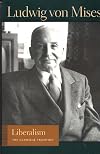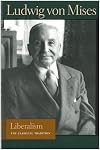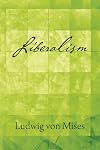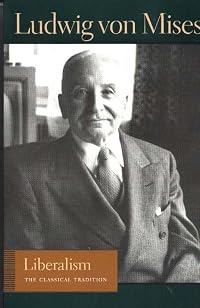
Liberalism
by Ludwig Von Mises
On This Page
Description
The term "liberalism" comes from the Latin word "liber" meaning "free." Mises defines "liberalism" as "the liberal doctrine of the harmony of the rightly understood interests of all members of a free society founded on the principle of private ownership of the means of production." This book presents the theoretical and practical arguments for liberalism in the classical tradition. The foundation of liberalism, Mises says, rests on an understanding and appreciation of private property, show more social cooperation, the freedom idea, ethics and morality, democracy, and the legitimate role of government. Liberalism is not a political party; it is a system of social organization. The liberal program aims at securing equality under law and freedom of opportunity for everyone to make their own choices and decisions, so long as they do not interfere with the equal rights of others; it offers no special privileges to anyone. Under liberalism, the role of government would be limited to protecting the lives, property, and freedom of its citizens to pursue their own ends and goals. Mises is more specific here than elsewhere in applying the liberal program to economic policy, domestic and foreign. Also in this book, Mises contrasts liberalism with other conceivable systems of social organization such as socialism, communism, and fascism. Ludwig von Mises (1881-1973) was the leading spokesman of the Austrian School of Economics throughout most of the twentieth century. He earned his doctorate in law and economics from the University of Vienna in 1906. In 1926, Mises founded the Austrian Institute for Business Cycle Research. From 1909 to 1934, he was an economist for the Vienna Chamber of Commerce. Before the "Anschluss," in 1934 Mises left for Geneva, where he was a professor at the Graduate Institute of International Studies until 1940, when he emigrated to New York City. From 1948 to 1969, he was a visiting professor at New York University. Bettina Bien Greaves is a former resident scholar, trustee, and longtime staff member of the Foundation for Economic Education. She has written and lectured extensively on topics of free market economics. Her articles have appeared in such journals as "Human Events, Reason, " and "The Freeman: Ideas on Liberty." A student of Mises, Greaves has become an expert on his work in particular and that of the Austrian School of economics in general. She has translated several Mises monographs, compiled an annotated bibliography of his work, and edited collections of papers by Mises and other members of the Austrian School. show lessTags
Recommendations



















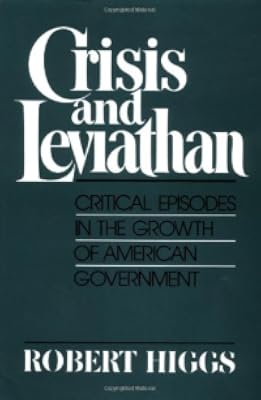

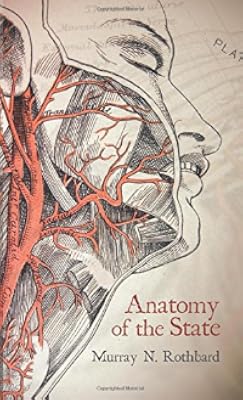
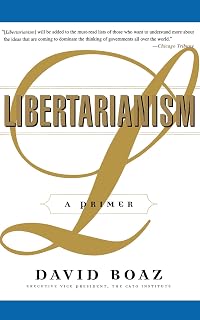



Member Reviews
A presentation of the theoretical and practical arguments for liberalism. The foundation and development of the philosophy of liberty is presented in this essential work.
Mises makes the case for classical liberalism.
Ratings
Members
- Recently Added By
Lists

Libertarian Books
102 works; 19 members
Author Information

91+ Works 5,214 Members
Ludwig von Mises (1881-1973) was a preeminent philosopher and economist during the twentieth century. He shared an intellectual friendship with literary giant Ayn Rand, and his theorems and philosophies have continued to influence the careers and ideas of politicians and economists alike.
Some Editions
Series
Belongs to Publisher Series
Common Knowledge
- Original publication date
- 1927
Classifications
- Genres
- Economics, Politics and Government, Nonfiction, General Nonfiction, Philosophy
- DDC/MDS
- 320.51 — Society, government, & culture Political science Types of Government Political ideologies Liberalism
- LCC
- JC585 .V613 — Political Science Political theory Political theory. The state. Theories of the state Purpose, functions, and relations of the state
- BISAC
Statistics
- Members
- 347
- Popularity
- 90,951
- Reviews
- 3
- Rating
- (4.21)
- Languages
- 8 — Czech, English, Estonian, German, Italian, Portuguese, Spanish, Turkish
- Media
- Paper, Audiobook, Ebook
- ISBNs
- 31
- ASINs
- 9