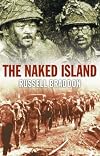
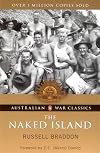
The Naked Island
by Russell Braddon, Ronald Searle
On This Page
Description
Russell Braddon wrote The Naked Island in 1950. By 1968 it had been reprinted eleven times and sold one million copies in Britain alone. As the author states, 'It was written to tell the world what sort of people the Japanese can be. It was written to explain what they did in the war and what they might well do again.' There are numerous books on the war in the East but this is one of the greatest. Often hilarious, even amidst the horror, this is the story of what the Japanese did to those show more they captured. It is written in prose all the more effective for its dry understatement and sharp observation by a man who never lost his will to live even in the most terrible circumstances. Braddon's story is however not that simply of a prisoner of war. In his comments on the equally brutal Japanese treatment of native workers and indeed any who were not Japanese, he reveals the hollow reality of the 'Greater Asian co-prosperity sphere' promised by the Japanese, and attempts to understand how one group of human beings could behave in such a way towards another and the inhuman ideology and fanaticism which drove the Japanese on. Even today the subject of Japanese war guilt is never far from the headlines and it was only last year that a deal on compensation was arrived at for surviving POWs. show lessTags
Recommendations








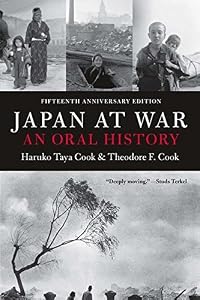



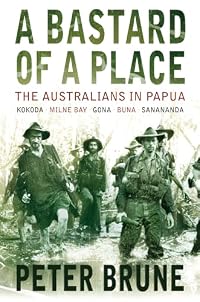
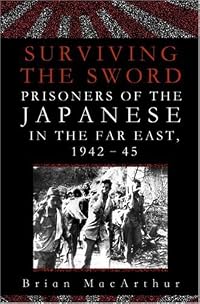






Member Reviews
What a great read, informative and well written. It is the true story of Russell Braddon who was an Australian soldier captured in Malaya during WWII. It starts with his enlistment and training in the Australian Army, he then goes to Malaya to train and then fight against the Japanese. He is captured and becomes a POW, first in Malaya and then in Changi in Singapore before being sent to Thailand to work on the infamous Burma-Thai railway. He survives both the railway and the war and the book was written in the early 1950's. What I find great about the book is that it is so true of it's time, no political correctness or wavering in tone, it is written as it was thought then without regards to feelings but as an honest effort to tell it show more like he saw it and lived it. I found the chapter on the Malayan campaign to be particularly informative, although there is no part of the book that is not informative. show less
Very well written account by an Australian POW of his time from enlistment to deployment to eventual capture by the Japanese. The hardship these men underwent defies comprehension. The author was a writer by trade and he brings home the horror and comradeship with great skill. The year on the Burma/Siam RR was even worse and his survival was remarkable and fueled by tremendous willpower. The book came out in 1953 so is close to contemporaneous with events. An excellent book and highly recommended.
Ratings
Members
- Recently Added By
Lists

Australia's Greatest Books, as chosen by Geoffrey Dutton (1985)
97 works; 6 members
Author Information

36+ Works 782 Members

93+ Works 3,927 Members
Ronald Searle was born in Cambridge, England on March 3, 1920. At the age of 15, he paid for his own art school classes by working for a cartoonist at The Cambridge Daily News. In 1939 he passed a government drafting test and joined the Army as an architectural draftsman. During this time, he also made impressionistic watercolor sketches of fellow show more soldiers and cartoons poking fun at military conventions. His work was first published in the magazine Lilliput in 1941. During the war, he was captured by the Japanese and sent to Changi prison, which provided forced labor for building the Burma railway. He recorded the deplorable conditions of his camp and the fates of fellow soldiers by drawing with crude implements and scraps of paper. After he was released in 1945, his drawings were exhibited in Cambridge and were later published in 1986 as a book entitled To the Kwai - and Back: War Drawings 1939-1945. In 1948, he began writing and illustrating parodies about the students at a fictional English girls' school called St. Trinian's and publishing them in Lilliput. This led to a series of popular books, which included Hurrah for St. Trinian's, The Terror of St. Trinian's, and The St. Trinian's Story. His other books included Searle's Cats, The Square Egg, Hello - Where Did All the People Go?, The Secret Sketchbook, and More Cats. He also drew illustrations for numerous magazines and newspapers including The New Yorker, TV Guide, Le Monde, Life magazine, The New York Times, and the International Herald Tribune. He died on December 30, 2011 at the age of 91. (Bowker Author Biography) show less
Awards and Honors
Notable Lists
Australia's Greatest Books (1952)
Common Knowledge
- Original publication date
- 1952
- Important places
- Changi, Singapore (POW camp)
- Original language
- English
Classifications
Statistics
- Members
- 129
- Popularity
- 252,402
- Reviews
- 2
- Rating
- (4.27)
- Languages
- Dutch, English
- Media
- Paper
- ISBNs
- 19
- ASINs
- 9