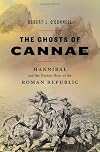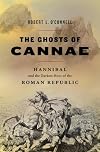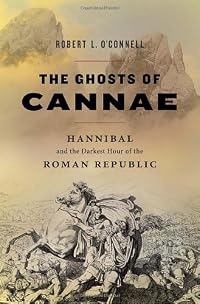
The Ghosts of Cannae: Hannibal and the Darkest Hour of the Roman Republic
by Robert L. O'Connell
On This Page
Description
Robert L. O'Connell, one of the most admired names in military history, tells the whole story of Cannae for the first time, giving a stirring account of this apocalyptic battle of the Second Punic War, and its causes and consequences.Tags
Recommendations





Member Reviews
As an avid fan of Republican Roman history, I've read various accounts of Hannibal and the 2nd Punic War (including its most famous battle, Cannae). As such, I was hesitant to embark on another book on the subject. Fortunately, I did so.
Despite its title, the book covers far more ground than simply the "ghosts" of the famous battle, i.e., the surviving Roman legionnaires. With great style and clarity, the author describes both the pertinent history of both Rome and Carthage, as well as the major developments, personalities and battles throughout the 17 year campaign and beyond.
If there is one book you want to read on this period, The Ghosts of Cannae is it. Highly recommended.
Despite its title, the book covers far more ground than simply the "ghosts" of the famous battle, i.e., the surviving Roman legionnaires. With great style and clarity, the author describes both the pertinent history of both Rome and Carthage, as well as the major developments, personalities and battles throughout the 17 year campaign and beyond.
If there is one book you want to read on this period, The Ghosts of Cannae is it. Highly recommended.
The gods have not given all their gifts to one man. You know how to win victory, Hannibal, you do not how to use it.
–Maharbal to Hannibal, after the Battle of Cannae in Titus Livy’s The History of Rome, Book XXII
On a hot morning in early August two armies amassed on an Italian plain, preparing to do battle. On one side was a massive force—the largest ever seen by anyone up until that day. On the other side the force was smaller, but it had been a fighting unit for years and come through many battles together, unlike their enemy, whose battalions were swelled with new recruits. Altogether, there was something like 120,000 soldiers on the field under the rising summer sun. By the end of the day more than a third of them would lay show more dead.
It was “. . . a terrible apocalyptic day,” writes military historian Robert L. O’Connell at the beginning of The Ghosts of Cannae, “. . . 120,000 men engaged in what amounted to a mass knife fight.” That statement encapsulates what makes O’Connell’s account of this ancient Roman battle at once so compelling, enlightening, and readable. The author possesses a rare talent among scholars to bring remote and seemingly academic facts down from their rarified heights and put them, vividly and viscerally, right in front of the reader. And it doesn’t get more visceral than 50,000 men, lying gutted on the field of battle on a hot summer day.
The Ghosts of Cannae is a study of that battle—the worse defeat in Roman history, and a battle that cost more lives than any other single engagement in Europe, up to and including the Battle of Somme. More Romans died at Cannae on August 2, 216 BC than Americans did during the whole of the Vietnam War. O’Connell undertakes to explain the entirety of Cannae, from the events, the cultural, social and political pressures that led to the engagement to the rippling after effects of the Roman defeat which would eventually shake the foundations of the Republic itself. read full review show less
–Maharbal to Hannibal, after the Battle of Cannae in Titus Livy’s The History of Rome, Book XXII
On a hot morning in early August two armies amassed on an Italian plain, preparing to do battle. On one side was a massive force—the largest ever seen by anyone up until that day. On the other side the force was smaller, but it had been a fighting unit for years and come through many battles together, unlike their enemy, whose battalions were swelled with new recruits. Altogether, there was something like 120,000 soldiers on the field under the rising summer sun. By the end of the day more than a third of them would lay show more dead.
It was “. . . a terrible apocalyptic day,” writes military historian Robert L. O’Connell at the beginning of The Ghosts of Cannae, “. . . 120,000 men engaged in what amounted to a mass knife fight.” That statement encapsulates what makes O’Connell’s account of this ancient Roman battle at once so compelling, enlightening, and readable. The author possesses a rare talent among scholars to bring remote and seemingly academic facts down from their rarified heights and put them, vividly and viscerally, right in front of the reader. And it doesn’t get more visceral than 50,000 men, lying gutted on the field of battle on a hot summer day.
The Ghosts of Cannae is a study of that battle—the worse defeat in Roman history, and a battle that cost more lives than any other single engagement in Europe, up to and including the Battle of Somme. More Romans died at Cannae on August 2, 216 BC than Americans did during the whole of the Vietnam War. O’Connell undertakes to explain the entirety of Cannae, from the events, the cultural, social and political pressures that led to the engagement to the rippling after effects of the Roman defeat which would eventually shake the foundations of the Republic itself. read full review show less
Author Robert O'Connell acknowledges up front that a lack of contemporary sources from the time period limit what we know, but he makes exceptionally good use of what information is available. He explains that the Battle of Cannae during the Second Punic War was a turning point for Republican Rome (216 BC). Rome was beaten badly by Hannibal, the Carthaginian general who led his troops over the Alps in a daring and highly successful raid. But for all Hannibal's military genius and victories, he lost the war and Rome went on to become a great power. The "Ghosts" in the title refer to Roman soldiers who lost at Cannae and were exiled in shame, but later played a pivotal role when Scipio Africanus (gotta love the names!) recruited them and show more finally defeated Carthage.
I remember Hannibal from history classes long ago but didn't recall the Battle of Cannae - even had to look up the pronunciation which surprisingly turns out to be kan-EE (the emphasis can actually be on either syllable). Hannibal really was the star of this book for me, and I found it rather boring (almost stopping for something else) until it reached his trek into the Alps. Then the book takes off and was almost impossible to put down as he explains Hannibal's military strategies, and how he adapted and took advantage of situations (like positioning his troops upwind so the dust blew in the Romans faces). While I think O'Connell tries to make the book accessible for those without much knowledge of early Roman history, some prior exposure might be useful to follow the narrative. I also appreciated that O'Connell explains the limitations on the record from that early time, and throughout debates on the merits of various records and why or why they might not be reliable. His writing style is... well, I guess I could say 'interesting' - I thought it sounded like it was written by a twenty-something instead of a seasoned historian - but it works and makes it very readable. Maps, a 'list of characters,' and glossary of important terms are also helpful for those of us not familiar with ancient military history. In the end, a very enjoyable book (now I'll have to find something on Archimedes and the battle of Syracuse, which sounded very interesting...). show less
I remember Hannibal from history classes long ago but didn't recall the Battle of Cannae - even had to look up the pronunciation which surprisingly turns out to be kan-EE (the emphasis can actually be on either syllable). Hannibal really was the star of this book for me, and I found it rather boring (almost stopping for something else) until it reached his trek into the Alps. Then the book takes off and was almost impossible to put down as he explains Hannibal's military strategies, and how he adapted and took advantage of situations (like positioning his troops upwind so the dust blew in the Romans faces). While I think O'Connell tries to make the book accessible for those without much knowledge of early Roman history, some prior exposure might be useful to follow the narrative. I also appreciated that O'Connell explains the limitations on the record from that early time, and throughout debates on the merits of various records and why or why they might not be reliable. His writing style is... well, I guess I could say 'interesting' - I thought it sounded like it was written by a twenty-something instead of a seasoned historian - but it works and makes it very readable. Maps, a 'list of characters,' and glossary of important terms are also helpful for those of us not familiar with ancient military history. In the end, a very enjoyable book (now I'll have to find something on Archimedes and the battle of Syracuse, which sounded very interesting...). show less
Author Robert O'Connell acknowledges up front that a lack of contemporary sources from the time period limit what we know, but he makes exceptionally good use of what information is available. He explains that the Battle of Cannae during the Second Punic War was a turning point for Republican Rome (216 BC). Rome was beaten badly by Hannibal, the Carthaginian general who led his troops over the Alps in a daring and highly successful raid. But for all Hannibal's military genius and victories, he lost the war and Rome went on to become a great power. The "Ghosts" in the title refer to Roman soldiers who lost at Cannae and were exiled in shame, but later played a pivotal role when Scipio Africanus (gotta love the names!) recruited them and show more finally defeated Carthage.
I remember Hannibal from history classes long ago but didn't recall the Battle of Cannae - even had to look up the pronunciation which surprisingly turns out to be kan-EE (the emphasis can actually be on either syllable). Hannibal really was the star of this book for me, and I found it rather boring (almost stopping for something else) until it reached his trek into the Alps. Then the book takes off and was almost impossible to put down as he explains Hannibal's military strategies, and how he adapted and took advantage of situations (like positioning his troops upwind so the dust blew in the Romans faces). While I think O'Connell tries to make the book accessible for those without much knowledge of early Roman history, some prior exposure might be useful to follow the narrative. I also appreciated that O'Connell explains the limitations on the record from that early time, and throughout debates on the merits of various records and why or why they might not be reliable. His writing style is... well, I guess I could say 'interesting' - I thought it sounded like it was written by a twenty-something instead of a seasoned historian - but it works and makes it very readable. Maps, a 'list of characters,' and glossary of important terms are also helpful for those of us not familiar with ancient military history. In the end, a very enjoyable book (now I'll have to find something on Archimedes and the battle of Syracuse, which sounded very interesting...). show less
I remember Hannibal from history classes long ago but didn't recall the Battle of Cannae - even had to look up the pronunciation which surprisingly turns out to be kan-EE (the emphasis can actually be on either syllable). Hannibal really was the star of this book for me, and I found it rather boring (almost stopping for something else) until it reached his trek into the Alps. Then the book takes off and was almost impossible to put down as he explains Hannibal's military strategies, and how he adapted and took advantage of situations (like positioning his troops upwind so the dust blew in the Romans faces). While I think O'Connell tries to make the book accessible for those without much knowledge of early Roman history, some prior exposure might be useful to follow the narrative. I also appreciated that O'Connell explains the limitations on the record from that early time, and throughout debates on the merits of various records and why or why they might not be reliable. His writing style is... well, I guess I could say 'interesting' - I thought it sounded like it was written by a twenty-something instead of a seasoned historian - but it works and makes it very readable. Maps, a 'list of characters,' and glossary of important terms are also helpful for those of us not familiar with ancient military history. In the end, a very enjoyable book (now I'll have to find something on Archimedes and the battle of Syracuse, which sounded very interesting...). show less
Author Robert O'Connell acknowledges up front that a lack of contemporary sources from the time period limit what we know, but he makes exceptionally good use of what information is available. He explains that the Battle of Cannae during the Second Punic War was a turning point for Republican Rome (216 BC). Rome was beaten badly by Hannibal, the Carthaginian general who led his troops over the Alps in a daring and highly successful raid. But for all Hannibal's military genius and victories, he lost the war and Rome went on to become a great power. The "Ghosts" in the title refer to Roman soldiers who lost at Cannae and were exiled in shame, but later played a pivotal role when Scipio Africanus (gotta love the names!) recruited them and show more finally defeated Carthage.
I remember Hannibal from history classes long ago but didn't recall the Battle of Cannae - even had to look up the pronunciation which surprisingly turns out to be kan-EE (the emphasis can actually be on either syllable). Hannibal really was the star of this book for me, and I found it rather boring (almost stopping for something else) until it reached his trek into the Alps. Then the book takes off and was almost impossible to put down as he explains Hannibal's military strategies, and how he adapted and took advantage of situations (like positioning his troops upwind so the dust blew in the Romans faces). While I think O'Connell tries to make the book accessible for those without much knowledge of early Roman history, some prior exposure might be useful to follow the narrative. I also appreciated that O'Connell explains the limitations on the record from that early time, and throughout debates on the merits of various records and why or why they might not be reliable. His writing style is... well, I guess I could say 'interesting' - I thought it sounded like it was written by a twenty-something instead of a seasoned historian - but it works and makes it very readable. Maps, a 'list of characters,' and glossary of important terms are also helpful for those of us not familiar with ancient military history. In the end, a very enjoyable book (now I'll have to find something on Archimedes and the battle of Syracuse, which sounded very interesting...). show less
I remember Hannibal from history classes long ago but didn't recall the Battle of Cannae - even had to look up the pronunciation which surprisingly turns out to be kan-EE (the emphasis can actually be on either syllable). Hannibal really was the star of this book for me, and I found it rather boring (almost stopping for something else) until it reached his trek into the Alps. Then the book takes off and was almost impossible to put down as he explains Hannibal's military strategies, and how he adapted and took advantage of situations (like positioning his troops upwind so the dust blew in the Romans faces). While I think O'Connell tries to make the book accessible for those without much knowledge of early Roman history, some prior exposure might be useful to follow the narrative. I also appreciated that O'Connell explains the limitations on the record from that early time, and throughout debates on the merits of various records and why or why they might not be reliable. His writing style is... well, I guess I could say 'interesting' - I thought it sounded like it was written by a twenty-something instead of a seasoned historian - but it works and makes it very readable. Maps, a 'list of characters,' and glossary of important terms are also helpful for those of us not familiar with ancient military history. In the end, a very enjoyable book (now I'll have to find something on Archimedes and the battle of Syracuse, which sounded very interesting...). show less
The Ghosts of Cannae details Rome and Hannibal's battle of Cannae, August 2nd, 216 BCE, and the rest of the Second Punic War. This war was brought upon by Hannibal Barca's child-hood desire to watch Rome burn, passed down from his father's personal vendetta. Many are familiar with Hannibal - the Anti-Roman - and his exploits during the Second Punic War - specifically (and most amazingly) marching an army, with elephants, over the Alps to attack Rome. So strong was his strategy and army, even though numerically out-classed, that he spent nearly 16 years on Italian soil without any major defeat. The Second Punic War can be considered "the first world war", in that it had players from Africa, Spain, Italy, Asia Minor and practically any show more place around the Mediterranean. Most intriguing, the only losses to Rome were on Italian soil; throughout the Roman army's time in Spain, Sicily, Sardinia and Africa, they had no problem fighting the Carthaginians. The reason is simple: Hannibal.
Robert O'Connell's book is laid out very simply, with the first few chapters dedicated to leading up to and explaining the major players of the war - Rome and Hannibal/Carthage. The remainder of the book details the Battle of Cannae and its repercussions, how the war dwindled down and ended, and how Hannibal's actions lead to the eventual downfall of the Roman Republic. O'Connell bases the title and ending of the book on the "legiones Cannenses" - the unfairly exiled "Ghosts of Cannae", and how they were able to redeem themselves. The final parts of the book include O'Connell's thoughts on modern scholars' views of the war, as well as the military significance of the battle. Interestingly, the Battle of Cannae has almost been non-existent throughout history until the early 20th century.
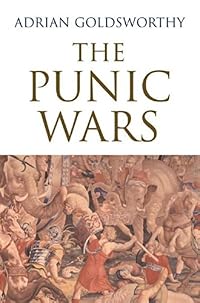
O'Connell offers great insight into and a very readable account of the Second Punic War. His writing is fluid and moves very quickly. Rather than a reference book for the War, The Ghosts of Cannae offers the reader a fast-paced general overview of the Second Punic War, with the emphasis on the Battle of Cannae. O'Connell also makes a point to analyze and explain how some of the sources must be read against the grain - specifically Livy. This offers the budding, new or part-time historian a glimpse into how and why historians critically analyze documents. For those that have read histories of the period from Goldsworthy, Daly, Lancel, or Lazenby, much of the information seems to be re-hashed and re-compiled, and may seem repetitive. For those who have not read the previous scholars, this is a very interesting read about some of the most interesting characters in Roman history. show less
Robert O'Connell's book is laid out very simply, with the first few chapters dedicated to leading up to and explaining the major players of the war - Rome and Hannibal/Carthage. The remainder of the book details the Battle of Cannae and its repercussions, how the war dwindled down and ended, and how Hannibal's actions lead to the eventual downfall of the Roman Republic. O'Connell bases the title and ending of the book on the "legiones Cannenses" - the unfairly exiled "Ghosts of Cannae", and how they were able to redeem themselves. The final parts of the book include O'Connell's thoughts on modern scholars' views of the war, as well as the military significance of the battle. Interestingly, the Battle of Cannae has almost been non-existent throughout history until the early 20th century.
O'Connell offers great insight into and a very readable account of the Second Punic War. His writing is fluid and moves very quickly. Rather than a reference book for the War, The Ghosts of Cannae offers the reader a fast-paced general overview of the Second Punic War, with the emphasis on the Battle of Cannae. O'Connell also makes a point to analyze and explain how some of the sources must be read against the grain - specifically Livy. This offers the budding, new or part-time historian a glimpse into how and why historians critically analyze documents. For those that have read histories of the period from Goldsworthy, Daly, Lancel, or Lazenby, much of the information seems to be re-hashed and re-compiled, and may seem repetitive. For those who have not read the previous scholars, this is a very interesting read about some of the most interesting characters in Roman history. show less
Threading a careful line between academic battles the author gives a modern take on the Battle of Cannae. The initial chapters detailing the Roman and Carthaginian republics can be a bit of a slog but are essential to understanding what follows. Once into Hannibal’s campaign as the story progresses more rapidly, with clarity and dry humour, it is a pleasure to read. Whilst mentioning the controversies regarding the route through the Alps, the battle itself and its aftermath, the author consciously or not has appeared to follow the principle of "inherent military probability" propounded by Alfred H Burne. All in all a very approachable and enjoyable study of an ancient battle that rightly or wrongly has obsessed military minds for show more centuries. show less
Members
- Recently Added By
Published Reviews
ThingScore 75
"The distinctive edge of “The Ghosts of Cannae” is Robert L. O’Connell’s consistently professional instinct for the behavior of men and units on the battlefield. He is able to put himself and his reader on the ground at Cannae, gagging in the heat of a southern Italian midsummer, assailed by an overload from every one of the five senses."
added by bookfitz
" For those of us with a more general interest in classical history, the military details of The Ghosts of Cannae can be a bit of a slog — it is, after all, a military history — but it’s still well worth looking at."
added by bookfitz
Lists

Books Read in 2015
3,299 works; 129 members
Author Information

9+ Works 1,416 Members
Robert L. O'Connell has worked as a senior analyst at the National Ground Intelligence Center and as a contributing editor to MHQ: The Quarterly Journal of Military History. He is the author of several nonfiction books including Of Arms and Men: A History of War, Weapons, and Aggression; Sacred Vessels: The Cult of the Battleship and the Rise of show more the U.S. Navy; Ride of the Second Horseman: The Birth and Death of War; Soul of the Sword: An Illustrated History of Weaponry and Warfare from Prehistory to the Present; and Fierce Patriot: The Tangled Lives of William Tecumseh Sherman. He also wrote the novel Fast Eddie. (Bowker Author Biography) show less
Some Editions
Common Knowledge
- Original title
- The Ghosts of Cannae: Hannibal and the Darkest Hour of the Roman Republic
- Original publication date
- 2010-07-13
- People/Characters
- Hannibal Barca
- Important places
- Cannae
- Important events
- Punic Wars; Second Punic War (218 BCE | 201 BCE); Battle of Cannae (216 BCE)
- Dedication
- To Harry Dell, who taught me about Greeks and Romans and even had some sympathy for Carthage
- First words
- Polybius of Megalopolis peered down from a pass high in the Italian Alps and caught sight of the rich green Lombard plain far below.
- Last words
- (Click to show. Warning: May contain spoilers.)But as long as men dream of killing other groups of men in very large numbers, we can rest assured, Cannae will not be forgotten.
- Blurbers
- Strauss, Barry; Hanson, Victor Davis
Classifications
- Genres
- History, Nonfiction, General Nonfiction
- DDC/MDS
- 937.04 — History & geography History of ancient world (to ca. 499) Italian Peninsula to 476 and adjacent territories to 476 Punic wars 264-146 B.C.
- LCC
- DG247.3 .O25 — History of Europe, Asia, Africa and Oceania City History of Italy Ancient Italy. Rome to 476 History By period Kings and Republic, 753-27 B.C. Republic, 509-27 Conquest of Mediterranean world. 264-133 First and Second Punic Wars. Illyrian
- BISAC
Statistics
- Members
- 573
- Popularity
- 51,190
- Reviews
- 18
- Rating
- (4.01)
- Languages
- English, Portuguese
- Media
- Paper, Audiobook, Ebook
- ISBNs
- 7
- ASINs
- 7