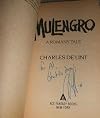
Mulengro
by Charles de Lint
On This Page
Description
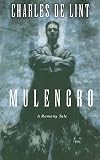
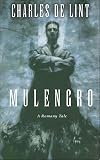
A series of bizarre murders are baffling the police, each death somehow connected with the city's elusive gypsy community. The police are searching for a human killer, but the romanies know better. They have a name for the darkness that hunts them down, one by one - Mulengro.Tags
Recommendations










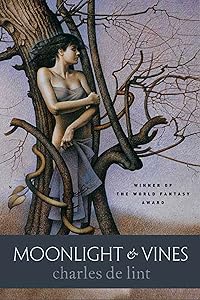


Member Recommendations
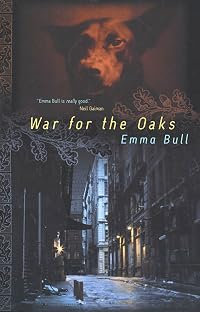
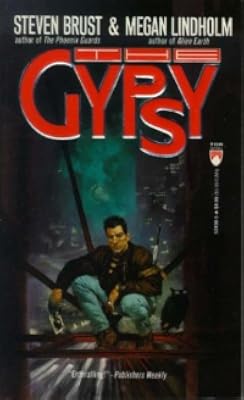
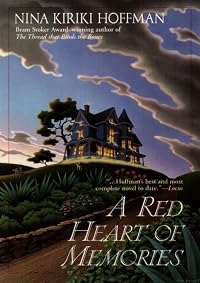
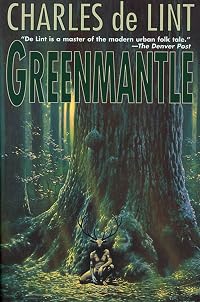
Ape Lot's of similarities between these two stories.
Member Reviews
I don't understand some of the reviews here from otherwise admitted de Lint fans who say that this one started slow or was too hard to get into because of the Romany stuff.
The book is about a malevolent gypsy who is murdering other gypsies to 'cleanse the race' in some way. He carries a large bit of magic. There are epic battles and esoteric discussions of identity along the way. But I felt like this was solidly part of de Lint's universe, simply casting a more inquisitive eye on a portion of his inhabitants who don't get much attention. There were also some reviews that said this one was too dark - baffling to me. This is no darker than his other works, slightly more explicit, but by only a slight degree. I highly recommend this and show more any other de Lint - I've never read a bad one.
5 bones!!!!!
Highly Recommended!!!!! show less
The book is about a malevolent gypsy who is murdering other gypsies to 'cleanse the race' in some way. He carries a large bit of magic. There are epic battles and esoteric discussions of identity along the way. But I felt like this was solidly part of de Lint's universe, simply casting a more inquisitive eye on a portion of his inhabitants who don't get much attention. There were also some reviews that said this one was too dark - baffling to me. This is no darker than his other works, slightly more explicit, but by only a slight degree. I highly recommend this and show more any other de Lint - I've never read a bad one.
5 bones!!!!!
Highly Recommended!!!!! show less
The first 15-20 pages of this were pretty hard to get through, because the author uses a lot of gypsy terminology when speaking through the roms, and being a gajo, I was often a bit confused. I stuck with it though, and after I passed the vocabulary test, I began to immensely enjoy it. The remaining 375 pages were addicting and tremendously satisfying. I've read a bit of urban fantasy in the past, but I don't think I've seen an author do such a good job of making the magic feel so believable. Charles de Lint definitely does a good job of bringing fantasy to life. The next time something you own comes up missing Mulengro really makes you want to believe that it was stolen by a magic-wielding gypsy trickster.
3.5 stars. Gypsies are being murdered in Ottawa and both the police and the gypsy community are working separately to stop the murders from continuing.
de Lint originally published this book under a pseudonym, Samuel M. Key, so readers would know that it's a darker tale than most of his fantasy works. I quite liked it, and would enjoy reading more of "Key's" books. de Lint did a lot of research on the modern day (well, it was written in the 80s) gypsy culture for the book as well, so there's some extra information there. I certainly didn't know anything about them, but I'd be interested in reading more of that, too.
The book follows many different characters throughout the book, but it was never difficult, nor did it take long to figure show more out, which character he switched to. I kind of liked that you got to see perspectives of things that were happening at the same time from different characters. For some of the characters, it does take a bit of time to see how they are connected, though. Not a bad thing, I just wanted to point that out. show less
de Lint originally published this book under a pseudonym, Samuel M. Key, so readers would know that it's a darker tale than most of his fantasy works. I quite liked it, and would enjoy reading more of "Key's" books. de Lint did a lot of research on the modern day (well, it was written in the 80s) gypsy culture for the book as well, so there's some extra information there. I certainly didn't know anything about them, but I'd be interested in reading more of that, too.
The book follows many different characters throughout the book, but it was never difficult, nor did it take long to figure show more out, which character he switched to. I kind of liked that you got to see perspectives of things that were happening at the same time from different characters. For some of the characters, it does take a bit of time to see how they are connected, though. Not a bad thing, I just wanted to point that out. show less
Several readers seem to have been put off by the fact that this is a horror novel when they are used to de Lint's stories of magical realism. I love horror, so what disappointed me the most was that this kind of story has been done many, many times before - Graham Masterton has practically made a career out of it - and better. Mulengro is a murder mystery revolving around a figure from Romany mythology, but it isn't very satisfying either as a police procedural or as a horror story. It's also one of de Lint's earlier works, so it's also not his best writing. Fortunately, he eventually realized this sort of thing wasn't his forte. If you like b-horror authors like Richard Laymon or Ray Garton (but without the sex) then this might be show more enjoyable; otherwise, skip it. show less
My first book about the Rom (their own name for what people call gypsies). There are a lot of mystical aspects to this novel and frankly one very stupid thing as well. A talking cat. Okay...I know it's part of the story & that with any horror story the reader is supposed to suspend belief. But a talking cat? I was reminded of that cat Salem on the show Sabrina that my daughter watched when she was much younger. I guess I'm just not a talking cat person. If you overlook the talking cat then what you have here is a mix of two genres: police procedural and horror.
Synopsis:
The story takes place near Ottawa, in the modern day. As the story opens, Janfri (one of the main characters in the novel), who is Rom by birth, has lost his house due show more to arson. As he stands and watches it burn, he notices a little sign cut into the wood which declares him to be unclean...meaning that he does not live as a pure Rom and thus should be shunned by the others. He searches his soul and cannot find any reason to believe that someone (another Rom, obviously) should mark him so. He does engage in music for a living, but has never played up his gypsy roots to make the music sell; he leaves him open to other Rom visitors & was married into another Rom family before his wife died. But this is not the worst: a member of his kumpania -- tribe-- has been violently murdered. The police want to find the murderer and the Rom sign gives them a clue that they are looking for Rom in their search for the killer. Janfri wants to find out who finds him unclean -- and going to the headman discovers that the one who finds him such is no mere mortal, but one who obviously believes that Janfri must be purged. As the bodies begin to stack up and witnesses begin to be killed, Janfri has to turn to more mystical means to find the killer. The killer is Mulengro...the controller of ghosts or "mule," who uses these spirits to kill the others. Two police inspectors become suspicious of Janfri, because he never did anything about the burning of his house, and stay on his trail as he is trying to find and destroy Mulengro.
I read a review that called this book "edge-of-your seat suspense" but I don't think that really fits. It's more like a good ghost story that would be fun to read on a stormy night with a fire burning in your fireplace. I recommend it to horror readers, for sure ... but watch out for the talking cat. show less
Synopsis:
The story takes place near Ottawa, in the modern day. As the story opens, Janfri (one of the main characters in the novel), who is Rom by birth, has lost his house due show more to arson. As he stands and watches it burn, he notices a little sign cut into the wood which declares him to be unclean...meaning that he does not live as a pure Rom and thus should be shunned by the others. He searches his soul and cannot find any reason to believe that someone (another Rom, obviously) should mark him so. He does engage in music for a living, but has never played up his gypsy roots to make the music sell; he leaves him open to other Rom visitors & was married into another Rom family before his wife died. But this is not the worst: a member of his kumpania -- tribe-- has been violently murdered. The police want to find the murderer and the Rom sign gives them a clue that they are looking for Rom in their search for the killer. Janfri wants to find out who finds him unclean -- and going to the headman discovers that the one who finds him such is no mere mortal, but one who obviously believes that Janfri must be purged. As the bodies begin to stack up and witnesses begin to be killed, Janfri has to turn to more mystical means to find the killer. The killer is Mulengro...the controller of ghosts or "mule," who uses these spirits to kill the others. Two police inspectors become suspicious of Janfri, because he never did anything about the burning of his house, and stay on his trail as he is trying to find and destroy Mulengro.
I read a review that called this book "edge-of-your seat suspense" but I don't think that really fits. It's more like a good ghost story that would be fun to read on a stormy night with a fire burning in your fireplace. I recommend it to horror readers, for sure ... but watch out for the talking cat. show less
Decided to reread this yesterday and yeah it is still as good as it was when I first read it back in the 80s. Okay some things are a little dated but then that is to be expected. This book was first published back in 1985 making it almost 30 years old. The characters are still strong and intriguing and it is interesting to look back at this and see where Charles de Lint went with his tales. He has always had a touch of the otherworldly. Sometimes it is dark like in this tale. Of all the characters in the book I think I like Boboko and Dr Rainbow best. While secondary characters they stayed true to themselves and both had important parts to play. Simple truths told out of extraordinary characters. It really isn't a wonder why I want to show more write as well as this author. show less
Mulengro is unusual for an urban fantasy book because Romany people (aka gypsies) are at the center of the story. De Lint, as usual, does a masterful job of making Romany magic work in a modern world and in the context of a city setting. One gets a sense of the gritty and some what grim life of modern Rom, and why they continue to be resistant to a "proper" modern settled life. Mulengro can be dark but is ultimately hopeful.
Members
- Recently Added By
Lists

Best Urban Fantasy
632 works; 78 members

75 Books Challenge Halloween Read "Official" Selections
71 works; 7 members
Author Information

196+ Works 43,460 Members
Charles de Lint, an extraordinarily prolific writer of fantasy works, was born in the Netherlands in 1951. Due to his father's work as a surveyor, the family lived in many different places, including Canada, Turkey, and Lebanon. De Lint was influenced by many writers in the areas of mythology, folklore, and science fiction. De Lint originally show more wanted to play Celtic music. He only began to write seriously to provide an artist friend with stories to illustrate. The combination of the success of his work, The Fane of the Grey Rose (which he later developed into the novel The Harp of the Grey Rose), the loss of his job in a record store, and the support of his wife, Mary Ann, helped encourage de Lint to pursue writing fulltime. After selling three novels in one year, his career soared and he has become a most successful fantasy writer. De Lint's works include novels, novellas, short stories, chapbooks, and verse. He also publishes under the pseudonyms Wendelessen, Henri Cuiscard, and Jan Penalurick. He has received many awards, including the 2000 World Fantasy Award for Best Collection for Moonlight and Vines, the Ontario Library Association's White Pine Award, as well as the Great Lakes Great Books Award for his young adult novel The Blue Girl. His novel Widdershins won first place, Amazon.com Editors' Picks: Top 10 Science Fiction & Fantasy Books of 2006. In 1988 he won Canadian SF/Fantasy Award, the Casper, now known as the Aurora for his novel Jack, the Giant Killer. Also, de Lint has been a judge for the Nebula Award, the World Fantasy Award, the Theodore Sturgeon Award and the Bram Stoker Award. (Bowker Author Biography) show less
Awards and Honors
Awards
Notable Lists
Common Knowledge
- Original title
- Mulengro
- Original publication date
- 1985
- People/Characters
- Janfri; Patrick Briggs; Will Sandler
- Important places
- Canada; Ontario, Canada; Ottawa, Ontario, Canada
- Dedication
- For
Charles R. Saunders
who got the ball rolling
Andrew J. Offutt
who pushed it a little further
and those folks who bounced it back and forth a few times:
Barry Blair, Roger Camm, John Charett... (show all)e, Larry Dickison, Ronald Grossey, Loay Hall, Richard Hall, Gordon Linzner - First words
- Janfri Yayal watched his house burn down without expression.
- Original language
- English
Classifications
Statistics
- Members
- 716
- Popularity
- 39,700
- Reviews
- 17
- Rating
- (3.73)
- Languages
- English, French
- Media
- Paper, Ebook
- ISBNs
- 8
- ASINs
- 4