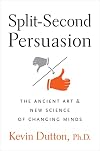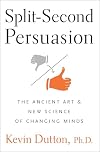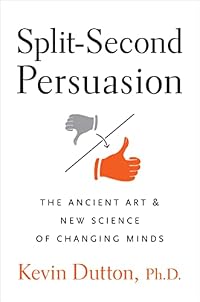
Split-Second Persuasion: The Ancient Art and New Science of Changing Minds
by Kevin Dutton
On This Page
Description
How many times a day do you think someone tries to persuade you? Twenty? Thirty? Actually it's more like 400. When you imagine a society based on coercion you start to see how important persuasion is; it literally keeps us alive. Now psychologist Kevin Dutton has identified a powerful strain of immediate, instinctual persuasion, an elixir of influence that can immediately help you disarm skeptics, win arguments, close the deal, get the guy. Mapping the cutting-edge psychology and show more neuroscience of this incisive new influence, he introduces us to the natural super-persuaders in our midst-Buddhist monks, magicians, advertisers, con men, hostage negotiators, even psychopaths. He shows us which simple triggers can make someone trust you immediately; what hidden pathways in the brain lead us to believe something even when we know it's not true; how group dynamics can make us more tolerant or deepen our extremism; and what we can learn from newborns about winning arguments. Dutton's fascinating and provocative book will help anyone tap into the power of split-second persuasion. show lessTags
Recommendations














Member Reviews
I loved this book! So, what kind of a miserable expletive am I to only award it four stars?
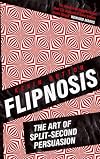
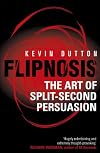
The reason for the missing astral body, is that it doesn't do what the cover purports: the art of split-second persuasion, "So mind-alteringly brilliant that I'm amazed that it hasn't been made illegal." Fairly standard self-help fair. Except, the book is far more honest, well written and interesting than that.
This book examines the how techniques work, rather than giving a list of 'must do' rules for earning a million before breakfast. Kevin Dutton gives an in-depth view of modern thinking upon the subject of how we react to certain stimuli and what kind of brain one needs to give off those stimuli. He does this, not in a dry, professorial show more style, but in a deceptively chatty, humorous fashion. One finds oneself smiling and enjoying a trip to places that can blow your mind.
Mr Dutton does not promise anything, let alone the power to sell snow to Eskimos; he does, however, give insights into areas whereby even a poor salesman, such as I, can improve both business and personal communication skills.
This book is absolutely fascinating and well worth reading - just don't believe the cover! show less
The reason for the missing astral body, is that it doesn't do what the cover purports: the art of split-second persuasion, "So mind-alteringly brilliant that I'm amazed that it hasn't been made illegal." Fairly standard self-help fair. Except, the book is far more honest, well written and interesting than that.
This book examines the how techniques work, rather than giving a list of 'must do' rules for earning a million before breakfast. Kevin Dutton gives an in-depth view of modern thinking upon the subject of how we react to certain stimuli and what kind of brain one needs to give off those stimuli. He does this, not in a dry, professorial show more style, but in a deceptively chatty, humorous fashion. One finds oneself smiling and enjoying a trip to places that can blow your mind.
Mr Dutton does not promise anything, let alone the power to sell snow to Eskimos; he does, however, give insights into areas whereby even a poor salesman, such as I, can improve both business and personal communication skills.
This book is absolutely fascinating and well worth reading - just don't believe the cover! show less
The thesis of this book is summarized in the acronym SPICE:
Simplicity
Personal Interest
Incongruity
Confidence
Empathy
So typically the process of deliberate persuasion involves engaging the target through some incongruous comment or observation. If this comment or observation follows a simple to relate to line that involves the personal interest of the target and is delivered with empathy and confidence, then the chances of successful persuasion are very good and occur nearly spontaneously.
The author shows some preliminary results in fMRI mapping of the brains of people who are undergoing various stages of this process. He feels that there are hard-wired neuronal correlates that make us predisposed to this particular combination of show more strategies delivered at about the same time.
Disturbingly, much of this work was in relation to the persuasive nature of psychopathic personalities. The implication is that we may learn to use these strategies to improve our skills in persuasion but psychopaths are predisposed to utilize them naturally. show less
Simplicity
Personal Interest
Incongruity
Confidence
Empathy
So typically the process of deliberate persuasion involves engaging the target through some incongruous comment or observation. If this comment or observation follows a simple to relate to line that involves the personal interest of the target and is delivered with empathy and confidence, then the chances of successful persuasion are very good and occur nearly spontaneously.
The author shows some preliminary results in fMRI mapping of the brains of people who are undergoing various stages of this process. He feels that there are hard-wired neuronal correlates that make us predisposed to this particular combination of show more strategies delivered at about the same time.
Disturbingly, much of this work was in relation to the persuasive nature of psychopathic personalities. The implication is that we may learn to use these strategies to improve our skills in persuasion but psychopaths are predisposed to utilize them naturally. show less
Psychologist Devin Dutton introduces a host of world class persuaders--advertisers, con men, magicians, and psychopaths--and describes the five simple elements they employ to effect instant and effective persuasion. Real world examples are backed up by the solid research in the areas of psychology and brain science to make this both an entertaining and informative read.
Part read, almost halfway through and couldn't stick it out.
Ratings
Members
- Recently Added By
Author Information

18 Works 964 Members
Common Knowledge
- Original publication date
- 2010-05-06
- Blurbers
- Ramachandran, V. S.; Wiseman, Richard; Jones, Terry; Palin, Michael
Classifications
- Genres
- Nonfiction, General Nonfiction, Science & Nature
- DDC/MDS
- 153.852 — Philosophy and Psychology Psychology Conscious mental processes and intelligence Decision Making And Persuasion Persuasion Persuasion
- LCC
- BF637 .P4 .D88 — Philosophy, Psychology and Religion Psychology Psychology Applied psychology
- BISAC
Statistics
- Members
- 208
- Popularity
- 156,652
- Reviews
- 4
- Rating
- (3.42)
- Languages
- Dutch, English, German, Spanish
- Media
- Paper, Audiobook, Ebook
- ISBNs
- 20
- ASINs
- 7