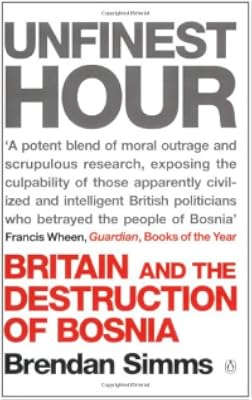
Unfinest Hour: Britain and the Destruction of Bosnia
by Brendan Simms
On This Page
Description
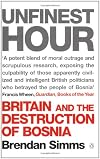
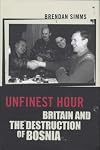
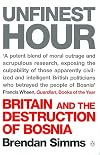
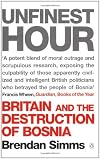
For most of 1992-1995, Britain stood aside while an internationally recognised state was attacked by externally-sponsored rebels bent on a campaign of territorial agression and ethnic cleansing. Based on interviews with many of the cheif participants, parliamentary debates, and a wide range of sources, Brendan Simm's study traces the roots of British policy and the highly sophisticated way in which the government sought to minimise the crisis and defuse popular and American pressure for action.Tags
Recommendations
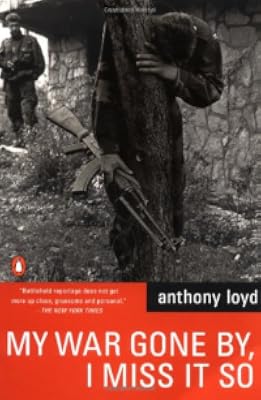
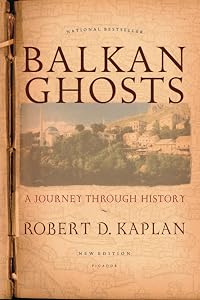
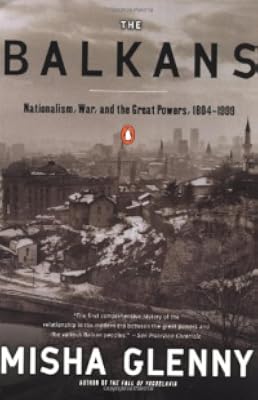
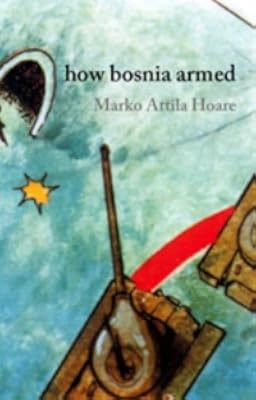
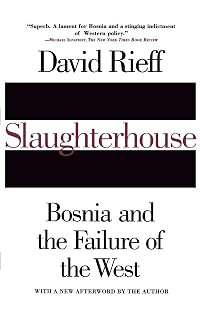
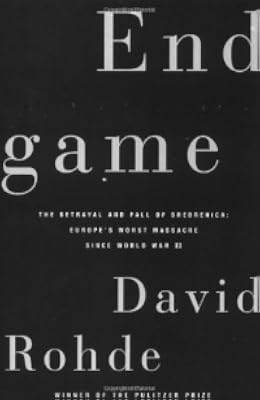
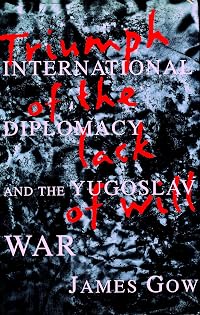

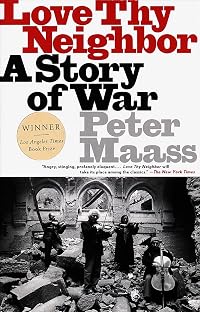


Member Reviews
http://nwhyte.livejournal.com/1523761.html
This book, written in 2000 and revised in 2001, is an excellent polemic against the awfulness of British policy on Bosnia for most of the duration of the 1992-95 war. Simms describes with vicious accuracy the unwillingness of the Major government to intervene in the conflict, and its success in blocking other international actors from doing so. He convincingly points the finger at three senior figures - Douglas Hurd, the Foreign Secretary for most of the war; David Owen, the EU's mediator; and General Sir Michael Rose, the UN commander in 1994-95 - as particularly culpable in fostering an intellectual and political climate where using the troops to change the political situation on the ground show more became unthinkable. The damage caused to Britain's credibility as a serious international player had not been reversed (certainly not by Iraq and Afghanistan), and the Bosnians remain certain that the international community will at some point betray them again.
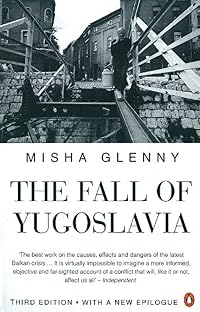
For all that his case is good and fundamentally in line with my own views, Simms goes over the top on occasion. In the introduction to the paperback edition, he acknowledges being too kind to the Croats and too tough on Paddy Ashdown. I think he is also too kind to the Americans, particularly the Pentagon which on my understanding resisted using the largest military force in the world to actually fight until far too late; too uncritical of the Bosnian government; and too harsh to Misha Glenny, whose commentary has always been rooted in empathy for all sides, even those who may not be flavour of the month. He is also simply wrong to see the development of the EU's security capabilities as a dark and sinister conspiracy, and I note the irony that Graham Messervy-Whiting, who Simms consistently praises for his sane (but ignored) security advice to David Owen, was actually the first commander of the EU's rather virtual army. However Simms also performs useful services in skewering a couple of the pernicious myths about Bosnia: that the Germans killed off the 1991 process by recognising Slovenia and Croatia (it was already dead, and the Germans recognised the fait accompli with great reluctance), and that the Vance-Owen Peace Plan was killed off by the Americans rather than by the Bosnian Serbs (a myth which rather mystifyingly is peddled, despite the clear facts of the historical record, by none other than David Owen).
Those are minor points against the big background question of why John Major's government was so crap, and why there was so little questioning of it at the time. Simms rightly excoriates the performance of parliament, the media, and the intellectual community in failing to expose the inactivity and aggressive indolence of official policy. I was not observing Bosnia closely in those days, but it's actually a coherent pattern with Northern Ireland policy under Sir Patrick Mayhew during the same time period: do nothing in particular, and hope nobody notices. The British under Major and Mayhew were woefully unprepared for the IRA ceasefire in 1994, and the peace process ran into the sand until Labour came to power. There was a general air of uselessness about the Major government which the latter years of Labour probably exceeded, but for a shorter time.
Major's government was equally unprepared for the shift of international mood in 1995 on Bosnia which compelled intervention at last; but to be fair to the troops, under the new leadership of General Rupert Smith, they played their part in ending the war and keeping the peace. It should be pointed out that eighteen British soldiers lost their lives in the line of duty during the 1992-95 period of policing humanitarian aid but looking away from the politics; since 1995 I don't think there has been a single British combat fatality in Bosnia. These days, post-Iraq and Afghanistan, the pendulum has probably swung against intervention in the next crisis wherever it may erupt. It's worth remembering that the case for intervention in Bosnia was far stronger, both morally and legally, than the case for intervention in Iraq, and that the international community as a whole and Britain in particular got it wrong in the early 1990s; Simms' arguments will need to be dusted off when the next time comes. show less
This book, written in 2000 and revised in 2001, is an excellent polemic against the awfulness of British policy on Bosnia for most of the duration of the 1992-95 war. Simms describes with vicious accuracy the unwillingness of the Major government to intervene in the conflict, and its success in blocking other international actors from doing so. He convincingly points the finger at three senior figures - Douglas Hurd, the Foreign Secretary for most of the war; David Owen, the EU's mediator; and General Sir Michael Rose, the UN commander in 1994-95 - as particularly culpable in fostering an intellectual and political climate where using the troops to change the political situation on the ground show more became unthinkable. The damage caused to Britain's credibility as a serious international player had not been reversed (certainly not by Iraq and Afghanistan), and the Bosnians remain certain that the international community will at some point betray them again.
For all that his case is good and fundamentally in line with my own views, Simms goes over the top on occasion. In the introduction to the paperback edition, he acknowledges being too kind to the Croats and too tough on Paddy Ashdown. I think he is also too kind to the Americans, particularly the Pentagon which on my understanding resisted using the largest military force in the world to actually fight until far too late; too uncritical of the Bosnian government; and too harsh to Misha Glenny, whose commentary has always been rooted in empathy for all sides, even those who may not be flavour of the month. He is also simply wrong to see the development of the EU's security capabilities as a dark and sinister conspiracy, and I note the irony that Graham Messervy-Whiting, who Simms consistently praises for his sane (but ignored) security advice to David Owen, was actually the first commander of the EU's rather virtual army. However Simms also performs useful services in skewering a couple of the pernicious myths about Bosnia: that the Germans killed off the 1991 process by recognising Slovenia and Croatia (it was already dead, and the Germans recognised the fait accompli with great reluctance), and that the Vance-Owen Peace Plan was killed off by the Americans rather than by the Bosnian Serbs (a myth which rather mystifyingly is peddled, despite the clear facts of the historical record, by none other than David Owen).
Those are minor points against the big background question of why John Major's government was so crap, and why there was so little questioning of it at the time. Simms rightly excoriates the performance of parliament, the media, and the intellectual community in failing to expose the inactivity and aggressive indolence of official policy. I was not observing Bosnia closely in those days, but it's actually a coherent pattern with Northern Ireland policy under Sir Patrick Mayhew during the same time period: do nothing in particular, and hope nobody notices. The British under Major and Mayhew were woefully unprepared for the IRA ceasefire in 1994, and the peace process ran into the sand until Labour came to power. There was a general air of uselessness about the Major government which the latter years of Labour probably exceeded, but for a shorter time.
Major's government was equally unprepared for the shift of international mood in 1995 on Bosnia which compelled intervention at last; but to be fair to the troops, under the new leadership of General Rupert Smith, they played their part in ending the war and keeping the peace. It should be pointed out that eighteen British soldiers lost their lives in the line of duty during the 1992-95 period of policing humanitarian aid but looking away from the politics; since 1995 I don't think there has been a single British combat fatality in Bosnia. These days, post-Iraq and Afghanistan, the pendulum has probably swung against intervention in the next crisis wherever it may erupt. It's worth remembering that the case for intervention in Bosnia was far stronger, both morally and legally, than the case for intervention in Iraq, and that the international community as a whole and Britain in particular got it wrong in the early 1990s; Simms' arguments will need to be dusted off when the next time comes. show less
I had no idea at the time of just how sinister a role was played by the UK establishment in condemning Bosnia to it's fate. I always believed that more should have been done to intervene but now I know why it was not and, most interestingly, how assistance to Bosnia was prevented. Unsurprisingly, cabinet members at the time, notably Hogg, Hurd and Rifkind, all receive much criticism as does "the perfect popinjay" David Owen, but I didn't realise Thatcher and David Trimball had taken such admirable positions on the issue, not to mention our lovable cousins across the Atlantic.
The book is well written, occasionally humorous, and the overwhelming majority (but not all) of the arguments it presents are coherent and well referenced. It show more certainly does have an agenda but this is in no way disguised. My only main complaint is the length of the chapters. At approximately fifty pages each, it is hard going to find a suitable place for a break, especially as some of the material is relatively mentally taxing. That said, the author presents what is a demanding subject in a style that maintains interest.
The material covered in this book is highly relevant to current events in Iraq, on which we all have an opinion. I found it very interesting to see that many of the voices who are today complaining about western imperialism, the immorality of military intervention etc were the same as those who lent their support to British foreign policy in the early 1990s, with appalling consequences.
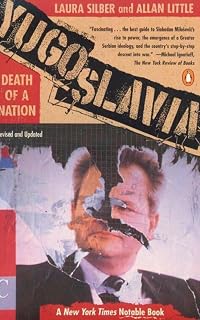
Note: this is not a history of the break-up of Yugoslavia, which is covered with great skill in the excellent "Death of Yugoslavia" by Silber and Little. show less
The book is well written, occasionally humorous, and the overwhelming majority (but not all) of the arguments it presents are coherent and well referenced. It show more certainly does have an agenda but this is in no way disguised. My only main complaint is the length of the chapters. At approximately fifty pages each, it is hard going to find a suitable place for a break, especially as some of the material is relatively mentally taxing. That said, the author presents what is a demanding subject in a style that maintains interest.
The material covered in this book is highly relevant to current events in Iraq, on which we all have an opinion. I found it very interesting to see that many of the voices who are today complaining about western imperialism, the immorality of military intervention etc were the same as those who lent their support to British foreign policy in the early 1990s, with appalling consequences.
Note: this is not a history of the break-up of Yugoslavia, which is covered with great skill in the excellent "Death of Yugoslavia" by Silber and Little. show less
Ratings
Members
- Recently Added By
Author Information

26+ Works 1,292 Members
Brendan Simms is a fellow at Peterhouse, Cambridge and Professor in the History of International Relations at the Center for International Studies, University of Cambridge. The author of five books, including Three Victories and a Defeat and Unfinest Hour, which was shortlisted for the Samuel JOhnson prize, he lives in Cambridge, England.
Awards and Honors
Common Knowledge
- Important places
- Bosnia and Herzegovina; United Kingdom
- Original language
- English
Classifications
- Genres
- History, Nonfiction, General Nonfiction, Politics and Government
- DDC/MDS
- 949.703 — History & geography History of Europe Greece, Albania, Yugoslavia, Serbia, Romania, Bulgaria Former Yugoslavia (Bosnia and Herzegovina ∙ Croatia ∙ Kosovo ∙ Montenegro ∙ Macedonia ∙ Serbia ∙ Slovenia) [formerly also Bulgaria]
- LCC
- DR1313.3 .S567 — History of Europe, Asia, Africa and Oceania Balkan Peninsula History of Balkan Peninsula Yugoslavia History By period 1918- Yugoslav War, 1991-1995
- BISAC
Statistics
- Members
- 50
- Popularity
- 606,014
- Reviews
- 2
- Rating
- (4.31)
- Languages
- English
- Media
- Paper, Ebook
- ISBNs
- 4
- ASINs
- 3