On This Page
Description
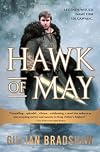
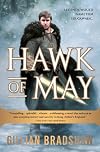
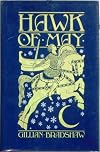
"Intelligent and imaginative...even the magic convinces."-Mary Renault, author of The King Must Die
On The Path Toward Greatness, Every Hero Makes a Choice
Legends sing of Sir Gawain, one of the most respected warriors of King Arthur's reign and one of the greatest champions of all time. But this is not that story. This is the story of Gwalchmai, middle son of the beautiful, infinitely evil sorceress Morgawse, and gifted student of her dark magical arts. A story of an uncertain man, show more doubting his ability to follow his elder brother's warrior prowess and seeking to find his own identity by bonding with his frightening and powerful mother. Disappointed in himself and despised by his father, Gwalchmai sets out on a journey that will lead him to the brink of darkness...
A tale of loss, redemption, and adventure, Hawk of May brings new depth and understanding to Sir Gawain, the legend of King Arthur, and the impact of choices made-and the consequences that follow.
"A welcome new light on the horizon of popular Arthurian legend...delightful...a strong sense of love and mysticism...a ripping adventure tale."
-Booklist
"Will appeal to those who have enjoyed Tolkien's works."
-Library Journal
"Compelling...splendid...vibrant...exhilarating...a novel that seduces us into accepting sorcery and sanctity in King Arthur's England."
-New York Times Book Review
. show less
Tags
Recommendations


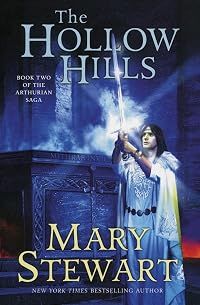
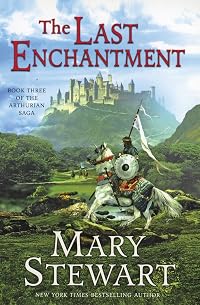


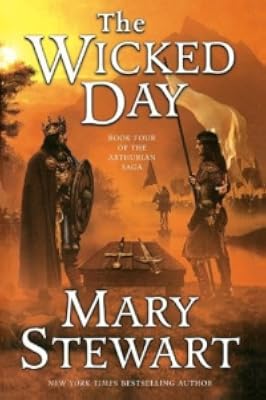
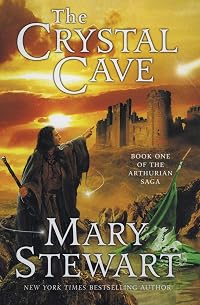

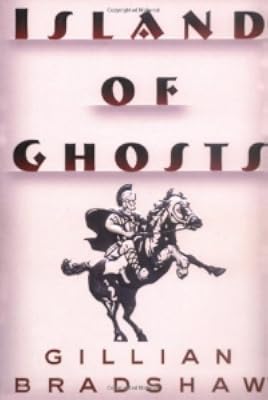


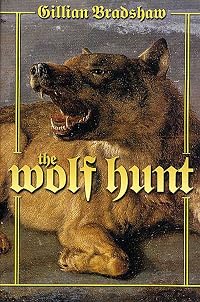

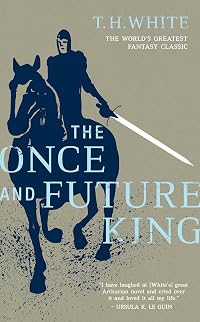


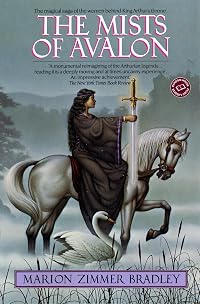

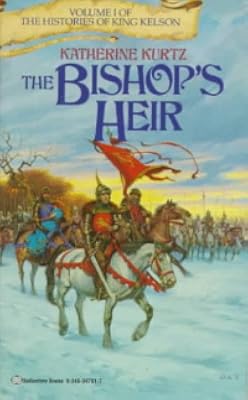

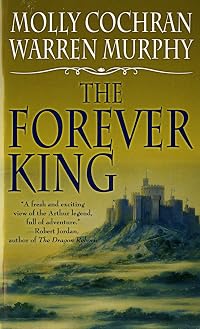


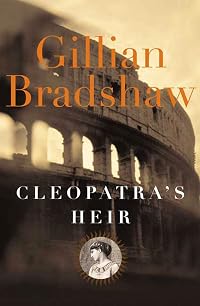
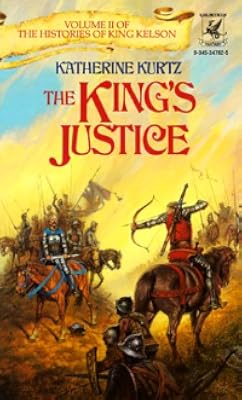




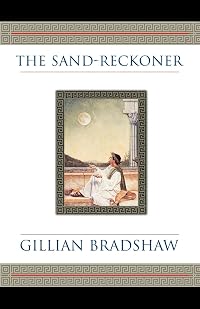


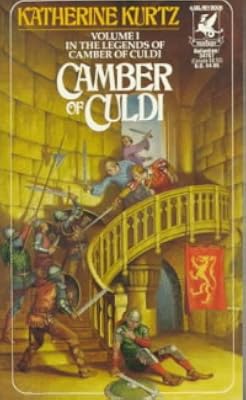
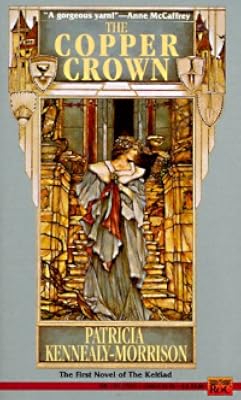
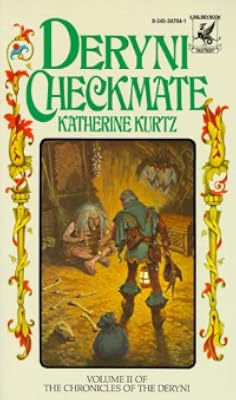

Member Recommendations

aulsmith Two books about Sir Gawain growing up
Member Reviews
I am disappointed that this novel is currently out of print, as it is one of the better written of the Arthurian novels. The first Gillian Bradshaw novel I have read, this will not the be last.
The Hawk of May is Gwalchmai, son of Lot (possibly) and Morgawse, sister of Arthur and daughter of recently deceased High King Uther. At the beginning of the novel, Gwalchmai has met neither of his more famous relatives, but he knows that both are greatly hated by his parents. Gwalchmai, more familiar to students of Arthurian romances as Gawain, is here the middle son, between his older brother Agravain, and his younger brother (and definitely not the son of Lot) Medraut. Gaheris, normally Agravain's twin, and Gareth are noticeably absent in this show more rendition. Unlike Agravain, Gwalchmai is not good at the manly arts of war. He is a gifted bard and horseman, but the Celts have not yet adopted battle on horseback yet. Gwalchmai is disappointed in himself and he knows that Lot and Agravain despise him. Finally deciding that he will never be man enough to be a warrior, Gwalchmai agrees to study the black arts from his mother, and discovers that he has a talent for them. He hates his choice, and desperately tries to protect his beloved younger brother, Medraut from them. Medraut, unlike Gwalchmai, has demonstrated that he will be an excellent warrior. When Gwalchmai realizes he failed in preventing Medraut from taking up the black arts, Gwalchmai flees his father's palace, and after a meeting with the forces of the Light, Gwalchmai decides to become one of Arthur's followers.
Until this point, the book is fascinating and can't be put down. Gwalchmai's meeting with his ancestor, Lugh, is one of the best written set ups for the Celtic Otherworld I have read in a while. Gwalchmai is likeable and the conflicts he describes growing up in his dysfunctional family are well written and presented. However, once he catches up to Arthur, the story takes on some false elements that cannot be remedied easily. Arthur treats Gwalchmai shabbily, even when Gwalchmai, suddenly turned into a formidable warrior by virtue of the gift of Lugh, the sword Caledvwlch (with which, for the first time, Gwalchmai is able to beat his brother Agravain), proves his capabilities and loyalties to Arthur. Arthur can't allow himself to accept Gwalchmai is truly out of his mother's control, until the very last, in an unconvincing ending. It is hard to believe that first Arthur, the good Celtic lord, would treat a man so rudely and inhospitably, and that second, Arthur's warriors would want to follow a man of such ignoble actions. Arthur's behavior is very un-Celtic like; so is the behavior of his soldiers.
However, most of these are the same liberties taken by the writers before and after Bradshaw. I eagerly look forward to finding her other, unfortunately out-of-print Arthurian novels. show less
The Hawk of May is Gwalchmai, son of Lot (possibly) and Morgawse, sister of Arthur and daughter of recently deceased High King Uther. At the beginning of the novel, Gwalchmai has met neither of his more famous relatives, but he knows that both are greatly hated by his parents. Gwalchmai, more familiar to students of Arthurian romances as Gawain, is here the middle son, between his older brother Agravain, and his younger brother (and definitely not the son of Lot) Medraut. Gaheris, normally Agravain's twin, and Gareth are noticeably absent in this show more rendition. Unlike Agravain, Gwalchmai is not good at the manly arts of war. He is a gifted bard and horseman, but the Celts have not yet adopted battle on horseback yet. Gwalchmai is disappointed in himself and he knows that Lot and Agravain despise him. Finally deciding that he will never be man enough to be a warrior, Gwalchmai agrees to study the black arts from his mother, and discovers that he has a talent for them. He hates his choice, and desperately tries to protect his beloved younger brother, Medraut from them. Medraut, unlike Gwalchmai, has demonstrated that he will be an excellent warrior. When Gwalchmai realizes he failed in preventing Medraut from taking up the black arts, Gwalchmai flees his father's palace, and after a meeting with the forces of the Light, Gwalchmai decides to become one of Arthur's followers.
Until this point, the book is fascinating and can't be put down. Gwalchmai's meeting with his ancestor, Lugh, is one of the best written set ups for the Celtic Otherworld I have read in a while. Gwalchmai is likeable and the conflicts he describes growing up in his dysfunctional family are well written and presented. However, once he catches up to Arthur, the story takes on some false elements that cannot be remedied easily. Arthur treats Gwalchmai shabbily, even when Gwalchmai, suddenly turned into a formidable warrior by virtue of the gift of Lugh, the sword Caledvwlch (with which, for the first time, Gwalchmai is able to beat his brother Agravain), proves his capabilities and loyalties to Arthur. Arthur can't allow himself to accept Gwalchmai is truly out of his mother's control, until the very last, in an unconvincing ending. It is hard to believe that first Arthur, the good Celtic lord, would treat a man so rudely and inhospitably, and that second, Arthur's warriors would want to follow a man of such ignoble actions. Arthur's behavior is very un-Celtic like; so is the behavior of his soldiers.
However, most of these are the same liberties taken by the writers before and after Bradshaw. I eagerly look forward to finding her other, unfortunately out-of-print Arthurian novels. show less
I can always depend upon Bradshaw for a good story grounded in history with appealing characters. If I'm not rating this higher... Well, when it comes to Arthurian works, she has really tough competition--even if you leave aside acknowledged classics of literature by Mallory and Tennyson. There are two basic approaches, the historical and pure, often anachronistic fantasy, with works often distinguishing themselves by how they mix the two. I have two favorites in the subgenre. Mary Stuart in her Merlin trilogy takes a more historical approach, although to my best recollection, it had a hint of fantasy, but more in the vein of Mary Renault where if you squint you could see rational explanations--plus, she's an outstanding, lyrical show more writer. My other favorite is T.H. White's The Once and Future King, and that's definitely unabashed fantasy that doesn't pretend to be set in a Dark Ages that still remembers Rome. And White's prose would please even finicky consumers of literary fiction. It's a moving, wonderfully written story (The basis for the musical Camelot and for Disney's The Sword and the Stone.)
Bradshaw's work is definitely that rare entity, the historical fantasy. There is dark magic, light magic, human sacrifice, the world of faerie, magical swords and horses. There are also references and quotations from classical works of antiquity and the dark ages and an obviously well researched attempt to create a plausible historical setting. The writing flows very smoothly--it's effortless reading, and her Gawain (Gwalchmai or "Hawk of May") is an appealing first person protagonist. Someone struggling to turn away from darkness, and to convince others he's changed as well. It was a diverting, entertaining read. But in terms of the Athurian works I've read--and I've read tons of them--its just not in the first rank. Good enough though, I'll be reading the next work in the trilogy. So I'd say this just misses a fourth star. show less
Bradshaw's work is definitely that rare entity, the historical fantasy. There is dark magic, light magic, human sacrifice, the world of faerie, magical swords and horses. There are also references and quotations from classical works of antiquity and the dark ages and an obviously well researched attempt to create a plausible historical setting. The writing flows very smoothly--it's effortless reading, and her Gawain (Gwalchmai or "Hawk of May") is an appealing first person protagonist. Someone struggling to turn away from darkness, and to convince others he's changed as well. It was a diverting, entertaining read. But in terms of the Athurian works I've read--and I've read tons of them--its just not in the first rank. Good enough though, I'll be reading the next work in the trilogy. So I'd say this just misses a fourth star. show less
This is the first in a trilogy by Gillian Bradshaw, retelling the Arthurian legends. As with some other retellings as far back as Rosemary Sutcliff’s The Lantern Bearers and Sword at Sunset, written in the late 1950s/early 1960s, the story is set against post Roman Britain where the (former Celts, now British) have splintered into rival kingdoms and are fighting off waves of invasion by the Saxons, who have taken large parts of the country and settled there. The Saxons are not content with their holdings but are continually raiding into British areas and taking more and more land.
The British are nominally ruled by a High King, Uther Pendragon. One of his illegitimate sons, Arthur, is a superb leader and has honed Uther’s war band show more into a fighting unit greater than any other, but no one expects him to become High King when Uther dies, and the rival kings are prepared to fight each other for the honour.
Gwalchmai (Hawk of May, his original Welsh name, later known as Gawain in the legends) is a young boy growing up in the Orkneys when the story opens. He is not much of a warrior and is therefore a disappointment to his father Lot and his elder brother, Agravain. His consolation is the admiration of his younger brother Medraut (Mordred), and his horsemanship. He starts to teach himself the fundamentals of a cavalry combat style that Lot and Agravain disdain. Then he is steered towards a scholarly path when their mother, Morgawse (Morgause) begins to teach him Latin. However, this turns out to be her way of inducting him into the ways of Dark sorcery.
Morgawse hates her father Uther Pendragon and half-brother Arthur and will stop at nothing to kill them, even if it means destroying the last chance for Celtic Britain to resist the Saxon invaders. When Gwalchmai discovers that she resorts to human sacrifice, he rebels, but is too late to save Medraut whom she has also secretly indoctrinated. Far from being repulsed, Medraut revels in the dark magic so Gwalchmai has to escape alone. His mother sends a demon in pursuit, but the powers of Light come to his aid and whisk him off to the Celtic Blessed Isles where he meets Lugh, the sun god, in the Hall of the Sidhe. Lugh tells him that he isn’t in fact a god, although something more than a man, but is an incarnation of the Light. His time is nearly over as another is taking his place. Although not overtly stated, it is obvious that Christ is meant.
He gives Gwalchmai a magic sword, known in the legends as Excalibur – so in this version, it is Gawain who has the sword rather than Arthur – and sends him back. Three years have passed in a single night and Gwalchmai is now a fully grown seventeen year old warrior, who has developed great fighting skills. His goal is to join Arthur’s war band, as Arthur is the leader of the Light's faction, but he must face many obstacles before he can do so, not least Arthur’s utter rejection of him.
A lot of the book deals with the conflict between Dark and Light with capital letters. Although the Dark seems exclusively associated with pagans - Morgawse and a Saxon sorcerer whom Gwalchmai encounters - the Light is associated with Celtic religion also, in the shape of Lugh and the Sidhe. Taliesin, the legendary poet of Welsh legend, features, and there are references to the Irish stories of Cuchulainn, the mighty hero. Also, not all the Christians in the story are 'good guys' - the monks at Ynys Winris (Glastonbury) are greedy and they overcharge travellers for meagre lodgings, so the situation is not as simplistic as it might appear.
Although in this story it is Morgawse who is the sorceress who has tricked her half-brother Arthur into sleeping with her, and gives birth to his nemesis, this is not against canon as there are versions where Morgause as she is usually known takes this role rather than Morgan le Fay/Morgaine.
My main problem with the story is that it suffers from pacing problems. In the beginning, Gwalchmai is young and is confined to his home island so we learn about the events in mainland Britain as a retelling of facts he has learned. The pace picks up once he escapes, and some of the characters are quite well defined such as the leading ones in Arthur’s war band, but quite a lot of the action is skipped over in summary. A few battle sequences are evoked to some extent, but because Gwalchmai becomes a beserker – someone who operates without thought under battle rage – a lot of this is fairly sketchy also. Basically, I found the story plodding and rather dull so that it was a chore to finish it.
I think also that it falls between two stools. A lot of the book is pseudo historical - the Dark Ages is not a period with a lot of documentation - but there is also the strong supernatural/religious/allegorical element of the Light versus Dark conflict. That doesn't really fit with a story that tries to be grounded in the possible experience of what it was like to fight against the Saxons - who include real historical characters such as Cerdic. For me, the writer doesn't quite pull off the mix of these two elements.
Finally, the book wasn't helped by some major misprints - not just the odd missing word or letter, but there was a whole paragraph scrambled. This in a traditionally published book in 1981 is quite odd. show less
The British are nominally ruled by a High King, Uther Pendragon. One of his illegitimate sons, Arthur, is a superb leader and has honed Uther’s war band show more into a fighting unit greater than any other, but no one expects him to become High King when Uther dies, and the rival kings are prepared to fight each other for the honour.
Gwalchmai (Hawk of May, his original Welsh name, later known as Gawain in the legends) is a young boy growing up in the Orkneys when the story opens. He is not much of a warrior and is therefore a disappointment to his father Lot and his elder brother, Agravain. His consolation is the admiration of his younger brother Medraut (Mordred), and his horsemanship. He starts to teach himself the fundamentals of a cavalry combat style that Lot and Agravain disdain. Then he is steered towards a scholarly path when their mother, Morgawse (Morgause) begins to teach him Latin. However, this turns out to be her way of inducting him into the ways of Dark sorcery.
Morgawse hates her father Uther Pendragon and half-brother Arthur and will stop at nothing to kill them, even if it means destroying the last chance for Celtic Britain to resist the Saxon invaders. When Gwalchmai discovers that she resorts to human sacrifice, he rebels, but is too late to save Medraut whom she has also secretly indoctrinated. Far from being repulsed, Medraut revels in the dark magic so Gwalchmai has to escape alone. His mother sends a demon in pursuit, but the powers of Light come to his aid and whisk him off to the Celtic Blessed Isles where he meets Lugh, the sun god, in the Hall of the Sidhe. Lugh tells him that he isn’t in fact a god, although something more than a man, but is an incarnation of the Light. His time is nearly over as another is taking his place. Although not overtly stated, it is obvious that Christ is meant.
He gives Gwalchmai a magic sword, known in the legends as Excalibur – so in this version, it is Gawain who has the sword rather than Arthur – and sends him back. Three years have passed in a single night and Gwalchmai is now a fully grown seventeen year old warrior, who has developed great fighting skills. His goal is to join Arthur’s war band, as Arthur is the leader of the Light's faction, but he must face many obstacles before he can do so, not least Arthur’s utter rejection of him.
A lot of the book deals with the conflict between Dark and Light with capital letters. Although the Dark seems exclusively associated with pagans - Morgawse and a Saxon sorcerer whom Gwalchmai encounters - the Light is associated with Celtic religion also, in the shape of Lugh and the Sidhe. Taliesin, the legendary poet of Welsh legend, features, and there are references to the Irish stories of Cuchulainn, the mighty hero. Also, not all the Christians in the story are 'good guys' - the monks at Ynys Winris (Glastonbury) are greedy and they overcharge travellers for meagre lodgings, so the situation is not as simplistic as it might appear.
Although in this story it is Morgawse who is the sorceress who has tricked her half-brother Arthur into sleeping with her, and gives birth to his nemesis, this is not against canon as there are versions where Morgause as she is usually known takes this role rather than Morgan le Fay/Morgaine.
My main problem with the story is that it suffers from pacing problems. In the beginning, Gwalchmai is young and is confined to his home island so we learn about the events in mainland Britain as a retelling of facts he has learned. The pace picks up once he escapes, and some of the characters are quite well defined such as the leading ones in Arthur’s war band, but quite a lot of the action is skipped over in summary. A few battle sequences are evoked to some extent, but because Gwalchmai becomes a beserker – someone who operates without thought under battle rage – a lot of this is fairly sketchy also. Basically, I found the story plodding and rather dull so that it was a chore to finish it.
I think also that it falls between two stools. A lot of the book is pseudo historical - the Dark Ages is not a period with a lot of documentation - but there is also the strong supernatural/religious/allegorical element of the Light versus Dark conflict. That doesn't really fit with a story that tries to be grounded in the possible experience of what it was like to fight against the Saxons - who include real historical characters such as Cerdic. For me, the writer doesn't quite pull off the mix of these two elements.
Finally, the book wasn't helped by some major misprints - not just the odd missing word or letter, but there was a whole paragraph scrambled. This in a traditionally published book in 1981 is quite odd. show less
Not as in love with this one as with Kingdom of Summer, its sequel; it is a lot harder to write a child's point of view than an adult's, to be fair, and there were some lovely moments of interaction between Gwalchmai and Agravain. But all in all: Gwalchmai's growth is pretty hard to make sense of — I get his desire to learn from his mother, but his rejection of her is more opaque, and it is especially difficult to understand what happens to him on the Isle of the Blessed — the tension between Light and Darkness is overly simplistic, and I felt as though Bradshaw was only reluctantly writing fantasy. She's clearly much more interested in the power struggles in post-Roman Britain than in epic moral battles and magic. Which is totally show more fine! I just wish she hadn't tried to do both — own you historical geekery, Gillian! You are really good at it! show less
His name was Gwalchmai, but story tellers and legend would call him Sir Gawain. Born to an evil sorceress it was no surprise that his life was on the road to darkness. But one day destiny came calling... sending him on a very important quest. His life would be forever changed when he took up arms under the Pendragon flag.
I thought this was a wonderful take on the King Arthur legends. I love reading books about King Arthur, but this is the first time I've read one just about Sir Gawain. Hawk of May is compelling and magical. The character of Gwalchmai pops off the pages and shines. Originally published in 1981, but the story is still fresh and poignant for 2010. Beautifully descriptive, a must read for any Arthurian fan.
I thought this was a wonderful take on the King Arthur legends. I love reading books about King Arthur, but this is the first time I've read one just about Sir Gawain. Hawk of May is compelling and magical. The character of Gwalchmai pops off the pages and shines. Originally published in 1981, but the story is still fresh and poignant for 2010. Beautifully descriptive, a must read for any Arthurian fan.
A book I send people to, when they think "The Mists of Avalon" was a good book. I think this one better, with more research than some on the same topic. There's a great deal of stuff on Arthur and I'm sorry more people haven't read and looked at the Howard Pyle Young Adult version.
If you like the historical fantasy of King Arthur and the Dark Ages, this book is up there. The book is face paced and will keep you hooked till the end. It's a good book and an enjoyable read, right to the end.
Members
- Recently Added By
Lists

Best Arthurian Fiction
104 works; 31 members

Books Set on Islands
190 works; 24 members

Carole's List
445 works; 13 members
Modern Arthurian Fiction
237 works; 15 members

Books Read in 2026
1,851 works; 65 members
Author Information

32+ Works 4,410 Members
Some Editions
Awards and Honors
Distinctions
Series

Belongs to Publisher Series
Science Fiction Book Club (2254)
rororo (5452)
Work Relationships
Is contained in
Common Knowledge
- Canonical title
- Hawk of May
- Original title
- Hawk of May
- Original publication date
- 1980
- People/Characters
- Gwalchmai; Agravaine; King Lot; Queen Morgawse; Medraut; King Arthur (show all 26); Gawain; Aldwulf; Cei; Bedwyr; Taliesin Pen Beirdd; Constantius (King of Dumnonia); Lugh Lamfada; Taliesin; Eduin; Wulf Aedmundson; King Cerdic of Wessex; King Aldwulf of Bernicia; Llemnydd ap Llwch; Ceincaled (Gringolet); Sion ap Rhys; Cei; Bedwyr; Urien Rheged; Gwenhwyfar; Ogyrfan
- Important places
- Orcades; Dun Fionn, Orcades; Llyn Gwalch, Orcades; Britain; Camlann, Dumnonia; Dumnonia (show all 11); Isle of the Blessed; Wessex; Searisbyrig, Wessex (Salisbury); Ynys Witrin, Dumnonia (Glastonbury); Rheged
- Dedication
- Parentibus Optimis "Siguid adhuc ego sum, muneris omne tut est."
- First words
- When my father received the news of the Pendragon's death, I was playing boats by the sea.
- Last words
- (Click to show. Warning: May contain spoilers.)The rest of the Family was not far behind.
- Blurbers
- Renault, Mary
- Original language
- English
- Canonical DDC/MDS
- 813.087661
Classifications
- Genres
- Fiction and Literature, Fantasy, General Fiction, Historical Fiction
- DDC/MDS
- 813.087661 — Literature & rhetoric American literature in English American fiction in English By type Genre fiction Adventure fiction Speculative fiction Fantasy High fantasy
- LCC
- PZ4 .B8112 — Language and Literature Fiction and juvenile belles lettres Fiction and juvenile belles lettres Fiction in English
- BISAC
Statistics
- Members
- 724
- Popularity
- 39,027
- Reviews
- 17
- Rating
- (3.85)
- Languages
- 5 — Danish, English, French, German, Spanish
- Media
- Paper, Audiobook, Ebook
- ISBNs
- 21
- UPCs
- 1
- ASINs
- 14