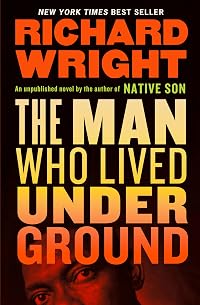
The Man Who Lived Underground
by Richard Wright
On This Page
Description
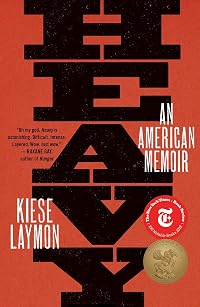
"The Man Who Lived Underground reminds us that any 'greatest writers of the 20th century' list that doesn't start and end with Richard Wright is laughable. It might very well be Wright's most brilliantly crafted, and ominously foretelling, book." —Kiese LaymonA major literary event: an explosive, previously unpublished novel about race and violence in America by the legendary author of Native Son and Black Boy
Fred Daniels, a Black man, is picked up by the police after a brutal double show more murder and tortured until he confesses to a crime he did not commit. After signing a confession, he escapes from custody and flees into the city's sewer system.
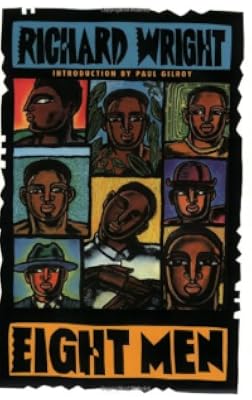
This is the devastating premise of this scorching novel, a never-before-seen masterpiece by Richard Wright. Written between his landmark books Native Son (1940) and Black Boy (1945), at the height of his creative powers, it would see publication in Wright's lifetime only in drastically condensed and truncated form, and ultimately be included in the posthumous short story collection Eight Men (1961). Now, for the first time, by special arrangement with the author's estate, the full text of the work that meant more to Wright than any other ("I have never written anything in my life that stemmed more from sheer inspiration") is published in the form that he intended, complete with his companion essay, "Memories of My Grandmother." Malcolm Wright, the author's grandson, contributes an afterword.
. show less
Tags
Recommendations






Member Reviews
Rating: 5* of five
The Publisher Says: A major literary event: an explosive, previously unpublished novel from the 1940s by the legendary author of Native Son and Black Boy.
Fred Daniels, a black man, is picked up randomly by the police after a brutal murder in a Chicago neighborhood and taken to the local precinct where he is tortured until he confesses to a crime he didn't commit. After signing a confession, he escapes—or is permitted to escape—from the precinct and takes up residence in the sewers below the streets of Chicago.
This is the simple, horrible premise of Richard Wright's scorching novel, The Man Who Lived Underground, a masterpiece written in the same period as his landmark books Native Son (1940) and Black Boy (1945) show more that he was unable to publish in his lifetime. Only small parts of it have appeared in print, and in a significantly redacted form it would eventually be included in the short story collection Eight Men (1961). Now, for the first time, by special arrangement with the author’s estate, the full text of the work that meant more to Wright than any other (“I have never written anything in my life that stemmed more from sheer inspiration”) is published in the form that he intended, complete with his companion essay, “Memories of My Grandmother.” Malcolm Wright, the author’s grandson, contributes an afterword.
I RECEIVED A DRC FROM THE PUBLISHER VIA NETGALLEY. THANK YOU.
My Review: Richard Wright was one of the twentieth century's crop of Great American Storytellers, a writer whose entire life of creation was a gift to a country that did not deserve his passionate voice calling into the face of its indifference that we can be better, do better, and must in order to survive.
People my age were required to read Native Son in high school English, and I am so very glad we were. I wouldn't have picked up the book any other way. It needed to be shoved on me. And wonder of wonders, the Austin (Texas) Independent School District of the early 1970s did. It was a tough thing to let myself believe, that people simply but sincerely hated for no better reason than someone was a different skin color than they were. I assumed all those yahoos were just performing their snotty, hateful idiocy like they did their fake homophobia; it seemed to me that racism against Black and Hispanic students was the same. Anything to look cool, after all, and these were teenagers whose ideas of Cool were neither self-reflective nor rebellious enough to have progressed from the 1950s their own parents were stuck in.
Then we read the equally astounding true-crime (I call racism a crime and am not likely to stop doing so) Black Like Me, an account of a white man passing as Black in the Jim Crow South. It too was gut-wrenching, but was different in kind than the novel Native Son. A factual report...well, I am quite sure that my own racism got hard, hard knocks that year. (I am fully aware that I'm complicit in racist society, that in no way am I "not a racist" just because I support Black political candidates and so on.) It's a pity we couldn't have read this jaw-dropping, intense, visceral evocation of the Other as refiner and perfecter of his Othering. It is the apotheosis of Otherness and Othering that this intense story tells its readers.
Anyone who's paid me any attention knows that I can be run off from continuing a read by child abuse, by use of the n-word, by cruelty to animals...the list goes on...and not a few unfriendlies are smirking in anticipation of taxing me with this book's abusive, rage-filled, n-word-bombing ethos...how can I give this five stars and still abandon ship with content warnings in other, arguably less offensive cases? Because Richard Wright never does a single thing to make the awfulness of PoV character Fred Daniels's world sensational. The author isn't kidding around, bedizening a story with nastiness to provoke a response. He is telling a story about how Othering a man will, over time, after many small and large blows and much deliberate infliction of every kind of pain, turn him in to the thing that he was not, did not want to be, and could not bear to know that he now was.
It worked, in its honesty and its clarity of purpose. I left the sewer Fred lived in without regret, without revulsion, and with the most horrified, profound acceptance of Fred as he was abused and neglected into being. Acceptance of his re-creation, transformation.
In the inexcusably hate-filled twenty-first century, we are fighting the battle that Fred lost all over again. There are wins...the conviction of Ahmaud Arbery's murderers...there are defeats, the gerrymandering cases standing out to me as disasters to Black people...but the trend is towards, as it ever was, the endless and pointless perpetuation of hate based on stupidity among the haters and truculence among the hated.
Books like this are strong medicine against both ends of the spectrum. Fred, a victim, sees what the System does to people, and ultimately still surrenders to it. Not to fight against the dehumanizing and brutalizing actions and inactions of the system that allows Fred to exist in the literal sewers is to acquiesce in the process of creating more Freds...and that is a moral wrong and a societal tragedy. Author Wright doesn't allow his readers the luxury of redemption. This book remained unpublished for seventy years because it is the most hopeless document of degradation's triumph I've ever read. White people of the 1940s would've been offended by the clear-eyed assertion of police violence as it happened...nowadays that illusion is gone...but they wouldn't have wanted to read about a good man surrendering his humanity regardless of that knee-jerk response. The accusing fingers pointing back at them as they called out Author Wright for his bleak treatment of Fred (theirs was the system he succumbed to, after all) were simply too on-the-nose.
There is an extended essay included with the novel entitled “Memories of My Grandmother” that enables our appalled eyes to see where so much of the story we've just read originated. The fact that Christian religion played such a big role in Wright's formation into a man capable of the kind of wordsmithing he does isn't a big surprise. I'm very grateful that the author's daughter required the essay to be published within the book containing the novel...it's a long piece and, even if you're on the fence about reading the novel, I hope you'll consider procuring it to read the essay alone. It is a marvelous explication of how each generation forms the next, for good and ill.
What Author Wright isn't, in the writing of this story, is subtle. The metaphors defining it simply aren't debatable: Whites own the sunshine and consign the Blacks to the literal sewers to eke out whatever existences they can. A Black man who's innocent of any crime is shoved into the sewer with the rest of the leavings because he's never had a place in the sunshine that was truly his. As he copes increasingly poorly with the sewers, he's not allowed to leave them; he's run away from the white police, deprived them of their fun of torturing and eventually killing him, so they say "stay there and die."
The author doesn't, then, offer Redemption to either side. It's a very uncharitable and un-Christian thing to withhold. But he's got a reason, does Author Wright: "Chickens come home to roost, don’t they?" his daughter quotes him as saying.
They very much do. The perch they roost on is, in this rare and exquisitely painful read, your complicit soul. show less
The Publisher Says: A major literary event: an explosive, previously unpublished novel from the 1940s by the legendary author of Native Son and Black Boy.
Fred Daniels, a black man, is picked up randomly by the police after a brutal murder in a Chicago neighborhood and taken to the local precinct where he is tortured until he confesses to a crime he didn't commit. After signing a confession, he escapes—or is permitted to escape—from the precinct and takes up residence in the sewers below the streets of Chicago.
This is the simple, horrible premise of Richard Wright's scorching novel, The Man Who Lived Underground, a masterpiece written in the same period as his landmark books Native Son (1940) and Black Boy (1945) show more that he was unable to publish in his lifetime. Only small parts of it have appeared in print, and in a significantly redacted form it would eventually be included in the short story collection Eight Men (1961). Now, for the first time, by special arrangement with the author’s estate, the full text of the work that meant more to Wright than any other (“I have never written anything in my life that stemmed more from sheer inspiration”) is published in the form that he intended, complete with his companion essay, “Memories of My Grandmother.” Malcolm Wright, the author’s grandson, contributes an afterword.
I RECEIVED A DRC FROM THE PUBLISHER VIA NETGALLEY. THANK YOU.
My Review: Richard Wright was one of the twentieth century's crop of Great American Storytellers, a writer whose entire life of creation was a gift to a country that did not deserve his passionate voice calling into the face of its indifference that we can be better, do better, and must in order to survive.
People my age were required to read Native Son in high school English, and I am so very glad we were. I wouldn't have picked up the book any other way. It needed to be shoved on me. And wonder of wonders, the Austin (Texas) Independent School District of the early 1970s did. It was a tough thing to let myself believe, that people simply but sincerely hated for no better reason than someone was a different skin color than they were. I assumed all those yahoos were just performing their snotty, hateful idiocy like they did their fake homophobia; it seemed to me that racism against Black and Hispanic students was the same. Anything to look cool, after all, and these were teenagers whose ideas of Cool were neither self-reflective nor rebellious enough to have progressed from the 1950s their own parents were stuck in.
Then we read the equally astounding true-crime (I call racism a crime and am not likely to stop doing so) Black Like Me, an account of a white man passing as Black in the Jim Crow South. It too was gut-wrenching, but was different in kind than the novel Native Son. A factual report...well, I am quite sure that my own racism got hard, hard knocks that year. (I am fully aware that I'm complicit in racist society, that in no way am I "not a racist" just because I support Black political candidates and so on.) It's a pity we couldn't have read this jaw-dropping, intense, visceral evocation of the Other as refiner and perfecter of his Othering. It is the apotheosis of Otherness and Othering that this intense story tells its readers.
Anyone who's paid me any attention knows that I can be run off from continuing a read by child abuse, by use of the n-word, by cruelty to animals...the list goes on...and not a few unfriendlies are smirking in anticipation of taxing me with this book's abusive, rage-filled, n-word-bombing ethos...how can I give this five stars and still abandon ship with content warnings in other, arguably less offensive cases? Because Richard Wright never does a single thing to make the awfulness of PoV character Fred Daniels's world sensational. The author isn't kidding around, bedizening a story with nastiness to provoke a response. He is telling a story about how Othering a man will, over time, after many small and large blows and much deliberate infliction of every kind of pain, turn him in to the thing that he was not, did not want to be, and could not bear to know that he now was.
It worked, in its honesty and its clarity of purpose. I left the sewer Fred lived in without regret, without revulsion, and with the most horrified, profound acceptance of Fred as he was abused and neglected into being. Acceptance of his re-creation, transformation.
In the inexcusably hate-filled twenty-first century, we are fighting the battle that Fred lost all over again. There are wins...the conviction of Ahmaud Arbery's murderers...there are defeats, the gerrymandering cases standing out to me as disasters to Black people...but the trend is towards, as it ever was, the endless and pointless perpetuation of hate based on stupidity among the haters and truculence among the hated.
Books like this are strong medicine against both ends of the spectrum. Fred, a victim, sees what the System does to people, and ultimately still surrenders to it. Not to fight against the dehumanizing and brutalizing actions and inactions of the system that allows Fred to exist in the literal sewers is to acquiesce in the process of creating more Freds...and that is a moral wrong and a societal tragedy. Author Wright doesn't allow his readers the luxury of redemption. This book remained unpublished for seventy years because it is the most hopeless document of degradation's triumph I've ever read. White people of the 1940s would've been offended by the clear-eyed assertion of police violence as it happened...nowadays that illusion is gone...but they wouldn't have wanted to read about a good man surrendering his humanity regardless of that knee-jerk response. The accusing fingers pointing back at them as they called out Author Wright for his bleak treatment of Fred (theirs was the system he succumbed to, after all) were simply too on-the-nose.
There is an extended essay included with the novel entitled “Memories of My Grandmother” that enables our appalled eyes to see where so much of the story we've just read originated. The fact that Christian religion played such a big role in Wright's formation into a man capable of the kind of wordsmithing he does isn't a big surprise. I'm very grateful that the author's daughter required the essay to be published within the book containing the novel...it's a long piece and, even if you're on the fence about reading the novel, I hope you'll consider procuring it to read the essay alone. It is a marvelous explication of how each generation forms the next, for good and ill.
What Author Wright isn't, in the writing of this story, is subtle. The metaphors defining it simply aren't debatable: Whites own the sunshine and consign the Blacks to the literal sewers to eke out whatever existences they can. A Black man who's innocent of any crime is shoved into the sewer with the rest of the leavings because he's never had a place in the sunshine that was truly his. As he copes increasingly poorly with the sewers, he's not allowed to leave them; he's run away from the white police, deprived them of their fun of torturing and eventually killing him, so they say "stay there and die."
The author doesn't, then, offer Redemption to either side. It's a very uncharitable and un-Christian thing to withhold. But he's got a reason, does Author Wright: "Chickens come home to roost, don’t they?" his daughter quotes him as saying.
They very much do. The perch they roost on is, in this rare and exquisitely painful read, your complicit soul. show less
In the 1940s, Richard Wright published two seminal works (Black Boy and Native Son). Both dealt with the topic of race in America. Wright also wrote another full-length work (this one), but it was rejected by publishers for being too controversial about race. However, during the recent Black Lives Matter movement, many saw the censorship of this book as being a historical injustice that needed correction. So in 2021, this story was published for the world to read… and oh, am I grateful for reading it.
Wright tells the story of a black man who is suddenly accused of double murder. In truth, he was peacefully working for a next-door neighbor during the crime, was active in his church, has a pregnant wife, and lives a morally upstanding show more life. He is arrested and forced into signing a confession by brutal police tactics and a corrupt district attorney. However, he escapes custody and eludes recapture by going down a sewer line. Underground, he develops a life of his own where he sees the world as it actually is. Three days later, he returns to the world to find that it has changed and it is all-too-much the same.
The philosophical depth of this storyline is evident. It reminds me of Plato’s famous allegory of the cave, only retold in a modern context. Further, this book is extraordinarily timely, some 70-80 years after its inscription. Sadly, some in the police can still maintain a white-supremacist status quo. Also sadly, it took George Floyd’s death to awaken us that Wright was indeed onto something real in American culture. Yes, this book is not hyperbole but a work of realistic fiction. Like other works of conscience, it speaks to reality more clearly than reading newspapers or Internet websites.
This book obviously touched a sensitive nerve when originally proposed. It obviously can touch a nerve today, too. But that nerve deserves to be touched again and again until we train our society to respond appropriately. I’m glad that this work has been trumpeted recently by so many in the literary industry. Its place in the American literary canon should be found and preserved. This book is ideal and suitable for college campuses where open discussion of these issues can take place. It also needs to become fodder for anyone interested in serious discussion about race in America, including book clubs. In his era, Wright saw his society clearer than society was willing to let him. The question now becomes transformed: Will we let Wright’s message speak to us today, and will we do something about it? show less
Wright tells the story of a black man who is suddenly accused of double murder. In truth, he was peacefully working for a next-door neighbor during the crime, was active in his church, has a pregnant wife, and lives a morally upstanding show more life. He is arrested and forced into signing a confession by brutal police tactics and a corrupt district attorney. However, he escapes custody and eludes recapture by going down a sewer line. Underground, he develops a life of his own where he sees the world as it actually is. Three days later, he returns to the world to find that it has changed and it is all-too-much the same.
The philosophical depth of this storyline is evident. It reminds me of Plato’s famous allegory of the cave, only retold in a modern context. Further, this book is extraordinarily timely, some 70-80 years after its inscription. Sadly, some in the police can still maintain a white-supremacist status quo. Also sadly, it took George Floyd’s death to awaken us that Wright was indeed onto something real in American culture. Yes, this book is not hyperbole but a work of realistic fiction. Like other works of conscience, it speaks to reality more clearly than reading newspapers or Internet websites.
This book obviously touched a sensitive nerve when originally proposed. It obviously can touch a nerve today, too. But that nerve deserves to be touched again and again until we train our society to respond appropriately. I’m glad that this work has been trumpeted recently by so many in the literary industry. Its place in the American literary canon should be found and preserved. This book is ideal and suitable for college campuses where open discussion of these issues can take place. It also needs to become fodder for anyone interested in serious discussion about race in America, including book clubs. In his era, Wright saw his society clearer than society was willing to let him. The question now becomes transformed: Will we let Wright’s message speak to us today, and will we do something about it? show less
note: the following review, and the above stars, are for the title story only, not the three other items added into this volume -
“He had triumphed over the world aboveground. He was free!”
A black man is accused of killing two people, and the white police officers beat him until he signs a confession he never gave. He is able to escape into the sewers below the city, and while underneath has a series of adventures that seem to change him fundamentally. He is not the same when he resurfaces, but the world around him is.
I think this is an amazing story, which says a lot about the condition of the black man in the 1940's, which is to say, is not much different than it is now. When life in a sewer line is an upgrade, that says a lot show more about the life that one is forced to lead. The repugnant, torturous behavior of the white police officers has been echoed over and over in the eight decades since this was written, and the fictional character of Fred Daniels in this book can easily be compared to the real-life victims of police violence now. Richard Wright knew the truth all too well, and this book is still calling us out in 2023. An important read. show less
“He had triumphed over the world aboveground. He was free!”
A black man is accused of killing two people, and the white police officers beat him until he signs a confession he never gave. He is able to escape into the sewers below the city, and while underneath has a series of adventures that seem to change him fundamentally. He is not the same when he resurfaces, but the world around him is.
I think this is an amazing story, which says a lot about the condition of the black man in the 1940's, which is to say, is not much different than it is now. When life in a sewer line is an upgrade, that says a lot show more about the life that one is forced to lead. The repugnant, torturous behavior of the white police officers has been echoed over and over in the eight decades since this was written, and the fictional character of Fred Daniels in this book can easily be compared to the real-life victims of police violence now. Richard Wright knew the truth all too well, and this book is still calling us out in 2023. An important read. show less
The opening pages of this book by one of America’s greatest writers were a shock both to Richard Wright’s agent and publisher. They were so violent and painful to read that the book could not be published when first written in the early 1940s. It has taken some 80 years before the full text can finally appear. And what was the shocking bit? The book opens with the arrest of a Black man accused of a murder he did not commit, and the brutal beatings and abuse he suffers at the hands of white policemen. No wonder the book is being hailed as relevant to our time.
But anyone expecting a realistic story will be disappointed, because Wright has ambitions far beyond telling a story of racial injustice, which he had done before so show more successfully. As he explains in a long essay at the end of the book, this novella is an attempt to get inside the head of the author’s grandmother who raised him. A deeply religious woman, she lived in a world of her own making as does the main character in this book when he literally goes underground.
An unusual book, painful to read in parts, but intelligent and gripping as well. show less
But anyone expecting a realistic story will be disappointed, because Wright has ambitions far beyond telling a story of racial injustice, which he had done before so show more successfully. As he explains in a long essay at the end of the book, this novella is an attempt to get inside the head of the author’s grandmother who raised him. A deeply religious woman, she lived in a world of her own making as does the main character in this book when he literally goes underground.
An unusual book, painful to read in parts, but intelligent and gripping as well. show less
Really powerful novel and especially loved the essay that followed, explaining some of the inspirations for the story in his grandmother's religious life. Disturbingly relevant in terms of policing and white supremacy.
56. The Man Who Lived Underground by Richard Wright
afterward Malcolm Wright (2021)
OPD: 2021 (written 1941-1942, with a shortened version published in 1944)
format: 228-page Kindle ebook
acquired: October 3 read: Oct 4-15 time reading: 5:44, 1.5 mpp
rating: 4
genre/style: Novel theme: Richard Wright
locations: unknown American city, probably southern
about the author: American author born on a Mississippi plantation, 1908-1960
This for me was a curiosity, part powerful, part quirky. Wright takes a close look at police brutality against African Americans (a point noted in his publisher's rejection documentation) and then an almost surreal look at a refugee living in American sewers. Fred Daniels, a good church-going upstanding person and show more expectant father, is arrested for a murder he knows nothing about. He's not questioned, but beat-up by an all-white police force demanding a confession. It's not clear where his mind was before this happens, but he gets rattled, and it seems his mind is never able to settle down. Instead, in the sewers he tunnels, and he stumbles across apparent odd truths about the basics in life - religion, death, money, entertainment, etc.
Maybe think Plato's cave. It's a combination of Wright's creativity and what I see has his semi-super-aware, semi-blind romantic mindset. It makes an odd combination of strange guy in a strange place doing strange things that don't quite make sense. In a long afterward, which Wright intended to be published with the novel, he explained the novel as a response to the stubborn illogical religious faith his grandmother followed and depended on, a source of conflict between he and his grandmother, his main parent during his older childhood.
This is a lost novel. Wright wrote it written during WW2, in 1942, but it was rejected for publication by his publisher. A shorter version was published in a journal, and later in a posthumous collection. Wright moved on, composing [Black Boy], his classic published in 1945. There he goes directly into his grandmother's religion and state of mind, and its impacts on him. The full version of this novel was first published in 2021, after Wright's grandson, Malcolm Wright, pushed for it.
2023
https://www.librarything.com/topic/354226#8263418 show less
afterward Malcolm Wright (2021)
OPD: 2021 (written 1941-1942, with a shortened version published in 1944)
format: 228-page Kindle ebook
acquired: October 3 read: Oct 4-15 time reading: 5:44, 1.5 mpp
rating: 4
genre/style: Novel theme: Richard Wright
locations: unknown American city, probably southern
about the author: American author born on a Mississippi plantation, 1908-1960
This for me was a curiosity, part powerful, part quirky. Wright takes a close look at police brutality against African Americans (a point noted in his publisher's rejection documentation) and then an almost surreal look at a refugee living in American sewers. Fred Daniels, a good church-going upstanding person and show more expectant father, is arrested for a murder he knows nothing about. He's not questioned, but beat-up by an all-white police force demanding a confession. It's not clear where his mind was before this happens, but he gets rattled, and it seems his mind is never able to settle down. Instead, in the sewers he tunnels, and he stumbles across apparent odd truths about the basics in life - religion, death, money, entertainment, etc.
Maybe think Plato's cave. It's a combination of Wright's creativity and what I see has his semi-super-aware, semi-blind romantic mindset. It makes an odd combination of strange guy in a strange place doing strange things that don't quite make sense. In a long afterward, which Wright intended to be published with the novel, he explained the novel as a response to the stubborn illogical religious faith his grandmother followed and depended on, a source of conflict between he and his grandmother, his main parent during his older childhood.
This is a lost novel. Wright wrote it written during WW2, in 1942, but it was rejected for publication by his publisher. A shorter version was published in a journal, and later in a posthumous collection. Wright moved on, composing [Black Boy], his classic published in 1945. There he goes directly into his grandmother's religion and state of mind, and its impacts on him. The full version of this novel was first published in 2021, after Wright's grandson, Malcolm Wright, pushed for it.
2023
https://www.librarything.com/topic/354226#8263418 show less
Underground Son
Review of the Library of America hardcover edition (Unpublished manuscript from 1941/42, first published April, 2021)
I read Richard Wright's autobiography Black Boy (1945/2020) in its 75th Anniversary expanded edition only earlier this year, thanks to a subscription to Shakespeare & Co.'s Year of Reading Lost Treasures. It was interesting to read there in the biographical timeline information about the lost, unfinished and/or unpublished early Wright works such as the first published story The Voodoo of Hell's Half Acre (1923) [no copies have been found of the newspaper where it was first printed], the unfinished early novels Little Sister (1939) & Black Hope (1941) and the early rejected novels such as Cesspool (1935) show more [later published as Lawd Today! (1963)], Tarbaby's Dawn (1937, still unpublished) and The Man Who Lived Underground (1941-42). As fate would have it, the latter has now been published in 2021.
The plot is easily summarized.A Black-American handyman, Fred Daniels is arrested on suspicion of committing murders in a house nearby to where he works. He is brought to the police station and brutally beaten and interrogated until he signs a confession. Through a chance trip allowed by the police to visit his wife in the hospital (who is giving birth), Daniels manages to escape and hides down a manhole in the sewers. He lives underground for several days digging passages into basements and secretly observing events in various businesses. Having an eventual revelation he emerges from underground and turns himself back into the police in order to reveal what he knows but it all ends with fatal consequences. Meanwhile, the criminal behind the original murders had been caught and the police know that Daniels was in fact innocent.
This newly published 2021 edition includes the essay Memories of my Grandmother which provides an extremely thorough background to the themes which are either overt or hidden in The Man Who Lived Underground. At first you can't even imagine how Wright's grandmother's religious faith would even relate to the novel, but Wright explains it with a great amount of detail. Even the fantastical story about someone living underground was based on a real-life incident in Hollywood, California that Wright read about in a True Detective magazine. The religious parallel to an innocent man condemned for crimes he didn't commit and who later 'rises' was the main metaphor that I drew from the story, but Wright's essay explains so much more about his grandmother's view of the world which was not 'real' to everyone else.
80 years later, this story still has the power to shock and disturb. The Library of America has filled a significant publishing gap in Wright's works by finally producing this excellent edition which includes Afterwords by Wright's daughter and grandson.
Trivia and Links
‘It couldn’t be more relevant’: the unseen Richard Wright novel finally getting its due by David Smith for The Guardian April 22, 2021. show less
Review of the Library of America hardcover edition (Unpublished manuscript from 1941/42, first published April, 2021)
I read Richard Wright's autobiography Black Boy (1945/2020) in its 75th Anniversary expanded edition only earlier this year, thanks to a subscription to Shakespeare & Co.'s Year of Reading Lost Treasures. It was interesting to read there in the biographical timeline information about the lost, unfinished and/or unpublished early Wright works such as the first published story The Voodoo of Hell's Half Acre (1923) [no copies have been found of the newspaper where it was first printed], the unfinished early novels Little Sister (1939) & Black Hope (1941) and the early rejected novels such as Cesspool (1935) show more [later published as Lawd Today! (1963)], Tarbaby's Dawn (1937, still unpublished) and The Man Who Lived Underground (1941-42). As fate would have it, the latter has now been published in 2021.
The plot is easily summarized.
This newly published 2021 edition includes the essay Memories of my Grandmother which provides an extremely thorough background to the themes which are either overt or hidden in The Man Who Lived Underground. At first you can't even imagine how Wright's grandmother's religious faith would even relate to the novel, but Wright explains it with a great amount of detail. Even the fantastical story about someone living underground was based on a real-life incident in Hollywood, California that Wright read about in a True Detective magazine. The religious parallel to an innocent man condemned for crimes he didn't commit and who later 'rises' was the main metaphor that I drew from the story, but Wright's essay explains so much more about his grandmother's view of the world which was not 'real' to everyone else.
80 years later, this story still has the power to shock and disturb. The Library of America has filled a significant publishing gap in Wright's works by finally producing this excellent edition which includes Afterwords by Wright's daughter and grandson.
Trivia and Links
‘It couldn’t be more relevant’: the unseen Richard Wright novel finally getting its due by David Smith for The Guardian April 22, 2021. show less
Members
- Recently Added By
Lists

Anticipated 2021 Reads
231 works; 7 members
Author Information

55+ Works 19,438 Members
Richard Wright was generally thought of as one of the most gifted contemporary African American writers until the rise of James Baldwin. "With Wright, the pain of being a Negro is basically economic---its sight is mainly in the pocket. With Baldwin, the pain suffuses the whole man. . . . If Baldwin's sights are higher than Wright's, it is in part show more because Wright helped to raise them" (Time). Wright was born on a plantation near Natchez, Mississippi, the son of a sharecropper. At the age of 15, he started to work in Memphis, then in Chicago, then "bummed all over the country," supporting himself by various odd jobs. His early writing was in the smaller magazines---first poetry, then prose. He won Story Story's $500 prize---for the best story written by a worker on the Writer's Project---with "Uncle Tom's Children" in 1938, his first important publication. He wrote Native Son (1940) in eight months, and it made his reputation. Based in part on the actual case of a young black murderer of a white woman, it was one of the first of the African American protest novels, violent and shocking in its scenes of cruelty, hunger, rape, murder, flight, and prison. Black Boy (1945) is the simple, vivid, and poignant story of Wright's early years in the South. It appeared at the beginning of a new postwar awareness of the evils of racial prejudice and did much to call attention to the plight of the African American. The Outsider (1953) is a novel based on Wright's own experience as a member of the Communist party, an affiliation he terminated in 1944. He remained politically inactive thereafter and from 1946 until his death made his principal residence in Paris. His nonfiction writings on problems of his race include Black Power: A Record of Reactions in a Land of Pathos (1954), about a visit to the Gold Coast, White Man, Listen (1957), and Twelve Million Black Voices: A Folk History of the Negro in the United States. (Bowker Author Biography) Richard Wright was born on a plantation near Natchez, Mississippi. His father left the family when Wright was only five years old, and he was raised first by his mother and then by a series of relatives. What little schooling he had ended with his graduation from ninth grade in Memphis, Tennessee. At age 15, he started to work in Memphis, and later worked in Chicago before traveling across the country supporting himself with odd jobs. When Wright finally returned to Chicago, he got a job with the federal Writer's Project, a government-supported arts program. He was quite successful, winning a $500 prize from a magazine for the best fiction written by a participant in that program. In Chicago, he was also introduced to leftist politics and became a member of the Communist Party. In 1937, Wright left Chicago for New York, where he became Harlem editor for the Communist national newspaper, The Daily Worker, and where he met future novelist, Ralph Ellison. Wright became a celebrated author with the publication of Native Son (1940), a novel he wrote in only eight months. Based on the actual case of a young black murderer of a white woman, it was one of the first of the modern black protest novels, violent and shocking in its sense of cruelty, hunger, rape, murder, flight, and prison. This novel brought Wright both fame and financial security. He followed it with his autobiography, Black Boy (1945), which was also successful. In 1942, Wright and his wife broke with the Communist Party, and in 1947, they moved to France, where Wright lived the rest of his life. His novel The Outsider (1953) is based on his experiences as a member of the Communist Party. Wright is regarded as a major modern American writer, one of the first black writers to reach a large white audience, and thereby raise the level of national awareness of the continuing problem of racism in America. In many respects Wright paved the way for all black writers who followed him. (Bowker Author Biography) show less
All Editions
Some Editions
Awards and Honors
Distinctions
Series
Belongs to Publisher Series
Work Relationships
Common Knowledge
- Canonical title
- The Man Who Lived Underground
- Original publication date
- 2021-04-20
Classifications
Statistics
- Members
- 355
- Popularity
- 89,137
- Reviews
- 14
- Rating
- (4.12)
- Languages
- English, German
- Media
- Paper, Audiobook, Ebook
- ISBNs
- 13
- ASINs
- 2