Travels in Siberia
by Ian Frazier
On This Page
Description
Here, travel writer Ian Frazier trains his eye for detail on Siberia, that vast expanse of Asiatic Russia. He explores many aspects of this storied, often grim region, which takes up one-seventh of the land on earth. He writes about the geography, the resources, the native peoples, the history, the forty-below midwinter afternoons, the bugs. The book brims with Mongols, half-crazed Orthodox archpriests, fur seekers, ambassadors of the czar bound for Peking, tea caravans, German scientists, show more American prospectors, intrepid English nurses, and prisoners and exiles of every kind. More than just a historical travelogue, this is also an account of Russia since the end of the Soviet Union, and a personal reflection on the all-around amazingness of Russia, a country that still somehow manages to be funny.--From publisher description. show lessTags
Recommendations




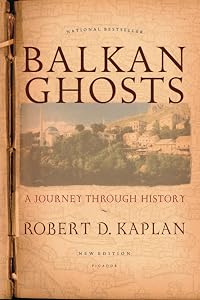
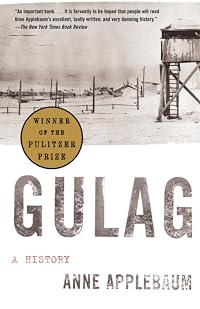
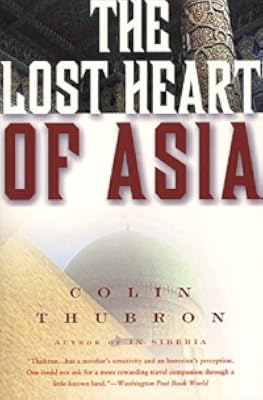







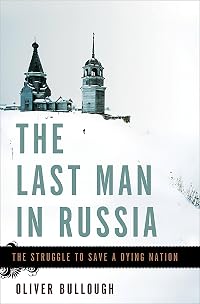
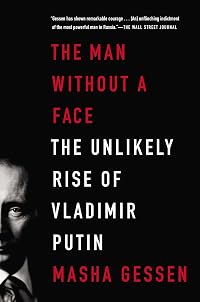
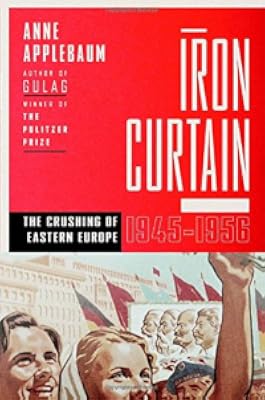



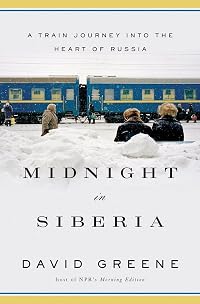


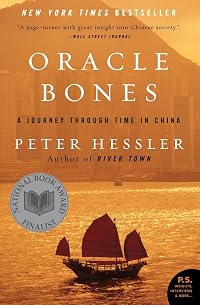
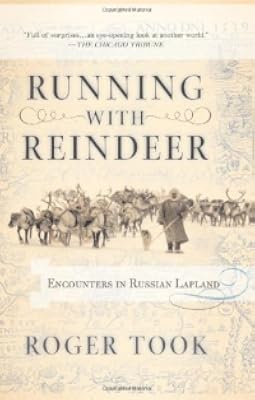




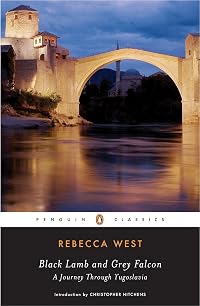

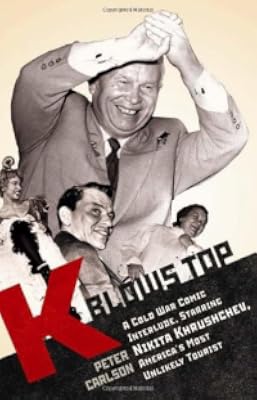

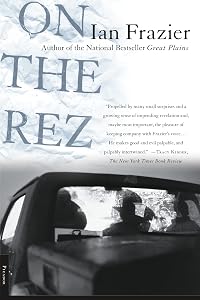




Member Recommendations
rebeccanyc Frazier mentions Dersu (the book and the movie) in his wonderfully written story of his five trips to Siberia, a book which encompasses history, natural history, fascinating characters and more. Dersu the Trapper provides a much more detailed look at a narrower segment of Siberia at a time when it was still wilderness
Member Reviews
Ian Frazier's is a masterful writer and his Travels in Siberia may be his best work He weaves nuggets of history and geography with his intrepid travels through the land mass of Siberia--one-twelfth of the earth's land. Before making his first foray into the land, he approaches his subject from Alaska, never quite making it. In his second venture, he travels by van eastward into ever remote areas of the land. I especially appreciate his boyish enthusiasm for his adventures and the travelers like George Keenan, a fellow Midwesterner who went before him in the 1860s. Indeed, he remarks on how the Ohio natives and other Midwesterners make up a disproportionate number of American travelers who were drawn to Siberia. Frazier has the ability show more to bring the exotic world of Siberia to life with him back to New York where he finds sensory reminders of Siberia in sable coats and Russian gas stations. In a later trip he finds one of the hundreds of abandoned gulags connecting it as the physical symbol of Stalin's cruel mind. His powers of perception observe both incredible beauty in the land, women, and food as well as dark stores of horror by travelers driven mad from their travels. Read it. show less
Ian Frazier's "Travels in Siberia" is an excellent travel book on a place I do not want to travel to. In it, he reports on five visits to that enormous place, intertwined with interesting reports on Siberian and Russian history, and with vignettes of (relatively) current Russian mores and manners. ("Relatively" because the book was written in 2010: an update would be much appreciated). Frazier's reporting is personal, witty and often horrifying. Travel in Siberia was incredibly difficult: when he took it, the main trans-Siberian road had a gap that had to be filled in by hauling cars and passengers across a 500 mile roadless waste. Cold is of course a feature for all but a few months of the year, but so are bugs, and ubiquitous show more mountains of trash. Some bits sound interesting -- Lake Baikal, for one -- but in general the book damped my already minimal interest in going to Siberia. For arm chair travellers, however, it's a great read. show less
I really enjoyed this somewhat laconic and dryly funny travel memoir about Frazier's several trips to Siberia. His adventures were fun to follow- real seat of the pants traveling, in a part of the world still resembling wilderness. I love his crankypants honesty and self-deprecating humor, and all the information he shares about the history and people of this spectacular and hidden part of our world. Full review: http://www.bostonbibliophile.com/2012/12/review-travels-in-siberia-by-ian-frazie...
The title is a bit of a misnomer. There isn't that much Siberia to begin with (the writer doesn't get to Siberia proper before page 200), nor is there much travelling going on: speeding non-stop across the Eurasian land mass in a van doesn't really provide for much of a a travelogue. "Clueless Petulant Older White Male" would do this book more justice. Frazier writes well (when he takes the effort - see below), but for a travel writer he has a severe lack of empathy (the patronising descriptions of his Russian companions, who for him are little more than modern-day Dersu Uzalas, are cringe-worthy, and the way he insidiously implies that some laughing and dancing with Siberian belles by his companions led to much more, won't have made show more for a warm welcome when these Russian men returned home in the Russian West. What happens in Siberia, clearly doesn't stay in Siberia, as far as Frazier is concerned). This is especially ironic since the author has a bit of a roving eye, and marks virtually every Siberian city for the beauty of its womenfolk. In spite of his own frequent assertions to the contrary, his Russian is clearly flimsy at best. He doesn't seem to realise that female family names are different from male names (he keeps going on about Princess Trubetskoy), and other painfully tentative conversations indicate that he has a very weak grasp of the language. But since he spends most of his travelling time holed up in the back of the van, sulking, this might only be a minor detail.
Despite allegedly having been 15 years in the making, some parts of the book are still rather sketchy: entire pages are little more than copies from his diary entries, as the staccato shorthand and irrelevant details indicate. Other parts are verbatim translations of conversations which he must have taped - translations that makes them sound like mad scientists from the '50s. These and other elements make the book feel a bit ramshackle.
Frazier complains (a lot) about his Russian companions growing distant for no discernible reason. When you read this book, you will understand why. What with his sulking and derogatory, clichéd view of Russia and its inhabitants, it is a small wonder they didn't push him under the ice. show less
Despite allegedly having been 15 years in the making, some parts of the book are still rather sketchy: entire pages are little more than copies from his diary entries, as the staccato shorthand and irrelevant details indicate. Other parts are verbatim translations of conversations which he must have taped - translations that makes them sound like mad scientists from the '50s. These and other elements make the book feel a bit ramshackle.
Frazier complains (a lot) about his Russian companions growing distant for no discernible reason. When you read this book, you will understand why. What with his sulking and derogatory, clichéd view of Russia and its inhabitants, it is a small wonder they didn't push him under the ice. show less
I'm very impressed with Frazier, and other writers like him (John McPhee is another example) who can somehow manage to make interesting friends, go interesting places, and then describe it all for those of us who are too shy to get as far. Frazier is also able to admit that for much of the book he is little more than a somewhat better-read "stupid American tourist" and doesn't pretend to be anything but a traveler and a writer. Nor does he leave out some foolish things he's done or the difficulties of traveling far into a country where you don't quite speak the language and don't quite understand the culture. But it is very informative, and the writing gives you a sense of his amazement at both the good and the bad and the mediocre of show more Russia. Bonus credits for good notes and an impressive bibliography. Frazier has been thinking about this book for decades now and it shows. show less
I never have had any interest in Siberia - never been there and never wanted to go. My sense of the place was an empty vastness, swampy with short buggy summers and long, cold dark winters. The architecture was dreary, the food was terrible, and the history irrelevant. It therefore is a measure of Frazier's writing ability that he kept me turning the pages - all 471. Frazier nibbles at the edges of Russia before plunging into a cross-country drive with two Russian guides. He also makes additional sidetrips. In all, the book spans some seventeen years of his travels in Russia. He has an eye for detail, be it the landscape, the people or anything else that captures his fancy. He develops the character of his two guides and other assorted show more personages that he meets. He is entertaining, witty and informative. He has read widely with respect to other travel books on Siberia and shares its history - what history there is. In short, if you want to know more about Siberia, this may be the only book you need to read. As great a work of travel literature this book is, however, I still have no desire to visit Siberia. There are good reasons why historically it was a place of exile and imprisonment. show less
I could hardly put this book down because Ian Frazier is such a wonderful writer. On the surface the story of his five trips to Siberia -- with a cross-Siberia drive the centerpiece -- it encompasses a great deal more: the history of Siberia (and Russia) from the Mongol tribes to the gulag and beyond, including a compelling chapter on the Decembrists; natural history from mosquitoes to ravens to reindeer to sables (with fascinating information about the historic fur trade) and geology from permafrost to oil wells; Russian literature and culture; Russian technology, especially cars and roads; and of course people of all sorts.
Despite the seriousness of some of these topics, Frazier's writing is so deceptively easy that the reader (or show more this one, anyway) learns a tremendous amount while feeling entertained. Frazier has a remarkable ability to talk to all sorts of people and convey their information in their own voices, a lively sense of humor, and an unobtrusive way of bringing his own thoughts and feelings into the story. He can be funny, horrified, worried, admiring, and appalled, and everything in between, He fell in love with Russia, and especially Siberia (which occupies 1/12 of the earth's surface), and by the end of the book the reader has too.
I first read excerpts of this book in the New Yorker; somehow, I'd missed Ian Frazier until then. Now I will look for his other work show less
Despite the seriousness of some of these topics, Frazier's writing is so deceptively easy that the reader (or show more this one, anyway) learns a tremendous amount while feeling entertained. Frazier has a remarkable ability to talk to all sorts of people and convey their information in their own voices, a lively sense of humor, and an unobtrusive way of bringing his own thoughts and feelings into the story. He can be funny, horrified, worried, admiring, and appalled, and everything in between, He fell in love with Russia, and especially Siberia (which occupies 1/12 of the earth's surface), and by the end of the book the reader has too.
I first read excerpts of this book in the New Yorker; somehow, I'd missed Ian Frazier until then. Now I will look for his other work show less
Members
- Recently Added By
Lists

Best of Travel Narratives
142 works; 28 members

Books about Russia and the former USSR
67 works; 12 members

2008-2012 Notable Books for Adults
127 works; 10 members

All Things Russia
459 works; 11 members
Author Information

29+ Works 4,454 Members
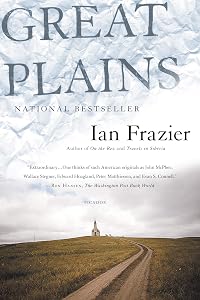
Writer and broadcaster Ian Frazier was born in Ohio and educated at Harvard University, where he wrote for the Harvard Lampoon. After his graduation he joined The New Yorker staff and frequently contributes to The Atlantic Monthly. His writing collections Dating Your Mom and Coyote V. Acme earned him a Thurber Prize for American Humor. The Great show more Plains won a 1990 Spur Award for Nonfiction from the Western Writers of America. Frazier has appeared on the National Public Radio Program A Prairie Home Companion and has acted in Smoke and Blue in the Face, both of which are Wayne Wang and Paul Auster films. (Bowker Author Biography) show less
Awards and Honors
Awards
Distinctions
Common Knowledge
- Canonical title
- Travels in Siberia
- Original publication date
- 2010
- Important places
- Siberia, Russia
- Original language
- English
- Canonical DDC/MDS
- 957
Classifications
- Genres
- Travel, Nonfiction, General Nonfiction, Biography & Memoir
- DDC/MDS
- 957 — History & geography History of Asia Asiatic Russia: Siberia
- LCC
- DK756.2 .F73 — History of Europe, Asia, Africa and Oceania Russia. Soviet Union. Former Soviet Republics – Poland History of Russia. Soviet Union. Former Soviet Republics Local history and description Siberia
- BISAC
Statistics
- Members
- 841
- Popularity
- 32,623
- Reviews
- 37
- Rating
- (4.03)
- Languages
- Danish, English
- Media
- Paper, Audiobook, Ebook
- ISBNs
- 9
- ASINs
- 8