The Kneebone Boy
by Ellen Potter
On This Page
Description
Otto, Lucia, and Max Hardscrabble, whose mother has been missing for many years, have unexpected and illuminating adventures in the village of Snoring-by-the-Sea after their father, who paints portraits of deposed monarchs, goes away on a business trip.Tags
Recommendations
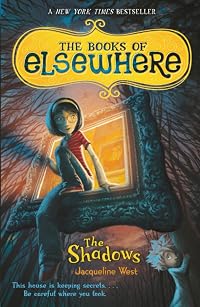
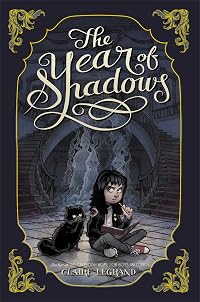
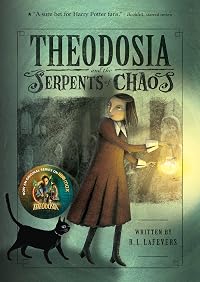
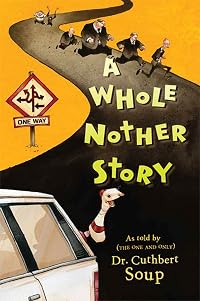

Member Recommendations
Member Reviews
It's clever, funny, dark, and touching. It's Lemony Snicket and Roald Dahl and dare I say a touch of the ol' J.K. And it's over too soon! The Kneebone Boy straight charmed the crap out of me. I wanted it to be longer, or at least be the start of a series, but I believe it's just an awesome little standalone gem I'll have to reread soon and often.
This is the story of the three Hardscrabble siblings: Otto, Lucia, and Max. These kids are outcasts in their hometown of Little Tunks because their mother disappeared and the whole town suspects Otto killed her and their father buried her in the backyard. But no one really knows what happened to the mother. She may be dead. She may have been kidnapped. It's been long years since anyone's seen show more her and the Hardscrabbles have precious few memories of her.
Then one day their father has to go on one of his portrait-painting trips and leaves the kids with their cousin in London. Only it turns out their cousin isn't in London and they are stranded. Unable to reach their father, they decide to seek out their mysterious Great-Aunt Haddie in a town called Snoring-by-the-Sea. I will not give away any more plot, which is quite twisty, but I will go on a little about why I loved this so much.
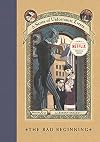
First and foremost, the narration is outstanding. We're told in the beginning that one of the Hardscrabble siblings is writing the story, but can't say who it is: "They said it's because the story belongs to all three of us, and I suppose they're right, but it seems unfair since I'm doing all the work. No one can stop you from guessing though." It's pretty easy to guess who the narrator is, but it's also really fun that the story is told in both third and first person. It has great flow, but can be broken up by asides about the writing of the story itself (very [b:Series of Unfortunate Events|78411|The Bad Beginning (A Series of Unfortunate Events, #1)|Lemony Snicket|http://photo.goodreads.com/books/1170942131s/78411.jpg|1069597]--if you didn't like those books, you probably won't like this). The asides are very funny and very meta. If I were more industrious I'd quote a long passage from page 87 that illustrates how great they are, but I'm not feeling industrious, so you're just going to have to read the book.
The relationship between the siblings is another of this book's strong suits. To me, it was so real. Each of the siblings' personalities seemed molded by their siblings. Otto doesn't speak, but communicates with a secret sign language he developed with Lucia. Max is just ten years old, but hyper-intelligent, so the very proud Lucia is often upstaged by him, which just makes her act even more haughty. They fight childishly. They bond touchingly. It's a dynamic that's familiar to most people, but not often captured so well in an adventure like this book.
One last compliment for Ms. Potter: I believe you are American, so bully for you for writing in so many cheeky Britishisms. I mean, I'm American too, so I can't truly say that you got them all right. But it sounded super awesomely British to me. The audio book could be great.
In the end, this book is about what all good adventure books are about: danger and discovery. And, as the narrator says, "Here is my most important message to you: All great adventures have moments that are really crap." Or, in a more philosophical vein: "You have to work really hard at being astonished by life."
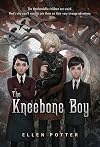
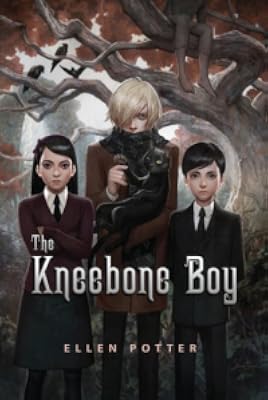
One last thing: the cover art is perfect. Do you see how the cat has extra toes? show less
This is the story of the three Hardscrabble siblings: Otto, Lucia, and Max. These kids are outcasts in their hometown of Little Tunks because their mother disappeared and the whole town suspects Otto killed her and their father buried her in the backyard. But no one really knows what happened to the mother. She may be dead. She may have been kidnapped. It's been long years since anyone's seen show more her and the Hardscrabbles have precious few memories of her.
Then one day their father has to go on one of his portrait-painting trips and leaves the kids with their cousin in London. Only it turns out their cousin isn't in London and they are stranded. Unable to reach their father, they decide to seek out their mysterious Great-Aunt Haddie in a town called Snoring-by-the-Sea. I will not give away any more plot, which is quite twisty, but I will go on a little about why I loved this so much.
First and foremost, the narration is outstanding. We're told in the beginning that one of the Hardscrabble siblings is writing the story, but can't say who it is: "They said it's because the story belongs to all three of us, and I suppose they're right, but it seems unfair since I'm doing all the work. No one can stop you from guessing though." It's pretty easy to guess who the narrator is, but it's also really fun that the story is told in both third and first person. It has great flow, but can be broken up by asides about the writing of the story itself (very [b:Series of Unfortunate Events|78411|The Bad Beginning (A Series of Unfortunate Events, #1)|Lemony Snicket|http://photo.goodreads.com/books/1170942131s/78411.jpg|1069597]--if you didn't like those books, you probably won't like this). The asides are very funny and very meta. If I were more industrious I'd quote a long passage from page 87 that illustrates how great they are, but I'm not feeling industrious, so you're just going to have to read the book.
The relationship between the siblings is another of this book's strong suits. To me, it was so real. Each of the siblings' personalities seemed molded by their siblings. Otto doesn't speak, but communicates with a secret sign language he developed with Lucia. Max is just ten years old, but hyper-intelligent, so the very proud Lucia is often upstaged by him, which just makes her act even more haughty. They fight childishly. They bond touchingly. It's a dynamic that's familiar to most people, but not often captured so well in an adventure like this book.
One last compliment for Ms. Potter: I believe you are American, so bully for you for writing in so many cheeky Britishisms. I mean, I'm American too, so I can't truly say that you got them all right. But it sounded super awesomely British to me. The audio book could be great.
In the end, this book is about what all good adventure books are about: danger and discovery. And, as the narrator says, "Here is my most important message to you: All great adventures have moments that are really crap." Or, in a more philosophical vein: "You have to work really hard at being astonished by life."
One last thing: the cover art is perfect. Do you see how the cat has extra toes? show less
Interesting to see the mixed reviews of this book. I am definitely on the thumbs-down side. It's well written, the voice is fun and snarky, and the characters are interesting and very unusual. But I didn't find the plot very compelling and never finished it the first time around. Then I picked it up two years later and it took me two chapters to realize that I had read it before, and not really all that long before. A totally forgettable book. Note to author: don't assume that your reader will stick with you just because you hooked them on the beginning. Note to self: Don't check this book out again!
The Hardscrabble family is an odd one. The children Otto, Max and Lucia ("you pronounce it Lu-CHEE-a," the narrator reminds us), live with their father, Casper - an artist who makes his rather peculiar living, painting portraits of dethroned royalty. Their mother, Tess Hardscrabble, disappeared years ago under suspicious circumstances. Caspar was immediately suspected by the police; but the neighborhood children believe that Otto, the mute and eldest Hardscrabble child, murdered his mother with the scarf that he wears always around his neck. The outcast children are frequently left in the care of a neighbor with an unsightly neck boil, while their father travels the globe to immortalize down-on-their-luck princesses, sultans and show more baronesses.
But this trip is different. Their father has failed to make the proper arrangements and the children find themselves on an adventure - a frightening, exciting, exhilarating adventure!
"All in all they were in that gorgeous state of mind in which they felt free and unafraid and sharply aware of how large and exciting the world was.
In other words, it hadn't gotten dark outside yet."
The Kneebone Boy is narrated in the third person by one of the three Hardscrabble children, with frequent asides and commentary on the nature of storytelling and writing. The narrator prefers to keep her identity a secret, insisting that the story belongs to all of them, but it soon becomes plain which of the children is narrating the story, as she gives away a clue in the title of the very first chapter,
"In which we meet the Hardscrabbles, unearth a triceratops bone, and begin to like Lucia even more."
After some trouble in London, they arrive in Snoring-by-the-Sea and take up temporary residence at their Great-Aunt Haddie's castle folly. The quite young Great-Aunt Haddie (do the math, it's possible) is an adventure unto herself, and in her curious care (which involves dungeons and peanut butter and jelly), the siblings begin to imagine that they can find their mother, discover a secret passageway through the castle folly, and rescue a sultan. Perhaps they can, or perhaps they are on a completely different adventure - one about which neither they, nor the reader, knows anything!
Though told through the lens of Lucia's mind, The Kneebone Boy displays all facets of the Hardscrabble children's personalities. Max may be a know-it-all who isn't fond of animals, but he is also a companionable and loving brother. Lucia sometimes resents Max's bossiness and feels herself to be Otto's protector, but she knows when to defer to Max's superior intellect and wonders if she may need Otto as much as Otto needs her. And though fearful of many things, she is more than capable of overcoming her fears when the need arises. Otto, who is mute and communicates with his hands, also has more to him than his description and appearance might suggest. Though speechless, Otto knows and understands more than his siblings think.
Dark and quirky, Otto and the rest of the Hardscrabble family will draw the reader into this witty and mysterious adventure with a completely unexpected and thought-provoking conclusion.
www.shelf-employed.blogspot.com show less
But this trip is different. Their father has failed to make the proper arrangements and the children find themselves on an adventure - a frightening, exciting, exhilarating adventure!
"All in all they were in that gorgeous state of mind in which they felt free and unafraid and sharply aware of how large and exciting the world was.
In other words, it hadn't gotten dark outside yet."
The Kneebone Boy is narrated in the third person by one of the three Hardscrabble children, with frequent asides and commentary on the nature of storytelling and writing. The narrator prefers to keep her identity a secret, insisting that the story belongs to all of them, but it soon becomes plain which of the children is narrating the story, as she gives away a clue in the title of the very first chapter,
"In which we meet the Hardscrabbles, unearth a triceratops bone, and begin to like Lucia even more."
After some trouble in London, they arrive in Snoring-by-the-Sea and take up temporary residence at their Great-Aunt Haddie's castle folly. The quite young Great-Aunt Haddie (do the math, it's possible) is an adventure unto herself, and in her curious care (which involves dungeons and peanut butter and jelly), the siblings begin to imagine that they can find their mother, discover a secret passageway through the castle folly, and rescue a sultan. Perhaps they can, or perhaps they are on a completely different adventure - one about which neither they, nor the reader, knows anything!
Though told through the lens of Lucia's mind, The Kneebone Boy displays all facets of the Hardscrabble children's personalities. Max may be a know-it-all who isn't fond of animals, but he is also a companionable and loving brother. Lucia sometimes resents Max's bossiness and feels herself to be Otto's protector, but she knows when to defer to Max's superior intellect and wonders if she may need Otto as much as Otto needs her. And though fearful of many things, she is more than capable of overcoming her fears when the need arises. Otto, who is mute and communicates with his hands, also has more to him than his description and appearance might suggest. Though speechless, Otto knows and understands more than his siblings think.
Dark and quirky, Otto and the rest of the Hardscrabble family will draw the reader into this witty and mysterious adventure with a completely unexpected and thought-provoking conclusion.
www.shelf-employed.blogspot.com show less
This book is not a fantasy; there is no magic. Weird things happen and you think that they MUST be magical/paranormal/fantastical, but there is a rational explanation for all of it. Weird creaky (not squeaky) rats that run on the same path all the time? Taxidermy-ed miniature zebras? A hole in the floor that goes forever? A cat with five legs? All explained. Well, not the cat, but he's the most believable bit to begin with. Still, this is certainly not realistic fiction. It is precocious-kids-left-on-their-own fiction, or rich-people-are-crazy fiction. Lemony-Snicket-type fiction. Let's just call it unrealistic fiction, shall we?
Even though they live with their father, the three Hardscrabble children are pretty used to fending for show more themselves. Since their mother mysteriously disappeared (and both Otto and their father were suspected of killing her and burying her in the garden), their father has been sad. He's also been taking more portrait clients; former royals who have been kicked off their thrones and who don't often pay their bills. Still, the Hardscrabbles manage.
Adventure upon adventure, the kids all end up in Snoring by the Sea, a small town outside of London, where their secret great-aunt Haddie is staying. They meet a taxidermist who could easily be mistaken for a Viking invasion reenactor, take up lodgings in a castle folly with Haddie, suffer through some ghastly American food (even though Haddie never gets her hands on the "fluff" to make fluff-r-nutters), and hear the local legend of The Kneebone Boy. The local aristocracy, the Kneebones, sent all of their children to grow up in the castle folly, back in the day. That way they adults could do adult things and the kids could do whatever their hearts desired. It also kept the Kneebone children from the oldest child of each generation, the Kneebone Boy, born half-human half-animal. The Kneebone Boy was kept, every generation, locked in a tower in the castle. This is all just legend, of course. But there is something weird going on in the forest surrounding the castle and the castle folly. The Hardscrabbles are certain that the Kneebone Boy is real and that he has escaped, and they're determined not to let him be captured and locked away in his tower again.
Unrealistic fiction has the most awesome and memorable characters, and Otto, Lucia and Max are no exception. They are all precocious, sarcastic, and quick-witted little monsters, constantly attacking each other, but not in a mean way. They're all just too smart for their own good, or at least each is trying to prove to the other two that he or she is the most knowledgeable of group on any given subject (Max usually wins). Lucia, the middle child but still clearly the leader of the group, is used to Otto going along with her, her ideas, and her adventures, especially as she is his translator. She's also still stuck in the thinking that Max is just little. Too little to be of help, too little to be a friend the way that Lucia and Otto are friends, too little to make decisions for the group. Through their adventure, each of the Hardscrabble children gets more of a will of their own, and instead of making them grow up and grow apart, they realize that they not only need each other but truly like each other as well.
Book source: ARC picked up at ALA. show less
Even though they live with their father, the three Hardscrabble children are pretty used to fending for show more themselves. Since their mother mysteriously disappeared (and both Otto and their father were suspected of killing her and burying her in the garden), their father has been sad. He's also been taking more portrait clients; former royals who have been kicked off their thrones and who don't often pay their bills. Still, the Hardscrabbles manage.
Adventure upon adventure, the kids all end up in Snoring by the Sea, a small town outside of London, where their secret great-aunt Haddie is staying. They meet a taxidermist who could easily be mistaken for a Viking invasion reenactor, take up lodgings in a castle folly with Haddie, suffer through some ghastly American food (even though Haddie never gets her hands on the "fluff" to make fluff-r-nutters), and hear the local legend of The Kneebone Boy. The local aristocracy, the Kneebones, sent all of their children to grow up in the castle folly, back in the day. That way they adults could do adult things and the kids could do whatever their hearts desired. It also kept the Kneebone children from the oldest child of each generation, the Kneebone Boy, born half-human half-animal. The Kneebone Boy was kept, every generation, locked in a tower in the castle. This is all just legend, of course. But there is something weird going on in the forest surrounding the castle and the castle folly. The Hardscrabbles are certain that the Kneebone Boy is real and that he has escaped, and they're determined not to let him be captured and locked away in his tower again.
Unrealistic fiction has the most awesome and memorable characters, and Otto, Lucia and Max are no exception. They are all precocious, sarcastic, and quick-witted little monsters, constantly attacking each other, but not in a mean way. They're all just too smart for their own good, or at least each is trying to prove to the other two that he or she is the most knowledgeable of group on any given subject (Max usually wins). Lucia, the middle child but still clearly the leader of the group, is used to Otto going along with her, her ideas, and her adventures, especially as she is his translator. She's also still stuck in the thinking that Max is just little. Too little to be of help, too little to be a friend the way that Lucia and Otto are friends, too little to make decisions for the group. Through their adventure, each of the Hardscrabble children gets more of a will of their own, and instead of making them grow up and grow apart, they realize that they not only need each other but truly like each other as well.
Book source: ARC picked up at ALA. show less
The three Hardscrabble children, Otto, Lucia, and Max, live in the town of Little Trunks. For most of their lives they've been the "weird" children that everyone whispers about and no one wants to be friends with. Otto, the eldest Hardscrabble kid, began wearing a scarf on a daily basis after their mother disappeared. He also hasn't spoken a word aloud since then - instead, he invented a personal sign language that only Lucia knows fluently, Max can puzzle out, and their father can't hardly understand.
Lucia, the middle child, acts confident but is actually very lonely. Otto is her best and closest friend. Max, the youngest, is the most outgoing of the Hardscrabble children, but even his best efforts aren't enough to overcome the show more family's reputation and earn him a non-Hardscrabble friend. He's the most observant of the children, always carefully noting everything going on around him and thinking through what it all means.
The kids' father, Casper, paints deposed royalty. When he's suddenly called out to paint another portrait, he sends the children to stay with his cousin Angela in London. Unfortunately, Angela turns out to actually be on vacation elsewhere. The children really don't want to go back to Little Trunks, so they decide to go visit their Great-Aunt Haddie, who they've never met before. And so begins their adventure.
I had been wanting to read this for ages, almost entirely because I loved the cover artwork. I'm easily drawn in by illustrated covers. I knew very little about the story but assumed that it would have at least a few fantasy elements. This assumption was supported by the Goodreads users who tagged it as "Fantasy" and Potter's own writing, which kept hinting that fantastical things would happen. At the very least, there was supposed to be a ghost.
I'll just get this out of the way right now: I don't consider this to be a fantasy novel, and my expectation that it was probably hurt my opinion of the overall story. It's really more of a mixture of mystery and adventure.
The kids' desire to avoid going back to Little Trunks resulted in them accidentally investigating the mystery of their mother's disappearance. The way Potter wrote about Otto's quirks as being defense mechanisms was very intriguing and part of what kept me reading, even though the book's pacing and efforts at foreshadowing annoyed me. I also felt for Lucia, who both protected and depended upon Otto, and was grateful for Max, whose observations and deductions kept the story from lurching to a standstill.
The pacing, as I said, really didn't work for me. I was also a bit impatient with Potter's choice of narrator. The book was written as though it was a story being told by one of the Hardscrabble kids. The narrator never revealed their name, but various clues made it clear who it was. It was never clear to me why the author did things this way, and there were a few moments when I was distracted by thoughts of how surprisingly good this child seemed to be at guessing adults' ages. I don't know about you, but when I was as young as the Hardscrabble kids, my knowledge of adult ages was limited to "as old as my parents," "probably younger than my parents," and various levels of "pretty old."
It didn't take me too long to decide that I wasn't going to love this book, but, as the pieces of the Hardscrabble children's past started to come together, I did at least want to know how things would turn out. My first impression of the ending was that it was okay, but a bit dissatisfying. As I thought about it some more, however, I began to get angry.
First, what is up with stories in which parentslie to and essentially betray their children for years and who are then forgiven by their children after a few minutes of explanations and apologies? Casper let his kids think that their mother had abandoned them, or had maybe even been killed. Heck, what about the rumors that Otto had killed his own mother? By not telling the truth, Casper let those flourish. I wouldn't have blamed a single one of the Hardscrabble kids for crying and screaming at him, or refusing to talk to him ever again.
Second, the way Potter wrote about mental illness was crap. Casper told his children that he'd taken their mother to multiple places to try to get her some help "but she was miserable at all of them. They pumped her body full of medication." (272) So she was miserable at all these places, but supposedly not miserable while held captive in a castle-turned-mental-hospital, kept from her children, who even Casper admitted she probably still loved even if she didn't know who they were? And then there was Potter's way of writing about medication. There was no mention of side-effects or issues with finding the correct dosage. Instead, Potter made it seem like it was the very act of trying to medicate Tessa that was bad. So what did Casper do instead? He took her to a place where no apparent effort was made to treat Tessa at all.
The Kneebone Boy had some good points. I liked the Hardscrabble children, and I thought the castle Haddie was staying at was pretty cool, even though the people who built it were awful. However, it took way too long for the book's focus to become apparent, and the more I think about the ending the more awful it feels.
(Original review posted on A Library Girl's Familiar Diversions.) show less
Lucia, the middle child, acts confident but is actually very lonely. Otto is her best and closest friend. Max, the youngest, is the most outgoing of the Hardscrabble children, but even his best efforts aren't enough to overcome the show more family's reputation and earn him a non-Hardscrabble friend. He's the most observant of the children, always carefully noting everything going on around him and thinking through what it all means.
The kids' father, Casper, paints deposed royalty. When he's suddenly called out to paint another portrait, he sends the children to stay with his cousin Angela in London. Unfortunately, Angela turns out to actually be on vacation elsewhere. The children really don't want to go back to Little Trunks, so they decide to go visit their Great-Aunt Haddie, who they've never met before. And so begins their adventure.
I had been wanting to read this for ages, almost entirely because I loved the cover artwork. I'm easily drawn in by illustrated covers. I knew very little about the story but assumed that it would have at least a few fantasy elements. This assumption was supported by the Goodreads users who tagged it as "Fantasy" and Potter's own writing, which kept hinting that fantastical things would happen. At the very least, there was supposed to be a ghost.
I'll just get this out of the way right now: I don't consider this to be a fantasy novel, and my expectation that it was probably hurt my opinion of the overall story. It's really more of a mixture of mystery and adventure.
The kids' desire to avoid going back to Little Trunks resulted in them accidentally investigating the mystery of their mother's disappearance. The way Potter wrote about Otto's quirks as being defense mechanisms was very intriguing and part of what kept me reading, even though the book's pacing and efforts at foreshadowing annoyed me. I also felt for Lucia, who both protected and depended upon Otto, and was grateful for Max, whose observations and deductions kept the story from lurching to a standstill.
The pacing, as I said, really didn't work for me. I was also a bit impatient with Potter's choice of narrator. The book was written as though it was a story being told by one of the Hardscrabble kids. The narrator never revealed their name, but various clues made it clear who it was. It was never clear to me why the author did things this way, and there were a few moments when I was distracted by thoughts of how surprisingly good this child seemed to be at guessing adults' ages. I don't know about you, but when I was as young as the Hardscrabble kids, my knowledge of adult ages was limited to "as old as my parents," "probably younger than my parents," and various levels of "pretty old."
It didn't take me too long to decide that I wasn't going to love this book, but, as the pieces of the Hardscrabble children's past started to come together, I did at least want to know how things would turn out. My first impression of the ending was that it was okay, but a bit dissatisfying. As I thought about it some more, however, I began to get angry.
First, what is up with stories in which parents
Second, the way Potter wrote about mental illness was crap. Casper told his children that he'd taken their mother to multiple places to try to get her some help "but she was miserable at all of them. They pumped her body full of medication." (272) So she was miserable at all these places, but supposedly not miserable while held captive in a castle-turned-mental-hospital, kept from her children, who even Casper admitted she probably still loved even if she didn't know who they were? And then there was Potter's way of writing about medication. There was no mention of side-effects or issues with finding the correct dosage. Instead, Potter made it seem like it was the very act of trying to medicate Tessa that was bad. So what did Casper do instead? He took her to a place where no apparent effort was made to treat Tessa at all.
The Kneebone Boy had some good points. I liked the Hardscrabble children, and I thought the castle Haddie was staying at was pretty cool, even though the people who built it were awful. However, it took way too long for the book's focus to become apparent, and the more I think about the ending the more awful it feels.
(Original review posted on A Library Girl's Familiar Diversions.) show less
The Hardscrabble children of the small English town Little Tunks are….well, it may not be the most polite thing to say, but they’re odd. Max is a bit of a know-it-all who likes to sit on the roof of their house. Lucia longs for adventure, or at least for something interesting to happen. Otto is the oddest by far though. Otto likes to collect oddities (things like one-eyed frogs and lobsters with extra claws), he never takes his scarf off, and most of all he never talks. The Hardscrabbles’ father, Caspar, is odd too – who ever heard of a job painting portraits of down-on-their luck royalty? What makes the people of Little Tunks really talk though is the mysterious disappearance of the Hardscrabbles’ mother. The whispers of the show more townsfolk echo in the children’s heads: “Has she run away? Been taken? Could she be dead? Did Otto have something to do with it? Is that why he’s so odd? Did the scarf that he never takes off play a part?” The Hardscrabbles are tired of being outcasts and the subject of gossip but it looks like things will never change – until their father gets a new job and has to leave town again (painting royalty requires a lot of traveling). A stay with nasty neighbor Mrs. Carnival looks inevitable, but Caspar announces that instead they will be traveling to London by train to stay with their cousin Angela. A train ride on their own! A stay in London! At last, it’s the adventure Lucia has craved and the change of scenery they’ve all wished for! Except, no one meets them at the train station when they arrive. The Hardscrabbles make their way to cousin Angela’s only to discover the truth: there’s been a miscommunication and Angela isn’t there! Angela has gone on vacation leaving Max, Lucia and Otto alone in London with nowhere to stay and no one they know. And that’s when the adventure really begins…
This went places I didn't really expect it to, and I have my suspicions that multiple readings may be needed to really appreciate all the nuances. I also think maybe it was trying to be too many different kinds of books at once - an adventure, a mystery, a problem novel - with incomplete success - at times it felt like the tone was all over the place. Still, it was a really enjoyable story with fantastic characters that I would not hesitate to recommend. show less
This went places I didn't really expect it to, and I have my suspicions that multiple readings may be needed to really appreciate all the nuances. I also think maybe it was trying to be too many different kinds of books at once - an adventure, a mystery, a problem novel - with incomplete success - at times it felt like the tone was all over the place. Still, it was a really enjoyable story with fantastic characters that I would not hesitate to recommend. show less
This book was the greatest. It reminded me of lots of other books - it was a little Lemony Snicket-ish, a little Shirley Jackson-ish, and a little bit of other things, but it still stood on it's own two legs. The characters are clever and quirky, but the greatest thing about it is that it's not fantasy. As bizarre and unexpected as the story is, it's really perfectly realistic. You come to realize the bizarreness isn't just to be cute or entertaining, it's because... well, I can't say or I'd give it away, but all in all the ending is surprisingly moving and good. I'll have to remember to recommend it to fans of the Emily the Strange novels.
Members
- Recently Added By
Author Information

30 Works 3,453 Members
Some Editions
Awards and Honors
Awards
Common Knowledge
- People/Characters
- Otto Hardscrabble; Lucia Hardscrabble; Max Hardscrabble; Tessa Hardscrabble; Casper Hardscrabble
Classifications
- Genres
- Tween, Kids, Fiction and Literature
- DDC/MDS
- 822.914 — Literature & rhetoric English & Old English literatures English drama 1900- 1900-1999 20th Century 1945-1999
- LCC
- PZ7 .P8518 .K — Language and Literature Fiction and juvenile belles lettres Fiction and juvenile belles lettres Juvenile belles lettres
- BISAC
Statistics
- Members
- 342
- Popularity
- 92,337
- Reviews
- 21
- Rating
- (4.12)
- Languages
- English, French
- Media
- Paper, Audiobook, Ebook
- ISBNs
- 9
- ASINs
- 4