On This Page
Description
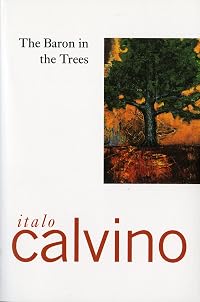
A landmark new translation of a Calvino classic, a whimsical, spirited novel that imagines a life lived entirely on its own terms Cosimo di Rondo, a young Italian nobleman of the eighteenth century, rebels against his parents by climbing into the trees and remaining there for the rest of his life. He adapts efficiently to an existence in the forest canopy-he hunts, sows crops, plays games with earth-bound friends, fights forest fires, solves engineering problems, and even manages to have show more love affairs. From his perch in the trees, Cosimo sees the Age of Enlightenment pass by and a new century dawn. The Baron in the Trees exemplifies Calvino's peerless ability to weave tales that sparkle with enchantment. This new English rendering by acclaimed translator Ann Goldstein breathes new life into one of Calvino's most beloved works. show lessTags
Recommendations






Member Recommendations
Member Reviews
El barón rampante es una fábula deliciosa en la que Italo Calvino, a través de su protagonista, teje una reflexión sobre los años de la Ilustración, la Revolución Francesa y las Guerras Napoleónicas. En la ficticia Ombrosa, el autor crea un microcosmos de la Italia prerrevolucionaria, poblado de personajes a la vez terrenales e idealizados. La historia, además, se narra desde una voz doblemente no fiable: tanto por el punto de vista sesgado del narrador —que difiere radicalmente del protagonista— como por la propia naturaleza ambigua de este último, lo que refuerza el carácter fabulístico y ambiguo de la obra.
Calvino emplea diversos recursos literarios para acentuar este tono de fábula moderna. Por un lado, recurre al show more realismo mágico, mezclando lo cotidiano con lo extraordinario: Cosimo vive en los árboles como si fuera lo más natural, y los habitantes de Ombrosa aceptan su decisión sin mayor cuestionamiento, suspendiendo la incredulidad del lector. Por otro, utiliza símbolos y alegorías —como los árboles, que representan libertad y rebeldía, o el suelo, que simboliza las convenciones sociales—, convirtiendo la historia en una alegoría sobre la búsqueda de identidad y la libertad individual.
La ironía y el humor sutil también juegan un papel clave, al contrastar las grandes ideas filosóficas con las acciones cotidianas y a veces absurdas de los personajes. Además, la estructura episódica de la novela, con capítulos que funcionan casi como cuentos independientes, refuerza su carácter fabulístico, permitiendo explorar temas variados sin perder cohesión. Finalmente, el lenguaje poético y descriptivo de Calvino, junto a una percepción distorsionada del tiempo y el espacio, contribuyen a crear un mundo que parece sacado de un cuento, pero con una profundidad filosófica y humana que trasciende lo meramente fantástico.
Lo más fascinante es cómo Calvino involucra al lector en la construcción de este universo, dejando espacios para la interpretación y la imaginación, como en las fábulas tradicionales. Además, la obra dialoga con la tradición literaria europea —desde los cuentos de hadas hasta la sátira ilustrada—, pero con un estilo único que la convierte en una fábula moderna y atemporal.
Una obra maestra que fusiona lo histórico y lo legendario, lo filosófico y lo poético, demostrando que las fábulas también pueden ser un espejo de la condición humana. show less
Calvino emplea diversos recursos literarios para acentuar este tono de fábula moderna. Por un lado, recurre al show more realismo mágico, mezclando lo cotidiano con lo extraordinario: Cosimo vive en los árboles como si fuera lo más natural, y los habitantes de Ombrosa aceptan su decisión sin mayor cuestionamiento, suspendiendo la incredulidad del lector. Por otro, utiliza símbolos y alegorías —como los árboles, que representan libertad y rebeldía, o el suelo, que simboliza las convenciones sociales—, convirtiendo la historia en una alegoría sobre la búsqueda de identidad y la libertad individual.
La ironía y el humor sutil también juegan un papel clave, al contrastar las grandes ideas filosóficas con las acciones cotidianas y a veces absurdas de los personajes. Además, la estructura episódica de la novela, con capítulos que funcionan casi como cuentos independientes, refuerza su carácter fabulístico, permitiendo explorar temas variados sin perder cohesión. Finalmente, el lenguaje poético y descriptivo de Calvino, junto a una percepción distorsionada del tiempo y el espacio, contribuyen a crear un mundo que parece sacado de un cuento, pero con una profundidad filosófica y humana que trasciende lo meramente fantástico.
Lo más fascinante es cómo Calvino involucra al lector en la construcción de este universo, dejando espacios para la interpretación y la imaginación, como en las fábulas tradicionales. Además, la obra dialoga con la tradición literaria europea —desde los cuentos de hadas hasta la sátira ilustrada—, pero con un estilo único que la convierte en una fábula moderna y atemporal.
Una obra maestra que fusiona lo histórico y lo legendario, lo filosófico y lo poético, demostrando que las fábulas también pueden ser un espejo de la condición humana. show less
Something daring lurks at the core of this otherwise linear novel. It is a parable of the Enlightenment. It depicts a fanciful revolt against tradition, one leading to an arboreal existence. This life in the trees blossoms through taxonomy into osmething wonderful.
This wasn't what I expected. I sensed with my typical flawed aplomb that The Baron In The Trees would be a series of language-games with half-covered politcs being the nexus of all the fun. There would be no end and the puns would extend outward. I was quite wrong and am damn glad for the experince.
This wasn't what I expected. I sensed with my typical flawed aplomb that The Baron In The Trees would be a series of language-games with half-covered politcs being the nexus of all the fun. There would be no end and the puns would extend outward. I was quite wrong and am damn glad for the experince.
Rating: 4* of five
The Publisher Says: Cosimo, a young eighteenth-century Italian nobleman, rebels by climbing into the trees to remain there for the rest of his life. He adapts efficiently to an arboreal existence and even has love affairs.
My Review: This being a famous and well-studied book, I suppose the publisher didn't feel the need to do a sell-job on it. That little squib is barely a log-line!
I read this book first in ~1974, because it had a cool-looking jacket. It also had an Italian author, which was also cool. But the reading of it was a revelation because the titular Baron was the perfect rebel, firm of purpose and adamant of spirit. And all over what seems, at first anyway, such a ridiculous cause: Refusing to eat snails. I'd show more never had snails offered to me at that point, and I was in full agreement with the Baron. But as the pages flipped on, I could see what was really at stake was the right to set one's own boundaries, to establish a core identity by and for one's own self.
All adolescents resonate to that theme, I think, and that's why I'm surprised that this book isn't required reading until college. It would serve well in junior or senior year of high school. Anything that deals with the process and price of becoming and being an individual seems to me to be a good fit for that age. Plus it's beautifully translated, so it's easy to read.
And for the record, I ate snails the first time they were offered to me. They were delicious. show less
The Publisher Says: Cosimo, a young eighteenth-century Italian nobleman, rebels by climbing into the trees to remain there for the rest of his life. He adapts efficiently to an arboreal existence and even has love affairs.
My Review: This being a famous and well-studied book, I suppose the publisher didn't feel the need to do a sell-job on it. That little squib is barely a log-line!
I read this book first in ~1974, because it had a cool-looking jacket. It also had an Italian author, which was also cool. But the reading of it was a revelation because the titular Baron was the perfect rebel, firm of purpose and adamant of spirit. And all over what seems, at first anyway, such a ridiculous cause: Refusing to eat snails. I'd show more never had snails offered to me at that point, and I was in full agreement with the Baron. But as the pages flipped on, I could see what was really at stake was the right to set one's own boundaries, to establish a core identity by and for one's own self.
All adolescents resonate to that theme, I think, and that's why I'm surprised that this book isn't required reading until college. It would serve well in junior or senior year of high school. Anything that deals with the process and price of becoming and being an individual seems to me to be a good fit for that age. Plus it's beautifully translated, so it's easy to read.
And for the record, I ate snails the first time they were offered to me. They were delicious. show less
The ecological aspect of this novel is not the most discussed one, but with [b:The Overstory|40180098|The Overstory|Richard Powers|https://i.gr-assets.com/images/S/compressed.photo.goodreads.com/books/1562786502l/40180098._SY75_.jpg|57662223] by Richard Powers still occupying sizable real estate in my head it's the first one that comes up for me. Calvino writes early on here of how the coastal area in Liguria, north-west Italy, used to be covered in trees and woods, which made possible the Baron's mobile life up there in the trees. Since then however they have been lost to development. Cosimo, the Baron of the title, came to an exaggeratedly intimate relationship with trees and nature, Calvino writing as a fabulist, but one that we'd be show more better off today if we were closer to than we are.
That's just one aspect of Cosimo's rebellion against his society, a rebellion against oppressive strictures but never against human community. Even living up in the trees, he frequently tried to help organize his fellow men down below into more cooperative and egalitarian relationships, from putting out fires to feeding the hungry to overthrowing oppressive government. It's a hopeful rebellion, one that sometimes bears fruit and that sometimes ends in disappointment, as they do. show less
That's just one aspect of Cosimo's rebellion against his society, a rebellion against oppressive strictures but never against human community. Even living up in the trees, he frequently tried to help organize his fellow men down below into more cooperative and egalitarian relationships, from putting out fires to feeding the hungry to overthrowing oppressive government. It's a hopeful rebellion, one that sometimes bears fruit and that sometimes ends in disappointment, as they do. show less
Set in 18th century Italy, following conflicts with his aristocratic parents and after being ordered to eat a bizarre deliberately disgusting snail dish prepared by his sociopathic sister, the 12 year old Baron Cosimo rebels and escapes up a tree. The initial reaction is that this quite standard act of defiance won't last long, and he'll be down by nightfall. But Cosimo is a stubborn child, and the standard act soon becomes anything but.
That afternoon he travels from tree to tree to meet Viola, in neighbouring grounds, and is enraptured by her, in his juvenile way. Her spiteful nature dares him to come down and lose this dare-game to her. So he stays up, to win the game, and possibly also secretly prove himself to her (she returns show more decades later for the most tempestuous emotive section of the novel). These are the initial impetuses that keep Cosimo in the trees in the coming days. But then the habit takes on a life of its own, becomes a kind of life trial, and he stays in the trees for weeks, months, and then for the entire rest of his long life, as this one act utterly defines him - and makes him famous Europe-wide.
Being in the trees gives Cosimo a unique perspective, both literal and metaphorical, on the ground and people below. This distance, rather than separating him from those around him, instead gives him an objective perspective. Despite being a Baron with vast lands, he adopts principles of equality and socialism. He befriends and helps the peasants and thieves around him. He becomes a dedicated steward of the forests and birds around him. He reads voraciously, mainly from enlightenment scholars, and mimics many enlightenment ideas, and this transforms him into a polymath.
Around Cosimo the main characters are at least as vivid and eccentric. For instance, his mother is obsessed with military matters and seems only able to understand and interact with the world through such a lens. And his snail-feeding sister comes back as an adult to live on the family estate with her husband, and demonstrates with apparent glee the mechanism of the guillotine (following the French Revolution), chopping off the heads of various live animals.
This larger-than-life, subtly magic realist plot is hard to capture in a single interpretation, partly because there are various distinct stages to Cosimo's life in the trees, as he goes from child rebel through to wise leader, jealous lover, and eventually to mad old man. But the slippery nature of the hidden meaning generates a richness of views, as if the ideas themselves are the branches of a tree, hard to support your weight, so numerous as to obscure your vision.
Compounding this fog is the clearly meta-fictional theme. At one point Prince Andrei from War and Peace turns up, for instance. But far more than this is the constant theme of the unreliable witness. The narrator, Cosimo's apparently conventional brother, regularly relates events from the perspective of either people classed as insane, or otherwise seriously misleading. Sometimes the same event is retold multiple times, in multiple different ways. The times, too, are saturated with superstition. Many of these obviously apocryphal viewpoints concern Cosimo himself, but so many other examples demonstrate that the viewpoint of most people in these times is replete with fantastical delusions that they all seem to relish in. Then, at the end, the narrator makes explicit that this is just effectively a story, pieced together imperfectly, haphazardly, dreamlike.
As an adult fable, with these exuberant characters and dramatic scenes, The Baron in The Trees is exciting, gripping reading. But the hidden, almost fractal-like structure in this novel make it clear that there are far deeper concepts at play, and because of this the book, and its over-arching metaphor of living in trees, live on in the memory many days after the last words are read. show less
That afternoon he travels from tree to tree to meet Viola, in neighbouring grounds, and is enraptured by her, in his juvenile way. Her spiteful nature dares him to come down and lose this dare-game to her. So he stays up, to win the game, and possibly also secretly prove himself to her (she returns show more decades later for the most tempestuous emotive section of the novel). These are the initial impetuses that keep Cosimo in the trees in the coming days. But then the habit takes on a life of its own, becomes a kind of life trial, and he stays in the trees for weeks, months, and then for the entire rest of his long life, as this one act utterly defines him - and makes him famous Europe-wide.
Being in the trees gives Cosimo a unique perspective, both literal and metaphorical, on the ground and people below. This distance, rather than separating him from those around him, instead gives him an objective perspective. Despite being a Baron with vast lands, he adopts principles of equality and socialism. He befriends and helps the peasants and thieves around him. He becomes a dedicated steward of the forests and birds around him. He reads voraciously, mainly from enlightenment scholars, and mimics many enlightenment ideas, and this transforms him into a polymath.
Around Cosimo the main characters are at least as vivid and eccentric. For instance, his mother is obsessed with military matters and seems only able to understand and interact with the world through such a lens. And his snail-feeding sister comes back as an adult to live on the family estate with her husband, and demonstrates with apparent glee the mechanism of the guillotine (following the French Revolution), chopping off the heads of various live animals.
This larger-than-life, subtly magic realist plot is hard to capture in a single interpretation, partly because there are various distinct stages to Cosimo's life in the trees, as he goes from child rebel through to wise leader, jealous lover, and eventually to mad old man. But the slippery nature of the hidden meaning generates a richness of views, as if the ideas themselves are the branches of a tree, hard to support your weight, so numerous as to obscure your vision.
Compounding this fog is the clearly meta-fictional theme. At one point Prince Andrei from War and Peace turns up, for instance. But far more than this is the constant theme of the unreliable witness. The narrator, Cosimo's apparently conventional brother, regularly relates events from the perspective of either people classed as insane, or otherwise seriously misleading. Sometimes the same event is retold multiple times, in multiple different ways. The times, too, are saturated with superstition. Many of these obviously apocryphal viewpoints concern Cosimo himself, but so many other examples demonstrate that the viewpoint of most people in these times is replete with fantastical delusions that they all seem to relish in. Then, at the end, the narrator makes explicit that this is just effectively a story, pieced together imperfectly, haphazardly, dreamlike.
As an adult fable, with these exuberant characters and dramatic scenes, The Baron in The Trees is exciting, gripping reading. But the hidden, almost fractal-like structure in this novel make it clear that there are far deeper concepts at play, and because of this the book, and its over-arching metaphor of living in trees, live on in the memory many days after the last words are read. show less
One of Calvino’s earlier works. He is an amazing writer so everything he writes is worth reading. However, this is definitely not his best work (My favorites remain Cosmicomics and t zero). I wouldn’t start reading Calvino with this book.
Although it seems to be a frivolous fairy tale, it is actually a quite depressing take on love, politics, and humanity in general, particularly towards the latter part of the book. Perhaps the pessimism is a reflection on his disillusionment with Communism (apparently he wrote it right after his break with the Italian Communist party).
Although it seems to be a frivolous fairy tale, it is actually a quite depressing take on love, politics, and humanity in general, particularly towards the latter part of the book. Perhaps the pessimism is a reflection on his disillusionment with Communism (apparently he wrote it right after his break with the Italian Communist party).
Some time ago Audible offered for free a number of books originally written in languages other than English. (If I recall correctly, it was a promotion in support of International Reading Day.) Of those I selected from the list, [b:The Baron in the Trees|9804|The Baron in the Trees|Italo Calvino|https://i.gr-assets.com/images/S/compressed.photo.goodreads.com/books/1344432724l/9804._SY75_.jpg|865256] has easily been the most enjoyable.
To begin, this edition is a success on all counts - the writing is brilliant, the translation fluid, and the narration perfectly attuned to the text. It can easily be read and enjoyed simply as an amusing fable of a young noble of the mid-18th century, from a province along the Italian Riviera, who in show more typical teen-age fashion declares that he is renouncing his family. What is not so typical is that he follows through on this impetuous stand by taking up residence in the local trees - and not putting foot on the ground for the rest of his life.
Behind this adventurous tale (no other word will appropriately describe the nature of the story, which relates a series of episodes in sparkling prose), [b:The Baron in the Trees|9804|The Baron in the Trees|Italo Calvino|https://i.gr-assets.com/images/S/compressed.photo.goodreads.com/books/1344432724l/9804._SY75_.jpg|865256] exists as an allegory for the social, economic and political changes of the time. Our hero, Cosimo, looks down from his arboreal residence, carefully nurtured to create pathways among the trees to facilitate his movements, on a continuously changing world. He sees the ideals of Voltaire and Rousseau and other key Enlightenment figures give way to the French Revolution, followed by the rise and fall of Napoleon.
He encounters many colorful individuals along the way, perhaps most notably Viola, a childhood neighbor who reappears later in his life as the embodiment of free love, stimulating both passions and intellectual argument. Viola's strategy for gaining independence she craved is notable: she married an elderly man, confident that before long he will die and she will have his extensive wealth at her command, with no one to rein her in.
Although the Italian portions of the book are all translated into English, at times brief passages appear in other languages, most notably French, but also a little Spanish and Russian. My limited linguistic skills failed me during the longer discourses, although I could discern the meaning through context.
But that is a small quibble. No way around it, this is a gem of a book. show less
To begin, this edition is a success on all counts - the writing is brilliant, the translation fluid, and the narration perfectly attuned to the text. It can easily be read and enjoyed simply as an amusing fable of a young noble of the mid-18th century, from a province along the Italian Riviera, who in show more typical teen-age fashion declares that he is renouncing his family. What is not so typical is that he follows through on this impetuous stand by taking up residence in the local trees - and not putting foot on the ground for the rest of his life.
Behind this adventurous tale (no other word will appropriately describe the nature of the story, which relates a series of episodes in sparkling prose), [b:The Baron in the Trees|9804|The Baron in the Trees|Italo Calvino|https://i.gr-assets.com/images/S/compressed.photo.goodreads.com/books/1344432724l/9804._SY75_.jpg|865256] exists as an allegory for the social, economic and political changes of the time. Our hero, Cosimo, looks down from his arboreal residence, carefully nurtured to create pathways among the trees to facilitate his movements, on a continuously changing world. He sees the ideals of Voltaire and Rousseau and other key Enlightenment figures give way to the French Revolution, followed by the rise and fall of Napoleon.
He encounters many colorful individuals along the way, perhaps most notably Viola, a childhood neighbor who reappears later in his life as the embodiment of free love, stimulating both passions and intellectual argument. Viola's strategy for gaining independence she craved is notable: she married an elderly man, confident that before long he will die and she will have his extensive wealth at her command, with no one to rein her in.
Although the Italian portions of the book are all translated into English, at times brief passages appear in other languages, most notably French, but also a little Spanish and Russian. My limited linguistic skills failed me during the longer discourses, although I could discern the meaning through context.
But that is a small quibble. No way around it, this is a gem of a book. show less
Members
- Recently Added By
Lists

The Guardian's 1000 Novels Everyone Must Read
1,005 works; 551 members

1001 Books You Must Read Before You Die
1,448 works; 1,133 members

Magic Realism
371 works; 52 members

Italian Literature
558 works; 42 members

Books Set in Italy
167 works; 19 members

Philip Ward's Lifetime Reading Plan
592 works; 22 members
20th Century Literature
1,161 works; 55 members

magic realism novels
44 works; 11 members

Books I've Read More Than Once
602 works; 49 members

Harold Bloom - The Western Canon: D. The Chaotic Age
833 works; 24 members

Canon de la narrativa universal del siglo XX
254 works; 6 members

1001 Children's Books You Must Read Before You Grow Up
774 works; 101 members

Backlisted
109 works; 9 members

A High School Trip to Italy
55 works; 7 members

Best Italian Novels
25 works; 3 members

SHOULD Read Books!
354 works; 9 members

Children's Book List author unknown
12 works; 1 member

Tammen Keltainen kirjasto
81 works; 1 member

Books Read in 2021
5,361 works; 114 members

Books Read in 2009
464 works; 11 members
Canon de la narrativa universal del s. XX (cicutadry)
499 works; 3 members

Favorite Books in Translation
320 works; 133 members

Read in 2009
44 works; 1 member

Books Read in 2022
5,218 works; 111 members
Author Information

395+ Works 70,190 Members
Italo Calvino 1923-1984 Novelist and short story writer Italo Calvino was born in Cuba on October 15, 1923, and grew up in Italy, graduating from the University of Turin in 1947. He is remembered for his distinctive style of fables. Much of his first work was political, including Il Sentiero dei Nidi di Ragno (The Path of the Nest Spiders, 1947), show more considered one of the main novels of neorealism. In the 1950s, Calvino began to explore fantasy and myth as extensions of realism. Il Visconte Dimezzato (The Cloven Knight, 1952), concerns a knight split in two in combat who continues to live on as two separates, one good and one bad, deprived of the link which made them a moral whole. In Il Barone Rampante (Baron in the Trees, 1957), a boy takes to the trees to avoid eating snail soup and lives an entire, fulfilled life without ever coming back down. Calvino was awarded an honorary degree from Mount Holyoke College in 1984 and died in 1985, following a cerebral hemorrhage. At the time of his death, he was the most translated contemporary Italian writer and a contender for the Nobel Prize for Literature. (Bowker Author Biography) show less
Some Editions
Awards and Honors
Awards
Notable Lists
Series

Belongs to Publisher Series
Gyldendals små grå (10)
Club Bruguera (14)
De twintigste eeuw (23)
Keltainen kirjasto (29)
Libro amigo [Bruguera] (664)
Gallimard, Folio (5458)
Fischer Taschenbuch (90441)
Work Relationships
Is contained in
Has as a reference guide/companion
Has as a student's study guide
Common Knowledge
- Canonical title*
- Il barone rampante
- Original title
- Il barone rampante
- Original publication date
- 1957
- People/Characters
- Cosimo; Viola
- Important places
- Liguria, Italy; Treetops
- Important events
- French Revolution
- First words
- It was on the fifteenth of June, 1767, that Cosimo Piovasco di Rondo, my brother, sat among us for the last time.
C'est le 15 juin 1767 que Côme Laverse du Rondeau, mon frère, s'assit au milieu de nous pour la dernière fois. Je m'en souviens comme si c'était hier. Nous étions dans la salle à manger de notre villa d'Ombreuse ; les f... (show all)enêtres encadraient les branches touffues de la grande yeuse du parc. Il était midi : c'est à cette heure-là que notre famille, obéissant à une vieille tradition, se mettait à table ; le déjeuner au milieu de l'après-midi, mode venue de la nonchalante Cour de France et adoptée par toute la noblesse, n'était pas en usage chez nous. Je me rappelle que le vent soufflait, qu'il venait de la mer et que les feuilles bougeaient.
-- J'ai déjà dit que je n'en voulais pas et je répète que je n'en veux pas, fit Côme en écartant le plat d'escargots.
On n'avait jamais vu désobéissance plus grave. - Last words
- (Click to show. Warning: May contain spoilers.)That mesh of leaves and twigs of fork and froth, minute and endless, with the sky glimpsed only in sudden specks and splinters, perhaps it was only there so that my brother could pass through it with his tomtit's tread, was embroidered on nothing, like this thread of ink which I have let run on for page after page, swarming with cancellations, corrections, doodles, blots and gaps, bursting at times into clear big berries, coagulating at others into piles of tiny starry seeds, then twisting away, forking off, surrounding buds of phrases with frameworks of leaves and clouds, then interweaving again, and so running on and on and on until it splutters and bursts into a last senseless cluster of words, ideas, dreams, and so ends.
- Original language
- Italian
*Some information comes from Common Knowledge in other languages. Click "Edit" for more information.
Classifications
- Genres
- Fiction and Literature, General Fiction, Fantasy
- DDC/MDS
- 853.914 — Literature & rhetoric Italian, Romanian & related literatures Italian fiction 1900- 20th Century 1945-1999
- LCC
- PZ3 .C13956 .B — Language and Literature Fiction and juvenile belles lettres Fiction and juvenile belles lettres Fiction in English
- BISAC
Statistics
- Members
- 5,276
- Popularity
- 2,576
- Reviews
- 75
- Rating
- (4.03)
- Languages
- 22 — Catalan, Chinese, Danish, Dutch, English, Estonian, Finnish, French, German, Galician, Hungarian, Italian, Korean, Norwegian (Bokmål), Farsi/Persian, Polish, Portuguese, Romanian, Russian, Spanish, Swedish, Turkish
- Media
- Paper, Audiobook, Ebook
- ISBNs
- 104
- ASINs
- 50