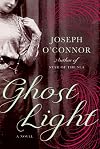
Ghost Light
by Joseph O'Connor
On This Page
Description
Dublin, 1907: a city of whispered rumors. An actress still in her teens begins an affair with a damaged older man, the leading playwright at the theatre where she works. Rebellious, irreverent, beautiful, flirtatious, Molly Allgood is a girl of the inner city tenements, dreaming of stardom in America. Her lover, John Synge, is a troubled, reticent genius, the son of a once prosperous landowning family, a poet of fiery language and tempestuous passions. Yet his life is hampered by Edwardian show more conventions and by the austere and God-fearing mother with whom he lives. show lessTags
Recommendations












Member Reviews
Beautiful evocation of Edwardian Dublin and the love affair between playwright J.M. Synge and Abbey Theatre actress Maire O'Neill. The author uses complicated tense changes [present for Synge's or Maire's present--1907 until his death for him, the year 1952 for her] and past for each of their pasts. An omnipotent narrator who will be returning from time to time, starts out by addressing Maire as "You" [he/she is addressing her] and we see that in 1952 London, Maire is a has-been actress and alcoholic living in a dilapidated tenement in penury. She obtains a job at BBC for a radio version of an O'Casey play. She trudges there, in the snowy, wintry weather from her home and besides doing errands, spends her day in the National Portrait show more Gallery, a church, and the cinema. The story moves back and forth from past to present: events in 'real-time' and those in Maire's memory as she makes her journey, recounting those years. Much remembrance is a type of stream of consciousness, but understandable. After the broadcast, the story becomes poignant and sad.
The story was slow-moving, so people wanting a lot of 'action' will not find it here. The language and descriptions were lovely! The author has a gift for putting words together in new ways meaningfully. Much dialogue was couched in Irish slang or Irish dialect; I was able to figure them out from context and they added to the Irish flavor. I especially liked the first half of Chapter 5: a hilarious rehearsal at the Abbey Theatre with Synge, Yeats, Lady Gregory, and Maire. I loved the author's quoting the various songs and ballads. The title was fitting: 'Ghost Light' is a theatrical superstition: when the theater is "dark" [no performances] at least one light is always left on for ghosts to perform their plays. The chapter where Synge meets Maire's mother and brother was written in the form of a play. O'Connor's note at the end was revealing.
Now I'm curious: I must read "Playboy of the Western World" by Synge. There was a big uproar when it was first presented. and I'd like to see why. show less
The story was slow-moving, so people wanting a lot of 'action' will not find it here. The language and descriptions were lovely! The author has a gift for putting words together in new ways meaningfully. Much dialogue was couched in Irish slang or Irish dialect; I was able to figure them out from context and they added to the Irish flavor. I especially liked the first half of Chapter 5: a hilarious rehearsal at the Abbey Theatre with Synge, Yeats, Lady Gregory, and Maire. I loved the author's quoting the various songs and ballads. The title was fitting: 'Ghost Light' is a theatrical superstition: when the theater is "dark" [no performances] at least one light is always left on for ghosts to perform their plays. The chapter where Synge meets Maire's mother and brother was written in the form of a play. O'Connor's note at the end was revealing.
Now I'm curious: I must read "Playboy of the Western World" by Synge. There was a big uproar when it was first presented. and I'd like to see why. show less
This novel opens in London in 1952. Molly is an Irish actress in her 60s, who spends most of her time remembering her younger days over a drink or two. She acted at the Abbey Theatre, where she and John fell in love.
John Synge was one of the co-founders of the theatre and wrote plays including The Playboy of the Western World. When he died of cancer in 1909 aged only 37, he was engaged to an actress called Molly Allgood, stage name Maire O'Neill. O'Connor draws on what is known about the facts of their lives and on published letters from Synge to Molly (her letters to him don't survive) in this novel, but he admits in Acknowledgements and Caveat at the back of the book that he took liberties with the truth and made up a lot of Molly's show more story completely.
I found the story of their romance moving though sad. Neither of their families approved - he was much older than her, but more importantly, he was the son of a wealthy Anglo-Irish Protestant family, and she was a working class Catholic with what was perceived to be a rather immoral job. These prejudices were to some extent shared by Synge's fellow owners of the theatre, W B Yeats and Lady Augusta Gregory, too (and they might have also worried about the impact on the business of the theatre and its performances).
I think that only having some factual records is an advantage for the novelist in this story, it gives him free rein to create his two major characters the way he chooses to. They are flawed but sympathetic. John finds it difficult emotionally or financially to break away from his mother and incur her wrath by openly marrying Molly. Despite all the difficulties though, the scenes of them together including a holiday together in the countryside, depict a real love affair with warmth and wit, important in making them sympathetic not pitiful characters (especially Molly).
The 1908 story takes place over a year or so, the 1952 story is set over just a few days. Molly's later existence in postwar London is rather bleak and pitiful - she has been married, widowed and divorced, her son has been killed and her daughter has her own life and a husband who disapproves of his mother in law's drinking, and she has fallen out with them. She is now scrabbling around trying to scrape together a bit of money, mainly for the drink. So most of the significant people in her life are dead, estranged or both. I felt sad to read about a character who didn't seem to have moved on emotionally from her early life; though she continued to act, was married twice and had two children, she is still living in her long ago past.
Some readers might find the style of this novel offputting. The narrative jumps around in time and in style. Although much of the novel is in the third person, it opens with a chapter in second person. I wouldn't have thought this would work well, but here for me it did, it drew me into the older Molly's thoughts and feelings.
I thought this was a sad but moving story, and would recommend it to readers who like stories of character and feeling rather than fast paced action. I would also like to read some of Synge's work, or see a performance of one of his plays. show less
John Synge was one of the co-founders of the theatre and wrote plays including The Playboy of the Western World. When he died of cancer in 1909 aged only 37, he was engaged to an actress called Molly Allgood, stage name Maire O'Neill. O'Connor draws on what is known about the facts of their lives and on published letters from Synge to Molly (her letters to him don't survive) in this novel, but he admits in Acknowledgements and Caveat at the back of the book that he took liberties with the truth and made up a lot of Molly's show more story completely.
I found the story of their romance moving though sad. Neither of their families approved - he was much older than her, but more importantly, he was the son of a wealthy Anglo-Irish Protestant family, and she was a working class Catholic with what was perceived to be a rather immoral job. These prejudices were to some extent shared by Synge's fellow owners of the theatre, W B Yeats and Lady Augusta Gregory, too (and they might have also worried about the impact on the business of the theatre and its performances).
I think that only having some factual records is an advantage for the novelist in this story, it gives him free rein to create his two major characters the way he chooses to. They are flawed but sympathetic. John finds it difficult emotionally or financially to break away from his mother and incur her wrath by openly marrying Molly. Despite all the difficulties though, the scenes of them together including a holiday together in the countryside, depict a real love affair with warmth and wit, important in making them sympathetic not pitiful characters (especially Molly).
The 1908 story takes place over a year or so, the 1952 story is set over just a few days. Molly's later existence in postwar London is rather bleak and pitiful - she has been married, widowed and divorced, her son has been killed and her daughter has her own life and a husband who disapproves of his mother in law's drinking, and she has fallen out with them. She is now scrabbling around trying to scrape together a bit of money, mainly for the drink. So most of the significant people in her life are dead, estranged or both. I felt sad to read about a character who didn't seem to have moved on emotionally from her early life; though she continued to act, was married twice and had two children, she is still living in her long ago past.
Some readers might find the style of this novel offputting. The narrative jumps around in time and in style. Although much of the novel is in the third person, it opens with a chapter in second person. I wouldn't have thought this would work well, but here for me it did, it drew me into the older Molly's thoughts and feelings.
I thought this was a sad but moving story, and would recommend it to readers who like stories of character and feeling rather than fast paced action. I would also like to read some of Synge's work, or see a performance of one of his plays. show less
Molly Allgood O’Neill is a cranky old woman, weakened by extreme poverty and loneliness. An aging actress, she makes her way across London to one of the few jobs she can find-as a voice actress. Throughout her journey, she spends her time remembering the long ago affair she carried on with the Irish playwright, John Synge. In her memory Synge as well as the legendary Yeats come to life, and through her memories she gains a bit of vitality-all while so malnourished she can barely walk.
Her memory is detailed, and with equal parts humor and bitterness, she reflects on aging, competing with her sister, and the complicated socially-unbalanced relationship she had with Synge. His being of wealth and fame, and her poor urban upbringing, show more dooms their affair from the start. His mother will not consider him marrying her as beneath their social level. Molly’s sister too objects to the relationship, denying its reality. The Dublin theatre, and everything made up and false, becomes a key to understanding their attraction to each other as well as their eventual distance.
Molly is at her best when she’s thinking aloud. The author, Joseph O’Connor, presents her as a tough old bird who dismisses those beneath her, yet still partaking of their charity towards her. Especially touching is a local bartender who spots her a free drink on occasion, as well as a bit of food. They both keep up the pretense that she's a wealthy old actress, when without him she'd likely starve. In her small apartment, she’s down to living with that which can’t be burnt for warmth. Hunger grates at her, and makes her memories that much more painful.
She laments aging and her habit of talking to herself: “And getting up earlier. Another symptom, that. What young person ever got up at dawn out of choice? And talking to the wireless. And talking to the rain. And talking to dogs and to flowers in people’s gardens. And talking to clothes that don’t fit you any more and to dishes that need washing but haven’t been washed….and whoever puts the zips in the back of women’s dresses, a presumption, if ever there was one, that every woman is married…”
Her observations of the London neighborhood are sardonic and ‘cheeky’. One man that looks at her a bit too long gets her riled: “So turn the other cheek if you don’t like the look of me, and kiss my arse like it owes you the rent.”
The name of the novel comes from a theatre tradition: “An ancient superstition among people of the stage. One lamp must always be left burning when the theatre is dark, so the ghosts can perform their own plays.” The significance is obvious: she’s still alive while her peers are dead, yet who remain as alive in her memories.
As a character study, it’s fascinating. Seeing the character change as she observes Synge’s illness, and her reaction to the gossip about her is subtle-the author doesn’t tell us how she’s changed but shows us instead. A few times I thought the theatre scenes, where Synge and Yeats interact, ran a bit long (I sort of scanned those pages). Perhaps if I knew more of their actual history I’d have been more interested. The other thing that unsettled me was the ending. The book proceeded to a point that I expected it to end, it would have been perfect (to me), yet a new development occurred that continued it a short while longer. That put me off-track a bit, and it was hard to reconnect after what seemed like the obvious ending.
I could actually see this becoming a movie-there's enough action and drama that would go well with the Dublin and London period costumes. I'd actually like to cast it: Cate Blanchett as Molly, Viggo Mortensen as Synge, and Liam Neeson as Yeats. That'd work. show less
Her memory is detailed, and with equal parts humor and bitterness, she reflects on aging, competing with her sister, and the complicated socially-unbalanced relationship she had with Synge. His being of wealth and fame, and her poor urban upbringing, show more dooms their affair from the start. His mother will not consider him marrying her as beneath their social level. Molly’s sister too objects to the relationship, denying its reality. The Dublin theatre, and everything made up and false, becomes a key to understanding their attraction to each other as well as their eventual distance.
Molly is at her best when she’s thinking aloud. The author, Joseph O’Connor, presents her as a tough old bird who dismisses those beneath her, yet still partaking of their charity towards her. Especially touching is a local bartender who spots her a free drink on occasion, as well as a bit of food. They both keep up the pretense that she's a wealthy old actress, when without him she'd likely starve. In her small apartment, she’s down to living with that which can’t be burnt for warmth. Hunger grates at her, and makes her memories that much more painful.
She laments aging and her habit of talking to herself: “And getting up earlier. Another symptom, that. What young person ever got up at dawn out of choice? And talking to the wireless. And talking to the rain. And talking to dogs and to flowers in people’s gardens. And talking to clothes that don’t fit you any more and to dishes that need washing but haven’t been washed….and whoever puts the zips in the back of women’s dresses, a presumption, if ever there was one, that every woman is married…”
Her observations of the London neighborhood are sardonic and ‘cheeky’. One man that looks at her a bit too long gets her riled: “So turn the other cheek if you don’t like the look of me, and kiss my arse like it owes you the rent.”
The name of the novel comes from a theatre tradition: “An ancient superstition among people of the stage. One lamp must always be left burning when the theatre is dark, so the ghosts can perform their own plays.” The significance is obvious: she’s still alive while her peers are dead, yet who remain as alive in her memories.
As a character study, it’s fascinating. Seeing the character change as she observes Synge’s illness, and her reaction to the gossip about her is subtle-the author doesn’t tell us how she’s changed but shows us instead. A few times I thought the theatre scenes, where Synge and Yeats interact, ran a bit long (I sort of scanned those pages). Perhaps if I knew more of their actual history I’d have been more interested. The other thing that unsettled me was the ending. The book proceeded to a point that I expected it to end, it would have been perfect (to me), yet a new development occurred that continued it a short while longer. That put me off-track a bit, and it was hard to reconnect after what seemed like the obvious ending.
I could actually see this becoming a movie-there's enough action and drama that would go well with the Dublin and London period costumes. I'd actually like to cast it: Cate Blanchett as Molly, Viggo Mortensen as Synge, and Liam Neeson as Yeats. That'd work. show less
A delightful bookclub re-read. I am not a fan of love stories, but Ghost light by Joseph O’ Connor (Author of Star of the Sea)[bc:Star of the Sea|147848|Star of the Sea|Joseph O'Connor|https://images.gr-assets.com/books/1328874812s/147848.jpg|950187] is wonderfully imagined and a lovely social and political history of Ireland to boot.
Joseph O’ Connor imagines the relationship between actress Molly Allgood (Playboy of the Western World) and playwright John Synge. It was an affair that broken taboos as he was a protestant in his mid thirties and of higher social class and she a catholic, just turned 18 and from a Dublin working class family.
We are introduced to Molly in London in her latter years, where she remember times past, the show more good old days at the Abbey Theatre with the Genius John Synge and the days when the “ Playboy of the Western World” was scandalizing the land of Saints and Scholars.
I really enjoyed this book, as the authors writing is vivid and lyrical. The characters are memorable and while most of the story is fiction, it does comes across as very believable and entertaining.
This wasn’t an easy read as I found myself sometimes having to re-read paragraphs but this may be more to do with my lack of concentration than the actual writing or story. It’s a character driven novel that has wit and charm to it. There is an authors note which explains what is real and what is fiction. Another book that I enjoy having on my real life bookshelf. show less
Joseph O’ Connor imagines the relationship between actress Molly Allgood (Playboy of the Western World) and playwright John Synge. It was an affair that broken taboos as he was a protestant in his mid thirties and of higher social class and she a catholic, just turned 18 and from a Dublin working class family.
We are introduced to Molly in London in her latter years, where she remember times past, the show more good old days at the Abbey Theatre with the Genius John Synge and the days when the “ Playboy of the Western World” was scandalizing the land of Saints and Scholars.
I really enjoyed this book, as the authors writing is vivid and lyrical. The characters are memorable and while most of the story is fiction, it does comes across as very believable and entertaining.
This wasn’t an easy read as I found myself sometimes having to re-read paragraphs but this may be more to do with my lack of concentration than the actual writing or story. It’s a character driven novel that has wit and charm to it. There is an authors note which explains what is real and what is fiction. Another book that I enjoy having on my real life bookshelf. show less
Gorgeous writing, almost so beautiful that you can't get past the poetry and into the characters, though by the end I was very caught up in Molly's story.
I picked this one up because it's Joseph O'Connor, and he can do no wrong, nearly. I wouldn't list this as one of his best books. It never hits the highs of "Inishowen" or "Star of the Sea" or "Redemption Falls," but it's *good*.
I found the story dragged a little bit, and while I get that it was the old woman, wandering across London, her memories of her time with Synge resurfacing, Joseph sparkled when telling of young Molly and her early sizzling affair with the playwright. And threatened to, when hinting at the strained relationship between Molly and her daughter, living up north, inaccessible to Molly of her own doing, it seems.
When I say 'drag' I mean more like the pull of the sea. The story surges forward, gently, though, and then show more lulls for a little bit as Molly lurches forward and hatches a plan to survive in London on what she has left. By the end I was knee deep in the sea, surrounded by it, and does Mr. O'Connor ever write well, immersing you in his characters' lives.
So while it's not my favorite Joseph O'Connor book, not by a long shot, it's very worth your while spending a few afternoons or evenings with it, he'll tell you a good story. show less
I found the story dragged a little bit, and while I get that it was the old woman, wandering across London, her memories of her time with Synge resurfacing, Joseph sparkled when telling of young Molly and her early sizzling affair with the playwright. And threatened to, when hinting at the strained relationship between Molly and her daughter, living up north, inaccessible to Molly of her own doing, it seems.
When I say 'drag' I mean more like the pull of the sea. The story surges forward, gently, though, and then show more lulls for a little bit as Molly lurches forward and hatches a plan to survive in London on what she has left. By the end I was knee deep in the sea, surrounded by it, and does Mr. O'Connor ever write well, immersing you in his characters' lives.
So while it's not my favorite Joseph O'Connor book, not by a long shot, it's very worth your while spending a few afternoons or evenings with it, he'll tell you a good story. show less
O'Connor gives us his fictional take on the love between Irish playwright John Millington Synge and actress Molly O'Neill (Algood). I really enjoyed the scenes set in the 1950s when Molly is an aging actress on her way to perform in a radio play for the BBC in London. She recalls her affair with Synge and her time with the Abbey Theatre as she walks from her shabby apartment to the BBC studios. Lyrically written, the novel dragged toward the end for me. But it has prompted me to take a look at one of Synge's most famous plays PLAYBOY OF THE WESTERN WORLD in which Molly starred.
Members
- Recently Added By
Published Reviews
Whatever the current fashion in fiction, there will always be readers to welcome a love story. And when the fashion runs to fictionalising the lives of actual people, what better than the love story of a young, doomed Irish genius and a young, beautiful Irish actress?
I don't know how closely Ghost Light follows what is known of John Millington Synge's relationship with Molly Allgood. Novelists show more generally claim the right to rearrange or suppress facts and invent non-facts in order to arrive, not at a biographical representation of historical figures, but at a re-creation of them – ... show less
I don't know how closely Ghost Light follows what is known of John Millington Synge's relationship with Molly Allgood. Novelists show more generally claim the right to rearrange or suppress facts and invent non-facts in order to arrive, not at a biographical representation of historical figures, but at a re-creation of them – ... show less
added by sarahemmm
Lists

Top Five Books of 2013
1,562 works; 721 members

Irish writers
87 works; 17 members

real people in fiction circumstances
74 works; 10 members
Walter Scott Prize Winners and Shortlist
66 works; 6 members
Author Information

30+ Works 5,479 Members
Awards and Honors
Awards
Distinctions
Common Knowledge
- Canonical title
- Ghost Light
- Original title
- Ghost Light
- Original publication date
- 2010
- People/Characters
- J. M. Synge; Molly Allgood (Maire O'Neill)
- Important places
- Glenageary, Dublin, Ireland; Abbey Theatre, Dublin, Ireland
- Dedication
- For Ciaran and Julia Carty
- First words
- In the top floor room of the dilapidated townhouse across the Terrace, a light has been on all night.
- Quotations
- Marriage smells of cabbage and twice-baked mutton and towards the end of the week, of dripping.
- Last words
- (Click to show. Warning: May contain spoilers.)I am half afraid to send it. I don't know why. The sun is coming up.
Your Changeling - Blurbers
- Cunningham, Michael; O'Neill, Joseph; McCann, Colum; Doyle, Roddy
Classifications
Statistics
- Members
- 370
- Popularity
- 85,170
- Reviews
- 17
- Rating
- (3.56)
- Languages
- 6 — Dutch, English, French, German, Italian, Swedish
- Media
- Paper, Audiobook, Ebook
- ISBNs
- 29
- UPCs
- 1
- ASINs
- 6