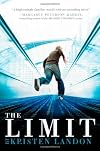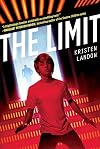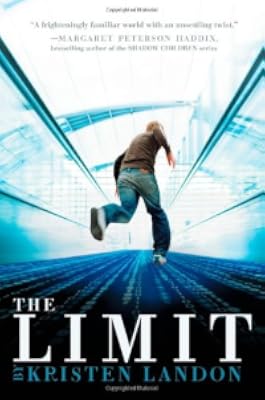
The Limit
by Kristen Landon
On This Page
Description
When his family exceeds its legal debt limit, thirteen-year-old Matt is sent to the Federal Debt Rehabilitation Agency workhouse, where he discovers illicit activities are being carried out using the children who have been placed there.Tags
Recommendations















Member Reviews
from The Limit
"...I heard a sharp gasp from Mom’s checkout worker. My eyes shot up. Checkout Lady had her hand over her mouth. Mom seemed unflustered. Checkout Lady must have made a mistake. I kept reading. ... The usual noise and confusion of the megastore around me dimmed. It was like it faded to almost nothing, leaving only the voices of my mom and Checkout Lady Even Abbie put a lid on her usual nonstop chatter and stuck her thumb in her mouth. I thought she’d stopped sucking her thumb a long time ago.
“I’m sure it’s a mistake,” Mom said. “A computer glitch somewhere.”
Checkout Lady punched a few buttons on her computer while her front teeth gnawed her lower lip like a beaver working a tree. “I’m sorry. It’s show more not a mistake. You’re over your limit.”
An electric current zapped through me. No. Wait. Stuff like this didn’t happen to our family."
But 13-year-old Matt was mistaken. It did happen to his family, and now he was the one chosen by the Federal Debt Rehabilitation Agency (FDRA) to repay his family’s debt under Federal Debt Ordinance 169, Option D which decrees compulsory service in an FDRA workhouse. Whisked away from his family by a burly guard and smooth-talking, Miss Smoot, Matt is taken to a workhouse without so much as a change of clothes. Likely based on his above average intelligence, Matt is designated a “Top Floor,” and receives a challenging job, a rigorous school curriculum, and plush accommodations. Unable to contact the outside world, he learns to live with his fellow “top floors,” Coop, Jeffrey, Isaac, Paige, Neela, Kia, Madeline, and the unseen and mysterious Reginald. At first glance, all appears in order at the workhouse, but Matt and his friends begin to discover something more threatening than unpaid debts at the Midwest Federal Debt Rehabilitation Agency workhouse.
Matt narrates this thriller about a high-tech society in which the government assigns every family a spending limit based on its income - not just any limit - the limit, the limit that cannot be exceeded without the direst of consequences. Eye scans and Big Brother-style monitoring are commonplace in this society that readers will find much like our own, where advertising and consumerism reign supreme. Although The Limit’s premise is the consequence of negligent overspending, the heart of the story is the high-tech, cat-and-mouse game between the brilliant “top floors” and the outwardly beautiful but sinister Miss Smoot, as Matt and his fellow inmates make increasingly shocking revelations as they attempt to discover the story of the other workhouse floor assignments and the headaches plaguing some inhabitants. Cautionary, but not didactic, The Limit is sure to hit a nerve with readers old enough to understand even the most basic aspects of family finances. The financially illiterate have even greater reason to read The Limit. Highly recommended.
http://www.shelf-employed.blogspot.com
(Advance Reader Copy) show less
"...I heard a sharp gasp from Mom’s checkout worker. My eyes shot up. Checkout Lady had her hand over her mouth. Mom seemed unflustered. Checkout Lady must have made a mistake. I kept reading. ... The usual noise and confusion of the megastore around me dimmed. It was like it faded to almost nothing, leaving only the voices of my mom and Checkout Lady Even Abbie put a lid on her usual nonstop chatter and stuck her thumb in her mouth. I thought she’d stopped sucking her thumb a long time ago.
“I’m sure it’s a mistake,” Mom said. “A computer glitch somewhere.”
Checkout Lady punched a few buttons on her computer while her front teeth gnawed her lower lip like a beaver working a tree. “I’m sorry. It’s show more not a mistake. You’re over your limit.”
An electric current zapped through me. No. Wait. Stuff like this didn’t happen to our family."
But 13-year-old Matt was mistaken. It did happen to his family, and now he was the one chosen by the Federal Debt Rehabilitation Agency (FDRA) to repay his family’s debt under Federal Debt Ordinance 169, Option D which decrees compulsory service in an FDRA workhouse. Whisked away from his family by a burly guard and smooth-talking, Miss Smoot, Matt is taken to a workhouse without so much as a change of clothes. Likely based on his above average intelligence, Matt is designated a “Top Floor,” and receives a challenging job, a rigorous school curriculum, and plush accommodations. Unable to contact the outside world, he learns to live with his fellow “top floors,” Coop, Jeffrey, Isaac, Paige, Neela, Kia, Madeline, and the unseen and mysterious Reginald. At first glance, all appears in order at the workhouse, but Matt and his friends begin to discover something more threatening than unpaid debts at the Midwest Federal Debt Rehabilitation Agency workhouse.
Matt narrates this thriller about a high-tech society in which the government assigns every family a spending limit based on its income - not just any limit - the limit, the limit that cannot be exceeded without the direst of consequences. Eye scans and Big Brother-style monitoring are commonplace in this society that readers will find much like our own, where advertising and consumerism reign supreme. Although The Limit’s premise is the consequence of negligent overspending, the heart of the story is the high-tech, cat-and-mouse game between the brilliant “top floors” and the outwardly beautiful but sinister Miss Smoot, as Matt and his fellow inmates make increasingly shocking revelations as they attempt to discover the story of the other workhouse floor assignments and the headaches plaguing some inhabitants. Cautionary, but not didactic, The Limit is sure to hit a nerve with readers old enough to understand even the most basic aspects of family finances. The financially illiterate have even greater reason to read The Limit. Highly recommended.
http://www.shelf-employed.blogspot.com
(Advance Reader Copy) show less
This is set in a society where every family has a set spending limit. If you go over, your oldest child (assuming they’re at least of high school–and then middle school–age) is sent to a workhouse to help your spending get back under the limit.
When Matt is taken to the workhouse, he doesn’t know what to expect. He’s pretty sure it’ll be creepy there, and that he’ll have to do a lot of menial labor.
Instead, it’s sort of like a big party. He’s on the top floor, which means there are really nice rooms (and single rooms for everyone, so he doesn’t have a roommate) and school and work are both really exciting. He can order whatever he wants for meals, and if he wants something fun, he can just order that, too.
The only show more downside is that he isn’t able to contact his family or friends. Cell phones don’t work and even though he emails them, he never hears back. And it’s kind of weird, the way they’re not allowed off the floor. But whatever–there’s even a pool!
I figured out what was going on–well, the general gist–long before Matt did. But this was still an incredibly fun book, and I both enjoyed and was terrified by the concept of a modified debtors’ prison.
I know that many people have credit card debt (I am one of them) but it was really scary to think about the fact that people would still let their spending get so out of control if they knew that their kids would be taken away from them because of it.
If you’re in the mood for a light dystopian novel, I’d recommend this very fun novel. show less
When Matt is taken to the workhouse, he doesn’t know what to expect. He’s pretty sure it’ll be creepy there, and that he’ll have to do a lot of menial labor.
Instead, it’s sort of like a big party. He’s on the top floor, which means there are really nice rooms (and single rooms for everyone, so he doesn’t have a roommate) and school and work are both really exciting. He can order whatever he wants for meals, and if he wants something fun, he can just order that, too.
The only show more downside is that he isn’t able to contact his family or friends. Cell phones don’t work and even though he emails them, he never hears back. And it’s kind of weird, the way they’re not allowed off the floor. But whatever–there’s even a pool!
I figured out what was going on–well, the general gist–long before Matt did. But this was still an incredibly fun book, and I both enjoyed and was terrified by the concept of a modified debtors’ prison.
I know that many people have credit card debt (I am one of them) but it was really scary to think about the fact that people would still let their spending get so out of control if they knew that their kids would be taken away from them because of it.
If you’re in the mood for a light dystopian novel, I’d recommend this very fun novel. show less
Americans tend to spend more than they earn. We have all read the headlines, watched shows like "The Real Housewives" and MTV's "Sweet Sixteen". We know that America has a problem with buying for pleasure, and some of us have even felt the repercussions of this spending philosophy (whether because of our own doing or because of someone else).
As bad as losing our jobs and our financial security has been, what about losing our children? Kristen Landon's The Limit imagines a futuristic America where parents who overspend lose their children to Dickens-like workhouses. Think Oliver Twist.
Except, not all of the workhouses are created equally. If your child is smart, he or she may live in the lap of luxury, unwittingly racking up more debt show more for your family. If your child is not so bright, they live a life of menial servitude until they turn 18 and are given their own limit. And the cycle continues.
This story centers around a preteen named Matt and his misadventures in one such workhouse. He is taken away from his distraught parents after they go on wild spending sprees. The saccharine-sweet woman who takes him to the skyscraper workhouse assures Matt that he will leave as soon as his parents pay down their debt and are under their limit. And, he can help by working hard on his computer. Too bad for her. Matt is no dummy and is not fooled with the fun and games for very long. He starts asking questions, demanding freedom, and causes problem after problem for the adults in the workhouse.
But, in a society that sees the spendthrift purchases of its adults as the inheritance of its youth, are Matt and his peers doomed to workhouses no matter how much they protest?
This is a thought-provoking and adventure-filled middle grade/ lower high school read. I think that there are lots of discussions that can come out of a reading of this book. Perhaps we need to start talking more openly with our young teens about money in order to prevent the very society that Landon predicts? I don't think it would hurt! show less
As bad as losing our jobs and our financial security has been, what about losing our children? Kristen Landon's The Limit imagines a futuristic America where parents who overspend lose their children to Dickens-like workhouses. Think Oliver Twist.
Except, not all of the workhouses are created equally. If your child is smart, he or she may live in the lap of luxury, unwittingly racking up more debt show more for your family. If your child is not so bright, they live a life of menial servitude until they turn 18 and are given their own limit. And the cycle continues.
This story centers around a preteen named Matt and his misadventures in one such workhouse. He is taken away from his distraught parents after they go on wild spending sprees. The saccharine-sweet woman who takes him to the skyscraper workhouse assures Matt that he will leave as soon as his parents pay down their debt and are under their limit. And, he can help by working hard on his computer. Too bad for her. Matt is no dummy and is not fooled with the fun and games for very long. He starts asking questions, demanding freedom, and causes problem after problem for the adults in the workhouse.
But, in a society that sees the spendthrift purchases of its adults as the inheritance of its youth, are Matt and his peers doomed to workhouses no matter how much they protest?
This is a thought-provoking and adventure-filled middle grade/ lower high school read. I think that there are lots of discussions that can come out of a reading of this book. Perhaps we need to start talking more openly with our young teens about money in order to prevent the very society that Landon predicts? I don't think it would hurt! show less
A fun "quickie" to read when you're feeling a bit nostalgic for the times when you thought one administrator with delusions of grandeur who will stop at nothing, including exploiting children, was villainous and monstrous instead of... pretty damn ordinary.
Liked:
Fast-paced and action packed.
This is like Dystopian Lite. It's easy and fast to read and its a fantastic concept that so much more could've been done with.
Tight writing with some moments of stunning brilliance.
Disliked:
The plot and characters stay pretty shallow. I don't know if it's because of the target audience (middle school) but it seemed too damn shallow, never going below any surface.
There were some plotting inconsistencies, the main of which being how did Matt's show more family overspend in the first place? I'm all about showing how easily one can find oneself buried in a mountain of debt without being a bad, lazy or unorganized person, but well, then that has to be actually shown.
RECOMMENDED FOR: Very young readers or readers new to the Dystopian genre, writers who are aiming at the middle school level maybe, and readers looking for a satisfying yet simple two-hour read. show less
Liked:
Fast-paced and action packed.
This is like Dystopian Lite. It's easy and fast to read and its a fantastic concept that so much more could've been done with.
Tight writing with some moments of stunning brilliance.
Disliked:
The plot and characters stay pretty shallow. I don't know if it's because of the target audience (middle school) but it seemed too damn shallow, never going below any surface.
There were some plotting inconsistencies, the main of which being how did Matt's show more family overspend in the first place? I'm all about showing how easily one can find oneself buried in a mountain of debt without being a bad, lazy or unorganized person, but well, then that has to be actually shown.
RECOMMENDED FOR: Very young readers or readers new to the Dystopian genre, writers who are aiming at the middle school level maybe, and readers looking for a satisfying yet simple two-hour read. show less
I picked up this book because I thought it was a dystopia. But it's not really. I definitely have some reservations about this society's systems, but they definitely don't qualify as dystopia levels of horror. The only worrying aspect mentioned besides the workhouses for kids (who get younger and younger as the novel progresses) was that old people, when unable to care for themselves anymore, are forced in to homes. When this happens, all of their stuff, except for a few trinkets to serve as memorabilia, is sold off to pay for the costs of the old folk's home, which I'm sure is super nice.
I do wonder what happens when single people or married individuals without progeny go over their limit. They can't send a kid, so I guess they use the show more other three options, but that seems sort of uneven and unfair. For the most part though, the future seems pretty believable, although child labor laws might prevent it. Maybe not though, since the kids only work a couple hours each day, spending the rest of the work day on school work. The children at the workhouses actually get a better education than those in the schools, because they have personal tutoring tailored to their abilities.
As mentioned above, this is not a dystopia really. More of an adventure/thriller for children. I almost expected the story to end with "It would have worked, if it weren't for you meddling kids," accompanied by a fist shake. Landon's book is engaging and presents and interesting futuristic America, but definitely aimed at older children/younger teens. show less
I do wonder what happens when single people or married individuals without progeny go over their limit. They can't send a kid, so I guess they use the show more other three options, but that seems sort of uneven and unfair. For the most part though, the future seems pretty believable, although child labor laws might prevent it. Maybe not though, since the kids only work a couple hours each day, spending the rest of the work day on school work. The children at the workhouses actually get a better education than those in the schools, because they have personal tutoring tailored to their abilities.
As mentioned above, this is not a dystopia really. More of an adventure/thriller for children. I almost expected the story to end with "It would have worked, if it weren't for you meddling kids," accompanied by a fist shake. Landon's book is engaging and presents and interesting futuristic America, but definitely aimed at older children/younger teens. show less
Matt was looking through magazines at a grocery store when he finds out that his mom has gone over their limit. Since they are in debt they need to give up one of their kids to a special work house where the kids help their families get under their limit. Matt is sent to a work house where he spends one night in a holding room and then goes to take a test to see what level he will be put on to work. Besides the work Matt makes friends and plays around in the pool, plays paddle-wall-ball, and planning on breaking out of the work house. Matt, Paige, Jeffery, and some other kids believe that the FDRA (the ones who control the limits in family accounts) are “brainwashing” them with the work they are assigned to. Soon Jeffery is learned show more by Matt to break into the workhouse’s system and puts all of the files on a flash drive. Jeffery gives the flash drive to Matt and he asks a girl Jessica who lives on the first floor to smuggle it out and give it to the authorities. Soon the SWATT team and the police come and they take care of the people who are in control of the work ho
I like this book because its facinating. Although that it may be true or not I never thought that the government would have workhouses that would take kids from their families to help them get under their debt. It is a really interesting way on how the government makes families give up one child everytime they go under their limit or go in debt. i personally think that it is unusual for the government to do so. Would you think it is also? For one thing the government can be greedy from what I know. I don't think that its fair though. Do you think it is? Kristen Landon is and absoulute awesome author. Her books can describe any reality and this book is one realistic book. show less
I like this book because its facinating. Although that it may be true or not I never thought that the government would have workhouses that would take kids from their families to help them get under their debt. It is a really interesting way on how the government makes families give up one child everytime they go under their limit or go in debt. i personally think that it is unusual for the government to do so. Would you think it is also? For one thing the government can be greedy from what I know. I don't think that its fair though. Do you think it is? Kristen Landon is and absoulute awesome author. Her books can describe any reality and this book is one realistic book. show less
Scarily possible. Enough said.
Every year, plenty of people find themselves buried in debt. Imagine if every time you were in debt., you had to give up a kid. Maybe forever.
Matt knows his parents are responsible, so he is shocked when they go over the limit. Still, matt isn't as worried as he should be. His parents are responsible. They can go back under their limit in no time. Right? But then Matt makes a shocking discovery. The workhouses are using him and his smarts as free labor. They're weighing the income so that he'll be stuck in the workhouse until he's 18. The family has a new limit. And passing it is inevitable. And now his sister's in the workhouse. One day his sister suffers a siezure, and Matt begins to smell something show more fishy. Not just the finance,. Why are all the kids getting headaches? Why aren't the top floor getting them. What are the warehouses doing to kids brians? show less
Every year, plenty of people find themselves buried in debt. Imagine if every time you were in debt., you had to give up a kid. Maybe forever.
Matt knows his parents are responsible, so he is shocked when they go over the limit. Still, matt isn't as worried as he should be. His parents are responsible. They can go back under their limit in no time. Right? But then Matt makes a shocking discovery. The workhouses are using him and his smarts as free labor. They're weighing the income so that he'll be stuck in the workhouse until he's 18. The family has a new limit. And passing it is inevitable. And now his sister's in the workhouse. One day his sister suffers a siezure, and Matt begins to smell something show more fishy. Not just the finance,. Why are all the kids getting headaches? Why aren't the top floor getting them. What are the warehouses doing to kids brians? show less
Members
- Recently Added By
Lists

Boy Protagonists
65 works; 1 member
Author Information

5 Works 458 Members
Kristen Landon was born in Midland, Michigan but the majority of her growing up years were spent in Utah. She graduated from Brigham Young University in Provo, Utah. After Kristen married and had her first child, she remembered how much she enjoyed writing. Her Books include The Limit and Life in The Pit. She has a short story in the collection show more Family Ties. (Bowker Author Biography) show less
Awards and Honors
Awards
Common Knowledge
- First words
- An eighth-grade girl was taken today. Whispers and text messages flew through Grover Middle School.
Classifications
Statistics
- Members
- 442
- Popularity
- 69,395
- Reviews
- 24
- Rating
- (3.64)
- Languages
- English
- Media
- Paper, Ebook
- ISBNs
- 7
- ASINs
- 5