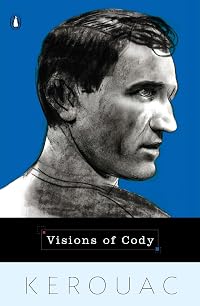
Visions of Cody
by Jack Kerouac 
On This Page
Description
An experimental novel which remained unpublished for years, Visions of Codyis Kerouac's fascinating examination of his own New York life, in a collection of colourful stream-of-consciousness essays. Transcribing taped conversations between members of their group as they took drugs and drank, this book reveals an intimate portrait of people caught up in destructive relationships with substances, and one another. Always fixated by Neal Cassady - the Cody of the title, renamed for the book show more along with Allen Ginsberg and William Burroughs - Kerouac also explores the feelings he had for a man who would inspire much of his work. show lessTags
Recommendations












Member Reviews
I’ve read 9 other novels by Kerouac (7 of which I’ve given 4+ stars), and consider him one of my favorite authors, but ‘Visions of Cody’ is a tough go. The first couple of chapters are uneven, but have some nice passages in the impressionist (or perhaps modern art) manner that Kerouac paints, with him bumming around New York and thinking of his friend Cody (Neal Cassady). His friendship with Cassady was so deep that in a letter to him he effused that he was his “lover”, that he “loves you and digs your greatness completely – haunted in the mind by you”. He’s lonely, thinking about life, reading Joyce, Proust, Melville, and Céline, doing a variety of drugs, and trying to scrape up a way of getting out to San show more Francisco. All of that sounds pretty interesting, but even so it’s pretty dense mining the nuggets of gold out of his stream of consciousness passages.
Where the novel breaks down for me, however, is chapter 3, featuring a 130 page transcript of Kerouac and Cassady high on marijuana, rambling on about nothing in particular. In the book’s notes, Allen Ginsberg does a phenomenal job describing why he finds this section compelling in six points (briefly summarized: 1. ‘Teahead’ talk and never before been transcribed and examined, 2. Despite monotony, the gaps and changes are dramatic, 3. It leads somewhere, 4. It is interesting if you know and love the characters, 5. It’s real, and 6. It’s art and relevant to progress in Kerouac’s art). That sounds fantastic but reading it is not, and it’s followed by 90 more pages of an “Imitation of the Tape”. There are some nice bits towards the end of the book, but it’s just tough to recover from this big block in the middle, which while heralded as a radical, experimental form, is to me an incoherent, literal transcript of a couple of guys getting high. It pains me to say this, but you can do much better with his other books. show less
Where the novel breaks down for me, however, is chapter 3, featuring a 130 page transcript of Kerouac and Cassady high on marijuana, rambling on about nothing in particular. In the book’s notes, Allen Ginsberg does a phenomenal job describing why he finds this section compelling in six points (briefly summarized: 1. ‘Teahead’ talk and never before been transcribed and examined, 2. Despite monotony, the gaps and changes are dramatic, 3. It leads somewhere, 4. It is interesting if you know and love the characters, 5. It’s real, and 6. It’s art and relevant to progress in Kerouac’s art). That sounds fantastic but reading it is not, and it’s followed by 90 more pages of an “Imitation of the Tape”. There are some nice bits towards the end of the book, but it’s just tough to recover from this big block in the middle, which while heralded as a radical, experimental form, is to me an incoherent, literal transcript of a couple of guys getting high. It pains me to say this, but you can do much better with his other books. show less
"What I'm beginning to discover now is something beyond the novel and beyond the arbitrary confines of the story. . . . I'm making myself seek to find the wild form, that can grow with my wild heart . . . because now I know MY HEART DOES GROW." --Jack Kerouac, in a letter to John Clellon Holmes Written in 1951-52, Visions of Cody was an underground legend by the time it was finally published in 1972. Writing in a radical, experimental form ("the New Journalism fifteen years early," as Dennis McNally noted in Desolate Angel), Kerouac created the ultimate account of his voyages with Neal Cassady during the late forties, which he captured in different form in On the Road. Here are the members of the Beat Generatoin as they were in the show more years before any label had been affixed to them. Here is the postwar America that Kerouac knew so well and celebrated so magnificently. His ecstatic sense of superabundant reality is informed by the knowledge of mortality: "I'm writing this book because we're all going to die. . . . My heart broke in the general despair and opened up inward to the Lord, I made a supplication in this dream." "The most sincere and holy writing I know of our age." --Allen Ginsberg show less
I've enjoyed a lot of Kerouac on a fleeting basis - I was told 'On the Road' and 'Dharma Bums' were THE BOOKs to read. Lo and behold, it turns out those were just the commercial pop singles for an artist whose real masterpieces are the obscure deep album cuts.
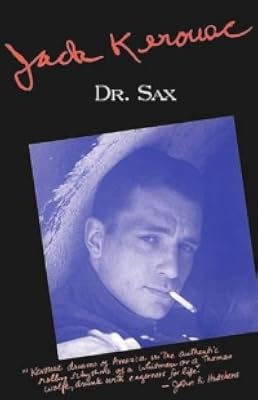
My Desert Island Kerouac books are this and 'Doctor Sax,' for sheer aural sensual beauty.
My Desert Island Kerouac books are this and 'Doctor Sax,' for sheer aural sensual beauty.
Read this many years ago, but it seemed to be a better, fuller, and more free treatment of some of the themes and characters of On The Road. Pure example of the Beat ideal of jazz-influenced writing with many thrilling, virtuoso passages and beautiful, lyrical moments.
A work of flawed genius. Kerouac tries to hard to be spontaneous here, and the results are pretty muddled.
Hard to read unless you're really familiar with Kerouac's writing style and the beat generation mythology. Experimental.
Kerouac's supreme masterpiece.
Members
- Recently Added By
Lists

The Complete Rory Gilmore Reading List
506 works; 5 members

Fiction with Men's Given Names in the Title
302 works; 11 members
Author Information

216+ Works 68,463 Members
Jack Kerouac was born in Lowell, Massachusetts, in 1922. His first novel, The Town and the City, was published in 1950. He considered all of his "true story novels," including On the Road, to be chapters of "one vast book," his autobiographical Legend of Duluoz. He died in St. Petersburg, Florida, in 1969 at the age of forty-seven. (Publisher show more Provided) show less
Jack Kerouac has a Legacy Library. Legacy libraries are the personal libraries of famous readers, entered by LibraryThing members from the Legacy Libraries group.
Series
Belongs to Publisher Series
Gallimard, Folio (5442)
Work Relationships
Common Knowledge
- Original title
- Visions of Cody
- Original publication date
- 1972
- First words
- This is an old diner like the ones Cody and his father ate in, long ago, with that oldfashioned railroad car ceiling and sliding doors - the board where the bread is cut is worn down fine as if with with bread dust and a plan... (show all)e; the icebox ("Say I got some nice homefries tonight Cody!") is a huge brownwood thing with oldfashioned pull-out handles, windows, tile walls, full of lovely pans of eggs, butter pats, piles of bacon - old lunchcarts always have a dish of sliced raw onions ready to go on hamburgs.
- Last words
- (Click to show. Warning: May contain spoilers.)Adios, you who watched the sun go down, at the rail, by my side, smiling - Adios, King.
Classifications
Statistics
- Members
- 1,186
- Popularity
- 21,121
- Reviews
- 9
- Rating
- (3.35)
- Languages
- 5 — Czech, English, French, Italian, Spanish
- Media
- Paper, Ebook
- ISBNs
- 20
- ASINs
- 13