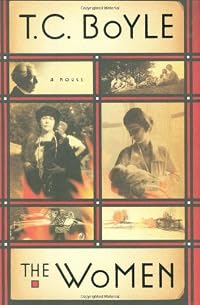
The Women
by T. Coraghessan Boyle
On This Page
Description
From the Publisher: A dazzling novel of Frank Lloyd Wright, told from the point of view of the women in his life. Having brought to life eccentric cereal king John Harvey Kellogg in The Road to Wellville and sex researcher Alfred Kinsey in The Inner Circle, T.C. Boyle now turns his fictional sights on an even more colorful and outlandish character: Frank Lloyd Wright. Boyle's account of Wright's life, as told through the experiences of the four women who loved him, blazes with his trademark show more wit and invention. Wright's life was one long howling struggle against the bonds of convention, whether aesthetic, social, moral, or romantic. He never did what was expected and despite the overblown scandals surrounding his amours and very public divorces and the financial disarray that dogged him throughout his career, he never let anything get in the way of his larger-than-life appetites and visions. Wright's triumphs and defeats were always tied to the women he loved: the Montenegrin beauty Olgivanna Milanoff; the passionate Southern belle Maud Miriam Noel; the spirited Mamah Cheney, tragically killed; and his young first wife, Kitty Tobin. In The Women, T.C. Boyle's protean voice captures these very different women and, in doing so, creates a masterful ode to the creative life in all its complexity and grandeur. show lessTags
Recommendations

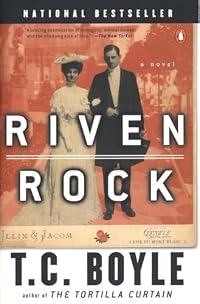
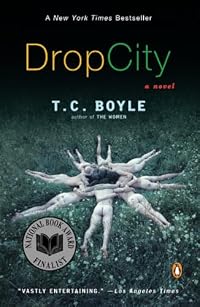



Member Recommendations
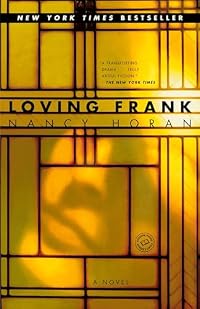
BookshelfMonstrosity Although The Women recounts several love affairs between architect Frank Lloyd Wright and his paramours, the lush lyricism of this richly detailed biographical novel may appeal to fans of The Aviator's Wife, which also explores the complexities of romantic relationships.
Member Reviews
Having divorced two self-involved would-be artistes, I'm sympathetic to the draw that Frank Lloyd Wright had for the intelligent women who found themselves in his orbit. Unlike them however, FLW had true genius and vision combined with the skill and drive to make his dreams a reality. The story of the women in Wright's life is told in reverse chronological order by an acolyte of his later years, Tadashi Sato. Sato is a Harvard educated Japanese national who's outsider observations about Wright and the American milieu are particularly pithy. He starts with the story of Wright's last wife, the one he knew, and relates the history of the previous women: Wright's drug crazed second wife, the savagely murdered mistress and the long suffering show more first wife who was mother of most of his children. In between he relates Wright's career successes, his financial failures and the trauma of the burning of his home Taliesin twice. If modern day celebrities have problems with paparazzi, they have nothing on the newspapermen who hounded Wright and his women. If true genius has a fatal flaw in Wright's case it was The Women. show less
T. Coraghessan Boyle's recent biographic novel, "The Women" (2009) examines the life of renowned architect Frank Lloyd Wright through the lens of Wright's tempestuous love affairs, which encompassed three wives and one mistress. The narrative is told in reverse chronological order, beginning with Wright's final wife, Olgivanna, and working backwards through Maude Miriam Noel (wife #2), Mamah Borthwick Cheney (mistress and presumptive love of his life), and ending with a section about his first wife, Catherine "Kitty" Tobin.
Boyle succeeds in conveying the unique personality of each woman with skill and conviction. Kitty, Wright's first wife, brought money, social connections, and six children to their union. She steadfastly resisted the show more urge to publicly vilify her husband after he left her. Dignified, morally impeccable, and intensely domestic, she defended Frank as a person and a father to the last, placing her children's welfare above all. Mamah, Frank's first mistress, was intelligent, romantically passionate, and tragically ahead of her time in terms of social attitudes about sex and gender equality. Her untimely death catapulted Frank into his third relationship, a rebound romance with Miriam, a flamboyant, drug-addicted femme fatale whose wild nature would cost Frank dearly when the marriage disintegrated (hell hath no fury . . . ). Frank's final wife, Olgivanna, was an aristocrat from Eastern Europe who nonetheless enjoyed physical labor, simple pleasures, and rural seclusion. She brought stability and a sense of peace, if not wild passion, to Frank's last years.
The most fascinating aspect of "The Women" may well revolve around the man, Frank Lloyd Wright, and how he managed to charm these women in the first place. The man who emerges from the book is deceptive, pompous, selfish, and incredibly self-absorbed. Boyle has stated that he admires Wright, but I can only assume he is alluding to Wright's professional accomplishments. Boyle paints the picture of a poppinjay who drives exotic cars he doesn't bother to pay for, promenades around in theatrical capes and hats, wears elevator shoes to disguise his true height, and nervously rearranges furniture for hours before dinner guests arrive at his door. He is enamored with Japanese culture and slavishly courts Japanese emissaries, greeting them at the local Wisconsin train station in a ridiculous pair of Asian pantaloons and an elongated jacket (when Miriam tries to join her husband in her own "costume," he informs her she looks absurd and makes her change clothes). He stubbornly resists paying his bills to local tradesmen and his own servants until he is absolutely forced to. He misappropriates construction advances to make personal purchases of Japanese wood block prints. He treats visiting architectural interns like day laborers, forcing them to mow the lawn and pluck chickens for dinner in return for the privilege of training with "The Master." The list goes on and on. During a court proceeding, he proclaims that he is "the greatest architect in the world," and when asked by the judge how he can make such a pronouncement, he replies that "he is under oath." What a guy.
Nonetheless, the women in Boyle's book flock to Wright like moths to the flame. They find his physical dynamism and psychological sense of command to be irresistible. They are swept away by his larger-than-life persona and creative vision. Although some of them detect Wright's clay feet earlier than others (at a fairly early stage in their relationship, Miriam stares at Wright's large cranium, which she initially worshiped as "leonine," and decides it's just a huge head), they're all initially captivated. Wright makes selfish demands upon each of them, and they all pay dearly for living life on his terms. He is conflicted about the public's reaction to his love life (wives 2 and 3 both lived with Frank prior to marriage). At times, he seeks to hide his indiscretion by passing off Miriam or Olgivana as his "housekeeper" (I'm sure they were thrilled at that); at other times he openly scoffs at convention, condemning it as a set of senseless rules for little people living little lives. He is conflicted about publicity. He loves the money and fame it brings him, but he's enraged when reporters show up at his doorstep with questions about his domestic arrangements. He is conflicted about love. He rushes into each relationship with a sense of urgent romantic inevitability, and leaves each relationship with a cool sense of detachment.
I ended up wondering whether Frank's charm with women would play in today's world. Would wives put up with him as long as he kept his misbehavior on the down low? Would young women be swept up by his international fame and eagerly throw themselves at his feet? Would the popular press alternatively praise and damn him? Catch up on your newspaper reading and decide for yourself. show less
Boyle succeeds in conveying the unique personality of each woman with skill and conviction. Kitty, Wright's first wife, brought money, social connections, and six children to their union. She steadfastly resisted the show more urge to publicly vilify her husband after he left her. Dignified, morally impeccable, and intensely domestic, she defended Frank as a person and a father to the last, placing her children's welfare above all. Mamah, Frank's first mistress, was intelligent, romantically passionate, and tragically ahead of her time in terms of social attitudes about sex and gender equality. Her untimely death catapulted Frank into his third relationship, a rebound romance with Miriam, a flamboyant, drug-addicted femme fatale whose wild nature would cost Frank dearly when the marriage disintegrated (hell hath no fury . . . ). Frank's final wife, Olgivanna, was an aristocrat from Eastern Europe who nonetheless enjoyed physical labor, simple pleasures, and rural seclusion. She brought stability and a sense of peace, if not wild passion, to Frank's last years.
The most fascinating aspect of "The Women" may well revolve around the man, Frank Lloyd Wright, and how he managed to charm these women in the first place. The man who emerges from the book is deceptive, pompous, selfish, and incredibly self-absorbed. Boyle has stated that he admires Wright, but I can only assume he is alluding to Wright's professional accomplishments. Boyle paints the picture of a poppinjay who drives exotic cars he doesn't bother to pay for, promenades around in theatrical capes and hats, wears elevator shoes to disguise his true height, and nervously rearranges furniture for hours before dinner guests arrive at his door. He is enamored with Japanese culture and slavishly courts Japanese emissaries, greeting them at the local Wisconsin train station in a ridiculous pair of Asian pantaloons and an elongated jacket (when Miriam tries to join her husband in her own "costume," he informs her she looks absurd and makes her change clothes). He stubbornly resists paying his bills to local tradesmen and his own servants until he is absolutely forced to. He misappropriates construction advances to make personal purchases of Japanese wood block prints. He treats visiting architectural interns like day laborers, forcing them to mow the lawn and pluck chickens for dinner in return for the privilege of training with "The Master." The list goes on and on. During a court proceeding, he proclaims that he is "the greatest architect in the world," and when asked by the judge how he can make such a pronouncement, he replies that "he is under oath." What a guy.
Nonetheless, the women in Boyle's book flock to Wright like moths to the flame. They find his physical dynamism and psychological sense of command to be irresistible. They are swept away by his larger-than-life persona and creative vision. Although some of them detect Wright's clay feet earlier than others (at a fairly early stage in their relationship, Miriam stares at Wright's large cranium, which she initially worshiped as "leonine," and decides it's just a huge head), they're all initially captivated. Wright makes selfish demands upon each of them, and they all pay dearly for living life on his terms. He is conflicted about the public's reaction to his love life (wives 2 and 3 both lived with Frank prior to marriage). At times, he seeks to hide his indiscretion by passing off Miriam or Olgivana as his "housekeeper" (I'm sure they were thrilled at that); at other times he openly scoffs at convention, condemning it as a set of senseless rules for little people living little lives. He is conflicted about publicity. He loves the money and fame it brings him, but he's enraged when reporters show up at his doorstep with questions about his domestic arrangements. He is conflicted about love. He rushes into each relationship with a sense of urgent romantic inevitability, and leaves each relationship with a cool sense of detachment.
I ended up wondering whether Frank's charm with women would play in today's world. Would wives put up with him as long as he kept his misbehavior on the down low? Would young women be swept up by his international fame and eagerly throw themselves at his feet? Would the popular press alternatively praise and damn him? Catch up on your newspaper reading and decide for yourself. show less
Read this book in conjunction with a visit to Frank Lloyd Wright's Falling Water, designed in the midst of some of the events described in this fictionalized account of FLW's amorous life with four diffent women. A solid background (or even interest) in architecture is not required to enjoy this book. I enjoyed the literary device of reverse chronology, which provides foreshadowing and tension regarding the tragic events of Mamah Borthwick's demise. Less entrancing was the use of a fictional Japanese apprentice narrator. I found his presence off-putting and his many added footnotes completely annoying. T. C. Boyle is a skillful writer, clearly capable of integrating his scholarship on FLW with out this device which detracts from the show more immediacy of a very interesting and arresting story. Some reviewers might have found FLW to be arrogant, personally and fina cially reprehensible. In this Boyle has been largely true to life. The internet has some videos of interviews conducted late FLW's life - his ego, either in truth or affected for publicity purposes, is fully evident. show less
This book took me a bit to get into, but once I was embroiled in the stories of Frank Lloyd Wright and his women, I was hooked. The talent, the temerity of this bold, talented, seductive "mama's boy" as he swept onto the Wisconsin plains to build Taliesen and move in his mother, his assistants and his successive paramours. Boyle's energetic descriptions and the breadth of the story match Wright's own movements as we traipse back (and forth) in time to learn more about the passionate, self-absorbed architect, the land, the work and of course each of his women, Kitty, Mamah, Miriam and Olgivanna, as told by Tadashi Sato, a Japanese apprentice architect at Taliesen.
Note: compelling video for paperback edition of this book: show more target="_top">http://vimeo.com/8664528 show less
Note: compelling video for paperback edition of this book: show more target="_top">http://vimeo.com/8664528 show less
T.C. Boyle’s new novel, The Women, is a fictionalized account of the adult years of architect Frank Lloyd Wright. Writing in first person, Boyle chose as his narrator Tadashi Sato, a Japanese apprentice to Wright. The narrative revolves around the women in the architect’s life: his three wives and his mistress, Mamah Cheney. Although Tadashi Sato professes a great deal of admiration for his mentor throughout the book, ultimately Wright is not painted in a flattering light. His genius is acknowledged, but he comes across as an egotistical scoundrel. He is completely unscrupulous about money and his business dealings. Wright also justifies his scandalous treatment of women by his disregard for convention and his belief in the power of show more love. Yet when young Tadashi falls in love with a Caucasion apprentice working at his estate, Wright intervenes and puts an end to the relationship. Clearly the right to defy convention does not apply to everyone. Aside from Wright’s first wife, Kitty, I found all of the women to be equally self centered and unsympathetic.
The organization of the book was interesting. Boyle begins the novel with Wright’s third wife, and each section of the story goes backward in time to the previous woman in Wright’s life. This technique allows tension to build and enables the book to end dramatically with the murder of Mamah Cheney in 1914 and the destruction of their home, one of Wright’s architectural masterpieces. As can be expected of T.C. Boyle, the book was well written and engaging from beginning to end. show less
The organization of the book was interesting. Boyle begins the novel with Wright’s third wife, and each section of the story goes backward in time to the previous woman in Wright’s life. This technique allows tension to build and enables the book to end dramatically with the murder of Mamah Cheney in 1914 and the destruction of their home, one of Wright’s architectural masterpieces. As can be expected of T.C. Boyle, the book was well written and engaging from beginning to end. show less
A tour-de-force. Boyle takes on the voices of Wright's women--his crazy, self-centered mistress Miriam, a more manipulative, vicious woman I've seldom met in literature or in life, his lovely mistress Mamah, and his wife who bore him many children but got nothing at all from him. Whether the noveistl creates these women accurately, I have no idea, but I couldn'[t put it down. Boyle's use of foreshadowing--we know about what happens to Mamah and Taliesin as we begin but we don't get to see those years in Wright's life even though they preceded the arrival of Miriam until the end of the novel. Somehow this kind of liberty with the narrative chronology worked wonderfully. It's a powerful book about a man I can't imagine loving, a life I show more can't imagine living, and at least one woman whom I detested yet who fascinated me that she could be so detestable, such a fraud, yet manage to "get" Wright.
I've lent it to my friend Barbara Putnam though told her that it would not help her understand Wright as an architect--but perhaps it might shine light on him as a person. show less
I've lent it to my friend Barbara Putnam though told her that it would not help her understand Wright as an architect--but perhaps it might shine light on him as a person. show less
(Reprinted from the Chicago Center for Literature and Photography [cclapcenter.com]. I am the original author of this essay, as well as the owner of CCLaP; it is not being reprinted illegally.)
Back in 2007 when I first started doing book reviews on a regular basis, one of the first older titles I tackled was by the magnificent T.C. Boyle, because of him being almost a textbook example of the type of author perfect for this site's "Tales from the Completist" series -- he has a wide range of books out now, each roughly as popular as the others, with significant differences between each but common themes to them all, a writer who has by now proven his importance to literary history but who continues to crank out new novels on a regular show more basis. So I was quite happy to say the least to recently stumble across his latest at my neighborhood library, 2009's The Women, which like many of his previous titles uses a true incident at its core in order to spin a seriocomic tale around it; in this case, a semi-biographical look at the life of renowned architect Frank Lloyd Wright, seen through the eyes of the four lovers he had as an adult, three of whom were eventually wives and an overlapping three of whom were at first illicit mistresses.
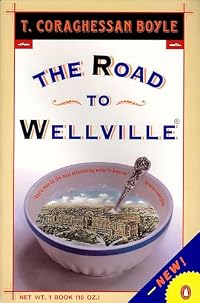
Although to Wright purists, let's make it clear right away that it's only a certain chunk of Wright's complicated and event-filled life that Boyle looks at here -- his decades spent at Taliesin, that is, the cutting-edge compound in the back woods of Wisconsin where he lived in the middle years of his life, which started simply as a retirement home for his ailing mother but eventually became an Objectivist-style refuge from the mouthbreathers of the world for all manner of haughty intellectuals, where residents were held to a more European standard of living (looser relationships but tighter morals), and where Wright wielded an iron fist over such forward-thinking pet habits as a ban on smoking and alcohol. And in fact, presented in this way, it's easy to see why Boyle would be attracted to such material to begin with, because within it are the seeds that also make up the two older novels of his I've already read, 2003's Drop City and 1993's The Road to Wellville (and I'm sure more of his books that I'm not yet familiar with); after all, they each deal with voluntarily isolated groups of "true believers" ensconced in rural American utopian enclaves, earnest yet slightly crazy people living existences defined by bizarrely specific rules, under the tight control of a cultish, eccentric leader, in this case making such a story work by ignoring Wright's early years in Chicago and late life in Arizona, instead focusing on his years in the Upper Midwest and all the dysfunctional events that took place there.
Because make no mistake, there were plenty of dysfunctional events that took place at Taliesin, a wealth of strange turns that keeps this thick yet easily readable story clicking along at a fast pace -- a man who was simply born to love women, Wright was one of the first big public figures at the end of the Victorian Age to embrace the idea of couples cohabitating without being married (the proverbial "living in sin"), with Taliesin quickly dubbed by the press as a smokily erotic den of iniquity, where an endless series of east-coast showgirls, European bohemians, and other undesirables maintained a rather steady revolving door all through the Edwardian Age and then into Modernism, as Wright's personal fortunes went from great to terrible to great again, using the Wisconsin campus itself as a rather literal living laboratory for his cutting-edge theories involving building materials, urban planning and more, keeping afloat in the lean years by selling off some of his antique Japanese prints, one of the biggest and most prestigious collections in Western hands at the time.
Much like his other books, then, Boyle uses this milieu to spin a tale by turns equally tragic and funny, a look at these years that clearly comes from a place of love and admiration, but that doesn't hesitate to get dark or critical whenever the occasion is warranted. And that's a fine line to tread, frankly, when basing such a story on true events, which is a big part of Boyle's magic, and why he's such an obsessively loved author in the first place; because his dedication to deep academic-style research keeps books like these honest in their details, while his sensitivity and fine touch keeps them emotionally honest as well, not lazy hatchet jobs despite their many cringe-inducing moments but rather these ironically sweet odes to the perpetual complexity of the human spirit, of the ephemeral traits that make all of us admired in some circumstances and despised in others. (And in fact Boyle even structures The Women in a way so to emphasize this duality, in effect telling the story chronologically backwards, so that each section starts with his previous lover as villain and the new lover as hero, but with the next section presenting that villain now as the new hero and the lover before her as the new villain, an ingenious framing device for a story that's ultimately about a charming man who unfortunately got tired of his lovers rather quickly.)
As with the other titles of his I've now read, this all adds up by the end to a rather delightful experience, a pleasing mix of academic focus and beach-read thrills which is what makes Boyle one of my favorite living writers on the planet right now; and if you've never tackled one of his oddly compelling titles before yourself, this is an excellent one to start with, not least of which is because of the storyline itself being already so well-known and thoroughly documented. It comes highly recommended today, and makes me anxious to jump right back into Boyle's funny, ribald universe as soon as I can.
Out of 10: 9.3 show less
Back in 2007 when I first started doing book reviews on a regular basis, one of the first older titles I tackled was by the magnificent T.C. Boyle, because of him being almost a textbook example of the type of author perfect for this site's "Tales from the Completist" series -- he has a wide range of books out now, each roughly as popular as the others, with significant differences between each but common themes to them all, a writer who has by now proven his importance to literary history but who continues to crank out new novels on a regular show more basis. So I was quite happy to say the least to recently stumble across his latest at my neighborhood library, 2009's The Women, which like many of his previous titles uses a true incident at its core in order to spin a seriocomic tale around it; in this case, a semi-biographical look at the life of renowned architect Frank Lloyd Wright, seen through the eyes of the four lovers he had as an adult, three of whom were eventually wives and an overlapping three of whom were at first illicit mistresses.
Although to Wright purists, let's make it clear right away that it's only a certain chunk of Wright's complicated and event-filled life that Boyle looks at here -- his decades spent at Taliesin, that is, the cutting-edge compound in the back woods of Wisconsin where he lived in the middle years of his life, which started simply as a retirement home for his ailing mother but eventually became an Objectivist-style refuge from the mouthbreathers of the world for all manner of haughty intellectuals, where residents were held to a more European standard of living (looser relationships but tighter morals), and where Wright wielded an iron fist over such forward-thinking pet habits as a ban on smoking and alcohol. And in fact, presented in this way, it's easy to see why Boyle would be attracted to such material to begin with, because within it are the seeds that also make up the two older novels of his I've already read, 2003's Drop City and 1993's The Road to Wellville (and I'm sure more of his books that I'm not yet familiar with); after all, they each deal with voluntarily isolated groups of "true believers" ensconced in rural American utopian enclaves, earnest yet slightly crazy people living existences defined by bizarrely specific rules, under the tight control of a cultish, eccentric leader, in this case making such a story work by ignoring Wright's early years in Chicago and late life in Arizona, instead focusing on his years in the Upper Midwest and all the dysfunctional events that took place there.
Because make no mistake, there were plenty of dysfunctional events that took place at Taliesin, a wealth of strange turns that keeps this thick yet easily readable story clicking along at a fast pace -- a man who was simply born to love women, Wright was one of the first big public figures at the end of the Victorian Age to embrace the idea of couples cohabitating without being married (the proverbial "living in sin"), with Taliesin quickly dubbed by the press as a smokily erotic den of iniquity, where an endless series of east-coast showgirls, European bohemians, and other undesirables maintained a rather steady revolving door all through the Edwardian Age and then into Modernism, as Wright's personal fortunes went from great to terrible to great again, using the Wisconsin campus itself as a rather literal living laboratory for his cutting-edge theories involving building materials, urban planning and more, keeping afloat in the lean years by selling off some of his antique Japanese prints, one of the biggest and most prestigious collections in Western hands at the time.
Much like his other books, then, Boyle uses this milieu to spin a tale by turns equally tragic and funny, a look at these years that clearly comes from a place of love and admiration, but that doesn't hesitate to get dark or critical whenever the occasion is warranted. And that's a fine line to tread, frankly, when basing such a story on true events, which is a big part of Boyle's magic, and why he's such an obsessively loved author in the first place; because his dedication to deep academic-style research keeps books like these honest in their details, while his sensitivity and fine touch keeps them emotionally honest as well, not lazy hatchet jobs despite their many cringe-inducing moments but rather these ironically sweet odes to the perpetual complexity of the human spirit, of the ephemeral traits that make all of us admired in some circumstances and despised in others. (And in fact Boyle even structures The Women in a way so to emphasize this duality, in effect telling the story chronologically backwards, so that each section starts with his previous lover as villain and the new lover as hero, but with the next section presenting that villain now as the new hero and the lover before her as the new villain, an ingenious framing device for a story that's ultimately about a charming man who unfortunately got tired of his lovers rather quickly.)
As with the other titles of his I've now read, this all adds up by the end to a rather delightful experience, a pleasing mix of academic focus and beach-read thrills which is what makes Boyle one of my favorite living writers on the planet right now; and if you've never tackled one of his oddly compelling titles before yourself, this is an excellent one to start with, not least of which is because of the storyline itself being already so well-known and thoroughly documented. It comes highly recommended today, and makes me anxious to jump right back into Boyle's funny, ribald universe as soon as I can.
Out of 10: 9.3 show less
Members
- Recently Added By
Published Reviews
ThingScore 75
All of Boyle’s colorful skills are fully engaged in his latest (as, to be fair, are his tendencies toward redundancy and overemphasis). It’s a performance worthy of the writer who has, in interviews and on his informative website, acknowledged the influences of Flannery O’Connor, Evelyn Waugh and Gabriel García Márquez. I’d argue that Dickens and Shakespeare also must loom show more prominently in the imagination of a writer so adept at the creation of improbably beguiling comic grotesques. And Boyle’s warmhearted, coldly calculating, ineffably seductive and unknowable Frank Lloyd Wright may be the most beguiling of them all. show less
added by Richardrobert
Lists

Top Five Books of 2018
802 works; 265 members

Books Set in Wisconsin
25 works; 7 members

real people in fiction circumstances
74 works; 10 members

Best Architecture Books
87 works; 14 members

Books Read in 2021
5,361 works; 114 members
Author Information

104+ Works 27,963 Members
T. C. Boyle was born Thomas John Boyle in Peekskill, New York on December 2, 1948. He received a B.A. in English and history from SUNY Potsdam in 1968, a MFA from the University of Iowa Writers' Workshop in 1974, and a Ph.D. degree in nineteenth century British literature from the University of Iowa in 1977. He has been a member of the English show more department at the University of Southern California since 1978. He has written over 20 books including After the Plague, Drop City, The Inner Circle, Tooth and Claw, The Human Fly, Talk Talk, The Women, Wild Child, and When the Killing's Done. He has received numerous awards including the PEN/Faulkner Award for best novel of the year for World's End; the PEN/Malamud Prize in the short story for T. C. Boyle Stories; and the Prix Médicis Étranger for best foreign novel in France for The Tortilla Curtain. His title's Sam Miguel and The Harder They Caome made The New York Times Best Seller List. (Bowker Author Biography) T. Coraghessan Boyle is the best-selling author of "T.C. Boyle Stories," "Riven Rock," "The Tortilla Curtain," "Without a Hero," "The Road to Wellville," "East Is East," "If the River Was Whiskey," "World's End" (winner of the PEN/Faulkner Award), "Greasy Lake," "Budding Prospects," "Water Music," & "Descent of Man" (all available from Penguin). His fiction regularly appears in major American magazines, including "The New Yorker," "GQ," "The Paris Review," "Playboy," & "Esquire." He lives in Santa Barbara, California. (Publisher Provided) show less
Some Editions
Awards and Honors
Awards
Distinctions
Series
Belongs to Publisher Series
Impedimenta (107)
Common Knowledge
- Canonical title
- The Women
- Original title
- The Women
- Original publication date
- 2009-02-10
- People/Characters
- Frank Lloyd Wright; Mamah Borthwick Cheney; Olgivanna Milanoff; Maud Miriam Noel; Kitty Tobin; Tadashi Sato
- Important places
- Spring Green, Wisconsin, USA
- Important events
- Taliesin Murders (1914-08-14)
- Epigraph
- Early in life I had to choose between honest arrogance and hypocritical humility; I chose arrogance. ~Frank Lloyd Wright
- Dedication
- For Karen Kvashay
- First words
- I didn't know much about automobiles at the time-still don't, for that matter-but it was an automobile that took me to Taliesin in the fall of 1932, through a country alternately fortified with trees and rolled out like a car... (show all)pet to the back walls of its barns, hayricks, and farmhouses, through towns with names like Black Earth, Mazomanie and Coon Rock, where no one in living memory had ever seen a Japanese face.
- Last words
- (Click to show. Warning: May contain spoilers.)The poor man, she was thinking. The poor, poor man.
- Original language
- English
Classifications
Statistics
- Members
- 1,749
- Popularity
- 12,513
- Reviews
- 63
- Rating
- (3.55)
- Languages
- 6 — Dutch, English, French, German, Italian, Spanish
- Media
- Paper, Audiobook, Ebook
- ISBNs
- 37
- ASINs
- 12