
Yosa Buson (1716–1783)
Author of The Essential Haiku: Versions of Bashō, Buson, and Issa
About the Author
Along with Basho and Issa, Buson was one of the three great haiku poets of the Edo Period. He is equally famous as a painter. His poetry was in the style of Basho but was distinguished by a particular lyricism and romantic subjectivity. Although more prolific than Basho, Buson is still show more underrepresented in English translation. (Bowker Author Biography) show less
Disambiguation Notice:
Yosa is the author's family name.
Works by Yosa Buson
Haïku 1 copy
[Haisei Buson zenshˆu 1 copy
A Borboleta e o Sino 1 copy
Os Quatro Rostos do Mundo 1 copy
Yosa no Buson 1 copy
Yosa Buson 1 copy
Associated Works
Literature: An Introduction to Fiction, Poetry, and Drama (1995) — Contributor, some editions — 1,011 copies, 7 reviews
World Poetry: An Anthology of Verse from Antiquity to Our Time (1998) — Contributor — 496 copies, 2 reviews
The Sound of Water: Haiku by Basho, Buson, Issa, and Other Poets (Shambhala Centaur Editions) (1995) — Contributor — 135 copies
Classic Haiku: The Greatest Japanese Poetry from Basho, Buson, Issa, Shiki, and Their Followers (2007) — Contributor — 90 copies, 1 review
Haiku: Gems of Intimate Beauty in a New Collection of Classic Japanese Poetry (1970) — Contributor — 53 copies
Born of a Dream: Fifty Haiku by Basho, Buson, Taigi, Issa, Shiki (1989) — Contributor — 7 copies, 1 review
Little Enough: 49 Haiku by Basho, Sodo, Ransetsu, Buson, Ryokan, Issa, Shiki (1991) — Contributor — 4 copies
Tagged
Common Knowledge
- Canonical name
- Yosa Buson
- Legal name
- 与謝 蕪村
- Other names
- Taniguchi Buson
Buson - Birthdate
- 1716
- Date of death
- 1783-12-25
- Gender
- male
- Nationality
- Japan
- Burial location
- Konpuku-ji, Kyoto, Japan
- Disambiguation notice
- Yosa is the author's family name.
- Associated Place (for map)
- Kyoto, Japan
Members
Reviews
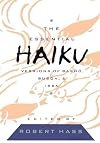
I took a class from Robert Haas during my undergrad. He was a vague teacher but his lectures were careful, rigorous, and were often delivered with a gentleness that made what would otherwise be burdensome topics graceful. So it is with this collection of Haiku by Buson, Basho, and Issa. Among the projects he set forth in the this edition, Haas wanted to show through contrast, how each master's personality and style comes through their work however restricted the form. The effect of reading show more this collection is that the differences become clear:
Issa's comical voice:
I'm going out,
Flies, so relax,
Make love.
Buson's imagery:
The spring sea rising
and falling, rising
and falling all day.
Basho's philosophical melancholy:
First day of spring-
I keep thinking about
the end of Autumn.
I highly recommend this collection for anyone interested in the Haiku form. Though there are some cultural and translational fault lines mapping the boundaries of this style of poetry the main ideas come through, often in unexpected ways: a flash of imagery or setting will set off a spontaneous feeling of sorrow or happiness, frustration or guilt. show less
Issa's comical voice:
I'm going out,
Flies, so relax,
Make love.
Buson's imagery:
The spring sea rising
and falling, rising
and falling all day.
Basho's philosophical melancholy:
First day of spring-
I keep thinking about
the end of Autumn.
I highly recommend this collection for anyone interested in the Haiku form. Though there are some cultural and translational fault lines mapping the boundaries of this style of poetry the main ideas come through, often in unexpected ways: a flash of imagery or setting will set off a spontaneous feeling of sorrow or happiness, frustration or guilt. show less
I took a class from Robert Haas during my undergrad. He was a vague teacher but his lectures were careful, rigorous, and were often delivered with a gentleness that made what would otherwise be burdensome topics graceful. So it is with this collection of Haiku by Buson, Basho, and Issa. Among the projects he set forth in the this edition, Haas wanted to show through contrast, how each master's personality and style comes through their work however restricted the form. The effect of reading show more this collection is that the differences become clear:
Issa's comical voice:
I'm going out,
Flies, so relax,
Make love.
Buson's imagery:
The spring sea rising
and falling, rising
and falling all day.
Basho's philosophical melancholy:
First day of spring-
I keep thinking about
the end of Autumn.
I highly recommend this collection for anyone interested in the Haiku form. Though there are some cultural and translational fault lines mapping the boundaries of this style of poetry the main ideas come through, often in unexpected ways: a flash of imagery or setting will set off a spontaneous feeling of sorrow or happiness, frustration or guilt. show less
Issa's comical voice:
I'm going out,
Flies, so relax,
Make love.
Buson's imagery:
The spring sea rising
and falling, rising
and falling all day.
Basho's philosophical melancholy:
First day of spring-
I keep thinking about
the end of Autumn.
I highly recommend this collection for anyone interested in the Haiku form. Though there are some cultural and translational fault lines mapping the boundaries of this style of poetry the main ideas come through, often in unexpected ways: a flash of imagery or setting will set off a spontaneous feeling of sorrow or happiness, frustration or guilt. show less
What a masterpiece. At the end of the book it's noted that the poems were assembled by Buson's followers against Buson's wishes because he says a collection of poems diminishes great artists. Buson is a great artist, though, and as far as I'm concerned better than Basho and better than even Li Po. Rare is the artist who can pull so much out of so little. The translation is mighty fine, too.
Poem selection is average. Aesthetically, the translations are merely passable. (At one point he quote's Amy Lowell's version of a Buson poem, which only has the unintended consequence of making his appear inferior.) But the real problem here are the notes.
Whether it requires it or not, each poem is accompanied by a paragraph or more of only marginally useful notes. Well, notes is probably not entirely correct, as that would suggest that they help to explain the meaning of obscure terms or show more references. Sometimes, perhaps even the majority of the time, they do. (His note on Basho's famous helmet/cricket poem is an example of a good one, for instance.) But a decent amount of the time they serve as little more than an excuse for the author to meander off on whatever tangent the poem has reminded him of — his travels, his life, what he thinks the poet was feeling at the time. Often this is interwoven into the insightful bits, but sometimes the notes serve no purpose but this meandering stream of consciousness.
Eventually, somewhere in the section on Issa, I just stopped reading them. My enjoyment of the collection went up after that.
My final verdict? Find another anthology instead. show less
Whether it requires it or not, each poem is accompanied by a paragraph or more of only marginally useful notes. Well, notes is probably not entirely correct, as that would suggest that they help to explain the meaning of obscure terms or show more references. Sometimes, perhaps even the majority of the time, they do. (His note on Basho's famous helmet/cricket poem is an example of a good one, for instance.) But a decent amount of the time they serve as little more than an excuse for the author to meander off on whatever tangent the poem has reminded him of — his travels, his life, what he thinks the poet was feeling at the time. Often this is interwoven into the insightful bits, but sometimes the notes serve no purpose but this meandering stream of consciousness.
Eventually, somewhere in the section on Issa, I just stopped reading them. My enjoyment of the collection went up after that.
My final verdict? Find another anthology instead. show less
Lists
Awards


You May Also Like
Associated Authors
Statistics
- Works
- 37
- Also by
- 13
- Members
- 975
- Popularity
- #26,421
- Rating
- 4.1
- Reviews
- 14
- ISBNs
- 34
- Languages
- 8
- Favorited
- 1