
Watermill Press
Author of Great American Short Stories [Watermill Classics]
About the Author
Works by Watermill Press
great ghost stories 2 copies
Multiplication Wipe Off Fun 1 copy
The World- UP CLOSE 1 copy
HOW TO DRAW SEA CREATURES 1 copy
Animal World The Dolphin 1 copy
The Scarlet Pimpernel 1 copy
Tagged
Common Knowledge
There is no Common Knowledge data for this author yet. You can help.
Members
Reviews
Great Ghost Stories: Keeping His Promise; Caterpillars; the Squaw; the Hand; the Middle Toe of the Right Foot; Dickon the Devil: A Watermill Classic: Complete and Unabridged (Paperback 1994 Watermill Printing) by Watermill Classics
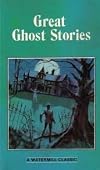
This anthology of six supernatural tales, published by Watermill Classics, gathers works by such famous scribes as Ambrose Bierce, Algernon Blackwood, Guy de Maupassant, and Bram Stoker. My favorites in the book are “Keeping His Promise” by Algernon Blackwood and “The Hand” by Guy de Maupassant. There are two in the collection that I would not consider ghost stories but were no less eerie— “Caterpillars” and “The Squaw.”
In “Keeping His Promise” by Algernon Blackwood, a show more university student pulls an all-nighter to study for an exam when a former classmate from elementary school arrives unexpectedly. Seeing that the man is in dire straits, the student invites him in for a meal and a place to spend the night while he studies. Things become a bit odd the following morning when his old friend can be heard but not seen…
In E.F. Benson’s “Caterpillars,” a man staying overnight at an Italian villa has visions of abnormally large glowing caterpillars amassing in various parts of the house. The following day, one of the other guests captures, then later kills, a smaller version of the same caterpillar—and suffers dire consequences.
A boisterous American visiting Nuremberg, Germany accidentally kills a kitten, sending its mother into a rage. Later, when the American visits the Torture Tower museum and tempts fate by placing himself in one of the devices, mother cat takes advantage of the opportunity in “The Squaw” by Bram Stoker.
In “The Hand” by Guy de Maupassant, a French judge meets an Englishman living in Marseilles and is eventually given a tour of the Englishman’s villa. Among the man’s gun collection is a severed human hand chained to the wall. The Englishman explains that the hand belonged to an enemy and must remained chained—lest it escape…
Ambrose Bierce brings us the tale of two men who use an abandoned mansion to hold a knife fight. One of the combatants ends up dead—but not at the end of a blade in “The Middle Toe of the Right Foot.”
A realtor is hired to partition a haunted estate inherited by three women. During his inspection of the property, he is confronted by the town idiot, a raving wild man named Dickon. The groundskeeper explains that while the previous owner of the estate was a kindly gentleman, he despised the three women, but died before he could change his will. Legend has it that the gentleman still roams the property, causing death and madness in “Dickon the Devil” by J.S. LeFanu. show less
In “Keeping His Promise” by Algernon Blackwood, a show more university student pulls an all-nighter to study for an exam when a former classmate from elementary school arrives unexpectedly. Seeing that the man is in dire straits, the student invites him in for a meal and a place to spend the night while he studies. Things become a bit odd the following morning when his old friend can be heard but not seen…
In E.F. Benson’s “Caterpillars,” a man staying overnight at an Italian villa has visions of abnormally large glowing caterpillars amassing in various parts of the house. The following day, one of the other guests captures, then later kills, a smaller version of the same caterpillar—and suffers dire consequences.
A boisterous American visiting Nuremberg, Germany accidentally kills a kitten, sending its mother into a rage. Later, when the American visits the Torture Tower museum and tempts fate by placing himself in one of the devices, mother cat takes advantage of the opportunity in “The Squaw” by Bram Stoker.
In “The Hand” by Guy de Maupassant, a French judge meets an Englishman living in Marseilles and is eventually given a tour of the Englishman’s villa. Among the man’s gun collection is a severed human hand chained to the wall. The Englishman explains that the hand belonged to an enemy and must remained chained—lest it escape…
Ambrose Bierce brings us the tale of two men who use an abandoned mansion to hold a knife fight. One of the combatants ends up dead—but not at the end of a blade in “The Middle Toe of the Right Foot.”
A realtor is hired to partition a haunted estate inherited by three women. During his inspection of the property, he is confronted by the town idiot, a raving wild man named Dickon. The groundskeeper explains that while the previous owner of the estate was a kindly gentleman, he despised the three women, but died before he could change his will. Legend has it that the gentleman still roams the property, causing death and madness in “Dickon the Devil” by J.S. LeFanu. show less

Considering the slimness of this book, there are some really great stories in here. I was partial to the one by H.G. Wells, but that's no surprise. :)
I love O. Henry! Some of his stories, particularly "The Gift of the Magi" still make me cry.
You May Also Like


Associated Authors
Statistics
- Works
- 24
- Members
- 612
- Popularity
- #41,085
- Rating
- 4.0
- Reviews
- 3
- ISBNs
- 16