
David Nickle
Author of Eutopia: A Novel of Terrible Optimism
About the Author
Series
Works by David Nickle
The Horror in the Lodge 1 copy
Looker 1 copy
Sick Reggie {short story} 1 copy
Rat Food 1 copy
PseudoPod 408: Knife Fight 1 copy
Associated Works
The Year's Best Fantasy and Horror: Eighth Annual Collection (1995) — Contributor — 330 copies, 6 reviews
Northern Suns : The New Anthology of Canadian Science Fiction (1999) — Contributor — 69 copies, 1 review
Tesseracts Twelve: New Novellas of Canadian Fantastic Fiction (2008) — Contributor — 31 copies, 2 reviews
Tesseracts Thirteen: Chilling Tales of the Great White North (2009) — Contributor — 27 copies, 1 review
Imaginarium 3: The Best Canadian Speculative Writing (The Imaginarium Series) (2015) — Contributor — 22 copies
Imaginarium 4: The Best Canadian Speculative Writing (The Imaginarium Series) (2016) — Contributor — 14 copies, 1 review
Northern Frights 1: Chilling tales by Robert Bloch, Charles De Lint, Steve Rasnic Tem, Tanya Huff, Garfield Reeves-Steve (1992) — Contributor — 13 copies
Tagged
Common Knowledge
- Birthdate
- 1964
- Gender
- male
- Nationality
- Canada
- Birthplace
- Newmarket, Ontario, Canada
- Places of residence
- Toronto, Ontario, Canada
- Associated Place (for map)
- Ontario, Canada
Members
Reviews
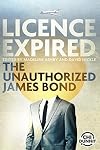
This took me longer to read than I expected, because I love Bond—both the movie version, and the literary version, which is the focus of this collection.
I will say this started out strong with an interesting and enigmatic opening story, followed by the best story of the collection as the second, by Robert J. Wiersema. I won't blow it, but I will say that, with his story, Wiersma effectively rewrote the entire reason for Bond's service in one neat little story.
After that, I found the book show more settled into a reasonably predictable rhythm of Bond stories, occasionally feeling like they broke from canon a little too often, or at least contradicted themselves from story to story (Bond is set financially for retirement / Bond doesn't have enough money, Bond easily recalls the women he's been with / Bond sees all women the same, etc.). For the most part, however, the stories were well-written, and engaging.
The second standout came toward the end of the book with Ian Rogers' story where he posits a bleak future for Bond. Again, really took a chance here, much like Wiersema, but it paid off.
Overall, if you love Bond, you'll definitely find some fun stuff in here. show less
I will say this started out strong with an interesting and enigmatic opening story, followed by the best story of the collection as the second, by Robert J. Wiersema. I won't blow it, but I will say that, with his story, Wiersma effectively rewrote the entire reason for Bond's service in one neat little story.
After that, I found the book show more settled into a reasonably predictable rhythm of Bond stories, occasionally feeling like they broke from canon a little too often, or at least contradicted themselves from story to story (Bond is set financially for retirement / Bond doesn't have enough money, Bond easily recalls the women he's been with / Bond sees all women the same, etc.). For the most part, however, the stories were well-written, and engaging.
The second standout came toward the end of the book with Ian Rogers' story where he posits a bleak future for Bond. Again, really took a chance here, much like Wiersema, but it paid off.
Overall, if you love Bond, you'll definitely find some fun stuff in here. show less
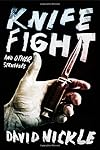
Damn! How much fun was that?
This is my first time reading David Nickle. I've heard him talk on two or three occasions, and always found him funny, intelligent, and interesting to listen to, but there are times when that doesn't translate to the page.
No worry of that here.
These stories. These stories, man. They run the range from horror to science fiction, from thriller to...I don't know...insightful drama? Really, there's only two terms that could serve as a link through all of them, as show more they're all so incredibly different from each other, and those two words would be dark and unsettling.
And I use both those words in the best possible way.
Seriously, I enjoyed the hell out of this collection. I must now go and find more of his stuff to read. Nickle kicks ass. show less
This is my first time reading David Nickle. I've heard him talk on two or three occasions, and always found him funny, intelligent, and interesting to listen to, but there are times when that doesn't translate to the page.
No worry of that here.
These stories. These stories, man. They run the range from horror to science fiction, from thriller to...I don't know...insightful drama? Really, there's only two terms that could serve as a link through all of them, as show more they're all so incredibly different from each other, and those two words would be dark and unsettling.
And I use both those words in the best possible way.
Seriously, I enjoyed the hell out of this collection. I must now go and find more of his stuff to read. Nickle kicks ass. show less
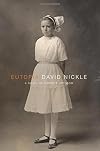
Pros: excellent writing, courageous, tight ending
Cons: the supernatural aspect isn't as scary as the historically accurate parts
Eutopia takes place in the early 1900's when the eugenics movement was becoming popular with a certain type of people. Mrs Frost, an agent of the Eugenics Records Office finds her nephew is the sole survivor of a plague ravaged frontier town. She brings him with her to Eilada, Idaho, where an industrialist has started what he intends to be a utopic community.
But not show more everything's rosy in paradise. The town's black doctor, Andrew Waggoner, has had a run in with the Ku Klux Klan and discovered that his colleague, Dr. Bergstrom has been keeping a 'Mr. Juke' in quarantine. The more Dr. Waggoner learns of Dr. Bergstrom's actions and who, or what, Mr. Juke is, the more imperiled his life becomes.
Because Mr. Juke's family is coming to get him back.
For a novel that has such a horrifying supernatural creature at the heart of it, the true terror of the book was contained in the historically accurate parts. It's hard to be afraid of made up monsters when the Klan and practicing eugenicists show up. Indeed, when you see the unrepentant Mrs. Frost and delusional Dr. Bergstrom own up to their crimes, no fictional monster could possibly stand up to the horrors humans are willing to perpetrate on each other.
I call this novel courageous because Mr. Nickle focuses on a period of history most people pretend didn't exist. The eugenics movement died after the holocaust showed the end result of such thinking. But denying that sterilization happened in other nations (including Canada and the U.S.), as painful as it is to admit, denies the injustices done to people in the past due to racism and elitist thinking. And allows the possibility of repeating such things. Fiction allows us to examine issues we'd rather not, in the safety of the present, when we hope such occurrences will never be allowed to happen again. In this way it reminds me of Blonde Roots, by Bernardine Evaristo, which flips history so Europeans are enslaved by Afrikaans. It shows how racism can go both ways and only the conquerors decide what is right and who are the elite.
People will find reading this book uncomfortable, for the subject matter and the liberal use of the 'n' word. We have whitewashed our history and no longer want to acknowledge the attitudes and language of the past. Even the subtle put downs black men faced, like using Dr. Waggoner's Christian name when addressing him, rather than his title, are accurately represented in this book.
The ending is tight, bringing all three plot lines together in surprising ways. It's an ending that is both satisfying, and thought provoking. show less
Cons: the supernatural aspect isn't as scary as the historically accurate parts
Eutopia takes place in the early 1900's when the eugenics movement was becoming popular with a certain type of people. Mrs Frost, an agent of the Eugenics Records Office finds her nephew is the sole survivor of a plague ravaged frontier town. She brings him with her to Eilada, Idaho, where an industrialist has started what he intends to be a utopic community.
But not show more everything's rosy in paradise. The town's black doctor, Andrew Waggoner, has had a run in with the Ku Klux Klan and discovered that his colleague, Dr. Bergstrom has been keeping a 'Mr. Juke' in quarantine. The more Dr. Waggoner learns of Dr. Bergstrom's actions and who, or what, Mr. Juke is, the more imperiled his life becomes.
Because Mr. Juke's family is coming to get him back.
For a novel that has such a horrifying supernatural creature at the heart of it, the true terror of the book was contained in the historically accurate parts. It's hard to be afraid of made up monsters when the Klan and practicing eugenicists show up. Indeed, when you see the unrepentant Mrs. Frost and delusional Dr. Bergstrom own up to their crimes, no fictional monster could possibly stand up to the horrors humans are willing to perpetrate on each other.
I call this novel courageous because Mr. Nickle focuses on a period of history most people pretend didn't exist. The eugenics movement died after the holocaust showed the end result of such thinking. But denying that sterilization happened in other nations (including Canada and the U.S.), as painful as it is to admit, denies the injustices done to people in the past due to racism and elitist thinking. And allows the possibility of repeating such things. Fiction allows us to examine issues we'd rather not, in the safety of the present, when we hope such occurrences will never be allowed to happen again. In this way it reminds me of Blonde Roots, by Bernardine Evaristo, which flips history so Europeans are enslaved by Afrikaans. It shows how racism can go both ways and only the conquerors decide what is right and who are the elite.
People will find reading this book uncomfortable, for the subject matter and the liberal use of the 'n' word. We have whitewashed our history and no longer want to acknowledge the attitudes and language of the past. Even the subtle put downs black men faced, like using Dr. Waggoner's Christian name when addressing him, rather than his title, are accurately represented in this book.
The ending is tight, bringing all three plot lines together in surprising ways. It's an ending that is both satisfying, and thought provoking. show less
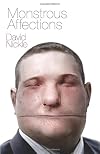
David Nickle’s on quite a tear lately, with recent novels Eutopia, Rasputin’s Bastards, and The ‘Geisters proving him a talent of vast range, depth, and awesomesauce. Yet Nickle could have stopped with this collection, his publishing debut, and I’d still be in thrall to his every whim. In Monstrous Affections (which may have the greatest book cover ever conceived), we discover the wisdom of talking fish, the heroism of witches, the persistence of flies, and the ugliness of love. Rich show more characters and a love of unique twists top off a captivating and sometimes gruesome collection of nightmares.
Find the full review at my website. show less
Find the full review at my website. show less
Awards


You May Also Like


Associated Authors
Statistics
- Works
- 20
- Also by
- 37
- Members
- 584
- Popularity
- #42,937
- Rating
- 3.6
- Reviews
- 32
- ISBNs
- 39