
Ian Rogers (2) (1976–)
Author of Every House Is Haunted
For other authors named Ian Rogers, see the disambiguation page.
Works by Ian Rogers
The Ash Angels 5 copies
Temporary Monsters 5 copies
Black Eyed Kids 4 copies
Ian Rogers : sanctuary 2 copies
Out Of The Blue 1 copy
The Underwood 1 copy
Associated Works
Screams from the Dark: 29 Tales of Monsters and the Monstrous (2022) — Contributor — 101 copies, 2 reviews
Worlds of Light & Darkness (The Best of DreamForge and Space & Time Book 1) (2021) — Contributor — 14 copies, 2 reviews
Tagged
Common Knowledge
- Birthdate
- 1976-10-17
- Gender
- male
- Nationality
- Canada
- Places of residence
- Peterborough, Ontario, Canada
- Associated Place (for map)
- Ontario, Canada
Members
Reviews
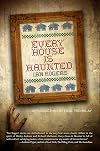
Winner of the ReLit Award for Best Short Fiction, Ian Roger’s debut is a corker, a paean to everything that scares us. Like the best of horror fiction, Rogers’ stories defy easy categorization. A jazz club may or may not be Hell, but is certainly not a place you want to visit. A loveable housecat proves adept at exterminating pests of all sizes. A campfire story takes an unusual turn. And in “Deleted Scenes” (my favourite in a collection rife with nominees), an actor finds himself show more employment by filming scenes never meant to be seen. Rogers has a way of tweaking even the most mundane idea and making it sparkle anew. Believe me, I’ll never look at a spider the same way again. Or ever again.
Find the full review at my website. show less
Find the full review at my website. show less

This just needs to be said: Felix Renn kicks ass.
I'd previously read about half of this book through the first three Felix Renn chapbooks published by Burning Effigy. Temporary Monsters was fun. Ash Angels was bleak. And Black Eyed Kids was scary as hell. There's one particular scene that scared the shit out of me, and there's really only a couple of times a story has done that to me. The only other time I believe I was as scared as I was with BEK was when Danny Torrance met the woman in show more Room 217 in The Shining.
So this time out, I got the excellent introduction by Mike Carey, a short story called My Body and the centrepiece of this collection, The Brick. Only Ian Rogers could make a brick a partner to a PI. And not only does he pull it off, he absolutely smokes it. I loved the longer form story format for this one, as it allowed Rogers to roll in additional characters and locales while building to an unforgettable climax with the monster of the piece, the Whyver, which is just brilliant.
If you haven't read anything by Rogers, then do yourself a favour and grab both SuperNOIRtual Tales from Burning Effigy Press and Every House Is Haunted from ChiZine. You won't be disappointed. show less
I'd previously read about half of this book through the first three Felix Renn chapbooks published by Burning Effigy. Temporary Monsters was fun. Ash Angels was bleak. And Black Eyed Kids was scary as hell. There's one particular scene that scared the shit out of me, and there's really only a couple of times a story has done that to me. The only other time I believe I was as scared as I was with BEK was when Danny Torrance met the woman in show more Room 217 in The Shining.
So this time out, I got the excellent introduction by Mike Carey, a short story called My Body and the centrepiece of this collection, The Brick. Only Ian Rogers could make a brick a partner to a PI. And not only does he pull it off, he absolutely smokes it. I loved the longer form story format for this one, as it allowed Rogers to roll in additional characters and locales while building to an unforgettable climax with the monster of the piece, the Whyver, which is just brilliant.
If you haven't read anything by Rogers, then do yourself a favour and grab both SuperNOIRtual Tales from Burning Effigy Press and Every House Is Haunted from ChiZine. You won't be disappointed. show less
Full disclosure: I am a friend of Ian Rogers and we've both been published by the same publisher (Burning Effigy). That being said, I'm still going to be completely honest and forthright in my review.
Reading any short story collection is an interesting experience for a reader. Instead of getting a single, all-encompassing insight into the author, you're treated to several different facets which, to me, put that author into a better perspective.
In Every House Is Haunted, you can't look at show more this as though you're diving into a package of cookies. Instead, this is like attending a chili cook-off: yes, they're all chili (horror stories), but some are smooth, some are spicy, some aren't quite to your taste, and some you love. Ian Rogers, at his worst, is still a writer that entertains and challenges the reader. At his best, he's terrifying, and terrifyingly good.
In fact, at one point, I finished a story, turned to my wife and said, "I really hate Ian Rogers." When she asked why, I stated it was because he was such a great writer. His characters are real, they're believable. The dialogue is natural. The details he picks out are intriguingly perfect. But it's the man's sheer imagination that blows me away.
Reading the stories, you do get a sense that he has his certain tropes: worlds hidden behind doors, rifts, dimensions, phases. Characters that aren't quite in step with those around them. Shadowing agencies that study the weird. They all show up again and again, but in each iteration, they're new, they're different and they're fascinating.
There's some absolute standouts in this collection. Personally, I don't think he tops the first story in the collection, Aces. It simply defies expectations and kicks all kinds of ass. However, there's other gems scattered throughout Ian's House: The larger world hinted at in Cabin D, the simplicity of The Nanny, the wistful relationship in Leaves Brown, the fun of The House on Ashley Avenue, the absolute unflinching brutality of The Cat, the sparsity of Hunger, the slow build of The Inheritor, and, in this hardcover edition, The Secret Door that seemingly sums up so many of the previous stories.
This isn't a book to run through quickly. Take your time in each section of the house. Look at each area slowly and carefully. Rogers' writing will reward you for your time. show less
Reading any short story collection is an interesting experience for a reader. Instead of getting a single, all-encompassing insight into the author, you're treated to several different facets which, to me, put that author into a better perspective.
In Every House Is Haunted, you can't look at show more this as though you're diving into a package of cookies. Instead, this is like attending a chili cook-off: yes, they're all chili (horror stories), but some are smooth, some are spicy, some aren't quite to your taste, and some you love. Ian Rogers, at his worst, is still a writer that entertains and challenges the reader. At his best, he's terrifying, and terrifyingly good.
In fact, at one point, I finished a story, turned to my wife and said, "I really hate Ian Rogers." When she asked why, I stated it was because he was such a great writer. His characters are real, they're believable. The dialogue is natural. The details he picks out are intriguingly perfect. But it's the man's sheer imagination that blows me away.
Reading the stories, you do get a sense that he has his certain tropes: worlds hidden behind doors, rifts, dimensions, phases. Characters that aren't quite in step with those around them. Shadowing agencies that study the weird. They all show up again and again, but in each iteration, they're new, they're different and they're fascinating.
There's some absolute standouts in this collection. Personally, I don't think he tops the first story in the collection, Aces. It simply defies expectations and kicks all kinds of ass. However, there's other gems scattered throughout Ian's House: The larger world hinted at in Cabin D, the simplicity of The Nanny, the wistful relationship in Leaves Brown, the fun of The House on Ashley Avenue, the absolute unflinching brutality of The Cat, the sparsity of Hunger, the slow build of The Inheritor, and, in this hardcover edition, The Secret Door that seemingly sums up so many of the previous stories.
This isn't a book to run through quickly. Take your time in each section of the house. Look at each area slowly and carefully. Rogers' writing will reward you for your time. show less
Ian Rogers must love Shirley Jackson, for his stories are often like hers, gentle on the surface, but with a knife thrust from below. In Every House is Haunted, his debut collection, Rogers writes about haunted houses, yes, but more often about haunted people, or shadows of people. Rogers sometimes has trouble finding appropriate endings, but his stories are always engaging.
The collection is divided into sections named for rooms in a house: the vestibule, the library, the attic, the den, show more and the cellar. There is not often a relationship between the tale and the room in which one finds it, however. “Aces,” the first story in the collection, is an example; it hasn’t got a darned thing to do with a vestibule. It is about Soelle, a girl who indirectly kills a classmate and has no guilt or sorrow over the act. She just wants her confiscated tarot cards returned to her. She talks about it with her older brother, Tobias, the narrator of the story, who is her de facto guardian; their parents simply up and left one day (or at least, so it seems). Soelle has always had a reputation as an unusual child, and strange things happen around her, but it isn’t until she’s kicked out of school for causing the death of her classmate that the strangeness begins to escalate. Soelle becomes fixated on finding playing cards — the aces, to be precise — that she believes are hidden around town. Her looking becomes easier once she finds a familiar. It all sounds like a crazy joke, until she appears to have found a way around the law of gravity. And then one day a couple of strangers appear to tell Tobias that his sister is dangerous. The ending is anticlimactic in one sense (nothing much happens), but scary in another (one’s imagination can fill in all sorts of consequences).
“Cabin D” is one of the best stories in the collection, not so much for its plot (which sort of peters out) as for its description of a man preparing to confront the cabin, which is malignly haunted. The writing is lovely:
"There are haunted places in the world. Dark places. Shunned places. Forgotten places. All existing in reality and every bit as tangible and accessible as the house next door. Sometimes it is the house next door.
"But hauntings aren’t restricted to houses. There are also haunted apartments and haunted trailers, haunted farms and haunted restaurants, haunted churches and haunted schools, and, on Lake Shore Boulevard in Toronto, there is even a haunted fish-processing plant."
This story is going to stay with me for a while, mainly for the quality of the writing.
My favorite in the collection, though, is “The House on Ashley Avenue.” It is beautifully haunted house story. The house at issue is one well known to the Mereville Group, which masquerades as an insurance company but is actually a group of psychics that controls outbreaks of the supernatural. The house is one of the eight most haunted houses known to the group, and they have taken pains to ensure that it stays empty. But somehow the house has come to be occupied, and the couple who took ownership lived there for only a short time before being killed in what appear to be accidents, but which the Mereville Group knows were deliberate acts of evil. The mystery of the house comes unraveled at the hands of Sally, a newly recruited member of the Mereville Group. The explanation for the evil at work in the house is completely satisfying in this rather old-fashioned ghost story.
“The Nanny” is about a house in a fairly new subdivision that is nonetheless haunted. The developer calls in an expert to deal with the house before word can spread and affect sales. Things are already pretty bad; for instance, a picket fence has entirely disappeared from one property. Jodie can see the ghosts — two small children — and she tells them that she is their nanny. Her attempts to get them to leave, despite the instructions of their babysitter, rests on her telling them good stories. Unfortunately, this story illustrates my concern about unsatisfying endings; the haunting is never explained, and the story doesn’t exactly end so much as it stops, with Jodie beginning what might be a long series of nights full of reading.
“The Dark and the Young” is better; it’s about an ancient book that Wendy is hired to translate. The set-up is strange; it’s not immediately clear why so much money has been sunk into translating an old text. A team has been working on the translation for years now, and made little progress until Wendy makes a breakthrough. That inspiration, however, leads to horrific results. It’s the familiar tale of scientists attempting to bend reality in order to find a bigger, better weapon, and the lengths to which they will go to do that. This one has a genuine ending, but it’s really too pat for the danger Rogers has built up in the long tale.
“Leaves Brown” is about Ben, who has bad dreams, and his grandfather, Sheldon, who knows why those dreams come: it’s the ghosts, especially the unnaturals. This is one of the stories that puts the word “gentle” in my mind when I want to describe Rogers’s work. All that happens is that Sheldon explains to Ben why he gets his bad dreams. The explanation contains a good deal of information, but nothing horrific is described (or even appears to have happened); Sheldon merely tells Ben about the ghosts. The story has a ring of deep truth to it in its portrayal of a man and his grandson, whom he dearly loves.
“Charlotte’s Frequency” is an odd tale — one of several tales obviously influenced by Lovecraft — about Morris, who discovers an unusual spider in his basement den when he installs a new big-screen television set. The spider seems to interact with machinery, spinning webs that are comprised of a strong silver material that forms into television antennae and complete connections between circuits. Morris ultimately doesn’t know “whether to call an exterminator or an electrician,” but the decision is taken out of his hands when nature has its way.
“The Candle” arises from that annoying quirk of growing older when you get into bed only to realize you can’t remember whether you blew out the candle in the living room, to your spouse’s annoyance. And then you go to check, and you don’t come back. What should your spouse conclude from that? We don’t entirely find out, but this time the ambiguity of the closing works to this story’s benefit. It’s a fitting way to end the book.
There are plenty of other stories before you get to that end, though. “Winter Hammock” is about the coming of inhuman creatures to our world, and the attempts of one man to survive them. It is written in the form of a diary, the last date ominously listed as “January 34(?)” “Autumnology” is a fine story about the only place in the world where it is always autumn. “A Night in the Library with the Gods” seems to be about a dream, but the books in the dream library instruct the reader to do hideous things. This story never truly plays out, however, and seems like a fragment of something larger. “The Currents” is about a travelling man who comes from and returns to the river. I know I was supposed to figure something out from the final word in the story, but after several readings it remains perplexing to me. In “Wood,” a trio of friends sits around a campfire telling tales. The abrupt ending comes out of nowhere. “The Rifts Between Us” is about a scientific investigation into what happens after death; but perhaps some things are better left unknown. “Vogo” tells of three young men taking a joy ride, and finding out more than they want to know about the local monster. “The Cat” is about the presents a feline brings his human companions each day, definitely including that yapping dog next door, and perhaps solving an even bigger problem. “Deleted Scenes” is a short, sharp story about actors who prepare those extra features you find on your DVDs when you buy a movie. Rogers demonstrates that he has a wicked sense of humor in “The Tattletail,” in which a boy gets a pet demon and learns about its care and feeding. “Relaxed Best” is about a strange bar that acts as a sort of purgatory for its denizens. “Hunger” is an unsuccessful story about a type of vampire; the story is too short, too curt, too undeveloped to tell a tale. “Inheritor” explains how Daniel Ramis inherits a house from his father and comes to understand the insomnia he also inherited. “Twillingate” is about two couples who find that there is more in the world than they knew.
Every House is Haunted is enjoyable for the horror reader who enjoys the unwritten as much as the written; who can imagine what happens next; who does not need everything spelled out. This approach works as often for Roberts as it doesn’t. It’s a satisfactory first collection from a voice that I expect will grow stronger with greater experience.
Originally publsihed at http://www.fantasyliterature.com/reviews/every-house-is-haunted/ show less
The collection is divided into sections named for rooms in a house: the vestibule, the library, the attic, the den, show more and the cellar. There is not often a relationship between the tale and the room in which one finds it, however. “Aces,” the first story in the collection, is an example; it hasn’t got a darned thing to do with a vestibule. It is about Soelle, a girl who indirectly kills a classmate and has no guilt or sorrow over the act. She just wants her confiscated tarot cards returned to her. She talks about it with her older brother, Tobias, the narrator of the story, who is her de facto guardian; their parents simply up and left one day (or at least, so it seems). Soelle has always had a reputation as an unusual child, and strange things happen around her, but it isn’t until she’s kicked out of school for causing the death of her classmate that the strangeness begins to escalate. Soelle becomes fixated on finding playing cards — the aces, to be precise — that she believes are hidden around town. Her looking becomes easier once she finds a familiar. It all sounds like a crazy joke, until she appears to have found a way around the law of gravity. And then one day a couple of strangers appear to tell Tobias that his sister is dangerous. The ending is anticlimactic in one sense (nothing much happens), but scary in another (one’s imagination can fill in all sorts of consequences).
“Cabin D” is one of the best stories in the collection, not so much for its plot (which sort of peters out) as for its description of a man preparing to confront the cabin, which is malignly haunted. The writing is lovely:
"There are haunted places in the world. Dark places. Shunned places. Forgotten places. All existing in reality and every bit as tangible and accessible as the house next door. Sometimes it is the house next door.
"But hauntings aren’t restricted to houses. There are also haunted apartments and haunted trailers, haunted farms and haunted restaurants, haunted churches and haunted schools, and, on Lake Shore Boulevard in Toronto, there is even a haunted fish-processing plant."
This story is going to stay with me for a while, mainly for the quality of the writing.
My favorite in the collection, though, is “The House on Ashley Avenue.” It is beautifully haunted house story. The house at issue is one well known to the Mereville Group, which masquerades as an insurance company but is actually a group of psychics that controls outbreaks of the supernatural. The house is one of the eight most haunted houses known to the group, and they have taken pains to ensure that it stays empty. But somehow the house has come to be occupied, and the couple who took ownership lived there for only a short time before being killed in what appear to be accidents, but which the Mereville Group knows were deliberate acts of evil. The mystery of the house comes unraveled at the hands of Sally, a newly recruited member of the Mereville Group. The explanation for the evil at work in the house is completely satisfying in this rather old-fashioned ghost story.
“The Nanny” is about a house in a fairly new subdivision that is nonetheless haunted. The developer calls in an expert to deal with the house before word can spread and affect sales. Things are already pretty bad; for instance, a picket fence has entirely disappeared from one property. Jodie can see the ghosts — two small children — and she tells them that she is their nanny. Her attempts to get them to leave, despite the instructions of their babysitter, rests on her telling them good stories. Unfortunately, this story illustrates my concern about unsatisfying endings; the haunting is never explained, and the story doesn’t exactly end so much as it stops, with Jodie beginning what might be a long series of nights full of reading.
“The Dark and the Young” is better; it’s about an ancient book that Wendy is hired to translate. The set-up is strange; it’s not immediately clear why so much money has been sunk into translating an old text. A team has been working on the translation for years now, and made little progress until Wendy makes a breakthrough. That inspiration, however, leads to horrific results. It’s the familiar tale of scientists attempting to bend reality in order to find a bigger, better weapon, and the lengths to which they will go to do that. This one has a genuine ending, but it’s really too pat for the danger Rogers has built up in the long tale.
“Leaves Brown” is about Ben, who has bad dreams, and his grandfather, Sheldon, who knows why those dreams come: it’s the ghosts, especially the unnaturals. This is one of the stories that puts the word “gentle” in my mind when I want to describe Rogers’s work. All that happens is that Sheldon explains to Ben why he gets his bad dreams. The explanation contains a good deal of information, but nothing horrific is described (or even appears to have happened); Sheldon merely tells Ben about the ghosts. The story has a ring of deep truth to it in its portrayal of a man and his grandson, whom he dearly loves.
“Charlotte’s Frequency” is an odd tale — one of several tales obviously influenced by Lovecraft — about Morris, who discovers an unusual spider in his basement den when he installs a new big-screen television set. The spider seems to interact with machinery, spinning webs that are comprised of a strong silver material that forms into television antennae and complete connections between circuits. Morris ultimately doesn’t know “whether to call an exterminator or an electrician,” but the decision is taken out of his hands when nature has its way.
“The Candle” arises from that annoying quirk of growing older when you get into bed only to realize you can’t remember whether you blew out the candle in the living room, to your spouse’s annoyance. And then you go to check, and you don’t come back. What should your spouse conclude from that? We don’t entirely find out, but this time the ambiguity of the closing works to this story’s benefit. It’s a fitting way to end the book.
There are plenty of other stories before you get to that end, though. “Winter Hammock” is about the coming of inhuman creatures to our world, and the attempts of one man to survive them. It is written in the form of a diary, the last date ominously listed as “January 34(?)” “Autumnology” is a fine story about the only place in the world where it is always autumn. “A Night in the Library with the Gods” seems to be about a dream, but the books in the dream library instruct the reader to do hideous things. This story never truly plays out, however, and seems like a fragment of something larger. “The Currents” is about a travelling man who comes from and returns to the river. I know I was supposed to figure something out from the final word in the story, but after several readings it remains perplexing to me. In “Wood,” a trio of friends sits around a campfire telling tales. The abrupt ending comes out of nowhere. “The Rifts Between Us” is about a scientific investigation into what happens after death; but perhaps some things are better left unknown. “Vogo” tells of three young men taking a joy ride, and finding out more than they want to know about the local monster. “The Cat” is about the presents a feline brings his human companions each day, definitely including that yapping dog next door, and perhaps solving an even bigger problem. “Deleted Scenes” is a short, sharp story about actors who prepare those extra features you find on your DVDs when you buy a movie. Rogers demonstrates that he has a wicked sense of humor in “The Tattletail,” in which a boy gets a pet demon and learns about its care and feeding. “Relaxed Best” is about a strange bar that acts as a sort of purgatory for its denizens. “Hunger” is an unsuccessful story about a type of vampire; the story is too short, too curt, too undeveloped to tell a tale. “Inheritor” explains how Daniel Ramis inherits a house from his father and comes to understand the insomnia he also inherited. “Twillingate” is about two couples who find that there is more in the world than they knew.
Every House is Haunted is enjoyable for the horror reader who enjoys the unwritten as much as the written; who can imagine what happens next; who does not need everything spelled out. This approach works as often for Roberts as it doesn’t. It’s a satisfactory first collection from a voice that I expect will grow stronger with greater experience.
Originally publsihed at http://www.fantasyliterature.com/reviews/every-house-is-haunted/ show less
Lists
Awards


You May Also Like


Associated Authors
Statistics
- Works
- 20
- Also by
- 19
- Members
- 207
- Popularity
- #106,919
- Rating
- 3.7
- Reviews
- 10
- ISBNs
- 34
- Favorited
- 1