
Suzanne Palmer
Author of Finder (The Finder Chronicles)
About the Author
Suznne Palmer is the author of, The Secret Life of Bots, for which she won the 2018 Hugo Award for best Novelette. (Bowker Author Biography)
Series
Works by Suzanne Palmer
Number Thirty-Nine Skink 2 copies
Il cercatore (Urania) 1 copy
Associated Works
The Year's Best Science Fiction: Thirty-Fifth Annual Collection (2018) — Contributor — 151 copies, 3 reviews
The Year's Best Science Fiction Vol. 1: The Saga Anthology of Science Fiction 2020 (2020) — Contributor — 109 copies, 7 reviews
The Year's Best Science Fiction Vol. 2: The Saga Anthology of Science Fiction 2021 (2021) — Contributor — 58 copies
The Long List Anthology Volume 5: More Stories from the Hugo Award Nomination List (The Long List Anthology Series) (2019) — Contributor — 53 copies
The Best Science Fiction and Fantasy of the Year Volume Twelve (2018) — Contributor — 47 copies, 2 reviews
The Long List Anthology Volume 6: More Stories from the Hugo Award Nomination List (2020) — Contributor — 30 copies, 2 reviews
Asimov's Science Fiction: Vol. 41, No. 9 & 10 [September/October 2017] (2017) — Contributor — 17 copies, 2 reviews
Asimov's Science Fiction: Vol. 42, No. 9 & 10 [September/October 2018] (2018) — Contributor — 7 copies
Asimov's Science Fiction: Vol. 46, No. 11 & 12 [November/December 2022] (2022) — Contributor — 6 copies, 1 review
Asimov's Science Fiction: Vol. 43, No. 1 & 2 [January/February 2019] (2019) — Contributor — 5 copies, 1 review
Asimov's Science Fiction: Vol. 45, No. 1 & 2 [January/February 2021] (2020) — Contributor — 3 copies
Clarkesworld: Issue 190 (July 2022) — Contributor — 1 copy
Tagged
Common Knowledge
- Birthdate
- 1968
- Gender
- female
- Agent
- Joshua Bilmes (JABberwocky Literary)
- Map Location
- USA
Members
Reviews

‘Finder’ was an action-packed story following the calamitous attempts of Spaceship Repo Man and trouble magnet, Fergus Ferguson, to repossess a stolen ship. What should have been a simple, one-person, ‘Get close. Get the code. Get the ship. Get out,’ operation turned into a series of life-threatening events that included exploding cable cars, an alien abduction and a full-scale civil war that risks destroying a fragile collection of space habitats with Fergus.
The world-building takes show more a while at the beginning, but it was well-thought through and vividly evoked the hazards and thrills of living in a collection of tin cans in space, connected only by cables and where everyone takes for granted jetting from habitat to habitat with nothing but a spacesuit and a powered stick between them and the endless void.
The plot is complicated without being chaotic. Fergus’ ability to survive the challenges he faced pushed my suspension of disbelief to its limits, but his tricks and schemes were fun to watch.
Fergus was brave, resourceful, often reckless and almost always dogged by regret over past failings.
The baddies were really bad, and the good guys were only a little better (equally lethal, but they meant well),
The aliens were so alien, I still don’t know what their motivation was, but, like me, what they required of Fergus was summed up in a single sentence: “Be interesting”. He interested me enough that I’ve already bought the next book in the series.
I listened to the audiobook, narrated by Joe Hempel. If there had been an ebook version of the book available, I’d have dumped the audiobook. Joe Hemple’s voice was so gentle and relaxed that it was mildly soporific. He frequently ended paragraphs with a tone of passive resignation better suited to a sad cleric officiating at a funeral than to a man involved in a series of life-or-death struggles. Thankfully, the second book has a different narrator. show less
The world-building takes show more a while at the beginning, but it was well-thought through and vividly evoked the hazards and thrills of living in a collection of tin cans in space, connected only by cables and where everyone takes for granted jetting from habitat to habitat with nothing but a spacesuit and a powered stick between them and the endless void.
The plot is complicated without being chaotic. Fergus’ ability to survive the challenges he faced pushed my suspension of disbelief to its limits, but his tricks and schemes were fun to watch.
Fergus was brave, resourceful, often reckless and almost always dogged by regret over past failings.
The baddies were really bad, and the good guys were only a little better (equally lethal, but they meant well),
The aliens were so alien, I still don’t know what their motivation was, but, like me, what they required of Fergus was summed up in a single sentence: “Be interesting”. He interested me enough that I’ve already bought the next book in the series.
I listened to the audiobook, narrated by Joe Hempel. If there had been an ebook version of the book available, I’d have dumped the audiobook. Joe Hemple’s voice was so gentle and relaxed that it was mildly soporific. He frequently ended paragraphs with a tone of passive resignation better suited to a sad cleric officiating at a funeral than to a man involved in a series of life-or-death struggles. Thankfully, the second book has a different narrator. show less
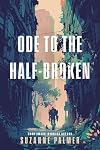
4.5 Stars
One of the better existential ponderings on the meaning of life, this surprised me with its balance of plot propulsion, speculative science fiction immersion, all countered effectively with thoughtful contemplation.
The blurb really does tell you everything you need to know. Earth is struggling to rebuild after a devastating war against artificial intelligence that resulted in years of infighting, pandemics, and famine. Those who have survived - both humans and sentient machines - show more are trying to build upon a fragile coexistence, and for the most part it’s working.
Stuck in the middle is Be, a product of a renowned genius who took his anger and frustration out on the world, creating the most evolved/advanced robots for the sole purpose of assisting humanity in its self destruction. Be is sorta kinda hiding from their past but finds they have no choice but to reintegrate when their leg is stolen by seemingly rogue robots. What starts out as perhaps a bit of mischief quickly turns into something way more sinister that threatens the progress of peace, as it’s quickly realized that Be is being manipulated to reconsider their initial programming.
I obviously enjoyed this piece of post-apocalyptic dystopic fiction as it’s part commentary on various topics such as the complexity of human nature, the futility of war, life’s purpose and drive, the pitfalls of apathy, and the weight of responsibility - but it’s also a propulsive mystery as Be and their traveling companions try to figure out who’s behind the various events trying to stop growth and progress.
Palmer does a great job of depicting this plausible future full of failures and promise and of amazing technology and all its possibilities. At times this was funny, snarky, sad, tense and intense. It was about greed, revenge, hatred, as well as friendship, found family, kindness, and forgiveness. If you liked the general gestalt of Monk and Robot, then this will surely deliver, as I fancied this heaps more. Buoyed by a delightful cast of characters, distinct in their personalities and being all around good folk that contrasted with the antagonists who have their own trauma and faults.
Overall, this is a story about that wonderful thing called hope - that despite all the events and people who have suffered and done terrible things, that everyone can evolve into something better and worthy no matter their original biological or mechanical natures. That gives weight to the ideal meaning behind existence and agency, and this wholly delivered on such a wonderful message.
Thank you to the author and DAW via NetGalley for a copy to review honestly show less
One of the better existential ponderings on the meaning of life, this surprised me with its balance of plot propulsion, speculative science fiction immersion, all countered effectively with thoughtful contemplation.
The blurb really does tell you everything you need to know. Earth is struggling to rebuild after a devastating war against artificial intelligence that resulted in years of infighting, pandemics, and famine. Those who have survived - both humans and sentient machines - show more are trying to build upon a fragile coexistence, and for the most part it’s working.
Stuck in the middle is Be, a product of a renowned genius who took his anger and frustration out on the world, creating the most evolved/advanced robots for the sole purpose of assisting humanity in its self destruction. Be is sorta kinda hiding from their past but finds they have no choice but to reintegrate when their leg is stolen by seemingly rogue robots. What starts out as perhaps a bit of mischief quickly turns into something way more sinister that threatens the progress of peace, as it’s quickly realized that Be is being manipulated to reconsider their initial programming.
I obviously enjoyed this piece of post-apocalyptic dystopic fiction as it’s part commentary on various topics such as the complexity of human nature, the futility of war, life’s purpose and drive, the pitfalls of apathy, and the weight of responsibility - but it’s also a propulsive mystery as Be and their traveling companions try to figure out who’s behind the various events trying to stop growth and progress.
Palmer does a great job of depicting this plausible future full of failures and promise and of amazing technology and all its possibilities. At times this was funny, snarky, sad, tense and intense. It was about greed, revenge, hatred, as well as friendship, found family, kindness, and forgiveness. If you liked the general gestalt of Monk and Robot, then this will surely deliver, as I fancied this heaps more. Buoyed by a delightful cast of characters, distinct in their personalities and being all around good folk that contrasted with the antagonists who have their own trauma and faults.
Overall, this is a story about that wonderful thing called hope - that despite all the events and people who have suffered and done terrible things, that everyone can evolve into something better and worthy no matter their original biological or mechanical natures. That gives weight to the ideal meaning behind existence and agency, and this wholly delivered on such a wonderful message.
Thank you to the author and DAW via NetGalley for a copy to review honestly show less
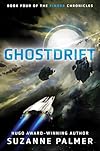
The fourth installment in Palmer's Finder series is a lot of fun. After the wild events of book three, Fergus is doing what he'd always claimed he wanted: making tea and gazing at the ocean. He's become almost Zen-like in his calmness. Unfortunately, an old acquaintance locates him and before long, he's involved with space pirates, deep-space waystations, the Alliance, traveling uncharted wormholes, and having even more alien encounters.
The Finder series is an interesting one. Palmer is not show more a prolific author, with a year between each of the first three books, and a wait of three years before this one. Perhaps because of the evolution of Fergus as a character, changes in the publishing industry and, well, life, each book has a different feel. Book one was the Price of Altruism, book two a Lone-hero Adventure, book three Heists and McGuffins, and this one, well, this one is all-out Space Adventure. I think the reluctant hero is a tricky one, and each book had Fergus feeling more and more boxed in. This one frees him, and his mild altruism opens it up for more fun, less obligation, and less fear. I hate to say too much for the risk of spoilers, so I'll just note that I felt like Palmer did a good job walking the line of keeping the story unpredictable, yet congruent.
"'Exactly,' Belows said. 'You would have made an excellent real pirate, you know, if only you were a little more inclined toward violence.'"
The tone matches the plotting. I like that Palmer neatly avoids all the romantic stuff; there's a line in this one that made me realize the lack of entanglement might have been deliberate:
"Marche glared at Fergus, as if this was all somehow his fault.
“Don’t look at me,” Fergus said. “I’m not much of a smoocher.”
I'll acknowledge to quibbles, two of my own and one others'. For myself, I felt that while Palmer talked a lot about the horrible and evilness of the Belos' space pirates, they really weren't. I was great with the positive feel, but I don't know that she achieved that dichotomy--were they really that evil, or was it their own marketing ploy? I lean towards the latter, personally. "It's quite the tale, though I don't know how much of it is real.' 'Some, but not all, of course.' Belos said. 'Go on.'" I'll also note that the writing felt a little less polished in places than Bot 9 stories. A few fragments, a little less atmosphere, a few cultural references ('spaceship turducken'? Really?) that seemed odd. But that's more a product of very high expectations over poor quality.
Regarding the general complaint of the omnipotent plot device: yes, the Asiig make an appearance (as they do), and though they are accused of being the ultimate deux et machina (much like Q in Next Generation), more of their intentions become apparent.
Really, any complaints from me are slight. This was an engaging adventure, start to finish. I sucked it up in a day. Alas; all things come to an end. Perhaps, as Palmer hints, even the Finder series, though I sincerely I hope not (I'd also love a spin-off with either/both Belos). I'll be looking for whatever Palmer chooses to write next (insert plea for more Bot 9 here!).
~Much appreciation to Neil~ show less
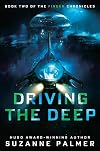
Driving the Deep was a fabulous follow-up to the first book about repo-man Fergus' adventures in Finder. No, you don't need to read it first. Yes, you should, because Fergus will undergo a very profound change in that book that will continue to impact his emotional and physical being.
So after the dramatic events at the spacestation Cernee, Fergus is chilling post-last-book with his shipmaker friends, when they convince him it is time to take care of some old emotional business on show more Earth--returning the motorcycle he stole from his cousin when he escaped his very unfortunate home life. Unbeknownst to him, a police detective has been watching that storage locker for two years for completely different reasons. When Fergus breaks in to liberate his cousin's motorcycle, there's a bit of a mix-up, but any thoughts of dealing with old family issues are wiped away when he receives a distress call from his friends. I'm really not giving any spoilers--this is pretty much where the story takes off.
You know what I think about this book? This is what A Long Way to An Angry Planet could have been if Chambers had a little bit better grasp of plotting. This is Leviathan Wakes with less mystery, more rescue.
I love the characterization, and that Fergus is mostly ethical. I like the range of people he runs into, and I felt a number of them came alive, although I'd have to say that some were a bit odd just for the sake of being odd, it seemed (much like Angry). There's a cat, as there should be on a ship, and the cat's mostly just a cat, which I actually appreciated.
“The farther you get from Earth, the more you’ll encounter people hacking the phenotype, either for aesthetics or survival. Often both. Try not to act like an originalist if you encounter any."
The plotting was tight, and if there was one angle that I solved before Fergus (or along with?), it really didn't spoil anything, because it was the last part of the book anyway. Action was fast-paced, veering from Fergus' internal struggle, to interpersonal tension, to large-scale environmental stresses. I appreciated the variety, and the fact that Palmer didn't allow Fergus to wallow. Ultimately, he's a Han.
"Here, the only thing they have to defend against is one rogue hauler pilot with a stray cat and, I suppose, possible discovery by a lackadaisical Alliance."
Atmosphere was decent. Most of it came alive for me, although a couple of times, I'm not entirely sure I felt the weight of the moon above as much as in other books (thinking of you, Starfish.). I mean, perhaps it's hard to find words above it because it is all darkness that deep, but that's why the weight of the ocean and the claustrophobia become so important.
It isn't an outright funny book, but it has it's moments. The almost-A.I.s in particular do a nice job of verbal fencing. And I'm almost positive I caught a couple of nerd-references to the first Star Wars (who shot first??). Zucker, the detective who reluctantly signs on for the ride, is also very good at being a foil, both literally and verbally.
"There were clearly significant advantages, in terms of avoiding law enforcement, of having spent a career inside of it."
While this plot wrapped up very satisfactorily, it was a very quick ending, post climactic scenes. There was an epilogue to the scene that brought Fergus and Zucker together in the first place that I found rather unsatisfactory, but perhaps that was the strain of reading all day. I'll have to give it another shot and see if it feels more comprehensive.
I really enjoyed Palmer's tone, which was occasionally irreverent, but always managed to be appropriately serious at the right times. Every now and then, she'd pull out the stops for some beautiful writing:
The planet—hundreds of years later, there was still active resistance to its demotion to microplanet—was a beautiful tapestry of browns and blacks and tans spun together like a rich, poorly stirred hot chocolate, even down to the tiny hint of foam at its polar cap.
Altogether, one of the few books that have held my attention (as in sit-down-and-read-all-day kind of attention) since recovering--we hope--from Quarantine Brain. Definitely a fan.
Re-read April 2021. It definitely holds up. What was especially interesting to me this time around is that I hadn't remembered how action-focused the story is. However, Palmer really varies the kinds of action happening, it crept up on me. But there's a lot of tension here that I didn't remember from the first time around. And just perhaps, she did better with the oppressive weight of the ocean than I remembered.
Re-read May 2023, getting ready for the newest release. Even though I knew the ending, events flow so well from one to the next, it is hard to stop. show less
So after the dramatic events at the spacestation Cernee, Fergus is chilling post-last-book with his shipmaker friends, when they convince him it is time to take care of some old emotional business on show more Earth--returning the motorcycle he stole from his cousin when he escaped his very unfortunate home life. Unbeknownst to him, a police detective has been watching that storage locker for two years for completely different reasons. When Fergus breaks in to liberate his cousin's motorcycle, there's a bit of a mix-up, but any thoughts of dealing with old family issues are wiped away when he receives a distress call from his friends. I'm really not giving any spoilers--this is pretty much where the story takes off.
You know what I think about this book? This is what A Long Way to An Angry Planet could have been if Chambers had a little bit better grasp of plotting. This is Leviathan Wakes with less mystery, more rescue.
I love the characterization, and that Fergus is mostly ethical. I like the range of people he runs into, and I felt a number of them came alive, although I'd have to say that some were a bit odd just for the sake of being odd, it seemed (much like Angry). There's a cat, as there should be on a ship, and the cat's mostly just a cat, which I actually appreciated.
“The farther you get from Earth, the more you’ll encounter people hacking the phenotype, either for aesthetics or survival. Often both. Try not to act like an originalist if you encounter any."
The plotting was tight, and if there was one angle that I solved before Fergus (or along with?), it really didn't spoil anything, because it was the last part of the book anyway. Action was fast-paced, veering from Fergus' internal struggle, to interpersonal tension, to large-scale environmental stresses. I appreciated the variety, and the fact that Palmer didn't allow Fergus to wallow. Ultimately, he's a Han.
"Here, the only thing they have to defend against is one rogue hauler pilot with a stray cat and, I suppose, possible discovery by a lackadaisical Alliance."
Atmosphere was decent. Most of it came alive for me, although a couple of times, I'm not entirely sure I felt the weight of the moon above as much as in other books (thinking of you, Starfish.). I mean, perhaps it's hard to find words above it because it is all darkness that deep, but that's why the weight of the ocean and the claustrophobia become so important.
It isn't an outright funny book, but it has it's moments. The almost-A.I.s in particular do a nice job of verbal fencing. And I'm almost positive I caught a couple of nerd-references to the first Star Wars (who shot first??). Zucker, the detective who reluctantly signs on for the ride, is also very good at being a foil, both literally and verbally.
"There were clearly significant advantages, in terms of avoiding law enforcement, of having spent a career inside of it."
While this plot wrapped up very satisfactorily, it was a very quick ending, post climactic scenes. There was an epilogue to the scene that brought Fergus and Zucker together in the first place that I found rather unsatisfactory, but perhaps that was the strain of reading all day. I'll have to give it another shot and see if it feels more comprehensive.
I really enjoyed Palmer's tone, which was occasionally irreverent, but always managed to be appropriately serious at the right times. Every now and then, she'd pull out the stops for some beautiful writing:
The planet—hundreds of years later, there was still active resistance to its demotion to microplanet—was a beautiful tapestry of browns and blacks and tans spun together like a rich, poorly stirred hot chocolate, even down to the tiny hint of foam at its polar cap.
Altogether, one of the few books that have held my attention (as in sit-down-and-read-all-day kind of attention) since recovering--we hope--from Quarantine Brain. Definitely a fan.
Re-read April 2021. It definitely holds up. What was especially interesting to me this time around is that I hadn't remembered how action-focused the story is. However, Palmer really varies the kinds of action happening, it crept up on me. But there's a lot of tension here that I didn't remember from the first time around. And just perhaps, she did better with the oppressive weight of the ocean than I remembered.
Re-read May 2023, getting ready for the newest release. Even though I knew the ending, events flow so well from one to the next, it is hard to stop. show less
Lists
Awards


You May Also Like


Associated Authors
Statistics
- Works
- 35
- Also by
- 45
- Members
- 894
- Popularity
- #28,652
- Rating
- 3.8
- Reviews
- 56
- ISBNs
- 38
- Languages
- 2
- Favorited
- 1