
J. S. Dewes
Author of The Last Watch
About the Author
Series
Works by J. S. Dewes
The Last Watch Sneak Peek 1 copy
Tagged
Common Knowledge
- Birthdate
- 20th Century
- Gender
- female
- Education
- Columbia College Chicago
- Nationality
- USA
- Associated Place (for map)
- USA
Members
Reviews
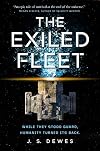
In the first book of the trilogy, Dewes won me over with her perfect balance of attention to compelling character and fantastically crafted story. If anything, Dewes only elevated that balance here, with intricacies of character making the story all the more powerful with each twist, turn, and development piling on ever more pressure. I'm picky about space operas, but I adore what Dewes is doing here and can't wait to read the next book in the series.
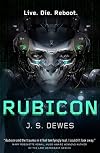
Rubicon is the latest novel by J. S. Dewes, and I loved it. Yes, I am a huge nerd and love all the science that comes with novels set in space. I adore the potential for alien interactions, and a good action story will win out over a good romance any day of the week. Thankfully, Rubicon has all that and more.
I don’t think I took a single breath once I hit the 75% mark in the novel. Up until that point, there are brief moments of respite in which you can catch your breath and reflect on the show more huge amount of information you have learned so far. At that mark, though, Ms. Dewes ratchets up the action to the point where you honestly don’t know what the outcome of all of it will be. You are helpless as you watch Valero struggle through twist after twist, each more shocking than the last. Even the very last scene will leave you gasping in shock.
Rubicon is not all action, however. Ms. Dewes includes a lot of ideas that challenge our understanding of free will, artificial intelligence, and life itself. For example, we meet Valero right before she dies for the ninety-sixth time. Except she doesn’t die. Scientists found a way to download and upload everything that makes you a person into a new body, meaning that every time your body dies, your memories/ethics/experiences all jump into a new body set in one of many storage tanks set around the universe. You even remember your death. How is that for trauma?
As we watch Valero struggle to find meaning in her life after dying NINETY-SIX times, Ms. Dewes forces you to think about what it means to be alive. At the same time, the enemy Valero and her fellow soldiers are fighting are sentient artificial intelligent robots who want nothing more than to eradicate the human race. This brings to mind the age-old fear explored hundreds of times in other science fiction novels and movies regarding the dangers of A.I. and humankind’s ability to wage war against beings that are more intelligent and less fleshy than humans. How do you continue when there appears to be no hope, especially in light of the fact all you can look forward to is dying over and over again to fight this seemingly unwinnable war?
Crossing the Rubicon is a metaphor for reaching a decision and undertaking an action from which there is no return. There are several Rubicons in Rubicon, all of which are moments when humans think they are taking the next natural step in advancement or a necessary step to help them win the war. As with so many things in life, those Rubicon moments have much more far-reaching ramifications and serve as reminders that scientific advancement for the sake of itself does not mean that it is a good thing for humankind or necessary. If anything, Rubicon is a strong warning to think before taking the next great leap.
With its almost non-stop action and the many thought-provoking ethical quandaries, there is no way I would not adore J. S. Dewes’ Rubicon. For me, it hit all the right notes. It has the perfect blend of action, science, and ethics, with a little romance to provide hope in a hopeless situation. Valero is the perfect science fiction hero – experienced and wise, careworn, fiercely loyal, and asking all the right questions. I do not doubt that other science fiction fans will love Rubicon as much as I did. show less
I don’t think I took a single breath once I hit the 75% mark in the novel. Up until that point, there are brief moments of respite in which you can catch your breath and reflect on the show more huge amount of information you have learned so far. At that mark, though, Ms. Dewes ratchets up the action to the point where you honestly don’t know what the outcome of all of it will be. You are helpless as you watch Valero struggle through twist after twist, each more shocking than the last. Even the very last scene will leave you gasping in shock.
Rubicon is not all action, however. Ms. Dewes includes a lot of ideas that challenge our understanding of free will, artificial intelligence, and life itself. For example, we meet Valero right before she dies for the ninety-sixth time. Except she doesn’t die. Scientists found a way to download and upload everything that makes you a person into a new body, meaning that every time your body dies, your memories/ethics/experiences all jump into a new body set in one of many storage tanks set around the universe. You even remember your death. How is that for trauma?
As we watch Valero struggle to find meaning in her life after dying NINETY-SIX times, Ms. Dewes forces you to think about what it means to be alive. At the same time, the enemy Valero and her fellow soldiers are fighting are sentient artificial intelligent robots who want nothing more than to eradicate the human race. This brings to mind the age-old fear explored hundreds of times in other science fiction novels and movies regarding the dangers of A.I. and humankind’s ability to wage war against beings that are more intelligent and less fleshy than humans. How do you continue when there appears to be no hope, especially in light of the fact all you can look forward to is dying over and over again to fight this seemingly unwinnable war?
Crossing the Rubicon is a metaphor for reaching a decision and undertaking an action from which there is no return. There are several Rubicons in Rubicon, all of which are moments when humans think they are taking the next natural step in advancement or a necessary step to help them win the war. As with so many things in life, those Rubicon moments have much more far-reaching ramifications and serve as reminders that scientific advancement for the sake of itself does not mean that it is a good thing for humankind or necessary. If anything, Rubicon is a strong warning to think before taking the next great leap.
With its almost non-stop action and the many thought-provoking ethical quandaries, there is no way I would not adore J. S. Dewes’ Rubicon. For me, it hit all the right notes. It has the perfect blend of action, science, and ethics, with a little romance to provide hope in a hopeless situation. Valero is the perfect science fiction hero – experienced and wise, careworn, fiercely loyal, and asking all the right questions. I do not doubt that other science fiction fans will love Rubicon as much as I did. show less
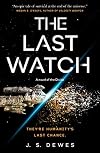
The Last Watch, by J. S. Dewes, has a Battlestar Galactic vibe. If you crossed that, with something like, The Expanse it would make a fairly accurate description of this epic space adventure. It is an excellent blend of characters and action that makes it a thrilling read.
Told from two POVs, Cavalon Mercer the disowned royal heir and Adequin Rake the commanding officer of the decommissioned battlecruiser, now jail of sorts, Argus. The ship sits on the edge of the universal, literally. The show more edge, called the Divide, is the point where the universal has quit expanding. The job of the Argus and her crew, along with similar other vessels, is to guard the Divide against their enemy the Viator.
There is just one problem, the universe has started to collapse and it will swallow everything in its path. There is no one else at the Divide and no way to reach the Core to get help. Therefore, this ragtag bunch of criminals and misfits maybe the only way to stop disaster.
Though this is a debut novel, it reads with much more sophistication than I expected. The characters are well rounded and the author gets you inside their heads so that you not only understand them, but you have empathy for them. Even the minor characters you understand their motives and actions. For example, you know why Griffith is serving aboard the Argus. It was no surprise to me what he revealed to Rake at the end, though she refused to see it. However, I think deep down she knew and was just afraid to admit it to herself.
The plot was fast paced and I found myself caught up in the action. In a couple of places I was biting my nails over the suspense. I also liked the twists and most were unexpected. However, one negative thing, though minor, I suspected some of the things that happened in the end. I felt this did not detract from the story in the slightest.
I am so looking forward to book two. Not looking forward to the wait! I want the second book NOW! There are so many directions the next book could go in. I really want to find out more about the other characters, like Puck. I want to understand the underlying politics better and lastly I want to know more about the Viator.
This is an all-around great opening to a series and I highly recommend this book for all loves of Sci-Fi. It will especially appeal to those that like Space Opera.
I received an advanced copy from the publisher in exchange for my honest opinion. For more of my reviews, and author interviews, please see my book blog at www.thespineview.com. show less
Told from two POVs, Cavalon Mercer the disowned royal heir and Adequin Rake the commanding officer of the decommissioned battlecruiser, now jail of sorts, Argus. The ship sits on the edge of the universal, literally. The show more edge, called the Divide, is the point where the universal has quit expanding. The job of the Argus and her crew, along with similar other vessels, is to guard the Divide against their enemy the Viator.
There is just one problem, the universe has started to collapse and it will swallow everything in its path. There is no one else at the Divide and no way to reach the Core to get help. Therefore, this ragtag bunch of criminals and misfits maybe the only way to stop disaster.
Though this is a debut novel, it reads with much more sophistication than I expected. The characters are well rounded and the author gets you inside their heads so that you not only understand them, but you have empathy for them. Even the minor characters you understand their motives and actions. For example, you know why Griffith is serving aboard the Argus. It was no surprise to me what he revealed to Rake at the end, though she refused to see it. However, I think deep down she knew and was just afraid to admit it to herself.
The plot was fast paced and I found myself caught up in the action. In a couple of places I was biting my nails over the suspense. I also liked the twists and most were unexpected. However, one negative thing, though minor, I suspected some of the things that happened in the end. I felt this did not detract from the story in the slightest.
I am so looking forward to book two. Not looking forward to the wait! I want the second book NOW! There are so many directions the next book could go in. I really want to find out more about the other characters, like Puck. I want to understand the underlying politics better and lastly I want to know more about the Viator.
This is an all-around great opening to a series and I highly recommend this book for all loves of Sci-Fi. It will especially appeal to those that like Space Opera.
I received an advanced copy from the publisher in exchange for my honest opinion. For more of my reviews, and author interviews, please see my book blog at www.thespineview.com. show less
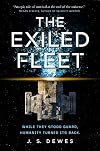
The Exiled Fleet is the second book in J. S. Dewes' Divide series, and it is a continuation of everything you want from a space opera. With believable science, the dangers of deep space, fantastic characters with the best chemistry, and an outstanding story, it is a story that you cannot stop reading.
This is my third Dewes novel, and I must say that she is quickly becoming one of my favorite science fiction authors. Her stories are so well-built. She develops her worlds carefully without show more sacrificing any action. The same holds true for her characters. You know all their backstories, but she develops her characters so organically that you don't realize just how much information she gives you. It's an impressive feat.
Not only are her stories high energy and high action, but her character dynamics are outstanding. She builds new relationships naturally and establishes existing relationships using the type of back-and-forth conversations that only come when you know someone inside and out. The banter is pitch-perfect.
I listened to the audiobook version of The Exiled Fleet. While I loved it, I had one minor issue with the narration. Of the two, I find Nicol Zanzarella the weaker of the two narrators. She struggles to perform the various accents used to individualize the characters. Her male voices are also a little rough. While both concerns are distracting at times, they were not enough to have prevented me from enjoying the audiobook.
The Exiled Fleet is such a great story. The high stakes of needing more fuel in deep space would be enough for some authors. But Ms. Dewes adds the additional peril of a potential mutiny. And if that wasn't enough, the Sentinals need to evade two different enemies. It's a story that keeps you on the edge of your seat.
I don't know if Ms. Dewes has any more installments of the Divide series planned, but I know I will gladly read anything Ms. Dewes publishes. Her stories are some of the best sci-fi I've read, which is saying something because I read a lot of science fiction. show less
This is my third Dewes novel, and I must say that she is quickly becoming one of my favorite science fiction authors. Her stories are so well-built. She develops her worlds carefully without show more sacrificing any action. The same holds true for her characters. You know all their backstories, but she develops her characters so organically that you don't realize just how much information she gives you. It's an impressive feat.
Not only are her stories high energy and high action, but her character dynamics are outstanding. She builds new relationships naturally and establishes existing relationships using the type of back-and-forth conversations that only come when you know someone inside and out. The banter is pitch-perfect.
I listened to the audiobook version of The Exiled Fleet. While I loved it, I had one minor issue with the narration. Of the two, I find Nicol Zanzarella the weaker of the two narrators. She struggles to perform the various accents used to individualize the characters. Her male voices are also a little rough. While both concerns are distracting at times, they were not enough to have prevented me from enjoying the audiobook.
The Exiled Fleet is such a great story. The high stakes of needing more fuel in deep space would be enough for some authors. But Ms. Dewes adds the additional peril of a potential mutiny. And if that wasn't enough, the Sentinals need to evade two different enemies. It's a story that keeps you on the edge of your seat.
I don't know if Ms. Dewes has any more installments of the Divide series planned, but I know I will gladly read anything Ms. Dewes publishes. Her stories are some of the best sci-fi I've read, which is saying something because I read a lot of science fiction. show less
Lists
Awards

You May Also Like


Statistics
- Works
- 5
- Members
- 1,066
- Popularity
- #24,147
- Rating
- 3.7
- Reviews
- 37
- ISBNs
- 13
- Languages
- 1