
Megan E. O'Keefe
Author of Velocity Weapon
About the Author
Series
Works by Megan E. O'Keefe
Of Blood and Brine 2 copies
Associated Works
L. Ron Hubbard Presents Writers of the Future, Volume 30 (2014) — Contributor — 115 copies, 37 reviews
Up and Coming: Stories by the 2016 Campbell-Eligible Authors (2016) — Contributor, some editions — 24 copies, 1 review
Tagged
Common Knowledge
- Birthdate
- 1985
- Gender
- female
- Occupations
- journalist
- Agent
- Lotts Agency, The
- Short biography
- Megan E. O'Keefe was raised amongst journalists, and as soon as she was able joined them by crafting a newsletter which chronicled the daily adventures of the local cat population. She has worked in both arts management and graphic design, and spends her free time tinkering with anything she can get her hands on.
Megan lives in the Bay Area of California. She's won the Gemmell Morningstar Award for her fantasy debut, Steal the Sky, and is represented by Sam Morgan. - Places of residence
- Bay Area, California, USA
Puget Sound, Washington, USA - Map Location
- USA
Members
Reviews
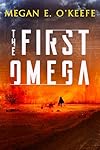
I received this novella from Orbit Books, through NetGalley, in exchange for an honest review: my thanks to both of them for this opportunity.
I discovered Megan O’Keefe through the first two novels in her Protectorate space opera series, so once I saw the notice for this post-apocalyptic novella that promised a Mad Max-like setting, I had no doubt that I would sample the author’s change of narrative tone: brief as it was, it turned out to be a very intriguing read, and my hope is that show more Ms. O’Keefe might decide to expand this small seed into a full-length novel, one of these days.
Climate change, or some other upheaval, transformed the face of the Earth, and what once was habitable land has turned into a deserted waste, crossed only by the automatic trucks that carry goods and supplies over the old Route 66, that still connects the East and West coast of the United States. Pirates, or desperate people (it would be hard to set the difference in this time and place) constantly try to steal from these trucks, so the corporation running them, Pac At, set up a sort of policing system through bounty hunters: Riley is one of them, her territory in the arid west, toward the end of the line.
Riley is not her name, she has forgotten it and uses it only because the cranky Ma Rickets calls her thus, for no reason she can understand. To everyone else, especially the desperate people trying to eke out a meagre living in the desert, she is Burner, because that’s what her touch does to you if - or rather when - she catches you. On her latest assignment, however, Riley is surprised to find the attackers already dead, their bodies decomposing although a very short time elapsed since the assault, and in the truck only one living person: a young girl with too-bright eyes that look uncannily like Riley’s own eyes. Her name is Omega…
Given the shortness of this novella I would not feel comfortable sharing any more details, for fear of revealing too much. What I can offer is that this is a story focused on identity and growth, of conditioning that goes beyond its intended programming and the meaning of justice when lawlessness is the only rule in no-man’s land. The few (too few…) pages of this story manage to flesh out Riley’s character in a very interesting way, and to reach moments of poignancy I would not have expected from such a harsh, unforgiving setting and merciless environment.
The narrative style is quite different from what I was used to in O’Keefe’s Protectorate series: like the desert where it’s set, it’s a bleak, stark prose that paints Riley with a sharp and cutting economy of words that leave no room for kindness and yet highlight a character of surprising depth and humanity, one that simply begs to be explored with more detail and more backstory. Hopefully one of these days the author will come back to this world and give us more… show less
I discovered Megan O’Keefe through the first two novels in her Protectorate space opera series, so once I saw the notice for this post-apocalyptic novella that promised a Mad Max-like setting, I had no doubt that I would sample the author’s change of narrative tone: brief as it was, it turned out to be a very intriguing read, and my hope is that show more Ms. O’Keefe might decide to expand this small seed into a full-length novel, one of these days.
Climate change, or some other upheaval, transformed the face of the Earth, and what once was habitable land has turned into a deserted waste, crossed only by the automatic trucks that carry goods and supplies over the old Route 66, that still connects the East and West coast of the United States. Pirates, or desperate people (it would be hard to set the difference in this time and place) constantly try to steal from these trucks, so the corporation running them, Pac At, set up a sort of policing system through bounty hunters: Riley is one of them, her territory in the arid west, toward the end of the line.
Riley is not her name, she has forgotten it and uses it only because the cranky Ma Rickets calls her thus, for no reason she can understand. To everyone else, especially the desperate people trying to eke out a meagre living in the desert, she is Burner, because that’s what her touch does to you if - or rather when - she catches you. On her latest assignment, however, Riley is surprised to find the attackers already dead, their bodies decomposing although a very short time elapsed since the assault, and in the truck only one living person: a young girl with too-bright eyes that look uncannily like Riley’s own eyes. Her name is Omega…
Given the shortness of this novella I would not feel comfortable sharing any more details, for fear of revealing too much. What I can offer is that this is a story focused on identity and growth, of conditioning that goes beyond its intended programming and the meaning of justice when lawlessness is the only rule in no-man’s land. The few (too few…) pages of this story manage to flesh out Riley’s character in a very interesting way, and to reach moments of poignancy I would not have expected from such a harsh, unforgiving setting and merciless environment.
The narrative style is quite different from what I was used to in O’Keefe’s Protectorate series: like the desert where it’s set, it’s a bleak, stark prose that paints Riley with a sharp and cutting economy of words that leave no room for kindness and yet highlight a character of surprising depth and humanity, one that simply begs to be explored with more detail and more backstory. Hopefully one of these days the author will come back to this world and give us more… show less
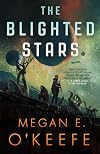
When a spy is stranded on a dead planet with her mortal enemy, she must figure out how to survive before she can uncover the conspiracy that landed them both there in the first place.
When I saw this book called a "space opera", I must say I was doubtful that I would enjoy it. I imagined a huge book that overwhelmed me with the large number of characters and several competing plot lines. I am so happy that I took the chance on this book, because I was so wrong.
This book has a focused plot, show more smooth pacing, and great character development. I enjoyed that, although there was a slight romance between the two main characters, the romance did not change the essence of their characters. The plot touches on the unintended consequences of technological advancements, consequences that impact not only the environment, but humanity itself. I did not see the plot twists coming and the ending was satisfying, but left the door open for a second book.
This book is the first in an expected duet. I highly recommend this book to anyone willing to try out a sci fi book. Thanks to Net Galley and Orbit Books for providing a review copy to me in exchange for my honest review. show less
When I saw this book called a "space opera", I must say I was doubtful that I would enjoy it. I imagined a huge book that overwhelmed me with the large number of characters and several competing plot lines. I am so happy that I took the chance on this book, because I was so wrong.
This book has a focused plot, show more smooth pacing, and great character development. I enjoyed that, although there was a slight romance between the two main characters, the romance did not change the essence of their characters. The plot touches on the unintended consequences of technological advancements, consequences that impact not only the environment, but humanity itself. I did not see the plot twists coming and the ending was satisfying, but left the door open for a second book.
This book is the first in an expected duet. I highly recommend this book to anyone willing to try out a sci fi book. Thanks to Net Galley and Orbit Books for providing a review copy to me in exchange for my honest review. show less
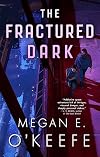
It was just a handful of months ago that I had the opportunity to read and review the first book in this new, amazing series by Megan O’Keefe, The Blighted Stars, so I was beyond excited in discovering that Book 2, The Fractured Dark, was going to follow closely on the heels of its predecessor.
A brief recap of the first book: humanity has reached toward the stars and spread on colony worlds and space stations, ruled by a conglomerate of five families, Mercator being the most powerful show more thanks to the mining of relkatite, a substance used both in power sources and in the physical enhancement pathways humans have become dependent on. The intensive mining, however, seems to directly connect to the expansion of the shroud, a fungal infestation that kills all life on those planets and the Conservationist movement is attempting to put a stop to such intensive mining, but with little success. Naira Sharp, formerly the bodyguard of family ruler Aecelus Mercator, and now a fervent Conservationist, finds herself on one such blighted world together with Tarquin, Aecelus’ son, and the two of them discover that a far worse danger looms over humanity and forge an alliance to face the threat.
As The Fractured Dark opens, Naira, Tarquin and their allies have been living on Earth (the first world to fall victim to the shroud) planning their next moves against the encroaching danger represented by canus, the agent employed in relkatite mining whose spread seems to continue unopposed. The relationship between them is somewhat strained, since Naira’s last reprinting (the transfer of consciousness into a new body) erased the last few weeks of her memories and she does not remember their budding romance, although she has constant flashes of… something she cannot put her finger on. But more pressing matters require the group’s attention and they embark on dangerous missions that will test their mettle and their determination to put a stop to canus’ encroaching advance - no matter the cost.
This second book in the series raises the already high stakes inherited from book 1, while expanding our knowledge of this universe and building on the characterization: where the first installment mostly kept the readers on the newly discovered world named Cradle Six, here we move from planetary settings to space stations to ships, following the different narrative threads at the core of this story and adding a few strokes of political intrigue to the mix. Where this varying focus helps readers to better understand the background in which the series is set, it also affects the pacing that here feels less smooth than the tightly managed sequences in The Blighted Stars. Still, the looming danger represented by the canus infection, and its repercussions on the future of humanity, acted as the foundation for this segment of the story just as the mystery at its root was for the first installment, so that the keen sense of impending doom that colors the characters’ actions serves the story well in keeping the narrative flow moving forward, though at a somewhat less hair-raising pace than before.
As far as characters are concerned, we learn more about Naira’s past and the events that shaped her into the person she presently is, and here we indeed see her as that person: where before her consciousness was inhabiting someone else’s “print”, therefore forcing her to adapt her interactions with other people to the individual she pretended to be, here she is herself - body and mind - and while some of her vulnerabilities are still present, she is totally free to fully show her true nature, that of a strong woman gifted with a steely determination tempered by a deep capacity for affection. And of course that means Tarquin - whose journey from a sheltered, bookish scion of the universe’s most powerful family to a warrior ready to do whatever is necessary to safeguard humanity’s future is not an easy one: he might not be as callous as the rest of his family, but he still needs to question many of the privileges he unthinkingly enjoyed until now, and this road is littered with pitfalls and false steps.
I appreciated the slow-burn romance between Naira and Tarquin in The Blighted Stars and I was curious to se how the setback from Naira’s loss of the memories from the events on Cradle Six would affect the relationship: it was fascinating to see, here, how they managed to connect again and re-build what they had lost, overcoming the obstacles that the events set on their path, but at some point it seemed as if every potential problem in their pairing (he a high-ranking member of the establishment, she a wanted terrorist, not to mention their different social extractions) was swept under the rug, with little of no raising of eyebrows once their attachment was made public. It might be just me, but it rang contrived to my ears, and those sections of the story slightly spoiled my enjoyment of it.
And since I just mentioned one of my main “troubles” with The Fractured Dark, I need to list the other one: Fletcher Demarco. This character was briefly introduced in the first book: he’s the Mercators’ finalizer, a sort of highly skilled torturer/assassin who in the past was Naira’s lover. Here he’s further fleshed out and turns out to be a prominent player in the chain of events, and as such he represents one of the forces of evil in the overall story, but unfortunately he’s depicted more like a ludicrously gloating, mustache-twirling villain rather than a nasty opponent to be reckoned with, which in my opinion defeats the purpose of his presence.
These are however minor annoyances in the course of a very enjoyable, compelling read that more than once kept me on the edge of the seat thanks to the high-stakes battle waged against the parasitic canus, to the personal and moral dilemmas facing the characters and the thrilling uncertainty offered by the many elements in motion in this story. At the end of The Fractured Dark one battle might be won, but the war is far from over, and my hope is that the final installment in this trilogy will arrive as swiftly as this one, because waiting for the resolution will not be so easy…. show less
A brief recap of the first book: humanity has reached toward the stars and spread on colony worlds and space stations, ruled by a conglomerate of five families, Mercator being the most powerful show more thanks to the mining of relkatite, a substance used both in power sources and in the physical enhancement pathways humans have become dependent on. The intensive mining, however, seems to directly connect to the expansion of the shroud, a fungal infestation that kills all life on those planets and the Conservationist movement is attempting to put a stop to such intensive mining, but with little success. Naira Sharp, formerly the bodyguard of family ruler Aecelus Mercator, and now a fervent Conservationist, finds herself on one such blighted world together with Tarquin, Aecelus’ son, and the two of them discover that a far worse danger looms over humanity and forge an alliance to face the threat.
As The Fractured Dark opens, Naira, Tarquin and their allies have been living on Earth (the first world to fall victim to the shroud) planning their next moves against the encroaching danger represented by canus, the agent employed in relkatite mining whose spread seems to continue unopposed. The relationship between them is somewhat strained, since Naira’s last reprinting (the transfer of consciousness into a new body) erased the last few weeks of her memories and she does not remember their budding romance, although she has constant flashes of… something she cannot put her finger on. But more pressing matters require the group’s attention and they embark on dangerous missions that will test their mettle and their determination to put a stop to canus’ encroaching advance - no matter the cost.
This second book in the series raises the already high stakes inherited from book 1, while expanding our knowledge of this universe and building on the characterization: where the first installment mostly kept the readers on the newly discovered world named Cradle Six, here we move from planetary settings to space stations to ships, following the different narrative threads at the core of this story and adding a few strokes of political intrigue to the mix. Where this varying focus helps readers to better understand the background in which the series is set, it also affects the pacing that here feels less smooth than the tightly managed sequences in The Blighted Stars. Still, the looming danger represented by the canus infection, and its repercussions on the future of humanity, acted as the foundation for this segment of the story just as the mystery at its root was for the first installment, so that the keen sense of impending doom that colors the characters’ actions serves the story well in keeping the narrative flow moving forward, though at a somewhat less hair-raising pace than before.
As far as characters are concerned, we learn more about Naira’s past and the events that shaped her into the person she presently is, and here we indeed see her as that person: where before her consciousness was inhabiting someone else’s “print”, therefore forcing her to adapt her interactions with other people to the individual she pretended to be, here she is herself - body and mind - and while some of her vulnerabilities are still present, she is totally free to fully show her true nature, that of a strong woman gifted with a steely determination tempered by a deep capacity for affection. And of course that means Tarquin - whose journey from a sheltered, bookish scion of the universe’s most powerful family to a warrior ready to do whatever is necessary to safeguard humanity’s future is not an easy one: he might not be as callous as the rest of his family, but he still needs to question many of the privileges he unthinkingly enjoyed until now, and this road is littered with pitfalls and false steps.
I appreciated the slow-burn romance between Naira and Tarquin in The Blighted Stars and I was curious to se how the setback from Naira’s loss of the memories from the events on Cradle Six would affect the relationship: it was fascinating to see, here, how they managed to connect again and re-build what they had lost, overcoming the obstacles that the events set on their path, but at some point it seemed as if every potential problem in their pairing (he a high-ranking member of the establishment, she a wanted terrorist, not to mention their different social extractions) was swept under the rug, with little of no raising of eyebrows once their attachment was made public. It might be just me, but it rang contrived to my ears, and those sections of the story slightly spoiled my enjoyment of it.
And since I just mentioned one of my main “troubles” with The Fractured Dark, I need to list the other one: Fletcher Demarco. This character was briefly introduced in the first book: he’s the Mercators’ finalizer, a sort of highly skilled torturer/assassin who in the past was Naira’s lover. Here he’s further fleshed out and turns out to be a prominent player in the chain of events, and as such he represents one of the forces of evil in the overall story, but unfortunately he’s depicted more like a ludicrously gloating, mustache-twirling villain rather than a nasty opponent to be reckoned with, which in my opinion defeats the purpose of his presence.
These are however minor annoyances in the course of a very enjoyable, compelling read that more than once kept me on the edge of the seat thanks to the high-stakes battle waged against the parasitic canus, to the personal and moral dilemmas facing the characters and the thrilling uncertainty offered by the many elements in motion in this story. At the end of The Fractured Dark one battle might be won, but the war is far from over, and my hope is that the final installment in this trilogy will arrive as swiftly as this one, because waiting for the resolution will not be so easy…. show less
I received this novel from Orbit Books, through NetGalley, in exchange for an honest review: my thanks to both of them for this opportunity.
After enjoying Megan O’Keefe’s The Protectorate trilogy, I was more than eager to see where she would take her readers next, and after reading this first volume in The Devoured Worlds series, all I can say is that this author managed to enormously improve from an already amazing starting point. The Blighted Stars is a complex novel based on many show more narrative threads that are handled with such skill that I never felt lost (something that happened at times with the equally complex The Protectorate) - such complexity, however, compels me to share more of the story than I’m used to in my reviews, but I will try to do so avoiding any spoilers.
In the future, humankind has made amazing breakthroughs but also lost a great deal: society is in the hands of five dominant families who control the economy and rule humanity through what looks like a feudal system. Mercator is the most powerful of these families: they hold the monopoly on the mining of relkatite, a material employed in the construction of space habitats and the cores of ships’ engines, among other things. Unfortunately it seems that wherever relkatite is mined extensively, the world falls prey to the shroud, a fungal growth that destroys all indigenous life: several worlds - also called cradles - have been lost to the shroud, including Earth, and a growing conservationist movement asking for a stop of relkatite mining is trying to oppose the Mercators’ expansion to other cradles.
Naira Sharp is the most vocal adversary of the Mercators: once the personal bodyguard - or exemplar - to Acaelus Mercator, the family’s head, she tried to stop the mining through a public hearing that she lost, thanks to the testimony of Tarquin Mercator, Acaelus’ son and a renowned geologist. Losing the battle also meant that Naira was put “on ice”: in this universe people’s minds can be transferred to a new body, which is printed by the evolutionary successors of our 3D printing machines. It’s a technique that insures virtual immortality, provided that you can pay the process of re-printing, and that the death of your previous print was not a violent one, because in that case the transferred consciousness “cracks” and becomes irretrievable. This also means that one’s mind - as is the case for Naira - can be stored indefinitely (“iced”) and never re-transferred into another body. Virtual death.
As the novel starts, Acaelus and Tarquin are orbiting Cradle Six, another promising world for the mining of relkatite, when something goes horribly wrong: Tarquin and a few survivors manage to shuttle down to the planet, and among them is also Naira Sharp, whose consciousness was transferred - thanks to the conservationist underground - into the body of Tarquin’s exemplar. The planet they find themselves on is already in an advanced stage of shroud predation, and it’s also infested by misprints, mindless creatures whose body printing went awry and whose instincts bring them to target the survivors. As the uneasy relationship between Tarquin and Naira grows into a tentative alliance, the two of them discover that many of their respective assumptions might be wrong and that humanity is facing a danger of frightening proportions.
As I said, I was completely engrossed in this story: there are so many narrative levels here, and I enjoyed them all. The whole concept of preserving human consciousness - or neural map - and transferring it to another body, is both fascinating and terrifying: if one can afford the expense, any time a body is damaged, or old, that individual can migrate to a brand-new one being so assured of near-immortality. But it’s not a perfect process, because multiple re-printings or a particularly gruesome death can affect the map and cause it to “crack” in the new body and bring the subject to madness - and even if the process is successful, where people are unable to upload their memories to the map, the new being might lose part of the experiences that occurred between the previous reprinting and the current one, and be a different person altogether. And all of the above does not even take into account the ramifications of suicide or euthanasia to preserve an individual’s map in the transition from a damaged print to a whole one - there is one sentence in the novel that to me summed up the various implications of the process:
People get to keep coming back, as long as they can afford to reprint. But I don’t believe the human heart has caught up with technology.
The society depicted here is equally fraught with contradictions: where on one side we see a star-faring humanity expanding through the universe, we have on the other a limited group of individuals ruling over their subjects with literal powers of life and death, asking for obedience and submission in exchange for the chance of a better life. Environmental, economical and political themes are also explored in a way that is never preaching but well-integrated into the story and the aspects of privilege and the relationship between ruler and subjects are woven into the narrative creating an intriguing whole that never suffers a moment of boredom.
The characters are equally well constructed and explored and I must applaud the way Megan O’Keefe treated the theme of enemies-to-lovers because I was not only captivated by the slow-burn development of the relationship between Tarquin and Naira, but I was actively rooting for it, something that does not usually happen to me, given my wariness toward any romantic entanglement in the stories I read. Tarquin is something of a naive individual, uncomfortable with the power his family exerts and more inclined toward academic studies rather than wielding that power and the privilege that come with it. Naira, on the other hand, had to fight for her survival all her life and she is a mixture of combat readiness and vulnerability that instantly endeared her to me. The way in which tentative banter and growing mutual respect turn the relationship between the two of them from bodyguard and charge to uneasy allies and to something more - united in a common front against the looming danger that might wipe out humanity as we conceive it - was a delight to behold and certainly one of the main strengths of the novel.
And of course there is the mystery at the core of the story, one that is slowly uncovered through a series of well-placed twists and turns that keep the pace going at a good speed and move the story from adventure to fight for survival to horror and to breakneck runs through a shroud-infested terrain that will keep you on the edge of your seat for most of the book. As the start of a new series, The Blighted Stars manages to both lay the groundwork and to create the stage for what promises to be a no-holds-barred battle for survival against a pervasive, insidious foe - and I can’t wait to learn how that battle will be fought. show less
After enjoying Megan O’Keefe’s The Protectorate trilogy, I was more than eager to see where she would take her readers next, and after reading this first volume in The Devoured Worlds series, all I can say is that this author managed to enormously improve from an already amazing starting point. The Blighted Stars is a complex novel based on many show more narrative threads that are handled with such skill that I never felt lost (something that happened at times with the equally complex The Protectorate) - such complexity, however, compels me to share more of the story than I’m used to in my reviews, but I will try to do so avoiding any spoilers.
In the future, humankind has made amazing breakthroughs but also lost a great deal: society is in the hands of five dominant families who control the economy and rule humanity through what looks like a feudal system. Mercator is the most powerful of these families: they hold the monopoly on the mining of relkatite, a material employed in the construction of space habitats and the cores of ships’ engines, among other things. Unfortunately it seems that wherever relkatite is mined extensively, the world falls prey to the shroud, a fungal growth that destroys all indigenous life: several worlds - also called cradles - have been lost to the shroud, including Earth, and a growing conservationist movement asking for a stop of relkatite mining is trying to oppose the Mercators’ expansion to other cradles.
Naira Sharp is the most vocal adversary of the Mercators: once the personal bodyguard - or exemplar - to Acaelus Mercator, the family’s head, she tried to stop the mining through a public hearing that she lost, thanks to the testimony of Tarquin Mercator, Acaelus’ son and a renowned geologist. Losing the battle also meant that Naira was put “on ice”: in this universe people’s minds can be transferred to a new body, which is printed by the evolutionary successors of our 3D printing machines. It’s a technique that insures virtual immortality, provided that you can pay the process of re-printing, and that the death of your previous print was not a violent one, because in that case the transferred consciousness “cracks” and becomes irretrievable. This also means that one’s mind - as is the case for Naira - can be stored indefinitely (“iced”) and never re-transferred into another body. Virtual death.
As the novel starts, Acaelus and Tarquin are orbiting Cradle Six, another promising world for the mining of relkatite, when something goes horribly wrong: Tarquin and a few survivors manage to shuttle down to the planet, and among them is also Naira Sharp, whose consciousness was transferred - thanks to the conservationist underground - into the body of Tarquin’s exemplar. The planet they find themselves on is already in an advanced stage of shroud predation, and it’s also infested by misprints, mindless creatures whose body printing went awry and whose instincts bring them to target the survivors. As the uneasy relationship between Tarquin and Naira grows into a tentative alliance, the two of them discover that many of their respective assumptions might be wrong and that humanity is facing a danger of frightening proportions.
As I said, I was completely engrossed in this story: there are so many narrative levels here, and I enjoyed them all. The whole concept of preserving human consciousness - or neural map - and transferring it to another body, is both fascinating and terrifying: if one can afford the expense, any time a body is damaged, or old, that individual can migrate to a brand-new one being so assured of near-immortality. But it’s not a perfect process, because multiple re-printings or a particularly gruesome death can affect the map and cause it to “crack” in the new body and bring the subject to madness - and even if the process is successful, where people are unable to upload their memories to the map, the new being might lose part of the experiences that occurred between the previous reprinting and the current one, and be a different person altogether. And all of the above does not even take into account the ramifications of suicide or euthanasia to preserve an individual’s map in the transition from a damaged print to a whole one - there is one sentence in the novel that to me summed up the various implications of the process:
People get to keep coming back, as long as they can afford to reprint. But I don’t believe the human heart has caught up with technology.
The society depicted here is equally fraught with contradictions: where on one side we see a star-faring humanity expanding through the universe, we have on the other a limited group of individuals ruling over their subjects with literal powers of life and death, asking for obedience and submission in exchange for the chance of a better life. Environmental, economical and political themes are also explored in a way that is never preaching but well-integrated into the story and the aspects of privilege and the relationship between ruler and subjects are woven into the narrative creating an intriguing whole that never suffers a moment of boredom.
The characters are equally well constructed and explored and I must applaud the way Megan O’Keefe treated the theme of enemies-to-lovers because I was not only captivated by the slow-burn development of the relationship between Tarquin and Naira, but I was actively rooting for it, something that does not usually happen to me, given my wariness toward any romantic entanglement in the stories I read. Tarquin is something of a naive individual, uncomfortable with the power his family exerts and more inclined toward academic studies rather than wielding that power and the privilege that come with it. Naira, on the other hand, had to fight for her survival all her life and she is a mixture of combat readiness and vulnerability that instantly endeared her to me. The way in which tentative banter and growing mutual respect turn the relationship between the two of them from bodyguard and charge to uneasy allies and to something more - united in a common front against the looming danger that might wipe out humanity as we conceive it - was a delight to behold and certainly one of the main strengths of the novel.
And of course there is the mystery at the core of the story, one that is slowly uncovered through a series of well-placed twists and turns that keep the pace going at a good speed and move the story from adventure to fight for survival to horror and to breakneck runs through a shroud-infested terrain that will keep you on the edge of your seat for most of the book. As the start of a new series, The Blighted Stars manages to both lay the groundwork and to create the stage for what promises to be a no-holds-barred battle for survival against a pervasive, insidious foe - and I can’t wait to learn how that battle will be fought. show less
Lists
Awards


You May Also Like


Associated Authors
Statistics
- Works
- 18
- Also by
- 3
- Members
- 2,312
- Popularity
- #11,104
- Rating
- 3.8
- Reviews
- 86
- ISBNs
- 78
- Languages
- 1
- Favorited
- 2