
Elaine Svenonius
Author of The Intellectual Foundation of Information Organization
About the Author
Works by Elaine Svenonius
Associated Works
Onthebus No. 8 and 9 — Contributor — 6 copies
Tagged
Common Knowledge
- Birthdate
- 1933-01-09
- Gender
- female
- Education
- University of California, Los Angeles (Professor Emeritus|Information Studies)
Barnard College (AB|1954)
University of Pennsylvania (MA|philosophy|1957)
University of Chicago (MA|library science|1965, PhD|library science|1971) - Organizations
- International Federation of Documentation (U.S. representative, 1981--)
International Federation of Library Associations, International Society for Knowledge Organization (member of executive board, 1990-94)
American Library Association (head of Library Education Division, 1972-73)
American Association of Library and Information Science Education
American Society for Information Science (head of Education Committee, 1973-74, Special Interest Group for Classification Research, 1979-80, and Special Interest Group for Education, 1982-83)
Association of American Library Schools (show all 7)
Association for Library Collections and Technical Services - Awards and honors
- Ranganathan Award (Classification Research, 1999)
American Society for Information Science (1982) - Nationality
- USA
- Birthplace
- Philadelphia, Pennsylvania, USA
- Places of residence
- Los Angeles, California, USA
- Associated Place (for map)
- USA
Members
Reviews
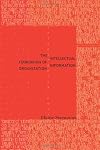
This book is an important addition to the field of LIS which is often criticised for lacking theoretical foundations. In the author’s own words, “instant electronic access to digital information is the single most distinguishing attribute of the information age. The elaborate retrieval mechanisms that support such access are a product of technology,. But technology is not enough. The effectiveness of a system for accessing information is a direct function of the intelligence put into show more organising it. Just as the practical science of engineering is undergirded by theoretical physics, so too the design of systems for organising information rests on an intellectual foundation”. According to Svenonius (2000, p.68), the major cataloguing principles that are well established in successive iterations of cataloguing practises include: Principle of user convenience, Principle of representation, Principle of sufficiency and necessity, Principle of standardisation, and Principle of integration. The book argues in favour of standardisation and internationalisation. It discusses in adequate detail about bibliographic languages. It also highlights on the history of library cataloguing and provides historical background. show less

PDFSV | This paper looks at changes affecting LCSH over its 100-year history. Adopting a linguistic conceptualization, it frames these changes as relating to the semantics, syntax and pragmatics of the LCSH language. While its category semantics has remained stable over time, the LCSH relational semantics underwent a significant upheaval when a thesaural structure was imposed upon its traditional See and See also structure. Over time the LCSH syntax has become increasingly
complex as it has show more moved from being largely enumerative to in large part synthetic. Until fairly recently the LCSH pragmatics consisted of only one rule, viz, the injunction to assign specific headings. This rule, always controversial, has become even more debated and interpreted with the move to the online environment |
Contents
1. Introduction pg. 2
-- Definitions: Category, Referential, Relational
-- Category Semantics
-- Qualification vs Classification
2. Referential Semantics pg.5
-- Control for Homonyms
-- Parenthetical Qualifiers
-- Disambiguation Techniques
3. Relational Semantics pg. 5
-- "Classical Music, see Music"
-- BT, NT, RT
4. Syntax pg. 7
-- Subdivisions: Topical Main Heading-Place-Topic-Time-Form, Topical Main Heading-Topic-Place-Time-Form, Geographic Main Heading--Topic-Time-Form
-- PRECIS
5. Specificity pg. 10
-- Alphabetic Subject Catalog
-- Coextensive
-- KWIC
6. Conclusion pg. 12
-- National Treasure
7. Notes pg. 12
SA - https://www.librarything.com/work/10029698/book/266142554 | https://www.librarything.com/work/8950437/book/266202790 | https://www.librarything.com/work/32428831/book/266191523 | https://www.librarything.com/work/1720352/book/266136829 | https://www.librarything.com/work/32410585/book/266002046 |
RT - Exploration
BT - Meaning
NT - Evolution
UF - The article analyzes the semantic, syntactic, and pragmatic aspects of LCSH, discussing its effectiveness in bibliographic control and subject access. Svenonius delves into how LCSH structures meaning and how it can be optimized for better information retrieval.
SN - This PDF was downloaded from the internet server/database where the journal is stored. (This entry does not reference a hierarchical list) show less
complex as it has show more moved from being largely enumerative to in large part synthetic. Until fairly recently the LCSH pragmatics consisted of only one rule, viz, the injunction to assign specific headings. This rule, always controversial, has become even more debated and interpreted with the move to the online environment |
Contents
1. Introduction pg. 2
-- Definitions: Category, Referential, Relational
-- Category Semantics
-- Qualification vs Classification
2. Referential Semantics pg.5
-- Control for Homonyms
-- Parenthetical Qualifiers
-- Disambiguation Techniques
3. Relational Semantics pg. 5
-- "Classical Music, see Music"
-- BT, NT, RT
4. Syntax pg. 7
-- Subdivisions: Topical Main Heading-Place-Topic-Time-Form, Topical Main Heading-Topic-Place-Time-Form, Geographic Main Heading--Topic-Time-Form
-- PRECIS
5. Specificity pg. 10
-- Alphabetic Subject Catalog
-- Coextensive
-- KWIC
6. Conclusion pg. 12
-- National Treasure
7. Notes pg. 12
SA - https://www.librarything.com/work/10029698/book/266142554 | https://www.librarything.com/work/8950437/book/266202790 | https://www.librarything.com/work/32428831/book/266191523 | https://www.librarything.com/work/1720352/book/266136829 | https://www.librarything.com/work/32410585/book/266002046 |
RT - Exploration
BT - Meaning
NT - Evolution
UF - The article analyzes the semantic, syntactic, and pragmatic aspects of LCSH, discussing its effectiveness in bibliographic control and subject access. Svenonius delves into how LCSH structures meaning and how it can be optimized for better information retrieval.
SN - This PDF was downloaded from the internet server/database where the journal is stored. (This entry does not reference a hierarchical list) show less

PDFS1 | Chapter 1 & 4 | Timeline of Information |
Contents
1. Introduction pg. 2
2. Conceptual Framework pg. 2
3. Historical Background pg. 3
4. Philosophical Background pg. 4
5. Systems Philosophy pg. 4
6. Language Philosophy pg. 6
7. Information and Its Embodiments
8. Purpose, Principles, and Problems pg. 10
9. Chapter 4: Bibliographic Records pg. 16
10. The Panizzi Era pg. 16
11. The Card-Catalog Era pg. 17
12. The Electronic Era pg. 17
13. Form and Function of the Bibliographic Record pg. 18
14. show more target="_top">https://www.wolframalpha.com/docs/timeline/ | Timeline of Systematic Data and the Development of Computable Knowledge
-- 20,000 BC Arithmetic
-- 15,000 BC Cave Painting
-- 2500 BC: Written Language
-- 3000 BC: Registering Land Ownership
-- 2500 BC
-- 1000 BC
SA - https://www.librarything.com/work/13996188/book/254691083 |
RT - Ideology
BT - Framework
NT - Organization
UF - To establish a conceptual framework to ensure that the discussion does not become idiosyncratic and anchor the concept to theory.
SN - Chapters 1 & 4 | Timeline of Information included. (This entry does not reference a hierarchical list) show less
Contents
1. Introduction pg. 2
2. Conceptual Framework pg. 2
3. Historical Background pg. 3
4. Philosophical Background pg. 4
5. Systems Philosophy pg. 4
6. Language Philosophy pg. 6
7. Information and Its Embodiments
8. Purpose, Principles, and Problems pg. 10
9. Chapter 4: Bibliographic Records pg. 16
10. The Panizzi Era pg. 16
11. The Card-Catalog Era pg. 17
12. The Electronic Era pg. 17
13. Form and Function of the Bibliographic Record pg. 18
14. show more target="_top">https://www.wolframalpha.com/docs/timeline/ | Timeline of Systematic Data and the Development of Computable Knowledge
-- 20,000 BC Arithmetic
-- 15,000 BC Cave Painting
-- 2500 BC: Written Language
-- 3000 BC: Registering Land Ownership
-- 2500 BC
-- 1000 BC
SA - https://www.librarything.com/work/13996188/book/254691083 |
RT - Ideology
BT - Framework
NT - Organization
UF - To establish a conceptual framework to ensure that the discussion does not become idiosyncratic and anchor the concept to theory.
SN - Chapters 1 & 4 | Timeline of Information included. (This entry does not reference a hierarchical list) show less
Lists
You May Also Like


Associated Authors
Statistics
- Works
- 3
- Also by
- 1
- Members
- 493
- Popularity
- #50,126
- Rating
- 3.4
- Reviews
- 4
- ISBNs
- 8
- Languages
- 2