
Gregg R. Allison
Author of Historical Theology: An Introduction to Christian Doctrine
About the Author
Gregg R. Allison (PhD, Trinity Evangelical Divinity School) is professor of Christian theology at the Southern Baptist Theological Seminary. He is secretary of the Evangelical Theological Society, a book review editor for the Journal of the Evangelical Theological Society, an elder at Sojourn show more Community. Church, and a theological strategic for Harbor Network. Allison is the author of numerous books. show less
Image credit: via Amazon.com
Works by Gregg R. Allison
50 Core Truths of the Christian Faith: A Guide to Understanding and Teaching Theology (2018) 190 copies
The Unfinished Reformation: What Unites and Divides Catholics and Protestants After 500 Years (2016) 130 copies, 1 review
Building on the Foundations of Evangelical Theology: Essays in Honor of John S. Feinberg (2015) 46 copies
The Kingdom and the Church 1 copy
Tagged
Common Knowledge
- Gender
- male
Members
Reviews
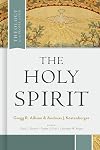
Summary: First in a new series, a biblical and systematic theology of the Holy Spirit, evangelical and continuationist, but not pentecostal.
If the inaugural volume of this new series, “Theology for the People of God,” is any indication, this should be an outstanding set. Each volume pairs two theologians, one in biblical theology, and one in systematic theology to provide an integrated approach deeply rooted in the biblical text.
This approach forms the organization of this book in which show more the first half is devoted to biblical theology, carefully considering each relevant text on the Holy Spirit in each book and major portion of scripture, followed by synthesizing the teaching of all of scripture on various theological aspects of the doctrine of the Holy Spirit. It is an approach that is thorough, covering the ground, while providing notes and references for those who wish to dig deeper.
A few highlights for each part. In the biblical theology section, each chapter, or sometimes, subsection, provides a chart with all the references to the Holy Spirit and a phrase summarizing the content. One old Testament highlight was the discussion of the Holy Spirit in Isaiah, anointing the Messiah, and empowering the servant of the Servant Songs to bring good news to the poor, and the Spirit’s role in the new exodus and the new creation.
The New Testament portion was lengthier, with treatment of the gospels, Acts, the Pauline works, the general epistles, and Revelation. Kostenberger summarizes the Spirit’s work in Acts with seven points that will preach!
1. The Spirit is a person and clearly divine.
2. The Spirit establishes the eschatological messianic community of the exalted Jesus.
3. The Holy Spirit is the Spirit of mission.
4. The Spirit fills all believers.
5. The Spirit is the Spirit of prophecy.
6. The Spirit convicts people and holds them to moral standards.
7. The Holy Spirit directs the affairs of the church.
The section on systematic theology left me at times worshiping God the Spirit and our wondrous Triune God. After an introduction laying out methodology and themes, Allison begins with the deity, the intratrinitarian relations and trinitarian processions. Careful discussion delineates both the inseparability of the works of Father, Son, and Spirit, and yet what may be said to be specific to each. Then, in successive chapters, the author discusses the Spirit in creation and providence, in relation to the inspiration and illumination of scripture, a fascinating chapter distinguishing the Spirit and angelic beings, the Spirit’s relation to human beings and sin, the Spirit’s work Christ, salvation, the church, and the future. The author addresses contemporary issues in pneumatology (the three ages, Spirit-emphasizing movements, and the Spirit and theology of religions). The concluding chapter is applicative, addressing our worship of the Spirit, our reliance on the Spirit’s illuminating work, our thanksgiving for the Spirit’s application of Christ’s work in our life, and keeping in step with and being guided by the Spirit.
The book is marked by a clarity of language and explanation and summary throughout, making this a great text for a course in theology or for the lay person wishing to understand more deeply the person and work of the Spirit. One possible criticism of the work is little engagement with theologians in the developing world. Inclusion of theological discussions and issues outside the white European and North American contexts will make this a more broadly useful text. The authors do engage pentecostal and charismatic theology, appreciative of the emphasis on the ministry of the Spirit, affirming, against some Reformed understanding, the continuation of the gifts and empowering work of the Spirit for mission. However they would associate the baptism of the Holy Spirit with conversion and not as a second and subsequent act. The response is gracious, and they denounce the vitriol that has often existed. The concluding pastoral applications are worth the price of the book.
In sum, this book sets a high bar for this series, marked as it is by an approach in which systematic theology is built on biblical theology. It models this work well for young pastors and theologians and offers the clarity of teaching that both preserves doctrinal integrity, and warmth of devotion.
________________________________
Disclosure of Material Connection: I received a complimentary review copy of this book from the publisher. The opinions I have expressed are my own. show less
If the inaugural volume of this new series, “Theology for the People of God,” is any indication, this should be an outstanding set. Each volume pairs two theologians, one in biblical theology, and one in systematic theology to provide an integrated approach deeply rooted in the biblical text.
This approach forms the organization of this book in which show more the first half is devoted to biblical theology, carefully considering each relevant text on the Holy Spirit in each book and major portion of scripture, followed by synthesizing the teaching of all of scripture on various theological aspects of the doctrine of the Holy Spirit. It is an approach that is thorough, covering the ground, while providing notes and references for those who wish to dig deeper.
A few highlights for each part. In the biblical theology section, each chapter, or sometimes, subsection, provides a chart with all the references to the Holy Spirit and a phrase summarizing the content. One old Testament highlight was the discussion of the Holy Spirit in Isaiah, anointing the Messiah, and empowering the servant of the Servant Songs to bring good news to the poor, and the Spirit’s role in the new exodus and the new creation.
The New Testament portion was lengthier, with treatment of the gospels, Acts, the Pauline works, the general epistles, and Revelation. Kostenberger summarizes the Spirit’s work in Acts with seven points that will preach!
1. The Spirit is a person and clearly divine.
2. The Spirit establishes the eschatological messianic community of the exalted Jesus.
3. The Holy Spirit is the Spirit of mission.
4. The Spirit fills all believers.
5. The Spirit is the Spirit of prophecy.
6. The Spirit convicts people and holds them to moral standards.
7. The Holy Spirit directs the affairs of the church.
The section on systematic theology left me at times worshiping God the Spirit and our wondrous Triune God. After an introduction laying out methodology and themes, Allison begins with the deity, the intratrinitarian relations and trinitarian processions. Careful discussion delineates both the inseparability of the works of Father, Son, and Spirit, and yet what may be said to be specific to each. Then, in successive chapters, the author discusses the Spirit in creation and providence, in relation to the inspiration and illumination of scripture, a fascinating chapter distinguishing the Spirit and angelic beings, the Spirit’s relation to human beings and sin, the Spirit’s work Christ, salvation, the church, and the future. The author addresses contemporary issues in pneumatology (the three ages, Spirit-emphasizing movements, and the Spirit and theology of religions). The concluding chapter is applicative, addressing our worship of the Spirit, our reliance on the Spirit’s illuminating work, our thanksgiving for the Spirit’s application of Christ’s work in our life, and keeping in step with and being guided by the Spirit.
The book is marked by a clarity of language and explanation and summary throughout, making this a great text for a course in theology or for the lay person wishing to understand more deeply the person and work of the Spirit. One possible criticism of the work is little engagement with theologians in the developing world. Inclusion of theological discussions and issues outside the white European and North American contexts will make this a more broadly useful text. The authors do engage pentecostal and charismatic theology, appreciative of the emphasis on the ministry of the Spirit, affirming, against some Reformed understanding, the continuation of the gifts and empowering work of the Spirit for mission. However they would associate the baptism of the Holy Spirit with conversion and not as a second and subsequent act. The response is gracious, and they denounce the vitriol that has often existed. The concluding pastoral applications are worth the price of the book.
In sum, this book sets a high bar for this series, marked as it is by an approach in which systematic theology is built on biblical theology. It models this work well for young pastors and theologians and offers the clarity of teaching that both preserves doctrinal integrity, and warmth of devotion.
________________________________
Disclosure of Material Connection: I received a complimentary review copy of this book from the publisher. The opinions I have expressed are my own. show less
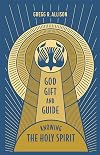
This book is a resourceful survey concerning God’s Holy Spirit. It includes questions to help the reader both assess their understanding of God’s Spirit, how they view Him and His “many-sided” work, and how to apply what they learn. Where there is more than one view on topics, both are presented without asserting that one or the other is correct or not, making this book more accessible to all.
I was pleased that the book is written with a conversational tone that will help believers show more grow in knowing the Holy Spirit’s role as the third person of the Trinity in far more aspects than many may be familiar.
My favorite chapter was 15: “The Holy Spirit Guides Us to Do God’s Will,” which contained various examples from Scripture and helpful biblical wisdom and practical instruction such as:
“Unless we adopt a posture of yieldedness to the Spirit, we should not expect Him to guide us clearly or grant us discernment regarding His direction.”
Chapter 4 on the Trinity was the most challenging chapter and I wish this could have been expounded more. I wonder if a different way of explaining it would help, or maybe it is simply just because this is a topic of theology that is beyond our understanding in many ways. I will suggest: Don’t skip the footnotes in this chapter because they do help some.
All in all, this is a great book surveying the Third Person of the Godhead, delving deep enough for most believers to learn and glean from a treasure trove of information on the Spirit of God.
Thank you to the publisher for a review copy of this book. I am leaving this review voluntarily. All opinions are my own. show less
I was pleased that the book is written with a conversational tone that will help believers show more grow in knowing the Holy Spirit’s role as the third person of the Trinity in far more aspects than many may be familiar.
My favorite chapter was 15: “The Holy Spirit Guides Us to Do God’s Will,” which contained various examples from Scripture and helpful biblical wisdom and practical instruction such as:
“Unless we adopt a posture of yieldedness to the Spirit, we should not expect Him to guide us clearly or grant us discernment regarding His direction.”
Chapter 4 on the Trinity was the most challenging chapter and I wish this could have been expounded more. I wonder if a different way of explaining it would help, or maybe it is simply just because this is a topic of theology that is beyond our understanding in many ways. I will suggest: Don’t skip the footnotes in this chapter because they do help some.
All in all, this is a great book surveying the Third Person of the Godhead, delving deep enough for most believers to learn and glean from a treasure trove of information on the Spirit of God.
Thank you to the publisher for a review copy of this book. I am leaving this review voluntarily. All opinions are my own. show less
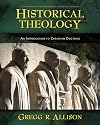
I listened to the audio book. As a result, I won't give a full review. However, what I am about to say, I believe, can be said of the published editions. Allison's Calvinism is very evident throughout the book. He does not retain any objectivity.
A Theologian Addresses Current Theological Issues Impinging on Christian Education by Gregg R. Allison

A systematic theologian offers a theological aggiornamento (bringing-up-to-date) critical doctrinal areas that affect Christian education: a) the doctrine of Scripture, with particular attention to recent challenges to the in errancy of Scripture; and b) the doctrine of humanity, with particular focus on the latest findings from neurophysiology and current evangelical reworking of the doctrine of theological anthropology. For each doctrinal area explored, implications for Christian educators show more are indicated and discussed. show less
You May Also Like


Statistics
- Works
- 29
- Members
- 2,794
- Popularity
- #9,205
- Rating
- 4.1
- Reviews
- 6
- ISBNs
- 48
- Languages
- 3
- Favorited
- 1