
Stephen R. Platt
Author of Autumn in the Heavenly Kingdom: China, the West, and the Epic Story of the Taiping Civil War
About the Author
Stephen R. Platt recounts these events in spellbinding detail, building his story on two fascinating characters with opposing visions for China's future: the conservative Confucian scholar Zeng Guofan, an accidental general who emerged as the most influential military strategist in China's modern show more history; and Hong Rengan, a brilliant Taiping leader whose grand vision of building a modern, industrial, and pro-Western Chinese state ended in tragic failure. show less
Works by Stephen R. Platt
Autumn in the Heavenly Kingdom: China, the West, and the Epic Story of the Taiping Civil War (2012) 425 copies, 11 reviews
Imperial Twilight: The Opium War and the End of China's Last Golden Age (2018) 409 copies, 7 reviews
Tagged
Common Knowledge
Members
Reviews
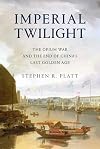
As Platt points out early in the book, we’re generally given to view the Opium War as an inevitable conflict, through which the British exercised their utter dominance of the remnants of the Chinese empire, almost literally forcing Opium down the throats of that nation’s people. But through overlapping layers of economic transformation, internal politics, imperial arrogance, cultural ignorance, individual incompetence, and the sheer slowness of global communication, Platt constructs a show more view of conflict not as inescapable destiny but as something messier, almost accidental. He makes a case for the power of miscalculation, delay, and personality in shaping history.
Obviously, there is the overwhelming arrogance of British actors like Napier and Elliot, as well as the broader ecosystem of pride and cluelessness within which they thrived. Nor does Platt let the Chinese court off the hook, patiently sketching an image of the domestic unrest and rigid bureaucracy that tended to block any meaningful engagement with outside forces.
By the end, I had come to see both the accuracy and inaccuracy of the term “Opium War” itself. I have a much clearer sense of how much weight that phrase carries, and how deeply it aligns with modern political storytelling. The war wasn’t simply fought over drugs—it was significantly championed by individuals on both sides who hoped it might actually end the Opium trade. Nor was it the simplistic tale of imperial domination that later narratives—especially nationalist ones—have tended to overlay. To be honest, you come away with a suspicion that almost no one involved really knew what they were fighting for, and with a clear sense that they entirely miscalculated its outcome.
I came in with very little prior knowledge, so the book filled in a lot of gaps for me. I’m more aware not just of the roots of this conflict, but of the larger cultural moment in Britain, China, and even the U.S. It’s a very informative history, and deeply satisfying intellectually. So much to think about, and so many modern resonances to note. show less
Obviously, there is the overwhelming arrogance of British actors like Napier and Elliot, as well as the broader ecosystem of pride and cluelessness within which they thrived. Nor does Platt let the Chinese court off the hook, patiently sketching an image of the domestic unrest and rigid bureaucracy that tended to block any meaningful engagement with outside forces.
By the end, I had come to see both the accuracy and inaccuracy of the term “Opium War” itself. I have a much clearer sense of how much weight that phrase carries, and how deeply it aligns with modern political storytelling. The war wasn’t simply fought over drugs—it was significantly championed by individuals on both sides who hoped it might actually end the Opium trade. Nor was it the simplistic tale of imperial domination that later narratives—especially nationalist ones—have tended to overlay. To be honest, you come away with a suspicion that almost no one involved really knew what they were fighting for, and with a clear sense that they entirely miscalculated its outcome.
I came in with very little prior knowledge, so the book filled in a lot of gaps for me. I’m more aware not just of the roots of this conflict, but of the larger cultural moment in Britain, China, and even the U.S. It’s a very informative history, and deeply satisfying intellectually. So much to think about, and so many modern resonances to note. show less
Imperial Twilight concerns the period 1800-1839 leading up to the Opium War. It's not about the war itself which is covered in a few pages at the end. Rather it seeks to understand how such a bizarre historical episode came to be - while the British were ending slavery and starting the worlds first human rights organization, they were enslaving millions of Chinese to opium which at the time was illegal in China, they were drug lords that Pablo Escobar would understand. It's a show more multi-generational story centered on Canton, the only Chinese port where Western companies could do trade with the kingdom. There are lessons relevant to today, namely when a few corporate entities are making ungodly amounts of money they will do anything to keep it going, even if means destroying entire countries, or indeed the planet, for short-term profits regardless of human or ethical issues.
The Chinese today see the event as the start of the modern era, when outsiders began meddling in their affairs from which they are still recovering a rightful place as the greatest country in history. Platt undermines that narrative somewhat showing it as mostly a series of unintended consequences and contingencies with both sides at fault. However if there is a bad guy it would be the British for deciding to go to war to maintain a reprehensible trade. This is serious but readable history, Platt has done considerable research on a key period. show less
The Chinese today see the event as the start of the modern era, when outsiders began meddling in their affairs from which they are still recovering a rightful place as the greatest country in history. Platt undermines that narrative somewhat showing it as mostly a series of unintended consequences and contingencies with both sides at fault. However if there is a bad guy it would be the British for deciding to go to war to maintain a reprehensible trade. This is serious but readable history, Platt has done considerable research on a key period. show less
While is a very worthwhile chronicle of how the British relationship with Qing China curdled over time, however, maybe ten percent of this work deals with the actual war. Essentially, Platt traces the decline from the zenith of British respect in the 1790s, to the point, where, in the 1830s, a naval campaign seemed like the logical response to what was essentially a local misunderstanding by the nations' responsible officials on the ground in Canton. For most of this book, Platt examines show more either the perspective of a Chinese government that was surfing chaos with less and less success, or the position of the community of merchant adventurers in Canton, who longed for a more robust status. In the end, if this war was about anything (the opium trade was, at most, the fuse to the conflict), it was about the inability of the Chinese and British governments to previously establish channels through which to work out their issues; making this one of those rare occasions where a war broke out by something that looked like an accident. However, once that war did break out, there is no denying that the UK Whig government of time was prepared to make the most of the situation that they could. Also, while this war remains the event where it all went wrong in the estimate of modern Chinese patriots, at the time, Lin Zexu (the responsible official cracking down on the use and trade of opium), was held to have overplayed his hand, and gave the British an excuse for war. show less
Autumn in the Heavenly Kingdom: China, the West, and the Epic Story of the Taiping Civil War by Stephen R. Platt
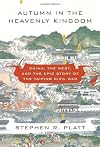
This is an excellent narrative history of a war which has the contradiction of being the second-bloodiest war in history (some 20 MILLION dead), and yet being almost wholly forgotten to Western audiences. The Chinese remember it, though. THeir history tells stories of the Yangtse overflowing and choked with the swollen corpses of the dead.
In narrative history style, Platt focuses on several of the major characters - a Confucian scholar-general who is the Qing Empire's last hope, British show more diplomats and mercenaries, American observers and missionaries, and the Shield-King, cousin to the Taiping ruler himself, who had visions of Christianity and modernizing China, at the point of a sword and God's blessing.
Although the Western nomenclature has this as a 'Rebellion', Platt characterizes this conflict as a Civil War - contemporary with the American one about to boil over. He posits that the two sides were so evenly matched that it was foreign intervention which tipped the balance to the Qing. They did so primarily for trade reasons, despite the fevered diplomacy of the Taiping, and the appeal to 'their fellow Christians'.
It is unknown what might have happened of the 'Younger Brother of Jesus Christ' took over China, and the Qing fell then instead of hanging on until 1911. If his plans of forced modernization had gone through some years earlier than planned, who knows what the course of Asian history would be instead. China is a colossus with feet of clay, and even now, her destiny is uncertain. show less
In narrative history style, Platt focuses on several of the major characters - a Confucian scholar-general who is the Qing Empire's last hope, British show more diplomats and mercenaries, American observers and missionaries, and the Shield-King, cousin to the Taiping ruler himself, who had visions of Christianity and modernizing China, at the point of a sword and God's blessing.
Although the Western nomenclature has this as a 'Rebellion', Platt characterizes this conflict as a Civil War - contemporary with the American one about to boil over. He posits that the two sides were so evenly matched that it was foreign intervention which tipped the balance to the Qing. They did so primarily for trade reasons, despite the fevered diplomacy of the Taiping, and the appeal to 'their fellow Christians'.
It is unknown what might have happened of the 'Younger Brother of Jesus Christ' took over China, and the Qing fell then instead of hanging on until 1911. If his plans of forced modernization had gone through some years earlier than planned, who knows what the course of Asian history would be instead. China is a colossus with feet of clay, and even now, her destiny is uncertain. show less
Lists
Awards


You May Also Like


Statistics
- Works
- 4
- Members
- 863
- Popularity
- #29,663
- Rating
- 4.0
- Reviews
- 18
- ISBNs
- 27
- Languages
- 2