
Rana Mitter
Author of Forgotten Ally: China's World War II, 1937-1945
About the Author
Rana Mitter is University Lecturer in the History and Politics of Modern China at Oxford University, and a Fellow of St. Cross College.
Works by Rana Mitter
Associated Works
BBC Proms 2019 : Prom 40 : Queen Victoria's 200th Anniversary [sound recording] (2019) — Presenter — 1 copy
Tagged
Common Knowledge
- Canonical name
- Mitter, Rana
- Legal name
- Mitter, Rana Shantashil Rajyeswar
- Birthdate
- 1969-08-11
- Gender
- male
- Occupations
- academic
historian
political scientist - Organizations
- Oxford University
Harvard University - Nationality
- UK
- Associated Place (for map)
- UK
Members
Reviews
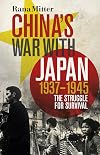
This is a useful but flawed account of an important theatre of war in the struggle of liberal internationalism (Western imperialism) and socialism against the attempted imperialisms of rising powers.
The story has two contemporary sets of resonance - the obvious one is the tricky current state of Sino-Japanese relations that has Westerners rushing to books like this. The less obvious is the attempt by the West to answer the question, 'what to do with rising powers?'
On the surface it is show more traditional narrative history. It starts at the beginning (what led up to the Marco Polo Bridge incident, the 'Sarajevo' of eight years of slaughter) through to the surprise ending - the 'deus ex machina' of the Atom Bombs on Hiroshima and Nagasaki.
With the usual unconscious racism of the Western armchair liberal, the debates on the use of the Bomb usually wonder about the dreadful morality of wiping out 100,000 persons in a few days in terms of saved men and materiel for the West.
A more open view would throw into the pot the hundreds of thousands, maybe millions of Chinese and Japanese lives saved from not going down the Nazi route of a year or two of mayhem as Japan fought to the end despite its prospect of certain defeat.
Between 8 million and 20 million, variously estimated, died in those eight years with perhaps three to four million the victims of first the deliberate flooding of Henan and then its appalling famine (Mitter also notes the estimated 3m who died in a similar Indian wartime famine).
The whole business is another story of 'things getting out of control' with millions being disrupted, starved, conscripted, terrorised and murdered as a few 'big men' squabble for advantage and for 'values' that are often noble enough but equally as often hypocritical.
It is a story played out almost continuously even today - Africa being the current playground for 'big men' and psychopaths of all 'moral' persuasions. We should be pleased the rising thuggery of new empires was suppressed but it was not a simple tale of good and evil.
The flaws in the book, however, detract from its usefulness as analytical tool although the 'further reading' at the back is useful for anyone wanting to delve deeper.
Above all, the book often reads like an unjustifiable apologia for Chiang Kai-Shek, warlord leader of the Nationalist Chinese with most claim to legitimacy as ruler of China. It certainly spends more time on the squabble with General Stilwell than a straight narrative deserves.
What is going on here? The reality is that, legitimate though he was, Chiang Kai-Shek was soon run out of town (the core of China in the East) and was not much more than a superior warlord from an earlier era.
He could speak for China and for millions of men but he had proved an unimaginative and narcissistic leader before the Marco Polo Bridge incident and was not much better after it. Mitter justifiably contextualises his decisions but they were more often than not poor.
Most of the non-Communist warlords in the south marked time under his leadership but his control was limited, while the Communists under Mao cannily created a state within a state in North West China that treated the peasantry as if they mattered instead of as fodder.
By the time the Americans arrived (and the Communists are almost exclusively seen through American eyes by 1942/3 as Mittar swerves off into analyses of thinking in Washington), Chiang's China was virtually being re-colonised by the US by stealth without benefit to the people.
The blunders of Stilwell and the Americans can be charitably put down to them 'learning on the job' as they slowly displaced the British Empire as global arbiter. US foreign policy does not really settle down into full competence until after the McCarthy blood-letting.
Mitter's attempt to recover Chiang's reputation by pointing out the new status given to China in the 'UN' holds little water. Yes, this was a fact on the ground and it portended great things, a benefit that India failed to achieve, but China was always a tool under Chiang.
In essence, China held down some 600,000 Japanese troops and that was important for the Allied war effort but it presupposes that this was always in the interests of the Chinese who died in huge numbers holding together a ramshackle strategy of mere survival.
It is noticeable that in the struggle against the last Japanese offensive - like the last push of the Germans in 1918 - Nationalist troops were attacked by Henan peasants who had suffered deliberate flooding and then famine, fertile ground for communism later.
The second flaw is associated with the first. Mittel devotes about the right amount of space to the Communists in Yan'an but his coverage is still cursory and lacking in analysis. His great lack is any serious investigation of Japanese thinking and Japanese motives.
This is highly problematic. The book is about the Japanese war on China. That means it is about both main participants and the whole war zone yet we hear virtually nothing of East China other than Nanking and little of Japanese-collaborationist dealings.
He devotes a great deal of attention to the Petain of China - Wang JIngwei and his circle - but always in the light of them being implicitly honourable Nationalists who got it wrong.
This misses the point - they were naive and 'useful idiots' but there were important ideological and practical Japanese reasons for creating 'Vichy' regimes across Asia and for nationalists to choose what they thought might be the lesser evil. We get little sense of this.
Right or wrong, what was actually happening in the huge area of East China under Japanese rule needs to be explained in terms of Japanese conduct on the ground after the Rape of Nanking and of the motivations for Chinese collaborationism and resistance.
By the second half of the war, just as the National Socialists could put 'national' SS divisions into the field against the Soviets so there were substantial collaborationist Chinese troops fighting against the nationalists alongside the Japanese in the final offensive.
This has to be explained. It cannot be explained by giving excessive coverage to the superior warlord's dealings with Washington and almost completely neglecting the dynamic between Tokyo and Nanking except in terms of the factional struggles of a few failed politicians.
The net effect is that we have a book that does not take the detached and cold view of the struggle that we need to have in order to assist with the analysis of the twin issues noted at the beginning of this review - Sino-Japanese relations and the rise of new powers.
Instead, what we have is another easy read for liberal internationalists that seems intended to guide them through the group think politics of their own side rather than assist in understanding complexity and think about the unthinkable.
It is a morale-booster that seems to say that the 'real' China was only accidentally corrupt and incompetent and that if we (the West) had behaved in diferent ways and taken a flawed great man at face value, things would have been better. It is like a polemic for the past!
However, there is lot to learn from this book - about Mao's genius for making inaction look like action, about the cynicism of the Allies, about the delusions of the Japanese elite, about the resilience and humanity of the Chinese people and about the chaos of war.
One lesson is fascinating and well taught. Under conditions of war and threat, all three regimes in China turned to terror to try and hold power - Mao's reined in his intellectuals and mobilised the peasantry with the help of the Yezhov-trained Kang Sheng but he was not alone.
Chiang used the dedicated monster Dai Li (with the close co-operation of the Americans) to eliminate opposition to a regime that was really not much different from those targeted in Libya and Syria more recently. Chiang was not a democrat but an authoritarian militarist.
Wang Jingwei hired politicised gangsters to do much the same in Nanking from a class which, in Shanghai, had helped Chiang himself on his road to power. Even today, it is clear that, after seventy years of Communist 'totalitarianism', South China's gangster culture thrives.
Although the victor Mao adopted techniques later that taught Pol Pot and the extremists in North Korea their techniques of terror and power, thuggery arose on all sides out of warfare and whatever state might have emerged, none would have had much truck with 'human rights'.
This makes any attempt to make the 'less worse' seem good rather futile - Chiang murdered 800,000 Chinese in a somewhat poorly thought-out tactical attempt to slow down the Japanese by breaching the dams on the Yellow River. No wonder the Henanese peasants were obstructive!
At the end of the day, the whole debacle came down to an incident where a rising power thought that it had rights, demonstrated by its imperial enemies in the Opium Wars and subsequently, to use force to extract concessions on spurious grounds against a weak target.
That the target was weak was definitely not the fault of Chiang Kai-Shek. He was dealt an appalling set of cards but, given the realities of the situation, his decisions tended to make things worse, starting with his initial 'Night of the Long Knives' against the Reds.
Still, the book remains a valuable narrative introduction to one of the nastiest wars in an era of nasty wars. It left this reader with an abiding sense of solidarity with the Chinese people if not their leaderships.
Above all, I have come to admire the achievement of China in not merely holding itself together but appearing to cohere into a Great Power that has managed, through the construction of its own creation myth, to bind together the East, the Party and the nationalist impulse into one.
The nervousness of the West - and the margin states of Japan, South Korea and Taiwan and perhaps Vietnam and the Philippines as well - is understandable but it may be that the US in particular is still not learning the lessons of the 1940s.
The book reminds us of the fragility of the Communist 'achievement'. The European Union is now seeing old interwar attitudes re-emerge in troubled economies - notably Spain and Eastern Europe - and there is no reason why something similar might not happen in China.
In its hour of greatest need, 'Free China' needed unconditional love like the battered child it was but instead it got used as a tool and was patronised by its equals - no wonder its successors are disinclined to trust anyone but their own instinct for tough love. show less
The story has two contemporary sets of resonance - the obvious one is the tricky current state of Sino-Japanese relations that has Westerners rushing to books like this. The less obvious is the attempt by the West to answer the question, 'what to do with rising powers?'
On the surface it is show more traditional narrative history. It starts at the beginning (what led up to the Marco Polo Bridge incident, the 'Sarajevo' of eight years of slaughter) through to the surprise ending - the 'deus ex machina' of the Atom Bombs on Hiroshima and Nagasaki.
With the usual unconscious racism of the Western armchair liberal, the debates on the use of the Bomb usually wonder about the dreadful morality of wiping out 100,000 persons in a few days in terms of saved men and materiel for the West.
A more open view would throw into the pot the hundreds of thousands, maybe millions of Chinese and Japanese lives saved from not going down the Nazi route of a year or two of mayhem as Japan fought to the end despite its prospect of certain defeat.
Between 8 million and 20 million, variously estimated, died in those eight years with perhaps three to four million the victims of first the deliberate flooding of Henan and then its appalling famine (Mitter also notes the estimated 3m who died in a similar Indian wartime famine).
The whole business is another story of 'things getting out of control' with millions being disrupted, starved, conscripted, terrorised and murdered as a few 'big men' squabble for advantage and for 'values' that are often noble enough but equally as often hypocritical.
It is a story played out almost continuously even today - Africa being the current playground for 'big men' and psychopaths of all 'moral' persuasions. We should be pleased the rising thuggery of new empires was suppressed but it was not a simple tale of good and evil.
The flaws in the book, however, detract from its usefulness as analytical tool although the 'further reading' at the back is useful for anyone wanting to delve deeper.
Above all, the book often reads like an unjustifiable apologia for Chiang Kai-Shek, warlord leader of the Nationalist Chinese with most claim to legitimacy as ruler of China. It certainly spends more time on the squabble with General Stilwell than a straight narrative deserves.
What is going on here? The reality is that, legitimate though he was, Chiang Kai-Shek was soon run out of town (the core of China in the East) and was not much more than a superior warlord from an earlier era.
He could speak for China and for millions of men but he had proved an unimaginative and narcissistic leader before the Marco Polo Bridge incident and was not much better after it. Mitter justifiably contextualises his decisions but they were more often than not poor.
Most of the non-Communist warlords in the south marked time under his leadership but his control was limited, while the Communists under Mao cannily created a state within a state in North West China that treated the peasantry as if they mattered instead of as fodder.
By the time the Americans arrived (and the Communists are almost exclusively seen through American eyes by 1942/3 as Mittar swerves off into analyses of thinking in Washington), Chiang's China was virtually being re-colonised by the US by stealth without benefit to the people.
The blunders of Stilwell and the Americans can be charitably put down to them 'learning on the job' as they slowly displaced the British Empire as global arbiter. US foreign policy does not really settle down into full competence until after the McCarthy blood-letting.
Mitter's attempt to recover Chiang's reputation by pointing out the new status given to China in the 'UN' holds little water. Yes, this was a fact on the ground and it portended great things, a benefit that India failed to achieve, but China was always a tool under Chiang.
In essence, China held down some 600,000 Japanese troops and that was important for the Allied war effort but it presupposes that this was always in the interests of the Chinese who died in huge numbers holding together a ramshackle strategy of mere survival.
It is noticeable that in the struggle against the last Japanese offensive - like the last push of the Germans in 1918 - Nationalist troops were attacked by Henan peasants who had suffered deliberate flooding and then famine, fertile ground for communism later.
The second flaw is associated with the first. Mittel devotes about the right amount of space to the Communists in Yan'an but his coverage is still cursory and lacking in analysis. His great lack is any serious investigation of Japanese thinking and Japanese motives.
This is highly problematic. The book is about the Japanese war on China. That means it is about both main participants and the whole war zone yet we hear virtually nothing of East China other than Nanking and little of Japanese-collaborationist dealings.
He devotes a great deal of attention to the Petain of China - Wang JIngwei and his circle - but always in the light of them being implicitly honourable Nationalists who got it wrong.
This misses the point - they were naive and 'useful idiots' but there were important ideological and practical Japanese reasons for creating 'Vichy' regimes across Asia and for nationalists to choose what they thought might be the lesser evil. We get little sense of this.
Right or wrong, what was actually happening in the huge area of East China under Japanese rule needs to be explained in terms of Japanese conduct on the ground after the Rape of Nanking and of the motivations for Chinese collaborationism and resistance.
By the second half of the war, just as the National Socialists could put 'national' SS divisions into the field against the Soviets so there were substantial collaborationist Chinese troops fighting against the nationalists alongside the Japanese in the final offensive.
This has to be explained. It cannot be explained by giving excessive coverage to the superior warlord's dealings with Washington and almost completely neglecting the dynamic between Tokyo and Nanking except in terms of the factional struggles of a few failed politicians.
The net effect is that we have a book that does not take the detached and cold view of the struggle that we need to have in order to assist with the analysis of the twin issues noted at the beginning of this review - Sino-Japanese relations and the rise of new powers.
Instead, what we have is another easy read for liberal internationalists that seems intended to guide them through the group think politics of their own side rather than assist in understanding complexity and think about the unthinkable.
It is a morale-booster that seems to say that the 'real' China was only accidentally corrupt and incompetent and that if we (the West) had behaved in diferent ways and taken a flawed great man at face value, things would have been better. It is like a polemic for the past!
However, there is lot to learn from this book - about Mao's genius for making inaction look like action, about the cynicism of the Allies, about the delusions of the Japanese elite, about the resilience and humanity of the Chinese people and about the chaos of war.
One lesson is fascinating and well taught. Under conditions of war and threat, all three regimes in China turned to terror to try and hold power - Mao's reined in his intellectuals and mobilised the peasantry with the help of the Yezhov-trained Kang Sheng but he was not alone.
Chiang used the dedicated monster Dai Li (with the close co-operation of the Americans) to eliminate opposition to a regime that was really not much different from those targeted in Libya and Syria more recently. Chiang was not a democrat but an authoritarian militarist.
Wang Jingwei hired politicised gangsters to do much the same in Nanking from a class which, in Shanghai, had helped Chiang himself on his road to power. Even today, it is clear that, after seventy years of Communist 'totalitarianism', South China's gangster culture thrives.
Although the victor Mao adopted techniques later that taught Pol Pot and the extremists in North Korea their techniques of terror and power, thuggery arose on all sides out of warfare and whatever state might have emerged, none would have had much truck with 'human rights'.
This makes any attempt to make the 'less worse' seem good rather futile - Chiang murdered 800,000 Chinese in a somewhat poorly thought-out tactical attempt to slow down the Japanese by breaching the dams on the Yellow River. No wonder the Henanese peasants were obstructive!
At the end of the day, the whole debacle came down to an incident where a rising power thought that it had rights, demonstrated by its imperial enemies in the Opium Wars and subsequently, to use force to extract concessions on spurious grounds against a weak target.
That the target was weak was definitely not the fault of Chiang Kai-Shek. He was dealt an appalling set of cards but, given the realities of the situation, his decisions tended to make things worse, starting with his initial 'Night of the Long Knives' against the Reds.
Still, the book remains a valuable narrative introduction to one of the nastiest wars in an era of nasty wars. It left this reader with an abiding sense of solidarity with the Chinese people if not their leaderships.
Above all, I have come to admire the achievement of China in not merely holding itself together but appearing to cohere into a Great Power that has managed, through the construction of its own creation myth, to bind together the East, the Party and the nationalist impulse into one.
The nervousness of the West - and the margin states of Japan, South Korea and Taiwan and perhaps Vietnam and the Philippines as well - is understandable but it may be that the US in particular is still not learning the lessons of the 1940s.
The book reminds us of the fragility of the Communist 'achievement'. The European Union is now seeing old interwar attitudes re-emerge in troubled economies - notably Spain and Eastern Europe - and there is no reason why something similar might not happen in China.
In its hour of greatest need, 'Free China' needed unconditional love like the battered child it was but instead it got used as a tool and was patronised by its equals - no wonder its successors are disinclined to trust anyone but their own instinct for tough love. show less
https://nwhyte.livejournal.com/3413280.html
It's a good readable, brief and almost breezy introduction to China as it has developed in the last century or so. By taking modern China as his subject, he more of less starts with the 1911 revolution (with occasional contextualising from the past) and argues for a relatively linear development from Sun Yat-Sen to Chiang Kai-Shek to Mao to Deng, Jiang, Hu and Xi; many things changed, but there is a lot of continuity too. The history section is only show more half of the book; he also looks at society as a whole, the Chinese economy and Chinese culture, this last of course extending well beyond the People's Republic. The second edition was published in 2016, when it was already clear that Xi was heading in a less liberal direction; now of course we are seeing the vicious crackdown on Hong Kong (which is very sad but surely not surprising), and the appalling treatment of the Uighurs, both clearly directed from the top. But Mitter seems to think that this can't last forever, and that there will be an inevitable pressure for liberalisation which Xi, or possibly his successor, will have to deal with; millions of Chinese live in democratic and open countries, most locally in Taiwan, and we should not underestimate the flexibility that already exists. show less
It's a good readable, brief and almost breezy introduction to China as it has developed in the last century or so. By taking modern China as his subject, he more of less starts with the 1911 revolution (with occasional contextualising from the past) and argues for a relatively linear development from Sun Yat-Sen to Chiang Kai-Shek to Mao to Deng, Jiang, Hu and Xi; many things changed, but there is a lot of continuity too. The history section is only show more half of the book; he also looks at society as a whole, the Chinese economy and Chinese culture, this last of course extending well beyond the People's Republic. The second edition was published in 2016, when it was already clear that Xi was heading in a less liberal direction; now of course we are seeing the vicious crackdown on Hong Kong (which is very sad but surely not surprising), and the appalling treatment of the Uighurs, both clearly directed from the top. But Mitter seems to think that this can't last forever, and that there will be an inevitable pressure for liberalisation which Xi, or possibly his successor, will have to deal with; millions of Chinese live in democratic and open countries, most locally in Taiwan, and we should not underestimate the flexibility that already exists. show less
An absolutely excellent history of the Sino-Japanese and subsequent involvement of China with Japan in WWII that has been long overdue in a post-Mao era. Historian Mitter has used resources and documents either long forgotten (or purposefully concealed) to write one of the first neutral histories of China's involvement with Japan. In this sense, the title is misleading China's War with Japan, 1937-1945 as the story begins in the late 1890s and continues post-1945.
This is a complex history show more with many players (Chiang Kai-Shek, Mao, Wang Jingwei, Churchill, Hurley, Chennault, Fumimaro, Marshall, Mountbatten, Stalin, Stilwell, Roosevelt...), but Mitter has accomplished in less than 400 pages what might have taken others thousands, due to his immaculate, succinct writing. Not only is this book illuminating reading, it is also pleasurable reading. Those seeking detailed battle information will be disappointed; the important battles and their preparations and results are included, but this is a book that focuses more on the issues and personalities than battlefield logistics. Yet it dips into the personal stories of soldiers and journalists in the field to illuminate in a short excerpt, some of the lesser-known facts of the time--the flooding of the central Chinese plains that led to countless Chinese deaths, the lack of equipment and food and training for the foot soldiers, Churchill's disdain for Chiang Kai-shek (the joke being that SEAC stood for "Save England's Asian Colonies" and betrayals, the to-and-fro, in-and-out policies and treaties that created the political quagmire that Chiang had to manage--sometimes successfully, sometimes not. And of course, the righting of the wrongful impression that it was the CCP, Mao's leadership and the accomplishment of the Eighth Route Army and its Long March that were the heroes of the war, as long defended by post-1949 Communist historians.
Anyone interested in Chinese history should read this book; lay readers and academics alike will benefit from the tale, and I would highly recommend watching the YouTube video of Mitter's presentation at the 2014 Jaipur Literature Festival (http://www.youtube.com/watch?v=5XK-DUEPYa8&app=desktop).
A personal footnote: when travelling in northern Myanmar in the early 1990s, we came across rural areas where bones and skulls were still visible from the battles fought on Burma's (as it was known in those days) soil. Those villagers we spoke with who were children during the war confirmed that they were the remains of Chinese and Japanese soldiers, abandoned by both sides. Mitter refers to these war dead in his chapter on Burma and tells the tale of a Chinese participant (Huang Yaowu) who mourns for his lost comrades who 'not even buried...might at least have hoped that their deaths would be remembered'. We need historians such as Rana Mitter to keep reminding us. show less
This is a complex history show more with many players (Chiang Kai-Shek, Mao, Wang Jingwei, Churchill, Hurley, Chennault, Fumimaro, Marshall, Mountbatten, Stalin, Stilwell, Roosevelt...), but Mitter has accomplished in less than 400 pages what might have taken others thousands, due to his immaculate, succinct writing. Not only is this book illuminating reading, it is also pleasurable reading. Those seeking detailed battle information will be disappointed; the important battles and their preparations and results are included, but this is a book that focuses more on the issues and personalities than battlefield logistics. Yet it dips into the personal stories of soldiers and journalists in the field to illuminate in a short excerpt, some of the lesser-known facts of the time--the flooding of the central Chinese plains that led to countless Chinese deaths, the lack of equipment and food and training for the foot soldiers, Churchill's disdain for Chiang Kai-shek (the joke being that SEAC stood for "Save England's Asian Colonies" and betrayals, the to-and-fro, in-and-out policies and treaties that created the political quagmire that Chiang had to manage--sometimes successfully, sometimes not. And of course, the righting of the wrongful impression that it was the CCP, Mao's leadership and the accomplishment of the Eighth Route Army and its Long March that were the heroes of the war, as long defended by post-1949 Communist historians.
Anyone interested in Chinese history should read this book; lay readers and academics alike will benefit from the tale, and I would highly recommend watching the YouTube video of Mitter's presentation at the 2014 Jaipur Literature Festival (http://www.youtube.com/watch?v=5XK-DUEPYa8&app=desktop).
A personal footnote: when travelling in northern Myanmar in the early 1990s, we came across rural areas where bones and skulls were still visible from the battles fought on Burma's (as it was known in those days) soil. Those villagers we spoke with who were children during the war confirmed that they were the remains of Chinese and Japanese soldiers, abandoned by both sides. Mitter refers to these war dead in his chapter on Burma and tells the tale of a Chinese participant (Huang Yaowu) who mourns for his lost comrades who 'not even buried...might at least have hoped that their deaths would be remembered'. We need historians such as Rana Mitter to keep reminding us. show less
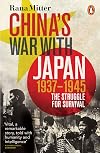
Mitter is an Oxford professor I have not previously encountered; he is apparently relatively young and a child of Bengali immigrants. All these indicators suggest that he brings a fresh perspective to the history of the Second Sino-Japanese War, and his book bears this out.
The book is written very largely from the Chinese perspective, and this means it is fairly sympathetic to Chiang Kai-shek without being particularly unsympathetic to Mao. Indeed, one chapter compares the Chiang, Mao, and show more (puppet) Wang regimes, and finds more similarity than differences. All claimed to be progressive but none were pluralistic; all were, at least at a gut level, nationalistic (yes, even the Wang regime); all maintained control partially through terror.
Mitter is particularly scathing of American dealings with China during the war. This criticism largely revolves around the character of "Vinegar Joe" Stilwell, who was appointed as Chiang's chief of staff but saw himself as more an adviser -- in the sense that my Ph.D. adviser was an adviser; her advice wasn't really optional. Stilwell got very sympathetic press during the war, and even more sympathetic press after (culminating in the biography by Barbara Tuchman) but a strong case can be made that Stilwell was unsuited for his role and ought to have been relieved much sooner. Stilwell, and Americans in general, never really understood the nature of the challenges facing Chiang, acting and talking as if all the problems could be solved in short order if only their advice could be forced on the Chinese. In fact, China had suffered catastrophic military defeat in 1937, and it is remarkable that the surviving Chinese forces were able to put up as much resistance in the Yangtze Valley in 1938-1941 as they did. This By the time Stilwell was offering to tutor Chiang on how to lead his country, the Kuomintang were trying to make do with perhaps a quarter of the national budget they had had in 1937 -- and they had lost in 1937 against a Japan that was not yet fully mobilized. All was compounded by a devastating famine in Henan in 1942 that included literal plagues of locusts.
There are better military histories; I'm working through one now. But this is a reasonably tractable one-volume diplomatic and social history that includes the basics of the military campaigns as well. Recommended. show less
The book is written very largely from the Chinese perspective, and this means it is fairly sympathetic to Chiang Kai-shek without being particularly unsympathetic to Mao. Indeed, one chapter compares the Chiang, Mao, and show more (puppet) Wang regimes, and finds more similarity than differences. All claimed to be progressive but none were pluralistic; all were, at least at a gut level, nationalistic (yes, even the Wang regime); all maintained control partially through terror.
Mitter is particularly scathing of American dealings with China during the war. This criticism largely revolves around the character of "Vinegar Joe" Stilwell, who was appointed as Chiang's chief of staff but saw himself as more an adviser -- in the sense that my Ph.D. adviser was an adviser; her advice wasn't really optional. Stilwell got very sympathetic press during the war, and even more sympathetic press after (culminating in the biography by Barbara Tuchman) but a strong case can be made that Stilwell was unsuited for his role and ought to have been relieved much sooner. Stilwell, and Americans in general, never really understood the nature of the challenges facing Chiang, acting and talking as if all the problems could be solved in short order if only their advice could be forced on the Chinese. In fact, China had suffered catastrophic military defeat in 1937, and it is remarkable that the surviving Chinese forces were able to put up as much resistance in the Yangtze Valley in 1938-1941 as they did. This By the time Stilwell was offering to tutor Chiang on how to lead his country, the Kuomintang were trying to make do with perhaps a quarter of the national budget they had had in 1937 -- and they had lost in 1937 against a Japan that was not yet fully mobilized. All was compounded by a devastating famine in Henan in 1942 that included literal plagues of locusts.
There are better military histories; I'm working through one now. But this is a reasonably tractable one-volume diplomatic and social history that includes the basics of the military campaigns as well. Recommended. show less
Lists
Awards


You May Also Like


Associated Authors
Statistics
- Works
- 7
- Also by
- 4
- Members
- 1,000
- Popularity
- #25,784
- Rating
- 3.9
- Reviews
- 18
- ISBNs
- 46
- Languages
- 4