
Linda Chalker-Scott
Author of How Plants Work: The Science Behind the Amazing Things Plants Do
Works by Linda Chalker-Scott
Tagged
Common Knowledge
- Gender
- female
- Education
- Oregon State University (PhD|Horticulture)
- Occupations
- associate professor
extension horticulturist - Organizations
- Washington State University
University of Washington - Awards and honors
- Cynthia Westcott Scientific Writing Award
- Short biography
- [from How Plants Work]
Linda Chalker-Scott has a Ph.D. in Horticulture from Oregon State University and is an ISA-certified arborist. She is Washington State University's extension urban horticulturist and an associate professor in the Department of Horticlture, with affiliate associate professor status at the University of Washington. She develops educational materials for home gardeners, certified arborists, restoration ecologists, pesticide applicators, and the nursery and landscape industry. At WSU, she is co-chair of the Garden Team, an interdisciplinary group that produces science-based extension pbulications for home gardeners. She is the author of three other books: the award-winning, horticultural myth-busting The Informed Gardener and The Informed Gardener Blooms Again, and Sustainable Landscapes and Gardens: Good Science, Practical Application. She has published extensively in the scientific literature as well as in popular magazines such as American Nurseryman, Organic Gardening, and Fine Gardening. She and three other academic colleagues host The Garden Professors blog and Facebook pages, through which they educate and entertain an international audience. - Places of residence
- Tacoma, Washington, USA
- Map Location
- USA
Members
Reviews
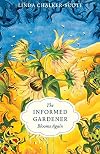
This is the second compilation of columns from the author's blog The Informed Gardener. Her purpose behind both the blog and these books is to bust popular and often ingrained myths about gardening with hard, peer-reviewed science.
i found the first book a little bit off-putting, if only because she busted more than a couple of myths I was suckered into. It's depressing to think you're a rational, objective, sceptical soul only to find out you're just as susceptible to marketing hype as the show more next gardener. Still, I came away from it determined to get my soil tested, convince MT to go back to wood chip mulch, and lay off the manure.
This time around she covered stuff I hadn't fallen for so of course it's a better book! ::grin:: But in all honestly, I thought this one was a better book because it wasn't all about tearing down the myths; occasionally the chapters covered practices that had merit, or potential, but not necessarily in all situations. This book felt more balanced.
The author does a great job keeping the writing accessible while sticking strictly to the hard science, and every chapter has its own citations/sources. This is an excellent resource for anyone remotely serious about gardening. show less
i found the first book a little bit off-putting, if only because she busted more than a couple of myths I was suckered into. It's depressing to think you're a rational, objective, sceptical soul only to find out you're just as susceptible to marketing hype as the show more next gardener. Still, I came away from it determined to get my soil tested, convince MT to go back to wood chip mulch, and lay off the manure.
This time around she covered stuff I hadn't fallen for so of course it's a better book! ::grin:: But in all honestly, I thought this one was a better book because it wasn't all about tearing down the myths; occasionally the chapters covered practices that had merit, or potential, but not necessarily in all situations. This book felt more balanced.
The author does a great job keeping the writing accessible while sticking strictly to the hard science, and every chapter has its own citations/sources. This is an excellent resource for anyone remotely serious about gardening. show less
How Plants Work: The Science Behind the Amazing Things Plants Do (Science for Gardeners) by Linda Chalker-Scott
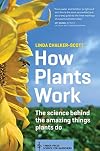
This is a good book for any gardener (no matter how inexperienced or experienced) to read. The author discusses the science behind plant growth and gardening techniques in an accessible manner that does not require a biology degree. She also explains the workings (or lack thereof) behind some gardening myths. This book explains how plants work - it is NOT a plant identification guide.
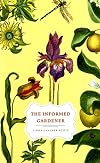
This book is a collection of columns that were originally written from 2000 for Washington State nursery and landscape professionals. It's aim to to bust the myths gardeners have been swearing by for decades using hard peer-reviewed science.
It's a good, easy, quick read and it pretty much makes the average gardener writing this review shake her head over the sheer number of things I've beein doing wrong, thereby proving the miracle that is life. Because after reading this it is truly a show more wonder anything lives in my garden.
Each column is immediately followed with citations; all of which are peer reviewed scientific resources. The columns are short and each has a "bottom line" summarising the take away points and a couple of times there are step by step instructions for certain tasks.
The only reason I didn't got the full five stars is that I took exception to her attitude about what is commonly called organic gardening. Her facts are dead on - I don't question those - but in her effort to 'straighten out' those misconceptions about organic vs. synthetic, she completely fails to address other benefits of avoiding synthetic chemicals; benefits that also have an army of peer reviewed research behind them. She leaves the impression that anyone eschewing RoundUp and MiracleGro are ignorant and foolish. The information is solid, it's just the attitude I found distasteful.
But everything else... well, I'll be changing most everything about how I transfer plants and care for them from now on. show less
It's a good, easy, quick read and it pretty much makes the average gardener writing this review shake her head over the sheer number of things I've beein doing wrong, thereby proving the miracle that is life. Because after reading this it is truly a show more wonder anything lives in my garden.
Each column is immediately followed with citations; all of which are peer reviewed scientific resources. The columns are short and each has a "bottom line" summarising the take away points and a couple of times there are step by step instructions for certain tasks.
The only reason I didn't got the full five stars is that I took exception to her attitude about what is commonly called organic gardening. Her facts are dead on - I don't question those - but in her effort to 'straighten out' those misconceptions about organic vs. synthetic, she completely fails to address other benefits of avoiding synthetic chemicals; benefits that also have an army of peer reviewed research behind them. She leaves the impression that anyone eschewing RoundUp and MiracleGro are ignorant and foolish. The information is solid, it's just the attitude I found distasteful.
But everything else... well, I'll be changing most everything about how I transfer plants and care for them from now on. show less

Accuracy without a heart. Definitely would not inspire anyone to take up gardening. To call it “gardening” is also misleading, since much of her work deals with landscape/lawn/tree & shrub care. She occasionally explains that some wrongly touted practices have their source in agricultural/production growing, which faces nutrient limitations. Perennials and landscapes generally do not—soil testing is important before any fertilizing is done. Because I’m concerned with vegetable show more gardening, most of her information was of no interest, tho she did make some useful points. For example, kelp harvests disrupt a natural coastal ecosystem so she doesn’t recommend kelp for gardens. The “water crystals” (polyacrylamide co-polymer) are not inert in environmental conditions, despite claims. When they are degraded, they can release a toxic byproduct which, besides irritation to skin of humans, binds to fish gills, suffocating them. Though anionic forms are less problematic, manufacturer’s don’t routinely provide that information on the packages. She speaks against the use of tires or their rubber chips in landscaping as they will leach toxins which can be concentrated by plants. I recall some alternative gardening tips to make earth berms with old tires and plant them with food or herbs. The author does have a website, so you can check out other plant care myths http://www.puyallup.wsu.edu/~Linda%20Chalker-Scott/ show less
You May Also Like


Associated Authors
Statistics
- Works
- 6
- Members
- 259
- Popularity
- #88,670
- Rating
- 4.3
- Reviews
- 11
- ISBNs
- 10
- Languages
- 1