
Anna Pavord
Author of The Tulip
About the Author
Anna Pavord chairs the Gardens Panel of the National Trust.
Works by Anna Pavord
Gartengestaltung 1 copy
Associated Works
Harry Potter: A History of Magic: The Book of the Exhibition (2018) — Contributor, some editions — 1,195 copies, 4 reviews
Tagged
Common Knowledge
- Canonical name
- Pavord, Anna
- Birthdate
- 1940-09-20
- Gender
- female
- Education
- University of Leicester (BA|1962)
- Occupations
- gardening writer
- Organizations
- The Independent
The Observer - Awards and honors
- Gold Veitch Memorial Medal (1991)
Garden Media Guild Lifetime Achievement Award (2020) - Nationality
- UK
- Birthplace
- Abergavenny, Monmouthshire, Wales, UK
- Places of residence
- Puncknowle, Dorset, England, UK
- Associated Place (for map)
- UK
Members
Reviews
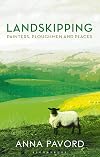
From the soft rolling hills of the chalk downs, the dramatic white cliffs, the wildness of the Scottish Highlands, the evocative hills and mountains of the Lakes and the long history of Wessex, Britain’s countryside has brought so much inspiration to artists and writers. These places have given us famous poems and paintings, but were also the source of inspiration for men who gave us tourism, a farming revolution and a sense of the picturesque.
In this book Pavord roams from coast to coast, show more valley to mountain following the people who travelled by foot and horseback to bring us captivating accounts of locations that became culturally significant and are nowadays instantly recognizable. We get a brief overview of artist such as Turner and Constable, the poetry of Wordsworth and the writings of Hardy. The men who transformed our countryside played no less a part; the quintessential image of rolling fields, bordered by hedges was bought about by the enclosure of land, and loss of the commons from the peasants. It is breathtakingly beautiful, but at what cost.
What Pavord writes about with most passion though, is her part of the world; West Dorset. It is a land of hill forts and water meadows, ancient coasts and timeless landscapes. In her exploration of the world outside her backdoor, she considers the struggle still for common land access for people, the delights and horrors of golf courses, coppices rooks and the animal that has moulded this landscape so much, the sheep. Another passion of hers is the spring and autumn light; in this part of the world it can be delightful, bringing out the contrast in the strip lynchets on the hills.
Pavord is an eloquent writer and for a lot of this book it shows. Her prose is captivating as she describes her patch. It is a shame, as she really has a grasp of the history of her part of Dorset and how it became what it is today. Pavord has a good grounding in the current issues that face rural communities in this modern age, to get the balance between accessibility and biodiversity whilst still maintaining the things that draw people to those locations. Good book overall, and in parts was really good, but I did feel that the book is let down by the section on art and artists. It feels that it was added after to fill it out which is a shame really. show less
In this book Pavord roams from coast to coast, show more valley to mountain following the people who travelled by foot and horseback to bring us captivating accounts of locations that became culturally significant and are nowadays instantly recognizable. We get a brief overview of artist such as Turner and Constable, the poetry of Wordsworth and the writings of Hardy. The men who transformed our countryside played no less a part; the quintessential image of rolling fields, bordered by hedges was bought about by the enclosure of land, and loss of the commons from the peasants. It is breathtakingly beautiful, but at what cost.
What Pavord writes about with most passion though, is her part of the world; West Dorset. It is a land of hill forts and water meadows, ancient coasts and timeless landscapes. In her exploration of the world outside her backdoor, she considers the struggle still for common land access for people, the delights and horrors of golf courses, coppices rooks and the animal that has moulded this landscape so much, the sheep. Another passion of hers is the spring and autumn light; in this part of the world it can be delightful, bringing out the contrast in the strip lynchets on the hills.
Pavord is an eloquent writer and for a lot of this book it shows. Her prose is captivating as she describes her patch. It is a shame, as she really has a grasp of the history of her part of Dorset and how it became what it is today. Pavord has a good grounding in the current issues that face rural communities in this modern age, to get the balance between accessibility and biodiversity whilst still maintaining the things that draw people to those locations. Good book overall, and in parts was really good, but I did feel that the book is let down by the section on art and artists. It feels that it was added after to fill it out which is a shame really. show less

I was expecting a book on the history of taxonomy for plants and what I got was a bunch of brief biographies on mostly medieval, mostly German, herbalists who had printed various volumes listing plants. There is very little in the way of discussion about how the plants are named or organized. It should have been titled A History of Publications About Plants.
I very much enjoyed this book although I was surprised when it came to an end. Perhaps that was an indication that I was 'involved'. Anna Pavord uses a wide vocabulary and sent me to the dictionary several times: arrish (corn stubble), Danmonian (relating to British ancestors), lynchets (terraces or ridges formed by mediaeval ploughing).
The author covers a wide range of British history - political, social as well as art history. Each of these is linked to its effect on the landscape.
A show more sizeable portion of the early part of the book is spent outlining the thoughts and travels of William Gilpin - perhaps a little too much.... However he was important and the developments in appreciating landscape such as the artist Richard Wilson (the father of landscape painting in Britain) justified this background.
Pavord highlights and brings to our attention some things which are self-evident but noteworthy. For example at Location 942 she writes 'All landscape is mediated by weather...'. I recall the moods of the landscape across the harbour at Mangonui that I tried to capture on camera in January.
And 'Speed diminishes the gifts that a journey can give you, the gift, for instance, of moving through a landscape slowly enough to be able to watch it, take in its characteristics, observe the land's relationships to the sky, the patterning made by boundaries etc. (Location 1000).
Her advice (Location1017) 'but the smaller the destination, the more carefully you need to match your arrival to it.' - is something which I want to be more conscious of in the future.
While this is a book about British landscape, there is much to apply critically to the New Zealand landscape: 'beauty is entirely bound up with use.' (Location 1525). Once again the landscape across Mangonui Harbour which I referred to before comes to mind. In this country landscape is often separated from use and visitors come to see landscape which is not used - Fiordland or Aorangi National Parks for example.
Landscape is key genre in New Zealand painting: McCahon, White, Siddell and many others. Either the landscape is the focus of the painting or a significant player in the painting. How does what Pavord writes apply to all that? She has left me much to think about here.
Interestingly she notes in the acknowledgements (Location 3271) that she 'commissioned a photographer George Wright... to photograph on particular view throughout one whole year.' Her idea was to try and fix the way that a single landscape changes with the seasons and the time of day. She used that in writing the chapter 15 Thomas Hardy's Wessex. Anna Pavord has also sent me back to W.G.Hoskins 'The Making of the English Landscape'. In addition I have discovered artists such as Howard Phipps, Andy Goldsworthy, Peter Randall-Page (in the Tate collection), Clare Curtis, Richard Bawden, John Jackson and John Brunsdon - many of whom are engravers.
There is a bibliography and an index. show less
The author covers a wide range of British history - political, social as well as art history. Each of these is linked to its effect on the landscape.
A show more sizeable portion of the early part of the book is spent outlining the thoughts and travels of William Gilpin - perhaps a little too much.... However he was important and the developments in appreciating landscape such as the artist Richard Wilson (the father of landscape painting in Britain) justified this background.
Pavord highlights and brings to our attention some things which are self-evident but noteworthy. For example at Location 942 she writes 'All landscape is mediated by weather...'. I recall the moods of the landscape across the harbour at Mangonui that I tried to capture on camera in January.
And 'Speed diminishes the gifts that a journey can give you, the gift, for instance, of moving through a landscape slowly enough to be able to watch it, take in its characteristics, observe the land's relationships to the sky, the patterning made by boundaries etc. (Location 1000).
Her advice (Location1017) 'but the smaller the destination, the more carefully you need to match your arrival to it.' - is something which I want to be more conscious of in the future.
While this is a book about British landscape, there is much to apply critically to the New Zealand landscape: 'beauty is entirely bound up with use.' (Location 1525). Once again the landscape across Mangonui Harbour which I referred to before comes to mind. In this country landscape is often separated from use and visitors come to see landscape which is not used - Fiordland or Aorangi National Parks for example.
Landscape is key genre in New Zealand painting: McCahon, White, Siddell and many others. Either the landscape is the focus of the painting or a significant player in the painting. How does what Pavord writes apply to all that? She has left me much to think about here.
Interestingly she notes in the acknowledgements (Location 3271) that she 'commissioned a photographer George Wright... to photograph on particular view throughout one whole year.' Her idea was to try and fix the way that a single landscape changes with the seasons and the time of day. She used that in writing the chapter 15 Thomas Hardy's Wessex. Anna Pavord has also sent me back to W.G.Hoskins 'The Making of the English Landscape'. In addition I have discovered artists such as Howard Phipps, Andy Goldsworthy, Peter Randall-Page (in the Tate collection), Clare Curtis, Richard Bawden, John Jackson and John Brunsdon - many of whom are engravers.
There is a bibliography and an index. show less
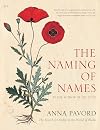
The extent of my awareness of the naming of plants a few weeks ago was 'Isn't that something to do with Linnaeus?'. Well, this book has put me right in a big way. Linnaeus features only in the epilogue: the main body of the story takes the reader from a Greek, Theophrastus, in the fourth century BC to John Ray, an Englishman of the seventeenth century AD, in the search for the best way to classify plants. It sounds like a dry subject, but the personalities, struggles and inter-relationships show more of the key players are beautifully portrayed, with room for the personality of the author to permeate the text too. This work is scholarly and accessible and sumptuously illustrated with coloured depictions of plants, maps and portraits. A treasure of a volume. show less
Lists
Awards


You May Also Like


Associated Authors
Statistics
- Works
- 25
- Also by
- 4
- Members
- 2,006
- Popularity
- #12,832
- Rating
- 3.9
- Reviews
- 21
- ISBNs
- 89
- Languages
- 7