
About the Author
Andrea Wulf is an English historian and writer, born in New Delhi, India in 1972. She studied design at the Royal College of Art. She is a public speaker and has lectured in the UK and USA. Her books include This Other Eden: Seven Great Gardens and 300 Years of English History; Founding Gardeners: show more The Revolutionary Generation, Nature, and the Shaping of the American Nation; and Chasing Venus: The Race to Measure the Heavens. Her award winning book, The Brother Gardeners, received a CBHL Annual Literature Award in 2010. The Invention of Nature: How Alexander Von Humboldt Revolutionized Our World, received the 2015 Costa Book Award in the biography category, and the 2016 Royal Society Science Book Prize for 'outstanding popular science books' written for a non-specialist audience. (Bowker Author Biography) show less
Image credit: Andrea Wulf
Works by Andrea Wulf
The Invention of Nature: The Adventures of Alexander von Humboldt, the Lost Hero of Science (2015) 3,048 copies, 99 reviews
Founding Gardeners: The Revolutionary Generation, Nature, and the Shaping of the American Nation (2011) 556 copies, 12 reviews
The Traveler: One Man's Quest for Humanity from the South Seas to Revolutionary Paris (2026) 56 copies, 3 reviews
The Private Jefferson: Perspectives from the Collections of the Massachusetts Historical Society (2016) — Contributor — 9 copies
Associated Works
Drawdown: The Most Comprehensive Plan Ever Proposed to Reverse Global Warming (2016) — Contributor — 631 copies, 13 reviews
Tagged
Common Knowledge
- Canonical name
- Wulf, Andrea
- Birthdate
- 1967
- Gender
- female
- Education
- Royal College of Art
University of Lüneburg - Occupations
- historian
author
science writer - Organizations
- Society of Woman Geographers
PEN American Center - Awards and honors
- Council on Botanical and Horticultural Libraries Annual Literature Award (2010)
Royal Society Insight Investment Science Book Prize (2016)
Ness Award (2016)
Costa Biography Award (2015)
LA Times Book Prize (2016)
James Wright Award for Nature Writing (2016) (show all 18)
Acqui Storia Award (2017)
Dingle Prize (2017)
Sarah Chapman Francis Medal, The Garden Club of America (2017)
Bayerischer Buchpreis (2016)
China Nature Book Award (2018)
Le Priz du doyen Jean de Feytaud (2018)
Lichtenberg-Medaille Academy of Sciences Göttingen (2019)
Wissensbuch des Jahres (2019)
ITB Book Awards (2020)
Royal Society of Literature (Fellow, 2018)
Explorers Club (International Fellow)
Royal Geographical Society (Fellow) - Agent
- Patrick Walsh (Pew Literary)
- Nationality
- Germany
UK - Birthplace
- New Delhi, India
- Places of residence
- Hamburg, Germany
London, England, UK
Members
Reviews
The traveler : one man's quest for humanity from the south seas to revolutionary paris by Andrea Wulf
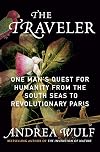
Rating: 4.75* of five
The Publisher Says: Step into the life and times of George Forster, the young naturalist and revolutionary who journeyed to the far reaches of the known world and whose radical ideas about humanity and freedom made waves in eighteenth-century Europe—from the bestselling author of The Invention of Nature and Magnificent Rebels.
From an early age, it was clear that George Forster possessed a brilliant mind. A polyglot and gifted scientist, he became an invaluable asset to show more the ambitions of his domineering father, Reinhold. As a young boy, he travelled with his father from the plains of West Prussia to the wild shores of the Volga to St. Petersburg and London on scientific endeavors, and soon became the breadwinner by publishing translations of hugely popular exploration accounts. When Reinhold Forster was offered the position of naturalist aboard Captain James Cook’s second voyage, he accepted on the condition that his seventeen-year-old son serve as his assistant.
The HMS Resolution set sail in 1772 with orders to find the hypothetical southern continent of Antarctica. On her voyage to the Antarctic Circle and the islands of the South Pacific—including New Zealand, Vanuatu, Tonga, Tahiti, and Easter Island—the Resolution carried the ambitions of the most powerful empire in the world. But George Forster brought an understanding that was centuries ahead of the attitudes of his day—his ideas belonged to the future. A remarkable observer, linguist, artist, and writer whose intelligence surpassed that of his own father, he studied the diverse cultures of the world without prejudice and sought to uncover our common humanity. He was a traveler in body and mind—not bound by place, people or establishment.
Recognized as one of Europe’s brightest minds on his return, Forster held positions across the continent and regaled the world not only with tales from his travels but also radical ideas about human nature. He would write against empire, white supremacy, and slavery. He would become a revolutionary and be declared an outlaw. He would never seek to control others as he had been controlled by his father, and even embraced a liberal idea of marriage, accepting his wife’s affairs and independence Andrea Wulf’s The Traveler recounts an extraordinary life largely forgotten by history, the tale of a man who broke with convention and was unafraid to critique the world around him in dedication to his belief in the human right to dignity, equality, and freedom.
I RECEIVED A DRC FROM THE PUBLISHER VIA NETGALLEY. THANK YOU.
My Review: A man as astonishing as Author Wulf's previous science-biography topic, Alexander von Humboldt (see here). Forster has been brought out of obscurity at a time when his delighted curiosity in the world is curdling die to the way we as a species ignored the warnings of imbalance von Humboldt was observing and reporting on. Forster is still known to us today because he wrote of his travels extensively. He was unusual for his attention to the contributions of women and his respect for the contributions of non-whites in many fields around the world. He died before he was fifty; it's a sadness to me personally that he and Alexander von Humboldt never traveled together. As Forster was two decades older than von Humboldt, I can only dream of what the synergy in these men's inclusive, broad views might have gifted us.
A man born in 1754 writing passionately about the flimsiness and dishonesty of white supremacy, and the idiocy of the idea of dominionism deserves a wide audience in the twenty-first century. If we're going to lionize dead white men, let's lionize George Forster the proponent of equality, the supporter of women's rights, the spreader of Enlightenment values. Here's a British man worthy of our respect and deserving of emulation.
Forster's travels broadened his mind and his spirit. He was a person who saw, as his private papers show, the connections among people in a time when colonialism and sexism were drawing ever thicker lines between us. I am saddened that his first-hand observations of the idiocy and evil that Othering (in today's terminology) colonized people was exacting never gained traction. I dream of a Forster who lived to lift up Mary Wollestonecraft, who worked effectively with Revolutionary Parisians to moderate the evils inherent in destroying systems to rebuild them fairly.
Author Wulf has, as is her wont, seen past History's battlefield fog to choose another target of worth and merit to remind us how long the world has been falling from Grace.
And how many before us saw it.
Honoring their legacies by taking action seems appropriate to me. I hope you'll read this dynamically written, thoroughly researched work on an unjustly underknown thinker, and feel inspired to do just that. show less
The Publisher Says: Step into the life and times of George Forster, the young naturalist and revolutionary who journeyed to the far reaches of the known world and whose radical ideas about humanity and freedom made waves in eighteenth-century Europe—from the bestselling author of The Invention of Nature and Magnificent Rebels.
From an early age, it was clear that George Forster possessed a brilliant mind. A polyglot and gifted scientist, he became an invaluable asset to show more the ambitions of his domineering father, Reinhold. As a young boy, he travelled with his father from the plains of West Prussia to the wild shores of the Volga to St. Petersburg and London on scientific endeavors, and soon became the breadwinner by publishing translations of hugely popular exploration accounts. When Reinhold Forster was offered the position of naturalist aboard Captain James Cook’s second voyage, he accepted on the condition that his seventeen-year-old son serve as his assistant.
The HMS Resolution set sail in 1772 with orders to find the hypothetical southern continent of Antarctica. On her voyage to the Antarctic Circle and the islands of the South Pacific—including New Zealand, Vanuatu, Tonga, Tahiti, and Easter Island—the Resolution carried the ambitions of the most powerful empire in the world. But George Forster brought an understanding that was centuries ahead of the attitudes of his day—his ideas belonged to the future. A remarkable observer, linguist, artist, and writer whose intelligence surpassed that of his own father, he studied the diverse cultures of the world without prejudice and sought to uncover our common humanity. He was a traveler in body and mind—not bound by place, people or establishment.
Recognized as one of Europe’s brightest minds on his return, Forster held positions across the continent and regaled the world not only with tales from his travels but also radical ideas about human nature. He would write against empire, white supremacy, and slavery. He would become a revolutionary and be declared an outlaw. He would never seek to control others as he had been controlled by his father, and even embraced a liberal idea of marriage, accepting his wife’s affairs and independence Andrea Wulf’s The Traveler recounts an extraordinary life largely forgotten by history, the tale of a man who broke with convention and was unafraid to critique the world around him in dedication to his belief in the human right to dignity, equality, and freedom.
I RECEIVED A DRC FROM THE PUBLISHER VIA NETGALLEY. THANK YOU.
My Review: A man as astonishing as Author Wulf's previous science-biography topic, Alexander von Humboldt (see here). Forster has been brought out of obscurity at a time when his delighted curiosity in the world is curdling die to the way we as a species ignored the warnings of imbalance von Humboldt was observing and reporting on. Forster is still known to us today because he wrote of his travels extensively. He was unusual for his attention to the contributions of women and his respect for the contributions of non-whites in many fields around the world. He died before he was fifty; it's a sadness to me personally that he and Alexander von Humboldt never traveled together. As Forster was two decades older than von Humboldt, I can only dream of what the synergy in these men's inclusive, broad views might have gifted us.
A man born in 1754 writing passionately about the flimsiness and dishonesty of white supremacy, and the idiocy of the idea of dominionism deserves a wide audience in the twenty-first century. If we're going to lionize dead white men, let's lionize George Forster the proponent of equality, the supporter of women's rights, the spreader of Enlightenment values. Here's a British man worthy of our respect and deserving of emulation.
Forster's travels broadened his mind and his spirit. He was a person who saw, as his private papers show, the connections among people in a time when colonialism and sexism were drawing ever thicker lines between us. I am saddened that his first-hand observations of the idiocy and evil that Othering (in today's terminology) colonized people was exacting never gained traction. I dream of a Forster who lived to lift up Mary Wollestonecraft, who worked effectively with Revolutionary Parisians to moderate the evils inherent in destroying systems to rebuild them fairly.
Author Wulf has, as is her wont, seen past History's battlefield fog to choose another target of worth and merit to remind us how long the world has been falling from Grace.
And how many before us saw it.
Honoring their legacies by taking action seems appropriate to me. I hope you'll read this dynamically written, thoroughly researched work on an unjustly underknown thinker, and feel inspired to do just that. show less
The invention of nature : the adventures of Alexander von Humboldt, the lost hero of science by Andrea Wulf
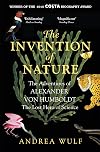
Real Rating: 4.75*of five
The Publisher Says: Alexander von Humboldt (1769–1859) was an intrepid explorer and the most famous scientist of his age. In North America, his name still graces four counties, thirteen towns, a river, parks, bays, lakes, and mountains. His restless life was packed with adventure and discovery, whether he was climbing the highest volcanoes in the world or racing through anthrax-infected Siberia or translating his research into bestselling publications that changed show more science and thinking. Among Humboldt’s most revolutionary ideas was a radical vision of nature, that it is a complex and interconnected global force that does not exist for the use of humankind alone.
Now Andrea Wulf brings the man and his achievements back into focus: his daring expeditions and investigation of wild environments around the world and his discoveries of similarities between climate and vegetation zones on different continents. She also discusses his prediction of human-induced climate change, his remarkable ability to fashion poetic narrative out of scientific observation, and his relationships with iconic figures such as Simón Bolívar and Thomas Jefferson. Wulf examines how Humboldt’s writings inspired other naturalists and poets such as Darwin, Wordsworth, and Goethe, and she makes the compelling case that it was Humboldt’s influence that led John Muir to his ideas of natural preservation and that shaped Thoreau’s Walden.
With this brilliantly researched and compellingly written book, Andrea Wulf shows the myriad fundamental ways in which Humboldt created our understanding of the natural world, and she champions a renewed interest in this vital and lost player in environmental history and science.
I CHECKED THIS BOOK OUT FROM THE PRIME LENDING SERVICE.
My Review: Start your journey into Alexander von Humboldt's character and intellect here:
This man, born the year a crucial observation of a Transit of Venus was measured, and died the year of the Carrington Event, was tied to science at both ends.
It's probably down to the fact that he was gay that he's never been lionized in US scientific education the way Lord Kelvin, Sir Humphry Davy, Leibniz, or Pasteur have. Yes, German-language output isn't hugely well-represented in general US scientific awareness to this day; if ever someone deserves an exception, it's the man who has a bay in California, a current running up our Pacific coast, and a species of giant squid found in ever-northening parts of that coast, named for him.
He was a very good writer (seriously...read Cosmos, it was as big a bestseller as On the Origin of Species by his follower Darwin and is an excellent browsing book), which led to his excellent observational science influencing multiple generations of scientists who founded new fields of study by expanding his work. His way of seeing Earth as a system is now the dominant view, expressed thusly by Author Wulf: "He saw the earth as one great living organism where everything was connected, conceiving a bold new vision of nature that still influences the way that we understand the natural world."
His writing skills were also useful in his later-life career as a diplomat, most enduringly to the Court of King Louis-Phillippe of France. I do not know of any English translations of his diplomatic correspondence, but I wager cash money they make for absorbing reading. His Prussian monarch did not compel von Humboldt to attend him, perform diplomacy for him, because the guy was boring. He charmed his friends, he charmed the many people his scientific and diplomatic duties brought him into contact with, he charmed several younger men enough that one of them, a Peruvian aristocrat, got jealous enough when he was dumped...that's so unkind, let's say left behind when von Humboldt departed...that he leveled the accusation of our guy visiting a Quito brothel for men who like men. von Humboldt was known to be "like that" but, as always, exceptional talent...and a lack of a widely used "scientific" term for men romantically and sexually interested in other men like "homosexual"...gets judged by other rules. Author Wulf doesn't delve into this aspect of his life, though it's interstitially there; her focus is instead on the immensity, the Forrest-Gumpian breadth of his social circle, and drawing some conclusions about his influence that veer into Great Man Theory territory. I'm not all the way able to get past that discomfiting adulatory tone, despite feeling its pull very strongly. I'd give this read five or even six stars of five with some critical distance baked in; as it is four-and-three-quarters give me wiggle room to work out my squeam.
It's a long read, it's an impactful resuscitation of a reputation very sadly in need of it among Anglophone readers, and if imperfect is still a very great pleasure to read. show less
The Publisher Says: Alexander von Humboldt (1769–1859) was an intrepid explorer and the most famous scientist of his age. In North America, his name still graces four counties, thirteen towns, a river, parks, bays, lakes, and mountains. His restless life was packed with adventure and discovery, whether he was climbing the highest volcanoes in the world or racing through anthrax-infected Siberia or translating his research into bestselling publications that changed show more science and thinking. Among Humboldt’s most revolutionary ideas was a radical vision of nature, that it is a complex and interconnected global force that does not exist for the use of humankind alone.
Now Andrea Wulf brings the man and his achievements back into focus: his daring expeditions and investigation of wild environments around the world and his discoveries of similarities between climate and vegetation zones on different continents. She also discusses his prediction of human-induced climate change, his remarkable ability to fashion poetic narrative out of scientific observation, and his relationships with iconic figures such as Simón Bolívar and Thomas Jefferson. Wulf examines how Humboldt’s writings inspired other naturalists and poets such as Darwin, Wordsworth, and Goethe, and she makes the compelling case that it was Humboldt’s influence that led John Muir to his ideas of natural preservation and that shaped Thoreau’s Walden.
With this brilliantly researched and compellingly written book, Andrea Wulf shows the myriad fundamental ways in which Humboldt created our understanding of the natural world, and she champions a renewed interest in this vital and lost player in environmental history and science.
I CHECKED THIS BOOK OUT FROM THE PRIME LENDING SERVICE.
My Review: Start your journey into Alexander von Humboldt's character and intellect here:
“The effects of the human species’ intervention were already ‘incalculable’, Humboldt insisted, and could become catastrophic if they continued to disturb the world so ‘brutally’. Humboldt would see again and again how humankind unsettled the balance of nature.”
This man, born the year a crucial observation of a Transit of Venus was measured, and died the year of the Carrington Event, was tied to science at both ends.
It's probably down to the fact that he was gay that he's never been lionized in US scientific education the way Lord Kelvin, Sir Humphry Davy, Leibniz, or Pasteur have. Yes, German-language output isn't hugely well-represented in general US scientific awareness to this day; if ever someone deserves an exception, it's the man who has a bay in California, a current running up our Pacific coast, and a species of giant squid found in ever-northening parts of that coast, named for him.
He was a very good writer (seriously...read Cosmos, it was as big a bestseller as On the Origin of Species by his follower Darwin and is an excellent browsing book), which led to his excellent observational science influencing multiple generations of scientists who founded new fields of study by expanding his work. His way of seeing Earth as a system is now the dominant view, expressed thusly by Author Wulf: "He saw the earth as one great living organism where everything was connected, conceiving a bold new vision of nature that still influences the way that we understand the natural world."
His writing skills were also useful in his later-life career as a diplomat, most enduringly to the Court of King Louis-Phillippe of France. I do not know of any English translations of his diplomatic correspondence, but I wager cash money they make for absorbing reading. His Prussian monarch did not compel von Humboldt to attend him, perform diplomacy for him, because the guy was boring. He charmed his friends, he charmed the many people his scientific and diplomatic duties brought him into contact with, he charmed several younger men enough that one of them, a Peruvian aristocrat, got jealous enough when he was dumped...that's so unkind, let's say left behind when von Humboldt departed...that he leveled the accusation of our guy visiting a Quito brothel for men who like men. von Humboldt was known to be "like that" but, as always, exceptional talent...and a lack of a widely used "scientific" term for men romantically and sexually interested in other men like "homosexual"...gets judged by other rules. Author Wulf doesn't delve into this aspect of his life, though it's interstitially there; her focus is instead on the immensity, the Forrest-Gumpian breadth of his social circle, and drawing some conclusions about his influence that veer into Great Man Theory territory. I'm not all the way able to get past that discomfiting adulatory tone, despite feeling its pull very strongly. I'd give this read five or even six stars of five with some critical distance baked in; as it is four-and-three-quarters give me wiggle room to work out my squeam.
It's a long read, it's an impactful resuscitation of a reputation very sadly in need of it among Anglophone readers, and if imperfect is still a very great pleasure to read. show less
Andrea Wulf’s second well-known work ‘Magnificent Rebels’ about the early German romantics, late 18th century, several times referred to the brothers Alexander and Wilhelm von Humboldt. Alexander’s exotic interests and travels were particularly intriguing, and so I ventured into this biography, the first work with which Wulf became very well-known. Again, it is a narrative biography (documented fiction, as evidenced by the more than 100 pages of footnotes!). Wulf portrays von show more Humboldt as a giant, and rightly so: just like Goethe at the time, you cannot help but be impressed by the enormous versatility and intensity with which he inventoried, analyzed and subsequently translated so many aspects of the natural world in an extensive series of publications. Alexander von Humboldt seemed to be well-versed in all aspects of nature. Wulf emphasizes his merit in making an infinite number of connections in an intuitive way (of course, after meticulous collection and description), and ultimately positing the connection of everything with everything; it seems as if she is portraying him as a holist avant-la-lettre. And there are more anachronistic propositions like that: Wulf also sees von Humboldt as the first climate scientist, a convinced anti-colonial and anti-monarchist. I am of course not well-versed enough in his work, but Wulf again and again stresses that Alexander was far ahead of his time. She almost makes him a saint. Wulf also takes quite a few side paths, such as Simon Bolivar's struggle for Columbian independence, the young Darwin's Beagle voyage, Thoreau's Walden experience and at the end also a whole series of 'grand naturalists' from the 19th century. All fascinating and of course clearly related to von Humboldt: it must support her thesis that he really ‘invented’ nature, as we know it. I don’t know. Perhaps I am doing von Humboldt an injustice, but in my opinion Wulf is going a bit too far here – just as in her work on the ‘Jena set’. But, of course, this book is a fascinating read! show less
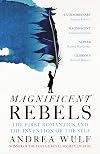
Andrea Wulf portrays a lively group of intellectuals who coalesced in the last decade of the eighteenth century in Jena, a small town near the geographical center of the German-speaking lands. They were drawn to a university that was unusually tolerant for its time, allowing their minds to roam unfettered as they forged new paths in philosophy and literary theory against the backdrop of admiration for the ideals of the French Revolution. Wulf makes a case for ranking this brief flowering show more alongside the transcendentalists of Concord (strongly influenced by the Jena set) or Bloomsbury in the 1920s.
Hovering over this group of young minds like a benign father figure was Goethe, based in nearby Weimar but often spending time in Jena. In return, their youthful drive energized him and left its mark on his masterpiece, Faust, when he finally finished it. His younger colleague Schiller was the magnet that attracted the first of them, although they later soured on him.
Surprisingly to me, Wulf placed Caroline Michaelis-Böhme-Schlegel-Schelling at the center of this constellation, but she argues the case well. At a time when women were discouraged from intellectual pursuits and consigned to a subservient domestic life, this professor’s daughter had free reign of her father’s library. She developed a formidable mind and self-assured personality, “the embodiment of the empowered free self,” according to Wulf. She was an equal partner to her second husband, the industrious August Wilhelm Schlegel, with whom she collaborated on the many essays and reviews that earned their living, as well as translations of several of Shakespeare’s plays, which remain the standard German versions.
Her contribution wasn’t limited to her uncredited part in Schlegel’s publications. Members of the circle gathered in their home for meals and stimulating conversation, as attested by the diaries and letters Wulf has mined to recover Caroline’s role. Wulf writes: “Caroline’s personality determined the rhythm and tempo of their discussion. If they were an orchestra, she was the conductor who brought the score alive.”
At the core of the book is the philosophy developed by a trio whose lectures thrilled hundreds of enthused students: Fichte, with his philosophy of the Ich; Schelling, who taught that the individual was an organic part of all that is; and Hegel, who sought to counter what he saw as their excesses and errors and with time outshone them both. For Wulf, these systems sowed the seeds for the concern with self-determination in our time, often manifested in a selfishness that has no regard for others. Her plea, expressed both in the prologue and epilogue, is that individual freedom exists in tension with responsibility as part of a community (something not all the figures in this charmed circle embodied in their lives and actions).
These systems were controversial at the time and were often lampooned. Fichte posited that the individual has no access to the universe as it is, only to what he perceives, a counterpart to the Ich that he called the Nicht-Ich. Both adherents and opponents thought he was denying that there was any objective world apart from our perception of it. Schelling took a different tack with his Naturphilosophie, a science mysticism (as Richard Holmes calls it) that seemed to rejoin what Fichte’s teaching had torn asunder. That both were often misunderstood was due as much to the density of their prose as to the novelty of their thought.
At times, Wulf seems to overdo her striving to defend the members of the circle from the suspicion that their critics were right and that this new philosophy and the Romantic movement born of it was a recipe for self-absorbed, antisocial behavior, as when she writes “Fichte never intended his ideas to be a narcissistic celebration of the self. Instead, he always insisted that our freedom was tightly interwoven with our moral obligations.” Whether or not her reading of Fichte is accurate, I found this a gripping story well-told. It brought to mind a Saturday afternoon before the fall of the wall when I took a stroll along the banks of the Saale, south of the old town, with like-minded acquaintances. We may not have had the intellectual firepower of Goethe, Schiller, Novalis, and the rest of the figures depicted in this book, but it was nice to realize we had been retracing their footsteps. show less
Hovering over this group of young minds like a benign father figure was Goethe, based in nearby Weimar but often spending time in Jena. In return, their youthful drive energized him and left its mark on his masterpiece, Faust, when he finally finished it. His younger colleague Schiller was the magnet that attracted the first of them, although they later soured on him.
Surprisingly to me, Wulf placed Caroline Michaelis-Böhme-Schlegel-Schelling at the center of this constellation, but she argues the case well. At a time when women were discouraged from intellectual pursuits and consigned to a subservient domestic life, this professor’s daughter had free reign of her father’s library. She developed a formidable mind and self-assured personality, “the embodiment of the empowered free self,” according to Wulf. She was an equal partner to her second husband, the industrious August Wilhelm Schlegel, with whom she collaborated on the many essays and reviews that earned their living, as well as translations of several of Shakespeare’s plays, which remain the standard German versions.
Her contribution wasn’t limited to her uncredited part in Schlegel’s publications. Members of the circle gathered in their home for meals and stimulating conversation, as attested by the diaries and letters Wulf has mined to recover Caroline’s role. Wulf writes: “Caroline’s personality determined the rhythm and tempo of their discussion. If they were an orchestra, she was the conductor who brought the score alive.”
At the core of the book is the philosophy developed by a trio whose lectures thrilled hundreds of enthused students: Fichte, with his philosophy of the Ich; Schelling, who taught that the individual was an organic part of all that is; and Hegel, who sought to counter what he saw as their excesses and errors and with time outshone them both. For Wulf, these systems sowed the seeds for the concern with self-determination in our time, often manifested in a selfishness that has no regard for others. Her plea, expressed both in the prologue and epilogue, is that individual freedom exists in tension with responsibility as part of a community (something not all the figures in this charmed circle embodied in their lives and actions).
These systems were controversial at the time and were often lampooned. Fichte posited that the individual has no access to the universe as it is, only to what he perceives, a counterpart to the Ich that he called the Nicht-Ich. Both adherents and opponents thought he was denying that there was any objective world apart from our perception of it. Schelling took a different tack with his Naturphilosophie, a science mysticism (as Richard Holmes calls it) that seemed to rejoin what Fichte’s teaching had torn asunder. That both were often misunderstood was due as much to the density of their prose as to the novelty of their thought.
At times, Wulf seems to overdo her striving to defend the members of the circle from the suspicion that their critics were right and that this new philosophy and the Romantic movement born of it was a recipe for self-absorbed, antisocial behavior, as when she writes “Fichte never intended his ideas to be a narcissistic celebration of the self. Instead, he always insisted that our freedom was tightly interwoven with our moral obligations.” Whether or not her reading of Fichte is accurate, I found this a gripping story well-told. It brought to mind a Saturday afternoon before the fall of the wall when I took a stroll along the banks of the Saale, south of the old town, with like-minded acquaintances. We may not have had the intellectual firepower of Goethe, Schiller, Novalis, and the rest of the figures depicted in this book, but it was nice to realize we had been retracing their footsteps. show less
Lists
Nature Writing (1)
Awards


You May Also Like


Associated Authors
Statistics
- Works
- 13
- Also by
- 1
- Members
- 5,291
- Popularity
- #4,705
- Rating
- 4.1
- Reviews
- 148
- ISBNs
- 120
- Languages
- 14
- Favorited
- 8