
John Bowlby (1907–1990)
Author of Attachment
About the Author
John Bowlby (1907-1990) was born in London and educated at the University of Cambridge and University College Hospital in London
Image credit: faculty.mdc.edu
Series
Works by John Bowlby
Personality and Mental Illness: An Essay in Psychiatric Diagnosis (The International Library of Psychology : Abnormal and Clinical Psychology) (1999) 8 copies
Il seminario di Milano. Applicazioni cliniche della teoria dell'attaccamento: Applicazioni cliniche della teoria dell'attaccamento (2013) 6 copies
Separation Anxiety 4 copies
Tagged
Common Knowledge
- Legal name
- Bowlby, Edward John Mostyn
- Birthdate
- 1907-02-26
- Date of death
- 1990-09-02
- Gender
- male
- Education
- University of Cambridge (Trinity College)
University College Hospital
Institute for Psychoanalysis
Maudsley Hospital - Occupations
- psychiatrist
author - Organizations
- British Psychological Society
British Psychoanalytical Society - Awards and honors
- Order of the British Empire (Commander, 1972)
James Spence Medal (1974) - Nationality
- UK
- Birthplace
- London, England, UK
- Place of death
- Isle of Skye, Scotland, UK
- Map Location
- England, UK
Members
Reviews
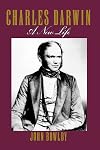
This biography arose out of what was originally intended as a much shorter discussion of the causes of Darwin's chronic ill-health (stomach pains, vomiting) by an author trained in psychology. The thesis is that Darwin did not have any kind of "organic" illness but instead suffered from chronic hyperventilation due to anxiety. Bowlby attributes this anxiety in turn to repressed grieving for the death of Darwin's mother when he was 8 years old and a "difficult" relationship with his father show more until the Voyage of the Beagle. The "organic illness" theory arises from a notion that Darwin could have been infected with a parasitic illness whilst in South America. There are strong reasons for discounting the latter theory, the two most telling being that symptoms were first mentioned by Darwin in the run up to the departure of the Beagle, before he had ever set foot outside Britain and that symptoms had eased during his final years and he died of something unrelated. All of this is convincing but it has been suggested that Darwin was autistic and autistic people are prone to anxiety and depression, just as Darwin was. They often show the obsessive focus on narrow topics, "special interests", that Darwin did first in relation to geology, then in relation to natural history, including his eight year definitive study of every living and fossil species of barnacle then known, which was merely part of his 20 year campaign to justify the evolution of species by natural selection. Darwin also struggled in school (and was bullied) despite his enormous ability - this is not unusual for autistic people either. Nor is his childhood penchant for collecting things for their own sake,
Bowlby suggests Darwin was "sociable" which would counter an autism diagnosis but in fact goes on to say that he could only meet people for 1/2 hr max. before anxiety would overcome him and lead to a vomiting attack. Darwin also moved out of London to the country in Kent, attended few formal functions, including receipt of medals, memberships of learned societies and so forth and had only one real friend who was not also a scientific colleague. He much prefered to communicate by letter and wrote extensively to other scientists.
The idea that Darwin was traumatised in childhood and that this affected his later life is not mutually exclusive to the notion that he was autistic but the latter clearly explains more of the significant features of Darwin's life than the former and though the idea is currently controversial (much more so than for Einstein and Dirac) I am convinced he was.
As for the biography in general, it's good: the author expressly states that he is not competent to give a deep explanation of Darwin's science or how it is viewed now. You'll have to look elsewhere for that. If you accept that, then this is a good, detailed, look at Darwin's life. My one criticism is that Bowlby keeps on being dragged off on tangents; the coverage of Darwin's parents, grandparents, children, grandchildren, wife and colleagues is excessive and probably would cut the book down by ~50p if reduced to a sensible level, without really impairing one's understanding of the real subject: Darwin. show less
Bowlby suggests Darwin was "sociable" which would counter an autism diagnosis but in fact goes on to say that he could only meet people for 1/2 hr max. before anxiety would overcome him and lead to a vomiting attack. Darwin also moved out of London to the country in Kent, attended few formal functions, including receipt of medals, memberships of learned societies and so forth and had only one real friend who was not also a scientific colleague. He much prefered to communicate by letter and wrote extensively to other scientists.
The idea that Darwin was traumatised in childhood and that this affected his later life is not mutually exclusive to the notion that he was autistic but the latter clearly explains more of the significant features of Darwin's life than the former and though the idea is currently controversial (much more so than for Einstein and Dirac) I am convinced he was.
As for the biography in general, it's good: the author expressly states that he is not competent to give a deep explanation of Darwin's science or how it is viewed now. You'll have to look elsewhere for that. If you accept that, then this is a good, detailed, look at Darwin's life. My one criticism is that Bowlby keeps on being dragged off on tangents; the coverage of Darwin's parents, grandparents, children, grandchildren, wife and colleagues is excessive and probably would cut the book down by ~50p if reduced to a sensible level, without really impairing one's understanding of the real subject: Darwin. show less

An easily digestible introduction to Attachment Theory by its principle originator.
Whilst Bowlby's background was in psychoanalysis, he eschewed the Freudian concepts of developmental stages and of the inner 'fantasy' life being more crucial in psychopathology than the effect of real-life events upon a person's 'developmental pathway'. His emphasis on the importance of the present experience over examination of past memories, and of the therapeutic effect of the quality of the show more client-therapist relationship, also distinguishes his work from that of traditional psychoanalysis. I found many of his precepts compatible with the client-centred therapy of Carl Rogers, which is the theoretical framework for counselling with which I am most familiar.
Bowlby's work fills in something of the blank in Rogerian therapy regarding child development. Whilst a counsellor working in the classical client-centred approach may not feel the need for this blank to be filed, it's something I've found fascinating and which I intend to read into further. show less
Whilst Bowlby's background was in psychoanalysis, he eschewed the Freudian concepts of developmental stages and of the inner 'fantasy' life being more crucial in psychopathology than the effect of real-life events upon a person's 'developmental pathway'. His emphasis on the importance of the present experience over examination of past memories, and of the therapeutic effect of the quality of the show more client-therapist relationship, also distinguishes his work from that of traditional psychoanalysis. I found many of his precepts compatible with the client-centred therapy of Carl Rogers, which is the theoretical framework for counselling with which I am most familiar.
Bowlby's work fills in something of the blank in Rogerian therapy regarding child development. Whilst a counsellor working in the classical client-centred approach may not feel the need for this blank to be filed, it's something I've found fascinating and which I intend to read into further. show less
This selection of key lectures by John Bowlby includes the long and important one that gives the volume its title. Informed by a wide clinical experience, and written with the author's well know humanity and lucidity, taken together, the lectures provide an invaluable introduction to John Bowlby's thought and work. In addition to the basic principles with which they are mainly concerned, they also contain much practical guidance of use both to parents and to members of the mental health show more professions.
Source: Publisher show less
Source: Publisher show less

It always seems like there are so many biographies of Darwin that no one could possibly find anything new to write, but each author manages to take a different approach to this complex man. This author explores Darwin's mysterious illness that plagued most of his adult life, and his forays into psuedoscience in an attempt to find some cure. An interesting look at the topic, well worth the time to read.
Lists
You May Also Like


Associated Authors
Statistics
- Works
- 37
- Members
- 1,650
- Popularity
- #15,572
- Rating
- 4.0
- Reviews
- 18
- ISBNs
- 128
- Languages
- 11
- Favorited
- 1