
Adrian Cole
Author of The Crimson Talisman
About the Author
Series
Works by Adrian Cole
The Horror Under Penmire 2 copies
Face To Face 2 copies
Heart of the Beast 2 copies
Dark Destroyer 1 copy
Only Human 1 copy
Treason in Zagadar [Kull] 1 copy
The Frankenstein Legacy 1 copy
A Beast by Any Other Name 1 copy
Associated Works
The Mammoth Book of Halloween Stories: Terrifying Tales Set on the Scariest Night of the Year! (2018) — Contributor — 72 copies
L. Ron Hubbard Presents Writers of the Future, Volume 27 (2011) — Contributor — 58 copies, 9 reviews
In the Shadow of Frankenstein: Tales of the Modern Prometheus (2016) — Contributor — 58 copies, 1 review
Tales From the Magician's Skull: Special 2 — Contributor — 5 copies
Tagged
Common Knowledge
- Legal name
- Cole, Adrian Christopher Synnot
- Birthdate
- 1949-07-22
- Gender
- male
- Occupations
- writer
- Nationality
- UK
- Birthplace
- Plymouth, Devon, England, UK
- Places of residence
- Bideford, Devon, England, UK
Malaya - Associated Place (for map)
- Devon, England, UK
Members
Reviews
I gradually grew to enjoy this book. 3 1/2 stars.
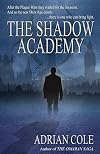
This book takes place in a future Grand Brittania after the Plague Wars have caused a worldwide collapse of civilization and dramatically reduced world population, while what little is known of what had happened is kept closely guarded, for the public's good, by the totalitarian Central Authority in Londonborough, which is concerned to protect GB from the expected Evropan invasion that has never come—yet. The Historical Society does what it show more can in secret to find out and preserve what ancient knowledge it can, any way. The novel begins with a mysterious murder and coverup (It's SUICIDE—got it? We know where your wife + kiddie live!) in the fortress-town school of Petra Dumnoniorum Academy, as the Way Things Are is gradually shown to the reader. There's quite a bit of hand-to-hand violence interspersed though out the book, along with some guns, and a bit of blackmail thrown in for good measure.
More than a third of the way in, no spoilers, but something happened that for a little while had me wondering what kind of book this was. It hadn't seemed to be fantasy up UNTIL this point, and it's not.
Although at first I found it hard to get into the book, partly because of the annoying PDF format provided, at some point I found myself drawn in, interested in the various characters, eager to learn more secrets. Another murder follows, cunningly blamed on the wrong people, to discredit them. Hidden knowledge must be unlocked. There's a clear split between the Christian Londonborough-based government who want knowledge controlled, and the outlying dissident heretical pagans who want to know as much as is possible about what REALLY happened before and during the Plague Wars. What exactly is the Daybreak project? (There's a tiny love interest, with a tiny triangle complete with crossed miscommunications, scarcely worth mentioning. If you like such stuff, it's there—if not, it isn't large enough to detract from the whole.) The Epilogue, which is seemingly there to pull loose ends together, ends slightly abruptly.
I gradually grew to enjoy the book, and so will rate it at 3 1/2 stars, rounded up. I'm still not entirely sure why it has the title it does…
I received a free uncorrected proof advance reading copy (ARC) through the LibraryThing Early Reviewer Program. Although there were a few typos, they have hopefully been corrected in the finished product. show less
This book takes place in a future Grand Brittania after the Plague Wars have caused a worldwide collapse of civilization and dramatically reduced world population, while what little is known of what had happened is kept closely guarded, for the public's good, by the totalitarian Central Authority in Londonborough, which is concerned to protect GB from the expected Evropan invasion that has never come—yet. The Historical Society does what it show more can in secret to find out and preserve what ancient knowledge it can, any way. The novel begins with a mysterious murder and coverup (It's SUICIDE—got it? We know where your wife + kiddie live!) in the fortress-town school of Petra Dumnoniorum Academy, as the Way Things Are is gradually shown to the reader. There's quite a bit of hand-to-hand violence interspersed though out the book, along with some guns, and a bit of blackmail thrown in for good measure.
More than a third of the way in, no spoilers, but something happened that for a little while had me wondering what kind of book this was. It hadn't seemed to be fantasy up UNTIL this point, and it's not.
Although at first I found it hard to get into the book, partly because of the annoying PDF format provided, at some point I found myself drawn in, interested in the various characters, eager to learn more secrets. Another murder follows, cunningly blamed on the wrong people, to discredit them. Hidden knowledge must be unlocked. There's a clear split between the Christian Londonborough-based government who want knowledge controlled, and the outlying dissident heretical pagans who want to know as much as is possible about what REALLY happened before and during the Plague Wars. What exactly is the Daybreak project? (There's a tiny love interest, with a tiny triangle complete with crossed miscommunications, scarcely worth mentioning. If you like such stuff, it's there—if not, it isn't large enough to detract from the whole.) The Epilogue, which is seemingly there to pull loose ends together, ends slightly abruptly.
I gradually grew to enjoy the book, and so will rate it at 3 1/2 stars, rounded up. I'm still not entirely sure why it has the title it does…
I received a free uncorrected proof advance reading copy (ARC) through the LibraryThing Early Reviewer Program. Although there were a few typos, they have hopefully been corrected in the finished product. show less
 This review was written for LibraryThing Early Reviewers.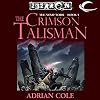
I've played D&D for almost 50 years, but I haven't played Eberron and didn't really know much about it (even thought I probably have 2 or 3 Eberron source books). It always sounded really cool to me, I just never got around to it. That, along with wanting to read something that was magic and action heavy, brought me to pick this up at a local used store.
It wasn't bad. The places they explored were cool, the action was awesome, lots of magic, and the halfling and elves, races you usually show more think of as "goody-two-shoes", where fierce, which I loved. Unfortunately, the plot was pretty standard, and the characters were pretty flat except for Nyam who was fun sometimes. The book wrapped up well, I was a little worried about a cliffhanger ending. show less
It wasn't bad. The places they explored were cool, the action was awesome, lots of magic, and the halfling and elves, races you usually show more think of as "goody-two-shoes", where fierce, which I loved. Unfortunately, the plot was pretty standard, and the characters were pretty flat except for Nyam who was fun sometimes. The book wrapped up well, I was a little worried about a cliffhanger ending. show less

It is difficult today, with the islands almost completely covered in forest, when even moors and uplands are succumbing to the spread of the trees, to visualise the terrain as it must have once existed.
The Shadow Academy, set in a sparsely populated Grand Britannia, in which fortress cities on the coast such as Petra Dumniorum in the West Country guard against an attack from mainland Evropa that never comes, and the rulers from Central Authority in Londonborough ban historical research, so show more no-one really knows what did happen in the Plague Wars that devastated the world over a century ago. The plot is driven by a secret society's desire to study the past and free the country from the Central Authority's rule, and the Central Authority's attempts to crush dissent and thwart its enemies.
It has an interesting premise, although I could have done without the weak love triangle sub-plot, and I would have liked to know a little more about the wider world. Grand Britannia has reverted to forest with the population in widely separated towns, but has there really been no contact at all with Evropa since the Plague Wars? Erish pirates from Ireland make an appearance in the story, so surely there would have been some contact with French traders or fishermen at least. I would be interested in reading a prequel set at the time of the Plague Wars now that I have some idea about what happened to devastate the world and decimate its population. show less
The Shadow Academy, set in a sparsely populated Grand Britannia, in which fortress cities on the coast such as Petra Dumniorum in the West Country guard against an attack from mainland Evropa that never comes, and the rulers from Central Authority in Londonborough ban historical research, so show more no-one really knows what did happen in the Plague Wars that devastated the world over a century ago. The plot is driven by a secret society's desire to study the past and free the country from the Central Authority's rule, and the Central Authority's attempts to crush dissent and thwart its enemies.
It has an interesting premise, although I could have done without the weak love triangle sub-plot, and I would have liked to know a little more about the wider world. Grand Britannia has reverted to forest with the population in widely separated towns, but has there really been no contact at all with Evropa since the Plague Wars? Erish pirates from Ireland make an appearance in the story, so surely there would have been some contact with French traders or fishermen at least. I would be interested in reading a prequel set at the time of the Plague Wars now that I have some idea about what happened to devastate the world and decimate its population. show less
This review was written for LibraryThing Early Reviewers.Rating books, for me, is about how engrossed I become - how quickly I want to get back to them during the day. I finished this one in three evenings.
Although a dystopian premise, this story takes place long after the "event", in this case, the "Plague Wars". London is now Londonborough and the seat of power in Great Britain. Other clusters of civilization exist, and Petra is the featured town.
People are divided into church followers and pagans, with the latter being considered basically a show more resistance force. A new "teacher" at the Academy, Chad Mundy, is a secret member of the secret Historical Society, whose mission is to study history and who are ultimately responsible for uncovering a incredible truth about the past.
Characters are engaging and the tale is generally well-written. As I neared the end, I could envision a sequel... who knows? show less
Although a dystopian premise, this story takes place long after the "event", in this case, the "Plague Wars". London is now Londonborough and the seat of power in Great Britain. Other clusters of civilization exist, and Petra is the featured town.
People are divided into church followers and pagans, with the latter being considered basically a show more resistance force. A new "teacher" at the Academy, Chad Mundy, is a secret member of the secret Historical Society, whose mission is to study history and who are ultimately responsible for uncovering a incredible truth about the past.
Characters are engaging and the tale is generally well-written. As I neared the end, I could envision a sequel... who knows? show less
This review was written for LibraryThing Early Reviewers.Lists
Awards

You May Also Like


Associated Authors
Statistics
- Works
- 46
- Also by
- 47
- Members
- 846
- Popularity
- #30,226
- Rating
- 3.8
- Reviews
- 10
- ISBNs
- 84
- Languages
- 1
