
Gardner Fox (1911–1986)
Author of Showcase Presents: Justice League of America, Vol. 1
About the Author
Disambiguation Notice:
Gardner Fox also wrote under the pen names Jefferson Cooper, Bart Sommers, Paul Dean, Ray Gardner, and Lynna Cooper.
Series
Works by Gardner Fox
DC Finest: Justice Society of America: For America and Democracy (2024) — Author — 24 copies, 1 review
Justice League of America [1960] #55 5 copies
Best of DC #3: Super Friends 5 copies
She wouldn't surrender: The wild days and nights of Belle Boyd--the notorious Confederate spy (A Monarch Americana book) (1960) 4 copies
Kothar and the Sword of Doom 4 copies
Creole Woman 4 copies
Engines Of The Gods 3 copies
The Last Monster 3 copies
When Kohonnes Screamed 3 copies
Batman Vol. 1 #170 3 copies
Fox/Kanigher/Broome golden age Flash Comics and Comic Cavalcade runs (Earth Two Flash) (1939) 3 copies
Batman Vol. 1 #196 3 copies
Green Lantern [1960] #38 3 copies
Detective Comics # 347 2 copies
Detective Comics #31 2 copies
Batman Vol. 1 #184 — Author — 2 copies
Batman Vol. 1 #191 2 copies
This Sword for Hire! 2 copies
Batman Vol. 1 #192 2 copies
Hawkman [1964] #12 2 copies
The Flash [1959] #143 2 copies
Batman Vol. 1 #201 2 copies
The Batman Family #2 2 copies
World Of Warlocks! 2 copies
Justice League of America [1960] #50 2 copies
Green Lantern [1960] #34 2 copies
Green Lantern [1960] #67 2 copies
Detective Comics # 384 2 copies
Eerie (Warren Magazine) #27 2 copies
Detective Comics # 376 2 copies
Red Wolf (1972) #9 2 copies
The Bloody Sevens, Love, Violence and Glory in the Bloodiest Year of the American Revolution -- 1777 (1956) 2 copies
Green Lantern [1960] #26 2 copies
Green Lantern [1960] #35 2 copies
Detective Comics (1937) #19 1 copy
Flash Comics 1940 (1940-) #2 1 copy
Werwile of the Crystal Crypt 1 copy
The Man the Sun-Gods Made 1 copy
Man nth 1 copy
The Warlock of Sharrador 1 copy
Sword of the Seven Suns 1 copy
Mystery in Space [1951] #75 1 copy
Mystery in Space [1951] #66 1 copy
Beyond Our Pleasure 1 copy
Adventure Comics # 61 1 copy
Crom The Barbarian 1 copy
The Spider God Of Akka 1 copy
Detective Comics # 369 1 copy
Mystery in Space [1951] #62 1 copy
Kother of the Magic Sword 1 copy
Mystery in Space [1951] #80 1 copy
DC Super-Stars #6 1 copy
Batman Vol. 1 #165 1 copy
Five Weeks in a Balloon 1 copy
Hurricane 1 copy
Green Lantern [1960] #46 1 copy
Batman Vol. 1 #41 — Author — 1 copy
Batman Vol. 1 #171 1 copy
The Man the Sun-Gods Made 1 copy
The Warlock of Sharrador 1 copy
Sword of the Seven Suns 1 copy
Werwile of the Crystal Crypt 1 copy
Man Nth 1 copy
Hurricane 1 copy
Lemonade Kid No. 1 1 copy
Green Lantern [1960] #62 1 copy
Durango Kid No. 1 1 copy
The Flash [1959] #164 1 copy
DC Special (1968) #16 1 copy
Batman Vol. 1 #175 — Author — 1 copy
Batman Vol. 1 #202 1 copy
Batman Vol. 1 #189 1 copy
O.S.S.E.X. SE DÉCOUVRE 1 copy
Batman Vol. 1 #197 1 copy
Batman Vol. 1 #199 1 copy
Moujik de chambre 1 copy
Marvel Spotlight [1971] #01 (Red Wolf) — Author — 1 copy
DC Special (1968) #7 1 copy
Detective Comics # 340 1 copy
Detective Comics # 344 1 copy
Detective Comics # 345 1 copy
Detective Comics # 356 1 copy
Batman (1940) #181 1 copy
Batman (1940) #191 1 copy
Batman (1940) #190 1 copy
Batman (1940) #189 1 copy
Batman (1940) #188 1 copy
Batman (1940) #186 1 copy
Batman (1940) #184 1 copy
Batman (1940) #183 1 copy
Batman (1940) #179 1 copy
Batman (1940) #197 1 copy
Batman (1940) #175 1 copy
Batman (1940) #174 1 copy
Batman (1940) #172 1 copy
Batman (1940) #171 1 copy
Batman (1940) #165 1 copy
Detective Comics (1937) #384 1 copy
Detective Comics (1937) #376 1 copy
Detective Comics (1937) #375 1 copy
Batman (1940) #192 1 copy
Batman (1940) #199 1 copy
Detective Comics (1937) #373 1 copy
All-Star Comics #18 — Author — 1 copy
All-Star Comics #24 — Author — 1 copy
All-Star Comics #23 — Author — 1 copy
All-Star Comics #22 — Author — 1 copy
All-Star Comics #21 — Author — 1 copy
All-Star Comics #20 — Author — 1 copy
All-Star Comics #19 — Author — 1 copy
Green Lantern [1960] #23 — Author — 1 copy
Batman (1940) #201 1 copy
All-Star Comics #16 — Author — 1 copy
All-Star Comics #15 — Author — 1 copy
All-Star Comics #13 — Author — 1 copy
Green Lantern [1960] #25 1 copy
Green Lantern [1960] #28 — Author — 1 copy
Green Lantern [1960] #33 1 copy
Batman (1940) #202 1 copy
Detective Comics (1937) #374 1 copy
Detective Comics (1937) #372 1 copy
The Brave and the Bold [1955] #36 (Hawkman) — Author — 1 copy
Detective Comics (1937) #338 1 copy
Detective Comics (1937) #345 1 copy
Detective Comics (1937) #344 1 copy
Detective Comics (1937) #343 1 copy
Detective Comics (1937) #342 1 copy
Detective Comics (1937) #341 1 copy
Detective Comics (1937) #340 1 copy
Detective Comics (1937) #339 1 copy
Detective Comics (1937) #337 1 copy
Detective Comics (1937) #348 1 copy
Detective Comics (1937) #336 1 copy
Detective Comics (1937) #335 1 copy
Detective Comics (1937) #334 1 copy
Detective Comics (1937) #333 1 copy
Detective Comics (1937) #330 1 copy
Detective Comics (1937) #32 1 copy
Detective Comics (1937) #29 1 copy
Detective Comics (1937) #21 1 copy
Detective Comics (1937) #346 1 copy
Detective Comics (1937) #34 1 copy
Detective Comics (1937) #371 1 copy
Detective Comics (1937) #361 1 copy
Detective Comics (1937) #370 1 copy
Detective Comics (1937) #369 1 copy
Detective Comics (1937) #368 1 copy
Detective Comics (1937) #367 1 copy
Detective Comics (1937) #365 1 copy
Detective Comics (1937) #364 1 copy
Detective Comics (1937) #363 1 copy
Detective Comics (1937) #362 1 copy
Detective Comics (1937) #360 1 copy
Detective Comics (1937) #350 1 copy
Detective Comics (1937) #358 1 copy
Detective Comics (1937) #357 1 copy
Detective Comics (1937) #356 1 copy
Detective Comics (1937) #355 1 copy
Detective Comics (1937) #354 1 copy
Detective Comics (1937) #353 1 copy
Detective Comics (1937) #352 1 copy
Detective Comics (1937) #351 1 copy
The Brave and the Bold [1955] #34 (Hawkman) — Author — 1 copy
The Brave and the Bold [1955] #42 (Hawkman) — Author — 1 copy
Terra Fantasy Bd.76 Der Barbar und der Meuchler - Kothar, der Schwertkrieger, und seine Abenteuer (2014) 1 copy
Temptress Of the Time Flow 1 copy
The Atom [1962] #32 1 copy
Giant Superman Album No. 25 1 copy
Mighty Comic No. 62 1 copy
Detective Comics # 331 1 copy
Detective Comics # 336 1 copy
Detective Comics # 360 1 copy
Detective Comics # 351 1 copy
Detective Comics # 364 1 copy
The Devil Sword 1 copy
The Atom [1962] #27 1 copy
Detective Comics # 367 1 copy
Detective Comics (1937) #20 1 copy
Detective Comics # 375 1 copy
Hawkman [1964] #27 1 copy
Detective Comics # 363 1 copy
Green Lantern [1960] #42 1 copy
The Brave and the Bold [1955] #43 (Hawkman) — Author — 1 copy
Hawkman [1964] #6 — Author — 1 copy
The Atom [1962] #7 — Author — 1 copy
Mystery in Space [1951] #87 — Author — 1 copy
The Brave and the Bold [1955] #35 (Hawkman) — Author — 1 copy
Hawkman [1964] #11 — Author — 1 copy
Hawkman [1964] #9 — Author — 1 copy
Hawkman [1964] #8 — Author — 1 copy
Hawkman [1964] #7 — Author — 1 copy
Hawkman [1964] #5 — Author — 1 copy
Hawkman [1964] #4 — Author — 1 copy
Hawkman [1964] #3 — Author — 1 copy
Hawkman [1964] #2 — Author — 1 copy
Hawkman [1964] #1 — Author — 1 copy
Mystery in Space [1951] #90 — Author — 1 copy
Mystery in Space [1951] #89 — Author — 1 copy
Mystery in Space [1951] #88 — Author — 1 copy
The Brave and the Bold [1955] #44 (Hawkman) — Author — 1 copy
Mystery in Space 83 1 copy
Red Wolf (1972) #8 1 copy
Green Lantern [1960] #21 — Author — 1 copy
Mystery in Space 84 1 copy
Red Wolf (1972) #2 1 copy
Red Wolf (1972) #4 1 copy
Red Wolf (1972) #3 1 copy
Red Wolf (1972) #6 1 copy
Red Wolf (1972) #7 1 copy
Red Wolf (1972) #5 1 copy
All-Star Comics #7 — Author — 1 copy
All-Star Comics #11 — Author — 1 copy
The Atom #033 (CB^) 1 copy
All-Star Comics #17 — Author — 1 copy
Associated Works
Titan, Teil 21: Klassische Science Fiction- Erzählungen (1976) — Contributor, some editions — 10 copies
Atomic Werewolves and Man-Eating Plants: When Men's Adventure Magazines Got Weird (Men's Adventure Library) (2023) — Contributor — 7 copies
Action Comics #3 — Contributor — 3 copies
Alter Ego, No. 4, Spring 2000 — Contributor — 2 copies
Doubleday Romance Library # ?. Flower of the Desert, The Chelbeck Charger, The Hired Wife (1970) — Contributor — 2 copies
Masters of Terror #1 — Contributor — 1 copy
DC Masterworks Series of Great Comic Book Artists #2 — Writer "Botalye - - The Immortal Indian Warrior" and "Spores From Space" — 1 copy
Tagged
Common Knowledge
- Canonical name
- Fox, Gardner
- Legal name
- Fox, Gardner Francis Cooper
- Other names
- Fox, Gardner F.
Cooper, Lynna
Purvis, Clement
Cooper, Jeff
Rod Gray
Matthews, Kevin (show all 14)
Chase, Glen
Conway, Troy
Morgan, John Medford
Kendricks, James
Majors, Simon
MacKendrick, Louise
Gardner, Jeffrey K.
Maitland, Margaret - Birthdate
- 1911-05-20
- Date of death
- 1986-12-24
- Gender
- male
- Awards and honors
- Bill Finger Award for Excellence in Comic Book Writing (2007)
Alley Award for Best Script Writer (1962) - Nationality
- USA
- Birthplace
- New York, New York, USA
- Places of residence
- Brooklyn, New York, USA (birth)
- Place of death
- Princeton, New Jersey, USA
- Map Location
- New York, USA
- Disambiguation notice
- Gardner Fox also wrote under the pen names Jefferson Cooper, Bart Sommers, Paul Dean, Ray Gardner, and Lynna Cooper.
Members
Reviews

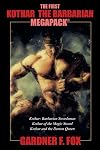
The Demon Queen Candara is one of many villains in this third book charting the adventures of Gardner F. Fox's derivatively-named Kothar the Cumberian. In his personal details and the larger setting that he inhabits, Kothar is less of a match for Robert E. Howard's Conan than he is for the later television cartoon Thundarr the Barbarian. A "god" in this far-future world may turn out to be a piece of ancient super-scientific gadgetry, while supernatural demons are veridical and hungry to show more consume human blood and souls.
There are lots of grudges and much double-crossing among the various wizards and rulers of the cities and strongholds in the Haunted Lands where Kothar explores in this segment. He still carries the enchanted sword Frostfire, which makes him nearly invincible and subjects him to a curse that prevents him from acquiring worldly wealth.
I had previously read only the second book of the series, Kothar of the Magic Sword, containing two sequential novellas. Those were both superior to the longer (though still short) novel in this volume, which seemed more preoccupied with its plot and somewhat less of a romp than the stories before it. The inimical sorceress Red Lori, who played such a large role in the two earlier books, is remarked as vanquished at the outset of Kothar and the Demon Queen, and she stays mute and absent throughout it, rather than competing for attention with Candara. show less
There are lots of grudges and much double-crossing among the various wizards and rulers of the cities and strongholds in the Haunted Lands where Kothar explores in this segment. He still carries the enchanted sword Frostfire, which makes him nearly invincible and subjects him to a curse that prevents him from acquiring worldly wealth.
I had previously read only the second book of the series, Kothar of the Magic Sword, containing two sequential novellas. Those were both superior to the longer (though still short) novel in this volume, which seemed more preoccupied with its plot and somewhat less of a romp than the stories before it. The inimical sorceress Red Lori, who played such a large role in the two earlier books, is remarked as vanquished at the outset of Kothar and the Demon Queen, and she stays mute and absent throughout it, rather than competing for attention with Candara. show less
I first had skimmed this volume and its companion a while ago as research for an article. It seemed rather thin then and after sitting down and actually reading through it cover to cover, it still has some lack as compared to some other barbarian swordsmen stories. It's not as bad as [b:Brak the Barbarian|509045|Brak the Barbarian (Brak the Barbarian, #1)|John Jakes|https://i.gr-assets.com/images/S/compressed.photo.goodreads.com/books/1175371607l/509045._SY75_.jpg|3058663] but it's not as show more good as [a:Karl Edward Wagner|88014|Karl Edward Wagner|https://images.gr-assets.com/authors/1444470571p2/88014.jpg]'s Kane books. It cannot touch [a:Robert E. Howard|66700|Robert E. Howard|https://images.gr-assets.com/authors/1210954603p2/66700.jpg]'s Conan but that is an impossibly high standard.
The first third of the book had two interesting scenes. Inside the tomb of Afgorkon when Kothar gets his cursed sword and the flayed sorcerer hovering above the land tortured by the whipping winds screaming. The second third was not very memorable and the last third did pick up the pace a little. The writing was slightly better here and a semblance of an atmosphere seemed to seep in. However, for the most part, this book completely lacks atmosphere. There is plenty of monsters and demons but most are kind of cliched at this point (lizard-beasts, tentacled horrors, a yeti). Although, the giant worm-god-thing was pretty cool.
This book is an okay diversion if you're starving for some sword & sorcery but its barbarian swordsman, the titular Kothar, seemed a bit too invincible for all of it. His strength was off the charts and in the last third he leaped from the top of a tower to the slanting stakes at the edge of the spiked moat below, sliding on the soles of his "war boots" down along them at landing. There is also the misogyny present in a few collar-tugging incidents and the sexual focus on the female form got to be a bit weird pretty quick, not in some places mind you, but in most.
I cannot really recommend this book to anyone new to the Sword & Sorcery genre but a clean slate and an immature mind might be required to really and thoroughly enjoy this. But I have to admit it scratched the sword & sorcery itch but didn't quite fully satisfy. show less
The first third of the book had two interesting scenes. Inside the tomb of Afgorkon when Kothar gets his cursed sword and the flayed sorcerer hovering above the land tortured by the whipping winds screaming. The second third was not very memorable and the last third did pick up the pace a little. The writing was slightly better here and a semblance of an atmosphere seemed to seep in. However, for the most part, this book completely lacks atmosphere. There is plenty of monsters and demons but most are kind of cliched at this point (lizard-beasts, tentacled horrors, a yeti). Although, the giant worm-god-thing was pretty cool.
This book is an okay diversion if you're starving for some sword & sorcery but its barbarian swordsman, the titular Kothar, seemed a bit too invincible for all of it. His strength was off the charts and in the last third he leaped from the top of a tower to the slanting stakes at the edge of the spiked moat below, sliding on the soles of his "war boots" down along them at landing. There is also the misogyny present in a few collar-tugging incidents and the sexual focus on the female form got to be a bit weird pretty quick, not in some places mind you, but in most.
I cannot really recommend this book to anyone new to the Sword & Sorcery genre but a clean slate and an immature mind might be required to really and thoroughly enjoy this. But I have to admit it scratched the sword & sorcery itch but didn't quite fully satisfy. show less

Gardner Fox is well known to comic book aficionados as the creator of many of the most 'significant' DC Comics characters. He introduced the idea of the multiverse to the comic book world but was also a science fiction, sword and planet and sword and sorcery writer.
'Woman of Kali' is a genuine surprise and much more enjoyable than I expected when I picked it up from a charity shop as a 1960 British reprint of a 1954 American bit of pulp fiction with a lurid and obscure illustration by Herman show more Bischoff. It is, in fact, still in print.
It is essentially a romantic orientalist fantasy set in the India of Clive with a hero straight out of then-contemporary Hollywood epics and a plot that stands up in its adventurous and fast-moving simplicity. It is certainly not politically correct but then that is partly why it is enjoyable.
On the other hand, while the characters are simple cases of good, cunning and evil, Fox gives us an Indian princess with as much fighting guts as our young British officer and inter-racial sexual shenanigans and he ensures that the opponents of British rule are not in the least patronised.
This is heroic imperialism as if Kipling had gone downmarket and wanted to produce a pulp potboiler for the money. Indeed, some British officers prove as treacherous and greedy as any 'native' and others stupid or weak. The book is about the struggle for mastery between equals.
I found it hard to believe that the book was not written by a Briton since Fox's 'simpatico' approach to empire-building is not exactly what Americans tend to think of as appropriate. No questions are asked of the process ... it is just a tale of business between competing 'companies'.
He has also done his research. He liberally throws around Indian-derived words and is good on local colour so that, whether it is all true or not, we believe that we are watching a tale unfold in a real eighteenth century India with its landscapes, customs, modes of warfare and intrigues.
It is also charmingly if mildly erotic, allowing the reader to imagine rather than be told explicitly what Captain Pritchard and the Princess Muhreen get up to (apparently quite frequently) and what Captain Pritchard might have been getting up to in the Temple of Kali with the dangerous Sharita.
Filled with incident and fast-paced, it even treats the French Officer D'Arcourt with respect although no tears can be shed for the treacherous British Officer who will remain unnamed here so as not to provide a spoiler.
Well written and exciting, if nonsense historically, 'Woman of Kali' represents the best of American pulp writing - unpretentious, determined to entertain, offering fantasy and release from the quotidian, well plotted and solidly researched where it needs to be. Basically, it is fun. show less
'Woman of Kali' is a genuine surprise and much more enjoyable than I expected when I picked it up from a charity shop as a 1960 British reprint of a 1954 American bit of pulp fiction with a lurid and obscure illustration by Herman show more Bischoff. It is, in fact, still in print.
It is essentially a romantic orientalist fantasy set in the India of Clive with a hero straight out of then-contemporary Hollywood epics and a plot that stands up in its adventurous and fast-moving simplicity. It is certainly not politically correct but then that is partly why it is enjoyable.
On the other hand, while the characters are simple cases of good, cunning and evil, Fox gives us an Indian princess with as much fighting guts as our young British officer and inter-racial sexual shenanigans and he ensures that the opponents of British rule are not in the least patronised.
This is heroic imperialism as if Kipling had gone downmarket and wanted to produce a pulp potboiler for the money. Indeed, some British officers prove as treacherous and greedy as any 'native' and others stupid or weak. The book is about the struggle for mastery between equals.
I found it hard to believe that the book was not written by a Briton since Fox's 'simpatico' approach to empire-building is not exactly what Americans tend to think of as appropriate. No questions are asked of the process ... it is just a tale of business between competing 'companies'.
He has also done his research. He liberally throws around Indian-derived words and is good on local colour so that, whether it is all true or not, we believe that we are watching a tale unfold in a real eighteenth century India with its landscapes, customs, modes of warfare and intrigues.
It is also charmingly if mildly erotic, allowing the reader to imagine rather than be told explicitly what Captain Pritchard and the Princess Muhreen get up to (apparently quite frequently) and what Captain Pritchard might have been getting up to in the Temple of Kali with the dangerous Sharita.
Filled with incident and fast-paced, it even treats the French Officer D'Arcourt with respect although no tears can be shed for the treacherous British Officer who will remain unnamed here so as not to provide a spoiler.
Well written and exciting, if nonsense historically, 'Woman of Kali' represents the best of American pulp writing - unpretentious, determined to entertain, offering fantasy and release from the quotidian, well plotted and solidly researched where it needs to be. Basically, it is fun. show less

With the door between Earths-One and -Two having been opened by the Flash, not only did characters start crossing between Earths, but whole groups of them-- the annual team-up of the Justice League and the Justice Society quickly becoming a staple of the comics of the 1960s and 1970s.
There's a lot of fun to be had, of course, and Gardner Fox has it, though two teams of six-plus characters means that the characterization often has to be put on the back burner to the punching and the shouting show more and the improbable twists. Why do villains who can transmute elements need to rob banks? Fox never stops getting creative with the characters' powers and abilities, though-- there are some great, odd fight scenes here. "Crisis on Earth-One!" and "Crisis on Earth-Two!" are pretty typical team-up stories once you subtract the alternate Earth element.
"Crisis on Earth-Three!" introduces the first alternate Earth that did not derive from a previous comic book: Earth-Three, the home of the evil Crime Syndicate of America, evil versions of the Justice League. It's a weird story-- Power Ring's power ring is so powerful as to beggar belief. At first he uses it to put vibrational energies into the Crime Syndicate so that when they touch someone and say a certain word, they'll be vibrated into Earth-Three. I can just about buy that. But then he rigs things so that when the Justice Society says that they've won a fight, they'll be vibrated away. What the--!? If it can do something so powerful and specific, then surely it can do all things! How can you ever beat someone with a power ring? I did like the idea put forth in this story, though, that one's home Earth is intrinsically biased towards one. Thus, a fight between the Justice League and the Crime Syndicate will be won by the League on Earth-One and the Syndicate on Earth-Three-- it can only be neutral on Earth-Two!
"Earth-- without a Justice League!" introduces some interesting ideas that it doesn't quite play through. The evil Earth-One version of Johnny Thunder (the first time we've seen the exact same person on both Earths, actually) uses Johnny's Thunderbolt to rid history of the Justice League, creating a new Earth which he dubs Earth-A. Unfortunately, the implications aren't really thought through, as Johnny has to tell his gang that the Justice League doesn't exist anymore... but surely they would have never even heard of it? The idea of Earth-A isn't really explored, though, as all Johnny does in this new timeline is rob banks. Then, when the Justice Society crosses over to Earth-A, Johnny has the Thunderbolt substitute his crooks in the past for the Justice League members, turning them into replacement Justice League members... the evil Lawless League. But how does this actually work? We see one thug get hit by the lightning bolt that gave Barry Allen his Flash powers, and another surrounded by atomic energy becoming the Atom, but Superman's powers derive from him being a Kryptonian-- there's no place you could substitute a human for him to make that human into Superman! Similar problems exist for the Martian Manhunter, the Green Lantern, and (worst of all!) Batman. An attractive idea, perhaps, but sheer nonsense as executed.
The last story, "Crisis between Earth-One and Earth-Two!" is perhaps the most barmy one yet. In addition to people randomly popping between Earths, the Spectre discovers that Earth-One and Earth-Two are going to crash into each other. This is no mean feat, given that Earth-One and Earth-Two actually exist in the same physical space, but vibrate at different rates. One could take this as symbolic... only the Spectre grows to enormous physical size to hold the Earths apart! And then, the Anti-Matter Man begins walking down the Spectre to one of the Earths! I guess it could all still be symbolic-- the Atom mentions that all of the events are happening in "warp space," not physical space. Anti-Matter Man is actually a great "villain"-- a silent, eerie explorer from the anti-matter universe (which I suppose is the same universe that the Anti-Monitor and the Weaponers of Qward come from) who doesn't know (or maybe doesn't care) that stepping foot on a planet of matter will cause massive destruction. (He can walk on the Spectre because the Spectre isn't made of matter, but it's not really explained how the Justice League and Justice Society fight him without exploding.) This story gets pretty nuts, but so much so that I felt I had to like it.
DC Comics Crises: « Previous in sequence | Next in sequence » show less
There's a lot of fun to be had, of course, and Gardner Fox has it, though two teams of six-plus characters means that the characterization often has to be put on the back burner to the punching and the shouting show more and the improbable twists. Why do villains who can transmute elements need to rob banks? Fox never stops getting creative with the characters' powers and abilities, though-- there are some great, odd fight scenes here. "Crisis on Earth-One!" and "Crisis on Earth-Two!" are pretty typical team-up stories once you subtract the alternate Earth element.
"Crisis on Earth-Three!" introduces the first alternate Earth that did not derive from a previous comic book: Earth-Three, the home of the evil Crime Syndicate of America, evil versions of the Justice League. It's a weird story-- Power Ring's power ring is so powerful as to beggar belief. At first he uses it to put vibrational energies into the Crime Syndicate so that when they touch someone and say a certain word, they'll be vibrated into Earth-Three. I can just about buy that. But then he rigs things so that when the Justice Society says that they've won a fight, they'll be vibrated away. What the--!? If it can do something so powerful and specific, then surely it can do all things! How can you ever beat someone with a power ring? I did like the idea put forth in this story, though, that one's home Earth is intrinsically biased towards one. Thus, a fight between the Justice League and the Crime Syndicate will be won by the League on Earth-One and the Syndicate on Earth-Three-- it can only be neutral on Earth-Two!
"Earth-- without a Justice League!" introduces some interesting ideas that it doesn't quite play through. The evil Earth-One version of Johnny Thunder (the first time we've seen the exact same person on both Earths, actually) uses Johnny's Thunderbolt to rid history of the Justice League, creating a new Earth which he dubs Earth-A. Unfortunately, the implications aren't really thought through, as Johnny has to tell his gang that the Justice League doesn't exist anymore... but surely they would have never even heard of it? The idea of Earth-A isn't really explored, though, as all Johnny does in this new timeline is rob banks. Then, when the Justice Society crosses over to Earth-A, Johnny has the Thunderbolt substitute his crooks in the past for the Justice League members, turning them into replacement Justice League members... the evil Lawless League. But how does this actually work? We see one thug get hit by the lightning bolt that gave Barry Allen his Flash powers, and another surrounded by atomic energy becoming the Atom, but Superman's powers derive from him being a Kryptonian-- there's no place you could substitute a human for him to make that human into Superman! Similar problems exist for the Martian Manhunter, the Green Lantern, and (worst of all!) Batman. An attractive idea, perhaps, but sheer nonsense as executed.
The last story, "Crisis between Earth-One and Earth-Two!" is perhaps the most barmy one yet. In addition to people randomly popping between Earths, the Spectre discovers that Earth-One and Earth-Two are going to crash into each other. This is no mean feat, given that Earth-One and Earth-Two actually exist in the same physical space, but vibrate at different rates. One could take this as symbolic... only the Spectre grows to enormous physical size to hold the Earths apart! And then, the Anti-Matter Man begins walking down the Spectre to one of the Earths! I guess it could all still be symbolic-- the Atom mentions that all of the events are happening in "warp space," not physical space. Anti-Matter Man is actually a great "villain"-- a silent, eerie explorer from the anti-matter universe (which I suppose is the same universe that the Anti-Monitor and the Weaponers of Qward come from) who doesn't know (or maybe doesn't care) that stepping foot on a planet of matter will cause massive destruction. (He can walk on the Spectre because the Spectre isn't made of matter, but it's not really explained how the Justice League and Justice Society fight him without exploding.) This story gets pretty nuts, but so much so that I felt I had to like it.
DC Comics Crises: « Previous in sequence | Next in sequence » show less
Lists
Read in 1999 (1)
Awards

You May Also Like


Associated Authors
Statistics
- Works
- 605
- Also by
- 47
- Members
- 5,875
- Popularity
- #4,201
- Rating
- 3.6
- Reviews
- 120
- ISBNs
- 292
- Languages
- 7
- Favorited
- 4
