
Jerry Siegel (1) (1914–1996)
Author of Showcase Presents: Superman, Vol. 1
For other authors named Jerry Siegel, see the disambiguation page.
About the Author
Image credit: 1976 San Diego Comic-Con, photo by Alan Light
Series
Works by Jerry Siegel
Marvel Masterworks, Volume 066: The Human Torch Volume 1 [Strange Tales #101-117 + Annual #2] (2006) — Writer — 29 copies
Siegel and Shuster's Funnyman: The First Jewish Superhero, from the Creators of Superman (2010) — Primary Contributor — 22 copies
Action Comics #6 — Author — 5 copies
Action Comics #23 4 copies
Action Comics #3 — Author — 3 copies
Action Comics #13 — Author — 3 copies
Action Comics #16 — Author — 3 copies
Action Comics #19 — Author — 3 copies
Action Comics #15 — Author — 3 copies
Action Comics #14 — Author — 3 copies
Legion Klassik - Monster Edition 3 copies
Super-Homem 2 copies
Adventure Comics # 266 — Author — 2 copies
Detective Comics #33 2 copies
Adventure Comics # 294 2 copies
Adventure Comics # 273 — Author — 1 copy
Adventure Comics # 274 — Author — 1 copy
Adventure Comics # 271 — Author — 1 copy
Adventure Comics # 272 — Author — 1 copy
Adventure Comics # 270 — Author — 1 copy
Adventure Comics # 269 — Author — 1 copy
Action Comics # 283 1 copy
Superman [1939] #142 1 copy
Superman [1939] #202 1 copy
Super DC Bumper Book (1970) 1 copy
Adventure Comics # 330 1 copy
Adventure Comics # 304 1 copy
Giant Superman Album No. 10 1 copy
Superman 1 copy
Superman - Nr. 19 - 1980 1 copy
The Shadow 7 1 copy
Wanted 9 1 copy
Superman - Nr. 9 - 1987 1 copy
Superman - Nr. 68 - 1984 1 copy
Superman - Nr. 73 - 1984 1 copy
Adventure Comics # 280 — Author — 1 copy
Superman - Nr. 86 - 1986 1 copy
Superman - Nr. 412 1 copy
Adventure Comics # 277 — Author — 1 copy
Action Comics # 104 1 copy
Superman [1939] #151 1 copy
Superman [1939] #232 1 copy
Superboy [1949] #109 1 copy
Superboy [1949] #83 1 copy
Adventure Comics # 323 1 copy
The Shadow No. 8 1 copy
Action Comics #21 1 copy
The Shadow No. 7 1 copy
The Shadow No. 6 1 copy
Superman [1939] #46 1 copy
Superman [1939] #4 1 copy
Superman [1939] #13 1 copy
Adventure Comics # 287 1 copy
Action Comics #27 1 copy
Action Comics #26 1 copy
Action Comics #24 1 copy
Superman 1 copy
Action Comics #31 1 copy
Action Comics #30 1 copy
Action Comics #29 1 copy
Action Comics #28 1 copy
Action Comics #25 1 copy
Action Comics #22 1 copy
Associated Works
DC Finest: Justice Society of America: For America and Democracy (2024) — Author — 20 copies, 1 review
Superman/Shazam!: The Return of Black Adam [2010 short film] (2010) — Original characters — 19 copies
Comics About Cartoonists: Stories About the World's Oddest Profession (2013) — Contributor — 18 copies
It's a Bird... It's a Plane... It's Superman: Original 1966 Broadway Cast Recording (1966) — Original characters — 9 copies
Best of DC #19: Superman 3 copies
Superman's Girl Friend Lois Lane, no. 46 — Contributor — 2 copies
Tagged
Common Knowledge
- Canonical name
- Siegel, Jerry
- Legal name
- Siegel, Jerome
- Other names
- Carter, Joe
Ess, Jerry
Fine, Herbert S. - Birthdate
- 1914-09-17
- Date of death
- 1996-01-28
- Gender
- male
- Education
- Glenville High School, Cleveland, Ohio
- Occupations
- writer
- Awards and honors
- Bill Finger Award for Excellence in Comic Book Writing (2005)
- Relationships
- Shuster, Joe (collaborator)
- Nationality
- USA
- Birthplace
- Cleveland, Ohio, USA
- Places of residence
- Cleveland, Ohio, USA
Los Angeles, California, USA - Place of death
- Los Angeles, California, USA
- Burial location
- Cremated (Location of ashes is unknown)
- Associated Place (for map)
- California, USA
Members
Reviews
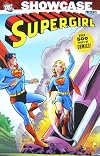
After recently catching up on the Supergirl TV show I thought it might be fun to go back and check out the original source material. Oh boy this is painful stuff to read. Covering the first two years of the Girl of Steel’s stories it is a reflection of the misogynistic gender role expectations of the time that makes for an uncomfortable read today. Also Superman just comes across as a butt-head of the highest caliber. After meeting his long lost cousin and hearing her traumatic tale of show more survival he dumps her in a orphanage and basically tells her to stay out of the way so she won’t devalue his reputation. As a result we get repetitive stories that revolve around Supergirl trying to avoid being adopted (which apparently was a very casual process), helping people out while staying hidden (in which she spends a lot of time blowing dust in peoples eyes, digging tunnels, or melting stuff with her x-ray vision), going places she doesn’t have to hide (other times & planets), and generally trying to win the approval of a man who doesn’t want to recognize her existence (and the few times he does it’s via the use of the creepiest wink possible). Having said all that, one thing that does shine through is Supergirl’s central character of a cheerful disposition and a drive to help people in trouble - something that Melissa Benoist captures so well in the aforementioned TV show. show less

Access a version of the below that includes illustrations on my blog.
This collects the Legion's legendary original appearance, a smattering of guest appearances across various titles, and then the beginning of its ongoing run in Adventure Comics. I had read a few of these stories before (their original appearance, the death of Lightning Lad) but not most of them, and as both a literary scholar and a continuity nut, what interested me here—far more than the actual contents of the stories to show more be honest—was the way in which the Legion concept evolved and mutated as it was first established. There was absolutely no intention, originally, of making it into an ongoing thing... and how that would come about is not very straightforward!
It all begins with Adventure Comics #247 (Apr. 1958), where Cosmic Boy, Saturn Girl, and Lightning Boy (as he was then) come back in time to invite Superboy to join the Legion of Super-Heroes. Because this in the 1950s, and these Superboy stories for some reasons love for the characters to be assholes, they set up an initiation test for him that they purposefully rig to fail. At the end, they say, "it proved you're a super-good sport, taking it all with a smile!" I once read this aloud to my six-year-old, and they didn't understand why Superboy just wouldn't say why he couldn't complete the initiation tests (he had a legitimate reason every time), or why the Legion would do this to them.
Other members of the Legion appear in crowd shots, but only a couple are ever in focus, on the final panel of page 11. One seems to be Brainiac 5, but apparently he had white skin in the original printing of this story; the Grand Comics Database tells me this character was recolored to look like Colossal Boy when the story was reprinted in Superman Annual #6 (Winter 1962/63). It's not clear to me when he was first recolored to look like Brainiac 5; the GCD first mentions the recoloring in its entry on this volume, but I can see that in the interim, it was also reprinted in DC Special Blue Ribbon Digest #1 (Mar./Apr. 1980) and Adventure Comics #491 (Sept. 1982).
Anyway, it took over eighteen months for the Legion to reappear, in Adventure #267 (Dec. 1959). While their first story was written by Otto Binder, this one is by Jerry Siegel, and you can see that Sigel closely studied the first Legion story, in that once again, the three Legion founders turn up and act like assholes: they deliberately upstage Superboy so that he feels isolated and lonely and flies away from the Earth, enabling them to trick him into going to a planet with a kryptonite prison, where they lock him up so that he cannot commit crimes they saw him perform five years hence on the "futurescope." (Surely it should be the pastscope, because these events would occur 995 years earlier for the Legion!) Like a lot of comics stories from this era, once has the feeling Jerry Siegel made it up as he went along. Superboy escapes the prison because a trophy on the planet explodes, "launching an atomic chain reaction" the causes the collapse of the kryptonite prison; the chain reaction also releases the element "sigellian," which is poisonous to the Legionnaires, so Superboy shouts loud enough to change its molecular structure, rendering it harmless. At that exact moment, Saturn Girl happens to hear a radio transmission from Earth where the U.S. president releases Superboy from his oath of silence, allowing Superboy to finally explain that he didn't commit those crimes five years in the future but just then (the futurescope was miscalibrated), and they weren't really crimes, but things he was asked to do by the U.S. government!
Like Jesus Christ, could this chain of events be any more contrived and nonsensical? There are repeated references to the planet being built by a group of superheroes along with the Legion, who we see in some crowd shots; I kind of think Siegel missed that the Legion was from the future because there's only one quick reference to a time-bubble, which I feel like could have been added by an editor. Anyway, it seems like the first Legion story was a success, but the perception was that what people really liked about it was the Legion being jerks to Superboy for contrived reasons, so they just told that same story again. I did really like the art by George Papp, though, which is more expressive than normal for the era.
The Legion wouldn't appear in another Superboy story for over another year, but in the interim they did pop up in a Supergirl story, in Action Comics #267 (Aug. 1960). Once again, it emulates the original story, this time by having the three original Legionnaires pop up to tease Supergirl that they know her secret identity, before bringing her to the future to undergo an initiation test, which she ends up failing. (Here because red kryptonite causes her to turn into an adult, rendering her too old for Legion membership; rather than, say, help her, the Legion just dumps her into the past, where luckily she soon de-ages.)
The story is the first to give us new, named Legionnaires: Colossal Boy, Invisible Kid, and Chameleon Boy. What's also noteworthy here is a fact that later stories would eventually ignore: the Lightning Lad, Saturn Girl, and Cosmic Boy who meet Supergirl here are in fact the children of the ones Superboy met; I guess the idea was that the Legion was always travelling exactly one thousand years into the past, and while Superboy is Superman when he was a boy, Supergirl was the adult Superman's contemporary, and thus from a generation later. Eventually, though, this would be streamlined and retconned away, so that these were the same three Legionnaires Superboy originally met, and indeed, my understanding is that at some point it was established that from the Legion's perspective, Action #267 actually preceded Adventure #247, so that the Legion actually recruited Supergirl first. I am not sure when or why this was done.
After this, we get a string of minor appearances, lacking the full Legion. In Superboy #86 (Jan. 1961), Lightning Lad cameos in a story about Superboy battling Lex Luthor, seemingly just there to point out that he is yet another "L.L." in Clark Kent's life. Then in Adventure #282 (Mar. 1961), we get the first story that actually substantively uses a new member of the Legion, when Star Boy chases super-criminals back in time, and Lana Lang decides to date him in a failed attempt to make Superboy jealous. We spend a lot of time here on Star Boy's home planet of Xanthu in the future, which I don't remember seeing much about in later stories. It has two noteworthy aspects: it's first story to really expand on the Legion's future world, and it also deviates from the Adventure #247 formula, so clearly writer Otto Binder was putting some thought into what people liked about the Legion stories. But also it has Chamelon Boy as a Legion member in Superboy's time, so Binder seemingly missed that Chamelon Boy was from a generation later according to Action #267. Or, I guess, this Chameleon Boy is that Chamelon Boy's parent! Either way, the confusing nature of having two Legions both a millennium hence but a generation apart is pretty obvious, and is already causing problems.
Supergirl goes into the future again in Action #276 (May 1961); this is the story that sees her gain Legion membership, alongside Brainiac 5, in his first appearance. Is Brainiac 5's appearance here the reason for retconning Supergirl to predate Superboy in the Legion, so as to line up with Brainiac 5's appearance in the reprints of Adventure #247? Anyway, this story is pretty dumb but I guess you have to hand it to Jerry Siegel for coming up with a clever spin on a villain with Brainiac 5.
I'm not totally going story by story here, but Legion lore develops in a really significant way with Superman #147 (Aug. 1961), the first story where the adult Superman meets the Legion. In this story, Lex Luthor reaches out into the future to discover that just as there's a Legion of Super-Heroes, there's also a Legion of Super-Villains. I hadn't realized that the LSV (do people call them that?) first appeared in a Superman story—but that's the reason they're adults, I guess, because they come from one thousand years in Superman's future, and thus the era where the Legionnaires are grown up. The Legionnaires appear here, too, and since they're relatively contemporary to Superman, they are also grown up.
The collapsing of the two Legion eras into one somewhat happens in Adventure #290 (Nov. 1961), which establishes how Sun Boy joined the Legion—we saw him get rejected at the tryouts in Action #276, a Supergirl/Superman-era Legion story, but now he's in the Superboy-era Legion. Was this on purpose? Was the unknown writer just confused? (I should also note that many of these early Legion stories indicate only one person can join the Legion per year, but later timelines would indicate all of these happened over the first year of the Legion. Which makes sense as a retcon; there are so many members now that the founding members couldn't be teenagers if there really was one new member per year!)
(One should also note that for many of the stories here, the Legion is said to be from the twenty-first century, not the thirtieth. Not sure why this happened, except maybe carelessness. In one of the stories to mention the twenty-first century, we're also told evolutionary processes have happened since Supergirl's time. I mean, I know one thousand years isn't enough for that, but certainly one hundred aren't!)
I think the last story to clearly have the two different Legion time eras is Action #289 (June 1962). This is a deeply weird story where Supergirl decides Superman needs a woman worthy of him; among the things she tries is taking him to the time of the adult Legion, to see if Saturn Woman could be it. (She's not, because she's married to Lightning Man... that says, she allows Superman to give her two really deep kisses anyway!) This story has Superman and Supergirl devise the flying belts that replace the rocket packs the Legion used in earlier stories... but the flying belts continue to appear in Superboy-era Legion stories after this.
We also get the first Legion of Super-Pets story in Adventure #293 (Feb. 1962); I hadn't realized that in Comet the Super-Horse's original appearance, he was picked up from Supergirl's relative future, as he hadn't actually been introduced in the Supergirl stories yet!
After appearing once in 1958, once in 1959, once in 1960, five times in 1961, and four times in early 1962, the Legion got an ongoing feature in Adventure #300 (Sept. 1962), the first six installments of which appear here. Adventure #301 (Oct. 1962) is the first Legion story with no Supergirl or Superboy or Superman, the first to purely take place in the future era, indicating that DC saw what the appeal of these characters really was. Adventure #302 (Nov. 1962) is the first where there's no specific reason for Superboy coming to the future, he just zips in to hang out with the Legion.
That the Legion was on ongoing concern is very clearly demonstrated by the second-last story collected here, Adventure #304 (Jan. 1963), where Saturn Girl is elected Legion leader and Lightning Lad dies. Here we see that adventures can have real, meaningful consequences. Also, this is the establishment of Saturn Girl's practical, ruthless side—she is one of my favorite Legionnaires. Manipulating her way to become Legion leader so she can save everyone else's life! Amazing. Along the same lines, we do get the saga of Mon-El, who first appears in a non-Legion story included here, Superboy #89 (June 1961), where he is trapped in the Phantom Zone, and then reappears in Adventure #300, where he temporarily gets out, and then he permanently gets out in #305. Disconnected from the need of superhero comics to be in an eternal present, the Legion can develop and change over time.
These stories, as my comments probably indicate, are generally not very sophisticated, in either art or story, though I did generally appreciate the work of George Papp. But there are a multitude of character and concepts here that would provide fertile ground for what has been sixty years of stories thus far. I am glad to finally dive back into these earliest tales, and I look forward to seeing the Legion continue to develop when I get to volume 2. show less
This collects the Legion's legendary original appearance, a smattering of guest appearances across various titles, and then the beginning of its ongoing run in Adventure Comics. I had read a few of these stories before (their original appearance, the death of Lightning Lad) but not most of them, and as both a literary scholar and a continuity nut, what interested me here—far more than the actual contents of the stories to show more be honest—was the way in which the Legion concept evolved and mutated as it was first established. There was absolutely no intention, originally, of making it into an ongoing thing... and how that would come about is not very straightforward!
It all begins with Adventure Comics #247 (Apr. 1958), where Cosmic Boy, Saturn Girl, and Lightning Boy (as he was then) come back in time to invite Superboy to join the Legion of Super-Heroes. Because this in the 1950s, and these Superboy stories for some reasons love for the characters to be assholes, they set up an initiation test for him that they purposefully rig to fail. At the end, they say, "it proved you're a super-good sport, taking it all with a smile!" I once read this aloud to my six-year-old, and they didn't understand why Superboy just wouldn't say why he couldn't complete the initiation tests (he had a legitimate reason every time), or why the Legion would do this to them.
Other members of the Legion appear in crowd shots, but only a couple are ever in focus, on the final panel of page 11. One seems to be Brainiac 5, but apparently he had white skin in the original printing of this story; the Grand Comics Database tells me this character was recolored to look like Colossal Boy when the story was reprinted in Superman Annual #6 (Winter 1962/63). It's not clear to me when he was first recolored to look like Brainiac 5; the GCD first mentions the recoloring in its entry on this volume, but I can see that in the interim, it was also reprinted in DC Special Blue Ribbon Digest #1 (Mar./Apr. 1980) and Adventure Comics #491 (Sept. 1982).
Anyway, it took over eighteen months for the Legion to reappear, in Adventure #267 (Dec. 1959). While their first story was written by Otto Binder, this one is by Jerry Siegel, and you can see that Sigel closely studied the first Legion story, in that once again, the three Legion founders turn up and act like assholes: they deliberately upstage Superboy so that he feels isolated and lonely and flies away from the Earth, enabling them to trick him into going to a planet with a kryptonite prison, where they lock him up so that he cannot commit crimes they saw him perform five years hence on the "futurescope." (Surely it should be the pastscope, because these events would occur 995 years earlier for the Legion!) Like a lot of comics stories from this era, once has the feeling Jerry Siegel made it up as he went along. Superboy escapes the prison because a trophy on the planet explodes, "launching an atomic chain reaction" the causes the collapse of the kryptonite prison; the chain reaction also releases the element "sigellian," which is poisonous to the Legionnaires, so Superboy shouts loud enough to change its molecular structure, rendering it harmless. At that exact moment, Saturn Girl happens to hear a radio transmission from Earth where the U.S. president releases Superboy from his oath of silence, allowing Superboy to finally explain that he didn't commit those crimes five years in the future but just then (the futurescope was miscalibrated), and they weren't really crimes, but things he was asked to do by the U.S. government!
Like Jesus Christ, could this chain of events be any more contrived and nonsensical? There are repeated references to the planet being built by a group of superheroes along with the Legion, who we see in some crowd shots; I kind of think Siegel missed that the Legion was from the future because there's only one quick reference to a time-bubble, which I feel like could have been added by an editor. Anyway, it seems like the first Legion story was a success, but the perception was that what people really liked about it was the Legion being jerks to Superboy for contrived reasons, so they just told that same story again. I did really like the art by George Papp, though, which is more expressive than normal for the era.
The Legion wouldn't appear in another Superboy story for over another year, but in the interim they did pop up in a Supergirl story, in Action Comics #267 (Aug. 1960). Once again, it emulates the original story, this time by having the three original Legionnaires pop up to tease Supergirl that they know her secret identity, before bringing her to the future to undergo an initiation test, which she ends up failing. (Here because red kryptonite causes her to turn into an adult, rendering her too old for Legion membership; rather than, say, help her, the Legion just dumps her into the past, where luckily she soon de-ages.)
The story is the first to give us new, named Legionnaires: Colossal Boy, Invisible Kid, and Chameleon Boy. What's also noteworthy here is a fact that later stories would eventually ignore: the Lightning Lad, Saturn Girl, and Cosmic Boy who meet Supergirl here are in fact the children of the ones Superboy met; I guess the idea was that the Legion was always travelling exactly one thousand years into the past, and while Superboy is Superman when he was a boy, Supergirl was the adult Superman's contemporary, and thus from a generation later. Eventually, though, this would be streamlined and retconned away, so that these were the same three Legionnaires Superboy originally met, and indeed, my understanding is that at some point it was established that from the Legion's perspective, Action #267 actually preceded Adventure #247, so that the Legion actually recruited Supergirl first. I am not sure when or why this was done.
After this, we get a string of minor appearances, lacking the full Legion. In Superboy #86 (Jan. 1961), Lightning Lad cameos in a story about Superboy battling Lex Luthor, seemingly just there to point out that he is yet another "L.L." in Clark Kent's life. Then in Adventure #282 (Mar. 1961), we get the first story that actually substantively uses a new member of the Legion, when Star Boy chases super-criminals back in time, and Lana Lang decides to date him in a failed attempt to make Superboy jealous. We spend a lot of time here on Star Boy's home planet of Xanthu in the future, which I don't remember seeing much about in later stories. It has two noteworthy aspects: it's first story to really expand on the Legion's future world, and it also deviates from the Adventure #247 formula, so clearly writer Otto Binder was putting some thought into what people liked about the Legion stories. But also it has Chamelon Boy as a Legion member in Superboy's time, so Binder seemingly missed that Chamelon Boy was from a generation later according to Action #267. Or, I guess, this Chameleon Boy is that Chamelon Boy's parent! Either way, the confusing nature of having two Legions both a millennium hence but a generation apart is pretty obvious, and is already causing problems.
Supergirl goes into the future again in Action #276 (May 1961); this is the story that sees her gain Legion membership, alongside Brainiac 5, in his first appearance. Is Brainiac 5's appearance here the reason for retconning Supergirl to predate Superboy in the Legion, so as to line up with Brainiac 5's appearance in the reprints of Adventure #247? Anyway, this story is pretty dumb but I guess you have to hand it to Jerry Siegel for coming up with a clever spin on a villain with Brainiac 5.
I'm not totally going story by story here, but Legion lore develops in a really significant way with Superman #147 (Aug. 1961), the first story where the adult Superman meets the Legion. In this story, Lex Luthor reaches out into the future to discover that just as there's a Legion of Super-Heroes, there's also a Legion of Super-Villains. I hadn't realized that the LSV (do people call them that?) first appeared in a Superman story—but that's the reason they're adults, I guess, because they come from one thousand years in Superman's future, and thus the era where the Legionnaires are grown up. The Legionnaires appear here, too, and since they're relatively contemporary to Superman, they are also grown up.
The collapsing of the two Legion eras into one somewhat happens in Adventure #290 (Nov. 1961), which establishes how Sun Boy joined the Legion—we saw him get rejected at the tryouts in Action #276, a Supergirl/Superman-era Legion story, but now he's in the Superboy-era Legion. Was this on purpose? Was the unknown writer just confused? (I should also note that many of these early Legion stories indicate only one person can join the Legion per year, but later timelines would indicate all of these happened over the first year of the Legion. Which makes sense as a retcon; there are so many members now that the founding members couldn't be teenagers if there really was one new member per year!)
(One should also note that for many of the stories here, the Legion is said to be from the twenty-first century, not the thirtieth. Not sure why this happened, except maybe carelessness. In one of the stories to mention the twenty-first century, we're also told evolutionary processes have happened since Supergirl's time. I mean, I know one thousand years isn't enough for that, but certainly one hundred aren't!)
I think the last story to clearly have the two different Legion time eras is Action #289 (June 1962). This is a deeply weird story where Supergirl decides Superman needs a woman worthy of him; among the things she tries is taking him to the time of the adult Legion, to see if Saturn Woman could be it. (She's not, because she's married to Lightning Man... that says, she allows Superman to give her two really deep kisses anyway!) This story has Superman and Supergirl devise the flying belts that replace the rocket packs the Legion used in earlier stories... but the flying belts continue to appear in Superboy-era Legion stories after this.
We also get the first Legion of Super-Pets story in Adventure #293 (Feb. 1962); I hadn't realized that in Comet the Super-Horse's original appearance, he was picked up from Supergirl's relative future, as he hadn't actually been introduced in the Supergirl stories yet!
After appearing once in 1958, once in 1959, once in 1960, five times in 1961, and four times in early 1962, the Legion got an ongoing feature in Adventure #300 (Sept. 1962), the first six installments of which appear here. Adventure #301 (Oct. 1962) is the first Legion story with no Supergirl or Superboy or Superman, the first to purely take place in the future era, indicating that DC saw what the appeal of these characters really was. Adventure #302 (Nov. 1962) is the first where there's no specific reason for Superboy coming to the future, he just zips in to hang out with the Legion.
That the Legion was on ongoing concern is very clearly demonstrated by the second-last story collected here, Adventure #304 (Jan. 1963), where Saturn Girl is elected Legion leader and Lightning Lad dies. Here we see that adventures can have real, meaningful consequences. Also, this is the establishment of Saturn Girl's practical, ruthless side—she is one of my favorite Legionnaires. Manipulating her way to become Legion leader so she can save everyone else's life! Amazing. Along the same lines, we do get the saga of Mon-El, who first appears in a non-Legion story included here, Superboy #89 (June 1961), where he is trapped in the Phantom Zone, and then reappears in Adventure #300, where he temporarily gets out, and then he permanently gets out in #305. Disconnected from the need of superhero comics to be in an eternal present, the Legion can develop and change over time.
These stories, as my comments probably indicate, are generally not very sophisticated, in either art or story, though I did generally appreciate the work of George Papp. But there are a multitude of character and concepts here that would provide fertile ground for what has been sixty years of stories thus far. I am glad to finally dive back into these earliest tales, and I look forward to seeing the Legion continue to develop when I get to volume 2. show less

Access a version of the below that includes illustrations on my blog.
Whenever I dip back into the pre-Great Darkness Saga adventures of the Legion of Super-Heroes, I'm like, this is what people look back on so fondly? Even by the standards of 1960s superhero comics, I would argue, most of these stories are dismal and dull and daft.
The dominant writers of the period, Edmond Hamilton and Jerry Siegel, are obsessed with plots where it seems like the Legionnaires have turned against one another: show more the stories collected in this volume include leader Sun Boy* going nuts from space fatigue and the Legion having to take him down, the Legion imprisoning Lightning Lad for revealing their secrets to their enemies, the female Legionnaires seducing and eliminating the men under the influence of evil women from the planet (I shit you not) Femnaz, five Legionnaires traveling back in time solely to screw over Superboy by revealing his secret identity, and short-lived member Command Kid turning the Legionnaires against each other. Each plot is more contrived than the previous, and the Femnaz one is ridiculously awful: the women of Femnaz destroy their planet's men because the men try to clamp down on violent arena games and won't let them shoot rockets at the moon. They see the error of their ways when they crack their moon in half with some of their rockets, and the male Legionnaires put it back together for them. Uh huh.
Almost without exception, these stories can only be liked for the potential they possess, rather than the actual ideas in them. A good case in point is the Time Trapper, a rare example of a genuine story arc in this series. He's mentioned in a couple stories as a contrived way to get the overly poweful Superboy and Mon-El out of the action, but he intrigues nevertheless: because of the "Iron Curtain of Time" he's created, the Legion can't pass beyond their own time period, no matter how hard the more powerful Legionnaires try. But the way this plot plays out is a bit silly. After a few mentions of this Iron Curtain of Time, the Legion considers using a never-before-mentioned superweapon, the Concentrator, against the Time Trapper. They decide not to do it, but having mentioned this device to the Science Police Chief, he decides they must be put through rigorous psychological evaluations to see if they'll break and reveal its existence and function to outsiders under pressure. The S.P. Chief turns out to be the Time Trapper in disguise, and they foil his plan using the Concentrator, but he escapes back into the future beyond the Iron Curtain of Time. The next story is all about the Legion making preparations to track the Time Trapper down... but they never actually do this, and he's not mentioned again in this volume. The Time Trapper's name intrigues, as does the idea of the futuristic Legion having an enemy from even further in the future, but the stories using him are dumb.
This is especially so of the story where the Legion is preparing to track him down. They're so desperate they call in the Legion of Super-Pets from the twentieth century: Krypto the Super-Dog, Comet the Super-Horse, Streaky the Super-Cat, and Beppo the Super-Monkey. Chameleon Boy's pet, Proty II, gets jealous and demands a position on the team, but because Proty doesn't have any superpowers, they make him do a try-out to demonstrate he can make the cut anyway. There are a lot of problems with this. The first is that Proty is seemingly as sentient as any Legionnaire; he seems to have been designated a "pet" solely because his natural form is of a small blob instead of a humanoid. The second is that any of the "pets" count as pets, since they all seem to be capable of reason and communication. The last is that being a shapeshifting telepath somehow isn't enough a superpower to qualify Proty for membership in the Legion of Super-Pets, even though his "master" Chameleon Boy gets to be in the Legion of Super-Heroes on virtue of just being a shapeshifter and not a telepath! In a later story, Proty sets up a puzzle to determine the Legion leader, one that only one member of the Legion can even solve, yet he's somehow still just a pet. Space racism at work, I guess.
You can see how many of the stories here had potential that was picked up by later writers: the Heroes of Lallor, four super-teens from a planet ruled by a dictatorship, would recur now and again, and their tale is one of the better here. (A villain manipulates the Heroes of Lallor and the Legion into seeing each other as enemies, but understanding and compassion win the day.) I was fascinated to see the debut of Lone Wolf, the hero later known as Timber Wolf; he eventually becomes something of a savage loner, but here he's as whitebread as all the other Legionnaires. And though his actual plan was dumb, I loved the idea of Lex Luthor travelling into the future and pretending to be a pre-evil Lex by wearing a wig to earn the trust of the Legion in order to kill them just because they're friends with Superboy/man. So there's some potential here, but most of it isn't delivered on.
Also: what's up with the Bouncing Boy subplot? He gets his powers removed by mistake in an aside in one issue, and they're temporarily restored for mere minutes in another. Like, I can't even work out what motivates these little snippets because he hadn't even done anything in the book before he showed up to have his powers eliminated.
* Continuity is never a strong point of the Legion: in Adventure Comics #318 (Mar. 1964) and #319 (Apr. 1964), Sun Boy is leader; in Adventure #323 (Aug. 1964), Saturn Girl is up for re-election as leader. Saturn Girl had previously been elected leader in Adventure #304 (Jan. 1963), so it seems like Jerry Siegel forgot about #318-19 when writing #323. We could assume, however, that there was an unseen election between #319 and #323-- after how disastrously Sun Boy's leadership went in #318 (and #319 wasn't exactly a shining hour, either), it would make sense for there to be an election and for an established safe hand like Saturn Girl to be reelected. What weirds me out is not the fault of this book though: none of the on-line lists I can find of Legion leaders include Sun Boy, which seems an odd thing for the detail-oriented Legion fans to miss. show less
Whenever I dip back into the pre-Great Darkness Saga adventures of the Legion of Super-Heroes, I'm like, this is what people look back on so fondly? Even by the standards of 1960s superhero comics, I would argue, most of these stories are dismal and dull and daft.
The dominant writers of the period, Edmond Hamilton and Jerry Siegel, are obsessed with plots where it seems like the Legionnaires have turned against one another: show more the stories collected in this volume include leader Sun Boy* going nuts from space fatigue and the Legion having to take him down, the Legion imprisoning Lightning Lad for revealing their secrets to their enemies, the female Legionnaires seducing and eliminating the men under the influence of evil women from the planet (I shit you not) Femnaz, five Legionnaires traveling back in time solely to screw over Superboy by revealing his secret identity, and short-lived member Command Kid turning the Legionnaires against each other. Each plot is more contrived than the previous, and the Femnaz one is ridiculously awful: the women of Femnaz destroy their planet's men because the men try to clamp down on violent arena games and won't let them shoot rockets at the moon. They see the error of their ways when they crack their moon in half with some of their rockets, and the male Legionnaires put it back together for them. Uh huh.
Almost without exception, these stories can only be liked for the potential they possess, rather than the actual ideas in them. A good case in point is the Time Trapper, a rare example of a genuine story arc in this series. He's mentioned in a couple stories as a contrived way to get the overly poweful Superboy and Mon-El out of the action, but he intrigues nevertheless: because of the "Iron Curtain of Time" he's created, the Legion can't pass beyond their own time period, no matter how hard the more powerful Legionnaires try. But the way this plot plays out is a bit silly. After a few mentions of this Iron Curtain of Time, the Legion considers using a never-before-mentioned superweapon, the Concentrator, against the Time Trapper. They decide not to do it, but having mentioned this device to the Science Police Chief, he decides they must be put through rigorous psychological evaluations to see if they'll break and reveal its existence and function to outsiders under pressure. The S.P. Chief turns out to be the Time Trapper in disguise, and they foil his plan using the Concentrator, but he escapes back into the future beyond the Iron Curtain of Time. The next story is all about the Legion making preparations to track the Time Trapper down... but they never actually do this, and he's not mentioned again in this volume. The Time Trapper's name intrigues, as does the idea of the futuristic Legion having an enemy from even further in the future, but the stories using him are dumb.
This is especially so of the story where the Legion is preparing to track him down. They're so desperate they call in the Legion of Super-Pets from the twentieth century: Krypto the Super-Dog, Comet the Super-Horse, Streaky the Super-Cat, and Beppo the Super-Monkey. Chameleon Boy's pet, Proty II, gets jealous and demands a position on the team, but because Proty doesn't have any superpowers, they make him do a try-out to demonstrate he can make the cut anyway. There are a lot of problems with this. The first is that Proty is seemingly as sentient as any Legionnaire; he seems to have been designated a "pet" solely because his natural form is of a small blob instead of a humanoid. The second is that any of the "pets" count as pets, since they all seem to be capable of reason and communication. The last is that being a shapeshifting telepath somehow isn't enough a superpower to qualify Proty for membership in the Legion of Super-Pets, even though his "master" Chameleon Boy gets to be in the Legion of Super-Heroes on virtue of just being a shapeshifter and not a telepath! In a later story, Proty sets up a puzzle to determine the Legion leader, one that only one member of the Legion can even solve, yet he's somehow still just a pet. Space racism at work, I guess.
You can see how many of the stories here had potential that was picked up by later writers: the Heroes of Lallor, four super-teens from a planet ruled by a dictatorship, would recur now and again, and their tale is one of the better here. (A villain manipulates the Heroes of Lallor and the Legion into seeing each other as enemies, but understanding and compassion win the day.) I was fascinated to see the debut of Lone Wolf, the hero later known as Timber Wolf; he eventually becomes something of a savage loner, but here he's as whitebread as all the other Legionnaires. And though his actual plan was dumb, I loved the idea of Lex Luthor travelling into the future and pretending to be a pre-evil Lex by wearing a wig to earn the trust of the Legion in order to kill them just because they're friends with Superboy/man. So there's some potential here, but most of it isn't delivered on.
Also: what's up with the Bouncing Boy subplot? He gets his powers removed by mistake in an aside in one issue, and they're temporarily restored for mere minutes in another. Like, I can't even work out what motivates these little snippets because he hadn't even done anything in the book before he showed up to have his powers eliminated.
* Continuity is never a strong point of the Legion: in Adventure Comics #318 (Mar. 1964) and #319 (Apr. 1964), Sun Boy is leader; in Adventure #323 (Aug. 1964), Saturn Girl is up for re-election as leader. Saturn Girl had previously been elected leader in Adventure #304 (Jan. 1963), so it seems like Jerry Siegel forgot about #318-19 when writing #323. We could assume, however, that there was an unseen election between #319 and #323-- after how disastrously Sun Boy's leadership went in #318 (and #319 wasn't exactly a shining hour, either), it would make sense for there to be an election and for an established safe hand like Saturn Girl to be reelected. What weirds me out is not the fault of this book though: none of the on-line lists I can find of Legion leaders include Sun Boy, which seems an odd thing for the detail-oriented Legion fans to miss. show less

The Superman Chronicles is a series with a rather ambitious aim-- to reprint "every Superman story in exact chronological order!" I don't know how far they plan on going with this thing, but right now they are up to five volumes of this stuff, which covers about three years of publishing, so they've got a ways to go, even if they are only doing the Golden Age. The first volume contains seventeen stories, mostly from various issues of Action Comics, though there is also one issue each of the show more New York World's Fair and Superman books. I'm not going to review all of these stories, however, because that would get pretty redundant.
Action Comics #1 ("Superman, Champion of the Oppressed!") of course created a splash on its initial publication, and it is easy to see why. Because Superman is awesome. In this first issue, he stops a woman from being wrongfully executed, stops a wife-beating in progress from a tip at the Daily Star (though who exactly phones a newspaper to inform of wife-beatings in progress is beyond me), takes Lois out for a dance, prevents Lois from being raped, and intimidates a lobbyist in Washington, D.C. This is a much more down-to-Earth Superman than the modern reader is used to-- not in the sense that he's more relateable as a character, because he's absolutely not-- but because he's got a much lower powerset (he can't yet fly, though he can run fast and jump high, and he has enormous strength, but no laser vision or anything like that), and he deals with much more "normal" problems. There's only one supervillain in this entire collection-- Ultra-Humanite makes his appearance in one of the last stories, and even then his plan is to take over the world via a taxi protection racket.
So Superman pretty much spends all of his time righting human wrongs-- and he does this in a most entertaining fashion. In Action Comics #2 ("Revolution in San Monte, Pt. 2"), he takes the boss of the aforementioned lobbyist to the South American country where his company is selling munitions to spur on a civil war, forcing him to enlist and then enlisting alongside him! Hilarity ensues as the lobbyist discovers the horrors of war, Lois is nearly executed for some random reason, Superman battles an airplane, and the war ends when the leaders of each side suddenly realize they have no idea what the war's about. How could you not enjoy this?
Of course, random South American countries aren't all Superman cares about. This early Superman is always sticking up for the little guy, and of course you know he's always going to win, because no one remotely capable of threatening him even exists. Where the entertainment value in these stories generally comes from is in how Superman rights his wrongs-- usually by giving the perpetrators a taste of their own medicine: he traps a negligent mine owner in his own mine (along with a group of bored socialites), he solves the problem of tenement housing by destroying the housing so that the government will have to build nicer housing (not exactly on the side of the law, this Superman), he puts a crooked prison warden in his own prison, he gets back on a group of stock swindlers by making them think their own shares are worth millions... and then wrecking their oil wells permanently, and he combats reckless driving by smashing up used car lots.
Of course, sometimes you have to wonder if he doesn't have better things to do, such as when he investigates cheating on the "Dale" and "Cordell" college football teams, or when he joins a circus to increase its flagging ticket sales. Though, in the end, there's usually an attempted murder, which would seem to justify his super-involvement.
The early Clark Kent persona is interesting-- I prefer a much more confident Clark myself, but this Clark is an absolute pansy. One is somewhat unsure why he must play at being such a pansy; at one point Clark gives up a source to a man likely to kill him just to keep up his persona! Of course, Superman rescues the man, but surely that wasn't necessary? Still, it's also interesting to note the overlap between the two persona-- frequently, he ends up embroiled in an adventure when using his Superman persona to do some investigative journalism that Clark doesn't have the powers to carry out. On the other hand, God knows what he's playing at with Lois Lane. For some reason, he seems purposefully mess things up with her as Clark, but when she's obviously willing to jump Superman, he acts entirely aloof and noncaring! (One can't blame him for having a thing for Lois, though-- even this early on, she's plucky and courageous, always doing what needs to be done for her story, and she doesn't take crap from anyone. And she's apparently a helluva kisser to boot.)
But by the end of the volume, this early Superman is starting to come to an end. As appealing as the idea of Superman, Champion of the Oppressed is, it can't work forever. When Superman's always going to win, it's eventually boring (the Superman vs. a cracking dam story is a great example), and he can't reshape the social structure of America-- which Superman could if he was real. The coming of Ultra-Humanite signals the end of this approach to Superman, as unrelentingly fun and enjoyable as it might be. (originally written September 2008) show less
Action Comics #1 ("Superman, Champion of the Oppressed!") of course created a splash on its initial publication, and it is easy to see why. Because Superman is awesome. In this first issue, he stops a woman from being wrongfully executed, stops a wife-beating in progress from a tip at the Daily Star (though who exactly phones a newspaper to inform of wife-beatings in progress is beyond me), takes Lois out for a dance, prevents Lois from being raped, and intimidates a lobbyist in Washington, D.C. This is a much more down-to-Earth Superman than the modern reader is used to-- not in the sense that he's more relateable as a character, because he's absolutely not-- but because he's got a much lower powerset (he can't yet fly, though he can run fast and jump high, and he has enormous strength, but no laser vision or anything like that), and he deals with much more "normal" problems. There's only one supervillain in this entire collection-- Ultra-Humanite makes his appearance in one of the last stories, and even then his plan is to take over the world via a taxi protection racket.
So Superman pretty much spends all of his time righting human wrongs-- and he does this in a most entertaining fashion. In Action Comics #2 ("Revolution in San Monte, Pt. 2"), he takes the boss of the aforementioned lobbyist to the South American country where his company is selling munitions to spur on a civil war, forcing him to enlist and then enlisting alongside him! Hilarity ensues as the lobbyist discovers the horrors of war, Lois is nearly executed for some random reason, Superman battles an airplane, and the war ends when the leaders of each side suddenly realize they have no idea what the war's about. How could you not enjoy this?
Of course, random South American countries aren't all Superman cares about. This early Superman is always sticking up for the little guy, and of course you know he's always going to win, because no one remotely capable of threatening him even exists. Where the entertainment value in these stories generally comes from is in how Superman rights his wrongs-- usually by giving the perpetrators a taste of their own medicine: he traps a negligent mine owner in his own mine (along with a group of bored socialites), he solves the problem of tenement housing by destroying the housing so that the government will have to build nicer housing (not exactly on the side of the law, this Superman), he puts a crooked prison warden in his own prison, he gets back on a group of stock swindlers by making them think their own shares are worth millions... and then wrecking their oil wells permanently, and he combats reckless driving by smashing up used car lots.
Of course, sometimes you have to wonder if he doesn't have better things to do, such as when he investigates cheating on the "Dale" and "Cordell" college football teams, or when he joins a circus to increase its flagging ticket sales. Though, in the end, there's usually an attempted murder, which would seem to justify his super-involvement.
The early Clark Kent persona is interesting-- I prefer a much more confident Clark myself, but this Clark is an absolute pansy. One is somewhat unsure why he must play at being such a pansy; at one point Clark gives up a source to a man likely to kill him just to keep up his persona! Of course, Superman rescues the man, but surely that wasn't necessary? Still, it's also interesting to note the overlap between the two persona-- frequently, he ends up embroiled in an adventure when using his Superman persona to do some investigative journalism that Clark doesn't have the powers to carry out. On the other hand, God knows what he's playing at with Lois Lane. For some reason, he seems purposefully mess things up with her as Clark, but when she's obviously willing to jump Superman, he acts entirely aloof and noncaring! (One can't blame him for having a thing for Lois, though-- even this early on, she's plucky and courageous, always doing what needs to be done for her story, and she doesn't take crap from anyone. And she's apparently a helluva kisser to boot.)
But by the end of the volume, this early Superman is starting to come to an end. As appealing as the idea of Superman, Champion of the Oppressed is, it can't work forever. When Superman's always going to win, it's eventually boring (the Superman vs. a cracking dam story is a great example), and he can't reshape the social structure of America-- which Superman could if he was real. The coming of Ultra-Humanite signals the end of this approach to Superman, as unrelentingly fun and enjoyable as it might be. (originally written September 2008) show less
Lists
You May Also Like


Associated Authors
Statistics
- Works
- 254
- Also by
- 48
- Members
- 4,087
- Popularity
- #6,157
- Rating
- 3.8
- Reviews
- 51
- ISBNs
- 177
- Languages
- 5
- Favorited
- 3