

Mark Allan Powell
Author of Introducing the New Testament: A Historical, Literary, and Theological Survey
About the Author
Mark Allan Powell (PhD, Union Theological Seminary, Richmond) is the Robert and Phyllis Leatherman Professor of New Testament at Trinity Lutheran Seminary. He is the general editor of the HarperCollins Bible Dictionary and the author of numerous articles and books.
Image credit: via Alchetron
Series
Works by Mark Allan Powell
Introducing the New Testament: A Historical, Literary, and Theological Survey (2009) 441 copies, 2 reviews
What Is Narrative Criticism? (Guides to Biblical Scholarship New Testament Series) (1991) 236 copies
Advent/Christmas: Interpreting the Lessons of the Church Year (Proclamation 5, Series a) (1992) 9 copies
The Bible and Modern Literary Criticism: A Critical Assessment and Annotated Bibliography (Bibliographies and Indexes in Religious Studies) (1992) 6 copies
The Gospel of Mark: God's Grace in Action (Leader Guide) — Author — 2 copies
Narrative Criticism 1 copy
Associated Works
Hearing the New Testament: Strategies for Interpretation (1995) — Contributor, some editions — 392 copies, 3 reviews
Tagged
Common Knowledge
- Birthdate
- 1953-07-05
- Gender
- male
- Organizations
- Trinity Lutheran Seminary
- Nationality
- USA
- Associated Place (for map)
- USA
Members
Reviews

Now somewhat dated (even 11 years makes a big difference in this field), but still a good first reference before deciding which scholars to read. Powell seems to do a fairly decent job of keeping neutral. The strength of this is that he gives a good idea of what the strengths and weaknesses are of each scholar, in a form that is much easier to read than many of the books he is describing. The weakness is that most of these books are much richer than his description, and without the show more supporting arguments the conclusions are up in the air. It would be dangerous to argue for or against any of these positions merely on the basis of what Powell writes.
The scholars described are: Jesus Seminar, Crossan, Borg, Sanders, Meier, Wright. show less
The scholars described are: Jesus Seminar, Crossan, Borg, Sanders, Meier, Wright. show less
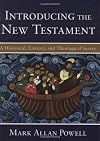
If you are looking for a good introduction to the NT, this is a good choice. Mark Allan Powell provides a chapter on each NT book as well as separate chapters on the NT world, NT writings, Jesus, the Gospels, the NT letters, and Paul. He does a great job at giving you the big picture without overwhelming you. Most chapters include an introduction, an overview of the book, historical background, and a list of the major themes. He is not afraid of broaching controversial topics, and he does so show more without forcing his own opinions too much into the conversation. All in all, a great book at learning the basic content and background to the NT. As an added bonus, he also has a website with flash cards and a quiz on every chapter with numerous articles for further reading and references. Highly recommended. show less
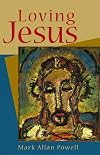
Loving Jesus by Mark Allan Powell. Epiphany-Oviedo ELCA library section 3A: Christianity: Jesus/God/Holy Spirit. This book by a professor of New Testament at a Lutheran seminary is written for everyday Lutherans just like us. He asks us to revisit our faith, not as an overly zealous “Jesus freak” would, but with a deeper commitment and steadier flame. He talks about religion in terms of “first naivete,” the early stage at which a person is constantly buoyed and happy in knowing show more Christ. Then he discusses the word piety, which sometimes has negative connotations; a pious person is sometimes thought of as being overly devout, perhaps even self-righteous. Instead, Powell asks us to consider piety to mean devotion to God, trying to love and understand others, and living with hope and faith. He terms this spiritual growth the “second naivete.” Using his own life experiences as examples, he shows us how some basic religious practices took his naive, youthful faith to a less certain but more bracing and exciting adult faith.
I found his review of prayer very helpful because I am not a very good pray-er, especially when I pray aloud. He covers when, where, how, and why we should pray. He suggests using the ACTS method of prayer which stands for Adoration, Confession, Thanksgiving and Supplication. Using these parts of a prayer gives us a framework upon which we can base our own personal praise, confessions, thanks and needs. This helps us formulate better prayers and if we can practice this, it becomes second nature. This was a very interesting discussion. Prayer is not just, “Dear God, I need this, I need that. And hurry it up! Amen.”
I also found his discussion about reading the bible helpful. He suggests how to read it, and and how we can expect to feel while reading it (perplexed, confused, and mostly puzzled.) He says that we will not understand parts of the bible, but with repeated reading and studying over the years, we will learn more and more about its meaning. He also suggests ways in which we can apply the bible personally to our own lives. This is very helpful and gives reading the bible greater value. He suggests that when you read a part of the bible you do not agree with, you should tell God this. Tell him your beliefs, biases, and doubts. Powell says, “Accept the bible’s invitation to engage the God of Scripture, and do this in a way that is honest and vulnerable.” In the end, everything in the bible, even the Old Testament, helps us to know, love, and have a relationship with Jesus Christ. This is the purpose of reading the bible. Thus reading the bible leads us into a deeper life of the spirit no matter what our current faith stage may be. How exciting, inspiring and comforting!
Important points of the text are separated into little quotations printed in gray type, and these are fun to read as highlights, for example: “Loving Jesus means loving someone who might sometimes get very annoyed with us, exasperated by our stupidity and appalled at our incompetence,” or “God is not only concerned with behavior, but also with the heart – not only with what we do, but also with why we do it.” show less
I found his review of prayer very helpful because I am not a very good pray-er, especially when I pray aloud. He covers when, where, how, and why we should pray. He suggests using the ACTS method of prayer which stands for Adoration, Confession, Thanksgiving and Supplication. Using these parts of a prayer gives us a framework upon which we can base our own personal praise, confessions, thanks and needs. This helps us formulate better prayers and if we can practice this, it becomes second nature. This was a very interesting discussion. Prayer is not just, “Dear God, I need this, I need that. And hurry it up! Amen.”
I also found his discussion about reading the bible helpful. He suggests how to read it, and and how we can expect to feel while reading it (perplexed, confused, and mostly puzzled.) He says that we will not understand parts of the bible, but with repeated reading and studying over the years, we will learn more and more about its meaning. He also suggests ways in which we can apply the bible personally to our own lives. This is very helpful and gives reading the bible greater value. He suggests that when you read a part of the bible you do not agree with, you should tell God this. Tell him your beliefs, biases, and doubts. Powell says, “Accept the bible’s invitation to engage the God of Scripture, and do this in a way that is honest and vulnerable.” In the end, everything in the bible, even the Old Testament, helps us to know, love, and have a relationship with Jesus Christ. This is the purpose of reading the bible. Thus reading the bible leads us into a deeper life of the spirit no matter what our current faith stage may be. How exciting, inspiring and comforting!
Important points of the text are separated into little quotations printed in gray type, and these are fun to read as highlights, for example: “Loving Jesus means loving someone who might sometimes get very annoyed with us, exasperated by our stupidity and appalled at our incompetence,” or “God is not only concerned with behavior, but also with the heart – not only with what we do, but also with why we do it.” show less
Decent overview of current scholarship on Acts. My one point of critique is that this book is 20 years old so does not reflect the most recent publications on Acts. Still the general approaches delineated within the text remain the same. Where an update would be helpful, is the inclusion of more details on Rhetorical approaches to Acts, particularly the Socio-Rhetorical approach of Ben Witherington and the like. It isn't as though Powell does not mention rhetorical criticism, but I think show more there is more to say here. show less
Lists
books read 2018 (1)
Awards

You May Also Like


Associated Authors
Statistics
- Works
- 30
- Also by
- 4
- Members
- 2,518
- Popularity
- #10,193
- Rating
- 4.0
- Reviews
- 14
- ISBNs
- 54
- Languages
- 1