
Brian Selznick
Author of The Invention of Hugo Cabret
About the Author
Brian Selznick is a Caldecott-winning author and illustrator of children's books born July 14, 1966 in East Brunswick Township, New Jersey. He graduated from the Rhode Island School of Design and then worked for three years at Eeyore's Books for Children in Manhattan while working on his first show more book, The Houdini Box. Selznick received the 2008 Caldecott Medal for The Invention of Hugo Cabret. He also won the Caldecott Honor for The Dinosaurs of Waterhouse Hawkins in 2002. Additional awards include the Texas Bluebonnet Award, the Rhode Island Children's Book Award, and the Christopher Award. The Invention of Hugo Cabret will be made into a film by director Martin Scorsese to be released in 2011. Other titles by illustrated by Selznick include: Frindle, The Landry News, Lunch Money, Wingwalker, and Baby Monkey, Private Eye. (Bowker Author Biography) show less
Image credit: 2018 National Book Festival By Avery Jensen - Own work, CC BY-SA 4.0, https://commons.wikimedia.org/w/index.php?curid=72641789
Works by Brian Selznick
The Hugo Movie Companion: A Behind the Scenes Look at How a Beloved Book Became a Major Motion Picture (2011) — Author — 146 copies, 3 reviews
Marly's Ghost 1 copy
Associated Works
When Marian Sang: The True Recital of Marian Anderson (2002) — Illustrator — 1,881 copies, 105 reviews
My Bookstore: Writers Celebrate Their Favorite Places to Browse, Read, and Shop (2012) — Contributor — 622 copies, 16 reviews
The Letter Q: Queer Writers' Notes to their Younger Selves (2012) — Contributor — 296 copies, 5 reviews
The Art of Reading: Forty Illustrators Celebrate RIF's 40th Anniversary (2005) — Contributor — 273 copies, 3 reviews
Our Story Begins: Your Favorite Authors and Illustrators Share Fun, Inspiring, and Occasionally Ridiculous Things They Wrote and Drew as Kids (2017) — Contributor — 105 copies, 2 reviews
Friends: Stories About New Friends, Old Friends, and Unexpectedly True Friends (2005) — Contributor — 92 copies
Tagged
Common Knowledge
- Canonical name
- Selznick, Brian
- Legal name
- Selznick, Brian P.
- Birthdate
- 1966-07-14
- Gender
- male
- Education
- Rhode Island School of Design (BFA|1988)
East Brunswick High School - Occupations
- children's book author
illustrator - Organizations
- Eeyore's Books for Children, Manhattan, New York (employee)
- Awards and honors
- Caldecott Medal (2008)
Caldecott Honor (2002)
Schneider Family Book Award (2012)
Quill Award (2007)
Texas Bluebonnet Award (1993)
Rhode Island Children's Book Award (1993, 1998) (show all 14)
Christopher Award (1997)
Robert F. Sibert Honor (2003, 2004)
Norman Sugarman Award (2004)
Flora Stieglitz Strauss Award (2002)
Rebecca Caudill Young Readers Award (1999)
California Young Readers Medal (2000)
Orbis Pictus Award Honor Book for outstanding non-fiction (2002)
May Hill Arbuthnot Lecturer (2015) - Relationships
- Fram, Joel (former employer)
Serlin, David (husband) - Nationality
- USA
- Birthplace
- East Brunswick, New Jersey, USA
- Places of residence
- East Brunswick, New Jersey, USA
Brooklyn, New York, New York, USA
San Diego, California, USA
La Jolla, California, USA - Map Location
- New Jersey, USA
Members
Discussions
July Fantasy Thread - SPOILERS - The Invention of Hugo Cabret in The Green Dragon (July 2012)
Reviews

This reminded me of Dandelion Wine. Vignettes within a common frame, each with its measure of wonder and strangeness, filled with boyhood exuberance but also loss and a ripening awareness that time both passes (irrevocably) and pauses (poignantly), sometimes within the same moment.
Selznick was absolutely right to title this Kaleidoscope. Fragments of imagery recur in these stories, and while I found my own meaning in them, I'm not sure another reader would share it. I bring my own show more experiences of grief and loneliness and my own treasured ideas—among them the vicissitudes of knowledge, the power of wonder, the mutability and tentativeness of reality—to the book, and those lenses shape not just what I see, but how I piece it together.
And maybe this is just more of the same—more of me seeing what I want to see—but while Kaleidoscope might allow its readers to find their own personal truths, I think the kaleidoscope structure, itself, holds a truth about how we respond to loss or trauma. The fragments, the shifting shapes they make, the ways moments form and reform, never reverting to what they were, but telling and retelling stories about where they came from, each story true but incomplete, each story a necessary piece in a mosaic that reconstructs an approximation of what was, even as it shapes and reshapes what is and what will be. show less
Selznick was absolutely right to title this Kaleidoscope. Fragments of imagery recur in these stories, and while I found my own meaning in them, I'm not sure another reader would share it. I bring my own show more experiences of grief and loneliness and my own treasured ideas—among them the vicissitudes of knowledge, the power of wonder, the mutability and tentativeness of reality—to the book, and those lenses shape not just what I see, but how I piece it together.
And maybe this is just more of the same—more of me seeing what I want to see—but while Kaleidoscope might allow its readers to find their own personal truths, I think the kaleidoscope structure, itself, holds a truth about how we respond to loss or trauma. The fragments, the shifting shapes they make, the ways moments form and reform, never reverting to what they were, but telling and retelling stories about where they came from, each story true but incomplete, each story a necessary piece in a mosaic that reconstructs an approximation of what was, even as it shapes and reshapes what is and what will be. show less
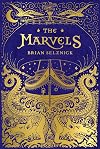
I think this might be my favorite Selznick so far. I loved the meta-ness of the story and I adored Joseph and Albert and Frankie. This is the first time one of Selznick's books has made me weep openly and being someone who appreciates an emotional whammy of a book, that weeping immediately earned it favorite status. As always, the illustrations are gorgeous and the story they tell is rich and layered. It is the prose section, though, that really grabbed my heart and wouldn't let go and I show more sincerely hope that Joseph got the future he imagined for himself.
If you're lucky enough to get ahold of an advance copy, don't take that for granted. If you have to wait until publication to discover 'The Marvels', then be assured, it's well worth the wait. show less
If you're lucky enough to get ahold of an advance copy, don't take that for granted. If you have to wait until publication to discover 'The Marvels', then be assured, it's well worth the wait. show less
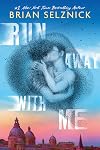
In the 1980s, a teenage boy travels with his mother from place to place; her work with rare books takes them all over the country and the world, meaning he's unable to make permanent connections with people.
During a summer in Rome, a boy who calls him Danny and who he calls Angelo slips past his usual defenses and the two become inseparable, exploring the city and each other. Angelo tells Danny stories of the city, about a sculptor called Dante who worked for Bernini and fell in love with show more an elephant and a sailor; about Alberto and Vittorio Monda, who lived in what is now the museum where Danny's mother works on a mysterious book. Angelo's own story comes more slowly; at first he insists he's nearly 3000 years old, as old as Rome, but his true story is more mundane. Stories, artifacts, and books weave together as the clock on Danny's time in Rome ticks down.
See also: Call Me By Your Name, Leave Myself Behind
Quotes
I was so used to feeling invisible that I didn't understand how he'd seen me at all. (103)
There's no stability, no permanence, just an endless parade of new people and sudden goodbyes. (109)
"Isn't it interesting? ...You from another planet, and me from another time. Isn't it interesting we've met?" (111)
I began to wonder how I'd describe for him the lonely planet where I'd been living all my life. (112)
"Did you ever notice that everyone things their own life is normal, but each person's life is so different?" (140)
...even though there was a time limit to the invisible passport I'd been issues, I was happy. (198)
...I'd change the tapes and no matter what I put on, every song was about us... (214) show less
During a summer in Rome, a boy who calls him Danny and who he calls Angelo slips past his usual defenses and the two become inseparable, exploring the city and each other. Angelo tells Danny stories of the city, about a sculptor called Dante who worked for Bernini and fell in love with show more an elephant and a sailor; about Alberto and Vittorio Monda, who lived in what is now the museum where Danny's mother works on a mysterious book. Angelo's own story comes more slowly; at first he insists he's nearly 3000 years old, as old as Rome, but his true story is more mundane. Stories, artifacts, and books weave together as the clock on Danny's time in Rome ticks down.
See also: Call Me By Your Name, Leave Myself Behind
Quotes
I was so used to feeling invisible that I didn't understand how he'd seen me at all. (103)
There's no stability, no permanence, just an endless parade of new people and sudden goodbyes. (109)
"Isn't it interesting? ...You from another planet, and me from another time. Isn't it interesting we've met?" (111)
I began to wonder how I'd describe for him the lonely planet where I'd been living all my life. (112)
"Did you ever notice that everyone things their own life is normal, but each person's life is so different?" (140)
...even though there was a time limit to the invisible passport I'd been issues, I was happy. (198)
...I'd change the tapes and no matter what I put on, every song was about us... (214) show less
Brian Selznick didn't have to do it.
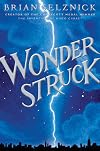
He didn't have to return to the groundbreaking pictures-and-text format that stunned the children's-book world in 2007 and won him an unlikely—though entirely deserved—Caldecott medal for The Invention of Hugo Cabret. Weighing in at about two pounds, the 500-plus page tome combined textual and visual storytelling in a way no one had quite seen before. In a world where the new becomes old in the blink of an eye, Selznick could have honorably rested on show more his laurels and returned to the standard 32-to-48–page picture-book format he has already mastered. He didn't have to try to top himself. But he has. If Hugo Cabret was a risky experiment that succeeded beyond Selznick and publisher Scholastic’s wildest dreams (well, maybe not Scholastic’s—they dream big), his follow-up, Wonderstruck, is a far riskier enterprise. In replicating the storytelling format of Hugo, Selznick begs comparisons that could easily find Wonderstruck wanting or just seem stale. Like its predecessor, this self-described "novel in words and pictures" opens with a cinematic, multi-page, wordless black-and-white sequence: Two wolves lope through a wooded landscape, the illustrator's "camera" zooming in to the eye of one till readers are lost in its pupil. The scene changes abruptly, to Gunflint Lake, Minn., in 1977. Prose describes how Ben Wilson, age 12, wakes from a nightmare about wolves. He's three months an orphan, living with his aunt and cousins after his mother's death in an automobile accident; he never knew his father. Then the scene cuts again, to Hoboken in 1927. A sequence of Selznick's now-trademark densely crosshatched black-and-white drawings introduces readers to a girl, clearly lonely, who lives in an attic room that looks out at New York City and that is filled with movie-star memorabilia and models—scads of them—of the skyscrapers of New York. Readers know that the two stories will converge, but Selznick keeps them guessing, cutting back and forth with expert precision. Both children leave their unhappy homes and head to New York City, Ben hoping to find his father and the girl also in search of family. The girl, readers learn, is deaf; her silent world is brilliantly evoked in wordless sequences, while Ben’s story unfolds in prose. Both stories are equally immersive and impeccably paced. The two threads come together at the American Museum of Natural History, Selznick's words and pictures communicating total exhilaration (and conscious homage to The Mixed-up Files of Mrs. Basil E. Frankweiler). Hugo brought the bygone excitement of silent movies to children; Wonderstruck shows them the thrilling possibilities of museums in a way Night at the Museum doesn't even bother to.
Visually stunning, completely compelling, Wonderstruck demonstrates a mastery and maturity that proves that, yes, lightning can strike twice. (Historical fiction. 9 & up)
-Kirkus Review show less
He didn't have to return to the groundbreaking pictures-and-text format that stunned the children's-book world in 2007 and won him an unlikely—though entirely deserved—Caldecott medal for The Invention of Hugo Cabret. Weighing in at about two pounds, the 500-plus page tome combined textual and visual storytelling in a way no one had quite seen before. In a world where the new becomes old in the blink of an eye, Selznick could have honorably rested on show more his laurels and returned to the standard 32-to-48–page picture-book format he has already mastered. He didn't have to try to top himself. But he has. If Hugo Cabret was a risky experiment that succeeded beyond Selznick and publisher Scholastic’s wildest dreams (well, maybe not Scholastic’s—they dream big), his follow-up, Wonderstruck, is a far riskier enterprise. In replicating the storytelling format of Hugo, Selznick begs comparisons that could easily find Wonderstruck wanting or just seem stale. Like its predecessor, this self-described "novel in words and pictures" opens with a cinematic, multi-page, wordless black-and-white sequence: Two wolves lope through a wooded landscape, the illustrator's "camera" zooming in to the eye of one till readers are lost in its pupil. The scene changes abruptly, to Gunflint Lake, Minn., in 1977. Prose describes how Ben Wilson, age 12, wakes from a nightmare about wolves. He's three months an orphan, living with his aunt and cousins after his mother's death in an automobile accident; he never knew his father. Then the scene cuts again, to Hoboken in 1927. A sequence of Selznick's now-trademark densely crosshatched black-and-white drawings introduces readers to a girl, clearly lonely, who lives in an attic room that looks out at New York City and that is filled with movie-star memorabilia and models—scads of them—of the skyscrapers of New York. Readers know that the two stories will converge, but Selznick keeps them guessing, cutting back and forth with expert precision. Both children leave their unhappy homes and head to New York City, Ben hoping to find his father and the girl also in search of family. The girl, readers learn, is deaf; her silent world is brilliantly evoked in wordless sequences, while Ben’s story unfolds in prose. Both stories are equally immersive and impeccably paced. The two threads come together at the American Museum of Natural History, Selznick's words and pictures communicating total exhilaration (and conscious homage to The Mixed-up Files of Mrs. Basil E. Frankweiler). Hugo brought the bygone excitement of silent movies to children; Wonderstruck shows them the thrilling possibilities of museums in a way Night at the Museum doesn't even bother to.
Visually stunning, completely compelling, Wonderstruck demonstrates a mastery and maturity that proves that, yes, lightning can strike twice. (Historical fiction. 9 & up)
-Kirkus Review show less
Lists
FAB 2024 (1)
Best Young Adult (1)
READ in 2024 (1)
Allie's Wishlist (1)
The "A" List (1)
4th Grade Books (2)
Awards


You May Also Like


Associated Authors
Statistics
- Works
- 21
- Also by
- 22
- Members
- 17,997
- Popularity
- #1,221
- Rating
- 4.2
- Reviews
- 1,122
- ISBNs
- 156
- Languages
- 22
- Favorited
- 18


